
You’ve heard the buzz. Maybe you saw it on a forum, a Telegram group, or a quick tweet promising the best of both worlds in crypto trading. The name is TEX, or "Decentralized Token Exchange." It sounds like the holy grail: the ease of a centralized app with the security of a blockchain. But here is the hard truth that most promotional posts won’t tell you. As of mid-2026, TEX does not exist as a recognized, legitimate platform in any major financial database.
If you are looking to trade on TEX right now, stop. There is no CoinGecko listing, no Trustpilot reviews, and no credible news coverage from established outlets like CoinDesk or Bloomberg. In fact, digging into the origins of this term reveals something much more concerning than a hidden gem. It appears to be either a misunderstanding of industry terms or, worse, a potential trap set by bad actors targeting new investors.
The Mystery Behind the Name TEX
To understand why TEX is a red flag, we have to look at where the name comes from. The standard language of crypto has two main pillars: CEX (Centralized Exchange) and DEX (Decentralized Exchange). A third letter, T, doesn’t fit naturally into this framework unless someone is trying to invent a new category to sound innovative.
The only substantive mention of "TEX" in recent history comes from a niche discussion on Bitcointalk.org in May 2025. Users there asked, "What is TEX?" The response was vague, describing it as offering a "centralized trading experience" while ensuring "transparency." This description is contradictory. Centralized exchanges, like Coinbase or Kraken, control your funds. Decentralized exchanges, like Uniswap, do not. Mixing these concepts without clear technical architecture is a common tactic used by scams to confuse beginners.
Let’s break down what a real hybrid model looks like versus what TEX claims to be:
- Real Hybrid Models: Platforms like dYdX or Bitfinex Lend use specific technologies such as zero-knowledge proofs or multi-party computation to prove they hold your assets without revealing private keys. They are transparent about their tech stack.
- TEX Claims: Vague promises of "convenience" and "security" without mentioning how custody works, which blockchain it uses, or who audits their smart contracts.
When a platform cannot explain its technology in simple terms, it usually means there is no technology behind it. Just a website and a way to take your money.
Why You Won’t Find TEX on CoinGecko or CoinMarketCap
In the crypto world, visibility equals legitimacy. If an exchange is handling real volume, it will show up on aggregators. As of February 2026, CoinGecko tracks over 1,146 decentralized exchanges. These platforms collectively moved $9.67 billion in a single day. Despite this massive market, TEX is nowhere to be found in the top 100, or even the bottom 100.
Compare this to the leaders in the space:
| Platform | 24h Volume | Type | Key Feature |
|---|---|---|---|
| Uniswap | $1.83 Billion | DEX | Largest on-chain marketplace |
| PancakeSwap | $1.11 Billion | DEX | Binance Smart Chain dominance |
| Jupiter Aggregator | $783 Million | DEX | Solana ecosystem leader |
| TEX | N/A | Unknown | No verifiable data |
The absence of TEX from these lists is not an oversight. It indicates that the platform either has zero liquidity (meaning you can’t actually trade anything) or it is operating off-chain in a way that mimics a DEX but functions like a private casino. Without public volume data, you have no proof that other people are using it, let alone that withdrawals work.
The Danger of "Hybrid" Promises
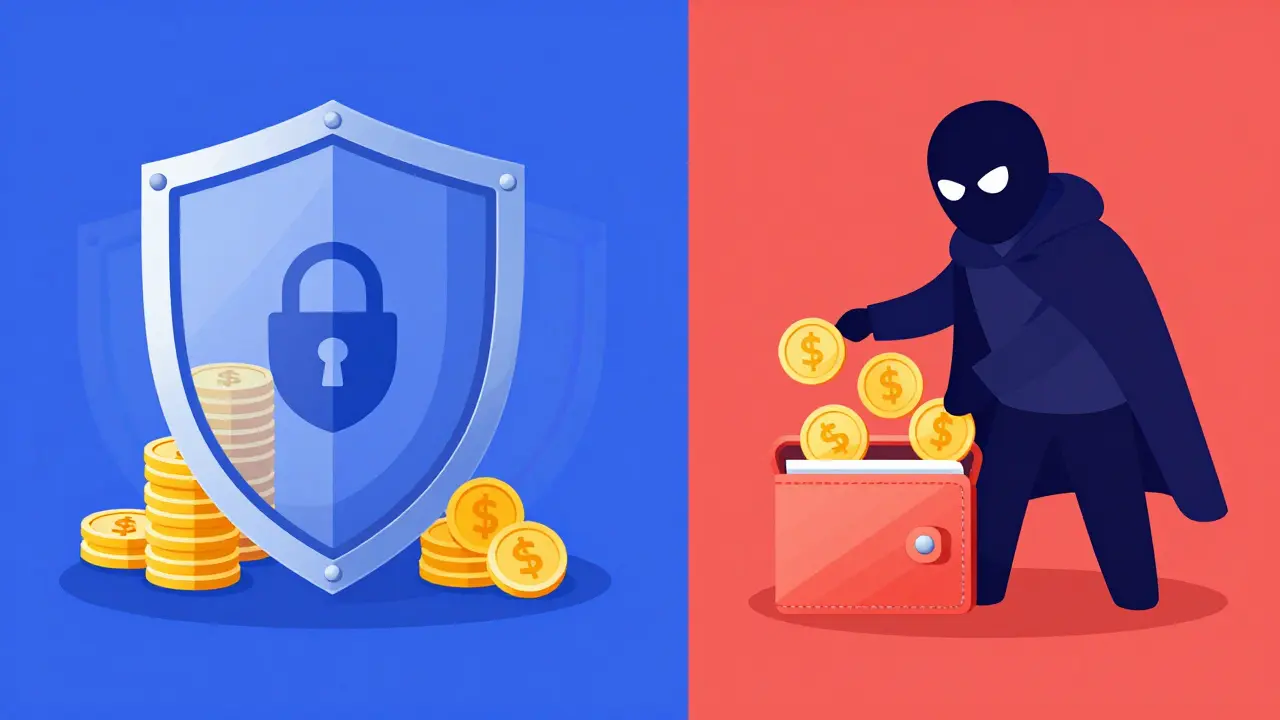
Scammers love the word "hybrid." It sounds sophisticated. But in practice, a fake hybrid exchange often tries to steal from both sides of the equation. They promise the anonymity of a DEX but require you to deposit funds into a wallet address they control, which is exactly how a CEX works-but without the legal protections.
Consider the security warnings issued by experts in early 2026. Alex Chen, a security researcher, highlighted that interacting with unknown smart contracts can lead to immediate fund theft. He advised users to use tools like revoke.cash to audit wallet approvals. If TEX requires you to connect your MetaMask or Phantom wallet to a site you’ve never seen before, you are signing a permission slip for them to drain your assets.
Furthermore, the regulatory landscape has tightened significantly. The SEC filed enforcement actions against three DEX platforms in January 2026 for unregistered securities offerings. The Financial Action Task Force (FATF) also updated its "Travel Rule" guidance in late 2025, demanding that even non-custodial exchanges monitor transactions. A platform like TEX, which lacks any regulatory footprint, is likely ignoring these rules entirely. This means if things go wrong, you have no recourse. No customer support email that answers back. No legal entity to sue.
How to Spot a Fake Exchange Like TEX
You don’t need to be a blockchain expert to spot a scam. Here are five concrete signs that TEX fits the profile of a fraudulent operation:
- No Independent Audits: Legitimate DEXs publish audit reports from firms like CertiK or Trail of Bits. TEX has none.
- Vague Team Information: Real projects list their developers with LinkedIn profiles. TEX offers anonymous founders or stock photos.
- Pressure to Act Fast: If you’re told TEX is launching soon or has limited spots, it’s a classic FOMO (Fear Of Missing Out) tactic.
- Broken English or Generic Content: Their website likely uses AI-generated text that sounds professional but says nothing specific about technology.
- Missing Social Proof: Search Reddit’s r/CryptoCurrency (4.2 million members). If no one is talking about TEX, it’s because no one is using it successfully.
David Shim, CEO of Elliptic, noted in a February 2026 interview that 63% of projects claiming to offer "hybrid solutions" had shut down or been compromised by Q1 2026. TEX falls squarely into this high-risk bucket.

Safe Alternatives for Trading in 2026
If you want the benefits of decentralized trading without the risk of a scam, stick to the giants. They have survived bear markets, regulatory scrutiny, and hacker attacks. Here is where you should actually put your money:
Uniswap: The gold standard for Ethereum-based swaps. It has deep liquidity, meaning you get fair prices, and it is open-source, so anyone can check the code.
Jupiter: If you trade on Solana, Jupiter is the aggregator you need. It finds the best price across multiple DEXs automatically. It is fast, cheap, and widely trusted.
Kraken or Coinbase: If you prefer a centralized experience with customer support and KYC verification, these are the safest options. They are regulated US companies with insurance on certain assets.
Don’t chase the next big thing if that thing doesn’t exist. The crypto market is full of noise. Your job is to filter out the scams and focus on platforms with proven track records.
What To Do If You Already Interacted With TEX
If you connected your wallet to a TEX website or sent funds to a TEX address, act immediately. First, disconnect your wallet from the site. Second, go to revoke.cash and revoke any token approvals you granted to the TEX contract. This stops them from draining future tokens you receive. Third, move your remaining funds to a new, clean wallet. Consider the old wallet compromised. While you may not recover lost funds, these steps prevent further damage.
Is TEX a legitimate crypto exchange?
No. As of July 2026, TEX is not listed on any major tracking platform like CoinGecko or CoinMarketCap. It lacks independent audits, user reviews, and verifiable team information. It is highly likely to be a scam or a defunct project.
What does TEX stand for in crypto?
There is no official definition. Some forums speculate it stands for "Token Exchange," but this is a generic term. The lack of a unique brand identity or whitepaper suggests it is not a serious financial product.
Can I withdraw money from TEX?
Unlikely. Since TEX is not a verified platform, there is no guarantee of withdrawal functionality. Many similar scams allow deposits but block withdrawals once the target amount is reached.
Why isn't TEX on CoinGecko?
CoinGecko requires strict criteria for listing, including active development, community presence, and transparency. TEX fails to meet these basic standards, indicating it is either inactive or fraudulent.
Are hybrid exchanges safe?
Legitimate hybrid exchanges exist, but they are rare and well-known (e.g., dYdX). Be extremely cautious of new platforms using the "hybrid" label to obscure their lack of security features or regulatory compliance.
Leave a comments