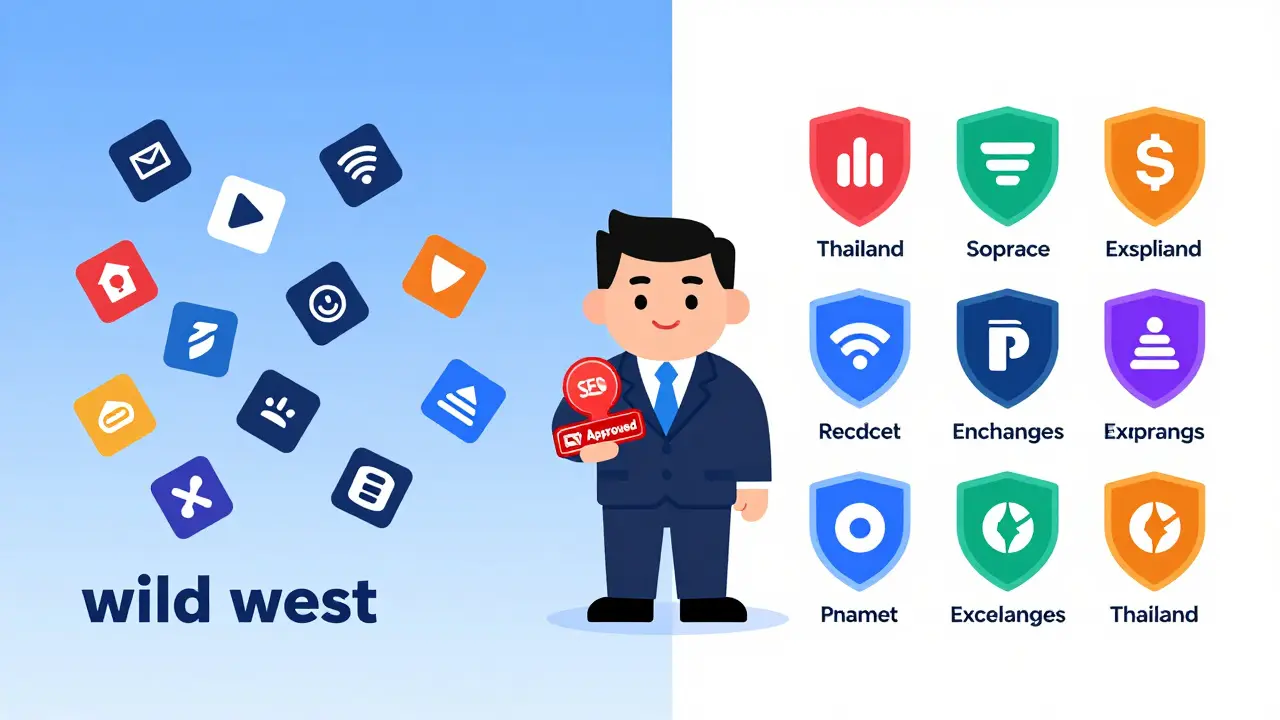
It used to be easy to trade crypto in Thailand. You could download any app from the App Store, buy Bitcoin with your local bank card, and forget about it. That era ended abruptly in April 2025. The Thailand Securities and Exchange Commission (SEC) pulled the rug out from under unlicensed platforms like Bybit and OKX overnight. If you are trading crypto in Thailand today, you need to know exactly what is legal, what is banned, and how to avoid losing your money or facing legal trouble.
The regulatory landscape has shifted from a 'wild west' environment to a strictly controlled market. The goal isn't just to tax traders; it's to stop fraud. With crypto-related scams spiking in early 2025, the government moved fast. Now, only nine entities hold the license to operate as digital asset portals. Understanding these rules is no longer optional-it's essential for anyone holding a wallet in Bangkok, Chiang Mai, or Phuket.
The New Rules: How the Thai SEC Defines 'Serving Thai Users'
The biggest change in the 2025 amendments to the Digital Asset Business Act is how aggressively the SEC defines who counts as a 'Thai user.' Previously, foreign exchanges argued they weren't operating in Thailand because their servers were overseas. The new Emergency Decree shuts that loophole completely.
If a platform does any of the following seven things, the SEC considers it serving persons in Thailand, meaning it must have a local license:
- Displaying its interface in Thai, even partially.
- Using a domain name ending in '.th' or '.ไทย'.
- Accepting payments in Thai Baht (THB) via local banks or e-wallets.
- Specifying Thai law for dispute resolution.
- Paying search engines to appear in results for Thai users.
- Hiring staff or opening offices to support Thai customers.
- Any other behavior prescribed by SEC notifications.
This extraterritorial reach is stricter than Singapore's approach and more nuanced than China's total ban. It means you can't just use a VPN to bypass restrictions if the platform itself hasn't adapted its terms of service. The Ministry of Digital Economy and Society (MDES) now has the power to block access to non-compliant sites instantly, without needing a court order. This happened in April 2025 when major global exchanges were suddenly inaccessible to many Thai users.
What Is Actually Banned? Privacy Coins, Meme Tokens, and Payments
Even if you stick to one of the nine licensed exchanges, you won't find everything you used to. The Thai SEC imposes strict operational restrictions on what assets can be traded and how they can be used. These bans are designed to prevent money laundering and protect retail investors from high-risk speculation.
| Asset Type / Activity | Status in Thailand | Reason for Restriction |
|---|---|---|
| Privacy Coins (e.g., Monero, Zcash) | Prohibited | High risk of money laundering and illicit finance. |
| Meme Tokens & Fan Tokens | Prohibited | Considered speculative and lacking intrinsic value. |
| NFTs (Non-Fungible Tokens) | Prohibited on Exchanges | Fraud risks and lack of clear valuation standards. |
| Crypto as Payment | Prohibited | Prevents circumvention of fiat currency laws. |
| Lending with Promised Returns | Prohibited | Protects against Ponzi-like schemes. |
| Bitcoin & Ethereum ETFs | Allowed | Regulated institutional investment products. |
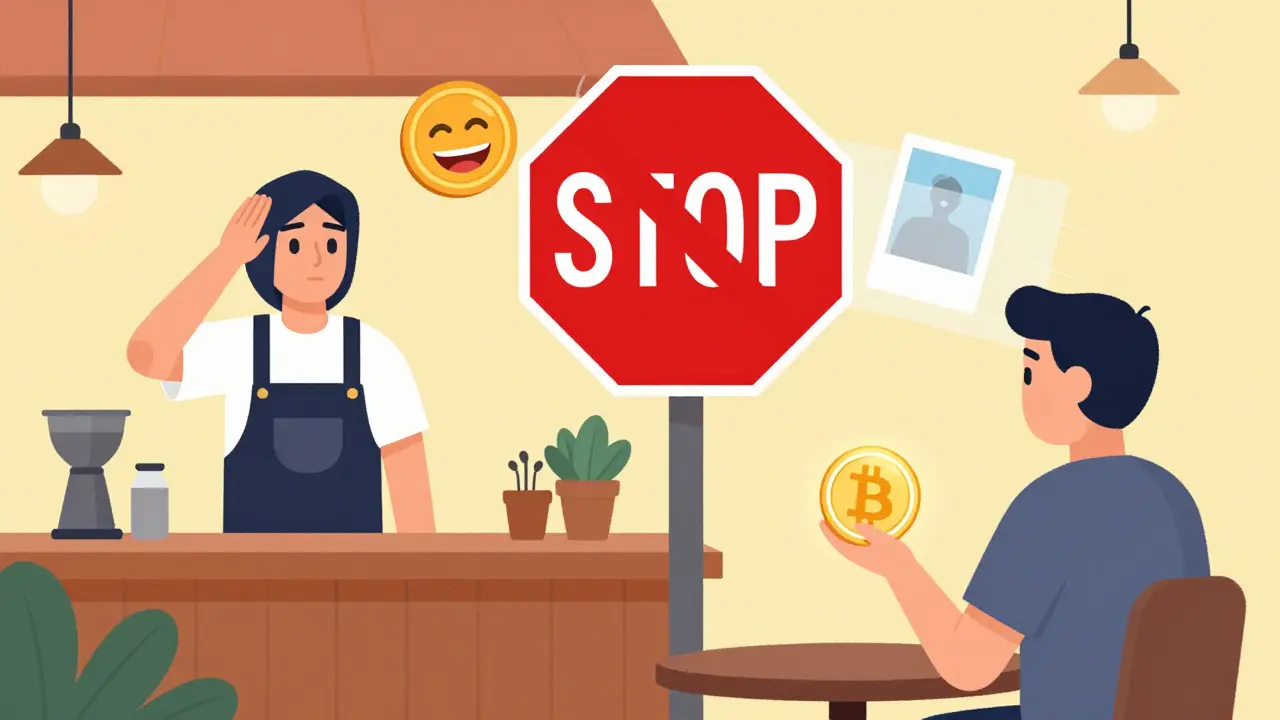
You cannot use your Bitcoin to buy coffee at a cafe in Sukhumvit. Licensed operators are explicitly forbidden from facilitating digital assets as payment for goods and services. Furthermore, if you see an exchange offering 'staking' with guaranteed daily returns, run away. That is illegal under current notifications. The SEC issued clarifications on staking in June 2025 to ensure providers aren't acting like unregulated banks.
The Nine Licensed Exchanges: Your Only Legal Option
As of mid-2025, only nine entities are approved to operate as digital asset portals in Thailand. The most prominent among them is Bitkub, which holds the largest market share. Others include CoinBaaz, BTC, and Satang Pro. Binance also expanded its operations to comply with local laws, establishing a stronger presence after the crackdown.
Trading on these platforms feels different compared to the global giants that left. Here is what you need to expect:
- Lower Liquidity: Spreads are wider. If you try to move large amounts of capital, you might notice slippage that wouldn't happen on Bybit.
- Higher Fees: Transaction fees average around 0.25%, compared to 0.1% on international platforms.
- Withdrawal Limits: Daily withdrawal limits can be restrictive. For example, Bitkub caps withdrawals at ฿500,000 (approx. $13,700) per day for standard accounts.
- Limited Selection: Only about 35 tokens are approved for trading. You won't find the latest meme coin or obscure altcoin here.
To verify if an exchange is legitimate, always check the official database at the SEC's website. Do not trust ads on social media. The SEC provides a direct link to verify licenses, and using anything else puts your funds at risk.
Costs and Compliance for Foreign Exchanges
For foreign companies looking to enter the Thai market, the barrier to entry is high. The SEC requires a minimum operational capital of ฿50 million (roughly $1.37 million). On top of that, there is an application fee of ฿1,000,000 ($27,400) and an annual license fee of ฿500,000 ($13,700).
Compliance isn't just about paying fees. Platforms must implement Anti-Money Laundering (AML) and Counter-Financing of Terrorism (CFT) systems that meet FATF standards. They also need source code audits from SEC-approved firms. The approval process takes between 90 and 120 days. Bitkub reported spending six months just to fully adapt its infrastructure to meet these real-time monitoring requirements.

Impact on Traders: Safety vs. Convenience
So, is the new system better? It depends on what you value. If you prioritize safety, the answer is yes. According to the Royal Thai Police Cybercrime Investigation Division, crypto-related fraud reports dropped by 37% in Q2 2025 compared to the previous quarter. User feedback on Pantip.com reflects this: many traders appreciate not having to worry about their exchange vanishing overnight.
However, convenience has taken a hit. A significant portion of Thai traders-estimated at 35% by Chainalysis-have migrated offshore using VPNs to access deeper liquidity and lower fees. This creates a gray area. While the SEC blocks known unlicensed sites, determined users find ways around it. But beware: if you use an unlicensed platform, you have zero recourse if something goes wrong. The Thai courts will not help you recover stolen funds from a banned entity.
Future Outlook: DeFi and CBDC Integration
The regulations are still evolving. The SEC plans to amend the Digital Asset Business Act in Q4 2025 to address decentralized finance (DeFi) protocols. Currently, DeFi exists in a regulatory blind spot, but expect clearer guidelines soon. Additionally, the Bank of Thailand is working on a Central Bank Digital Currency (CBDC), with pilot projects for integration with licensed exchanges expected in Q2 2026.
Altcoin ETFs are also on the horizon. After successfully launching Bitcoin and Ethereum ETFs, the SEC may approve more products in 2026, potentially unlocking billions in institutional investment. For now, stick to the basics. The Thai crypto market is maturing, becoming safer but less flexible. Adapt your strategy accordingly, and always prioritize licensed platforms.
Can I still use Bybit or OKX in Thailand?
No. As of April 2025, foreign peer-to-peer platforms like Bybit and OKX are prohibited from operating without a Thai SEC license. Their access has been blocked by the Ministry of Digital Economy and Society. Using them exposes you to legal risks and loss of consumer protection.
Is it legal to mine cryptocurrency in Thailand?
Yes, mining is legal, but it falls under separate energy and environmental regulations. However, selling mined coins requires going through a licensed exchange if you want to convert them to Thai Baht legally.
Why are privacy coins like Monero banned?
The Thai SEC bans privacy coins because their transaction anonymity makes it difficult to track money laundering and terrorist financing. This aligns with global FATF standards for financial transparency.
How do I check if a crypto exchange is licensed in Thailand?
You can verify licenses directly on the Thailand SEC's official website. Look for the 'License Check' section for Digital Asset Businesses. Never rely on third-party lists or advertisements.
Can I pay for goods with Bitcoin in Thailand?
No. Licensed exchanges are prohibited from facilitating the use of digital assets as payment for goods and services. Crypto is treated strictly as an investment asset, not a currency.
What happens if I trade on an unlicensed platform?
While individual users are rarely prosecuted, you lose all legal protections. If the platform hacks, scams, or shuts down, the Thai SEC cannot help you recover your funds. You also risk having your bank accounts frozen if transactions are flagged as suspicious.
Are NFTs legal in Thailand?
NFTs are not banned outright, but licensed exchanges are prohibited from listing or trading them due to high fraud risks. You may find niche, unregulated platforms, but these carry significant security risks.
When will DeFi regulations be clarified?
The SEC plans to amend the Digital Asset Business Act in Q4 2025 to specifically address decentralized finance platforms. Until then, DeFi operates in a regulatory gray area.
Leave a comments