 Imagine spending hundreds of hours grinding for a rare sword in a game, only for the developers to shut down the servers or ban your account, wiping out everything you've achieved. For decades, that was the deal. You didn't own your items; you rented them. But we're seeing a massive shift.
Blockchain Gaming is
a new era of digital entertainment where blockchain technology allows players to actually own their in-game assets through verifiable digital ledgers.
It's not just about playing a game anymore; it's about participating in a living economy where your time and skill have real-world value.
Imagine spending hundreds of hours grinding for a rare sword in a game, only for the developers to shut down the servers or ban your account, wiping out everything you've achieved. For decades, that was the deal. You didn't own your items; you rented them. But we're seeing a massive shift.
Blockchain Gaming is
a new era of digital entertainment where blockchain technology allows players to actually own their in-game assets through verifiable digital ledgers.
It's not just about playing a game anymore; it's about participating in a living economy where your time and skill have real-world value.
Key Takeaways
- True ownership of assets via NFTs is replacing the old "rental" model of gaming.
- The metaverse is evolving from simple 3D worlds into an interconnected economic hub.
- Mobile gaming is the primary driver for mass adoption due to lower hardware barriers.
- Sustainability is the new focus, moving away from hyper-inflationary play-to-earn schemes.
- Interoperability is the "holy grail," allowing items to move between different game worlds.
Breaking the Walls of Centralized Gaming
In traditional games, your gear lives on a central server. If the company decides to change the rules or close the shop, your assets vanish. Blockchain gaming flips this. By using Non-Fungible Tokens (or NFTs), unique digital identifiers that prove ownership of a specific item on a blockchain ], assets are stored on a decentralized ledger. This means you can sell your legendary armor on a third-party marketplace without needing the game developer's permission.
This transparency also fixes the "rigged loot box" problem. In standard games, you have to trust the developer that a 1% drop rate is actually 1%. With blockchain, the rarity and distribution of items are written into Smart Contracts-self-executing contracts with the terms of the agreement directly written into code. You can verify the odds yourself, making the game fair and auditable.
The Metaverse: More Than Just a 3D Chat Room
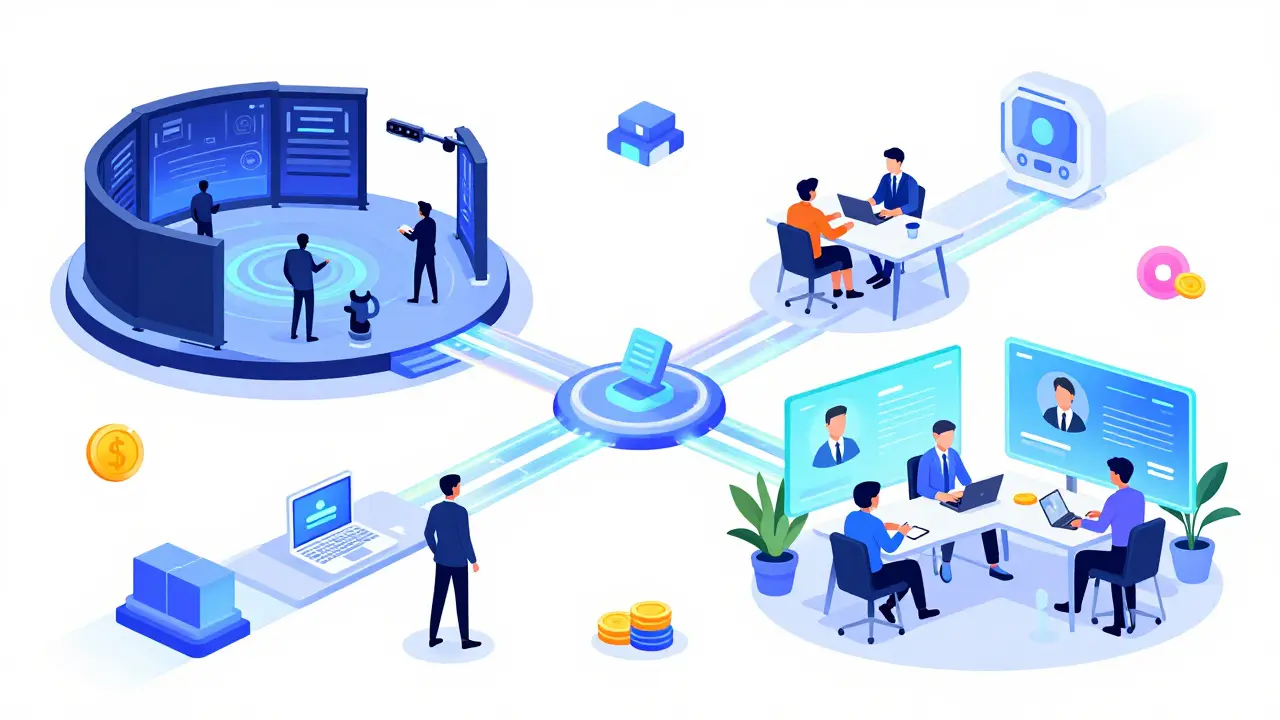
We often hear Metaverse used as a buzzword, but it's actually a convergence of social interaction, professional work, and gaming. It is an expansive virtual universe where different digital environments are interconnected. Think of it as the internet you can walk around in. As of 2025, we're seeing about 62% of these platforms integrate professional collaboration tools, meaning you might attend a business meeting in the same space where you hang out with friends.
The real magic happens when gaming acts as the gateway. About 78% of new crypto users actually enter the space through gaming because it's familiar. It's much easier to understand a digital sword that you can sell than it is to understand a complex DeFi lending protocol. This is why the metaverse is projected to reach a staggering addressable market of $8-13 trillion by 2030, serving potentially 5 billion users.
| Feature | Traditional Gaming (e.g., Steam/Epic) | Blockchain Gaming (Web3) |
|---|---|---|
| Asset Ownership | Centralized (Developer owns everything) | Decentralized (Player owns via NFT) |
| Economy | Closed loop (Money stays in-game) | Open market (Play-to-earn / Tradeable) |
| Transparency | Opaque (Trust the developer) | Transparent (Verifiable on-chain) |
| Interoperability | None (Items locked to one game) | Growing (Cross-game asset use) |
The Shift from Speculation to Sustainability
A few years ago, the trend was "Play-to-Earn" (P2E). Games like Axie Infinity showed that people could make a living playing games. In the Philippines, some players were earning $350 a month through Splinterlands, which is far above the local minimum wage. However, this early model had a flaw: it relied on a constant stream of new players to keep the token value up. When the hype died, tokens crashed. For example, the ATLAS token from Star Atlas dropped 98% from its 2021 high.
The future is moving toward "Play-and-Earn." The goal now is to make a game that is actually fun first, with the economic rewards being a bonus rather than the only reason to play. Industry experts note that retention metrics are improving by 210% year-over-year as developers focus on gameplay loop quality over token speculation. We're seeing the rise of DAOs (Decentralized Autonomous Organizations), community-led entities that allow players to vote on game updates and economic changes. Currently, about 38% of major blockchain games use this to give players a seat at the table.
Technical Hurdles and the Road to Mass Adoption
If blockchain gaming is so great, why isn't everyone doing it? The "onboarding friction" is a killer. For a regular person, creating a wallet, backing up a seed phrase, and managing gas fees is a nightmare. Studies show that about 62% of new users struggle to complete their first transaction. If it takes 60 minutes just to start the game, most people will just quit.
On the technical side, speed is still an issue. While Ethereum Layer 2 solutions have improved transactions to 15-30 per second-a 500% jump since 2022-they still can't compete with traditional servers that handle thousands of actions instantly. However, protocols like Polygon's zkEVM are making cross-chain compatibility possible, allowing assets to move between 12 major platforms. This is the first real step toward true interoperability.
Hardware is also becoming less of a barrier. The cost of VR Headsets like the Meta Quest 3 has dropped significantly, which is fueling a projected 300% growth in VR ownership by 2026. When you combine affordable VR with a blockchain-backed economy, the immersion becomes total.
Where We Go From Here
We are moving into a consolidation phase. The "wild west" of 2021 is over. Major players like Epic Games and Roblox are starting to experiment with blockchain-agnostic platforms and limited virtual land ownership. This signals that the industry is moving away from niche crypto-games and toward a hybrid model where blockchain is just the backend infrastructure, invisible to the user.
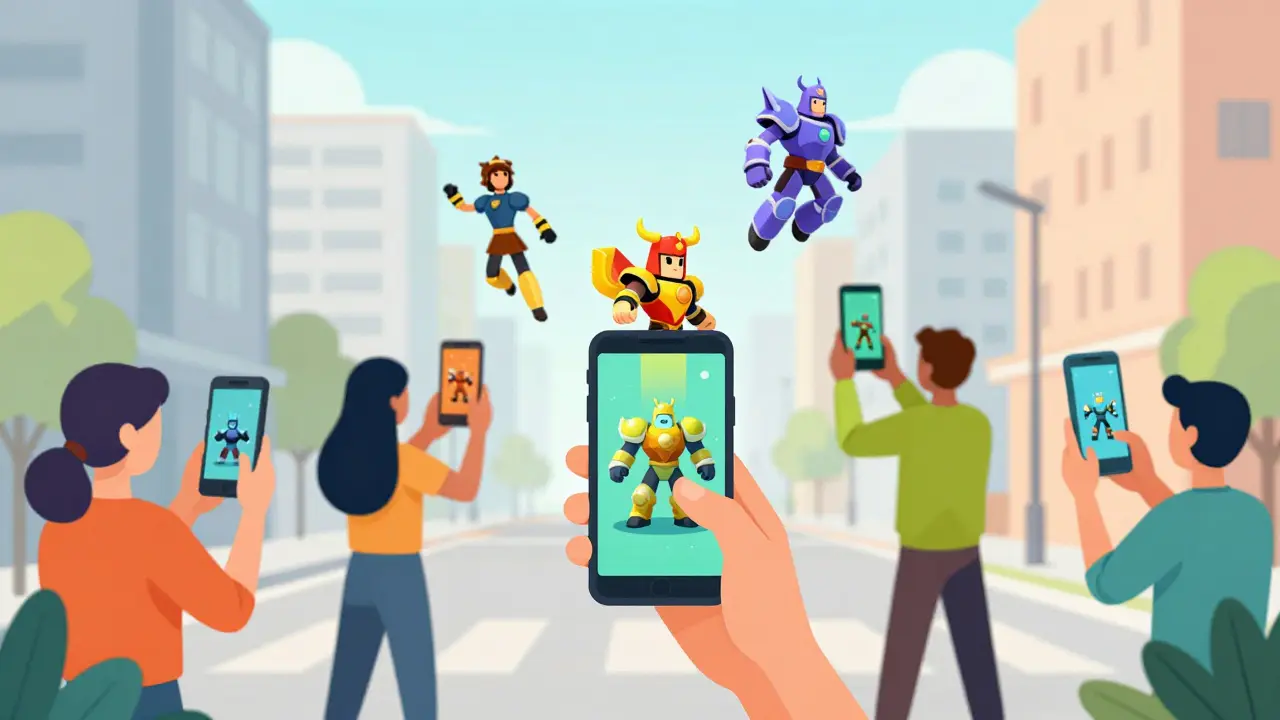
The most successful adoption vector is mobile gaming. Since 67% of all blockchain gaming activity happens on phones, the future isn't just a high-end PC rig; it's a game you play on the bus that allows you to earn a few dollars in assets that you can later trade for a rare skin in a different game. We're looking at a future where your digital identity-your achievements, your skins, and your currency-follows you across the entire internet, not just one platform.
What is the main difference between a regular game and a blockchain game?
The biggest difference is ownership. In a regular game, the developer owns all the items and can delete them at any time. In a blockchain game, items are NFTs owned by the player's wallet, meaning they can be sold, traded, or moved outside of the game environment.
Is play-to-earn still a viable way to make money?
It is possible, but the model has shifted. The early "hyper-earning" phase was volatile and often unsustainable. Today's games focus on "Play-and-Earn," where rewards are more modest and tied to actual gameplay skill and long-term participation rather than just recruiting new users.
What is a DAO in the context of gaming?
A DAO (Decentralized Autonomous Organization) is basically a player-run government. Instead of the developers deciding every update, players who hold governance tokens can vote on changes to the game's economy, map design, or rules.
Why is it so hard to get started with blockchain games?
The learning curve is steep because you need a crypto wallet and must understand concepts like seed phrases and gas fees (transaction costs). However, new "blockchain-agnostic" platforms are working to hide these technicalities behind a standard login screen.
Can I use an item from one blockchain game in another?
Not yet in most cases, but it's getting closer. Interoperability depends on the games using the same blockchain or compatible protocols. Technologies like Polygon's zkEVM are paving the way for assets to be recognized across different gaming platforms.
Next Steps and Troubleshooting
If you're a gamer looking to enter the space, start with mobile-first blockchain games-they usually have the lowest barrier to entry. If you encounter a "failed transaction" error, the most common cause is insufficient funds for gas fees. Always ensure you have a small amount of the network's native token (like ETH or MATIC) in your wallet to cover these costs.
For developers, the focus should be on UX. Don't force users to manage a seed phrase in the first five minutes of gameplay. Use "custodial wallets" to let them try the game first, then let them migrate to a full blockchain wallet once they've actually earned something they want to own permanently.
Suvoranjan Mukherjee
6 04 26 / 06:55 AMSpot on regarding the onboarding friction! In my experience, implementing Account Abstraction (ERC-4337) is the real game-changer here since it allows for social recovery and gasless transactions, basically hiding the blockchain layer completely. We need more projects to move toward these modular stacks to actually hit that mass adoption phase. Let's keep pushing the boundaries of Web3 UX!
Emma Pease-Byron
6 04 26 / 14:49 PMHow quaint that we are still pretending that owning a JPEG of a sword is an "evolution" of gaming. The sheer delusion that a decentralized ledger adds value to a digital experience is almost impressive in its banality.
Suzanne Robitaille
7 04 26 / 18:32 PMThe concept of a digital identity that follows us through existence is just... breathtaking! It feels like we are stepping into a new philosophical era where our achievements aren't tied to a corporate whim but to our own essence in the machine. There is something so poetic about finally reclaiming the fruits of our digital labor from the giants who have held us captive for so long!
Earnest Mudzengi
8 04 26 / 08:47 AMWake up people!! This "interoperability" is just a fancy word for a global surveillance grid. They want your assets on-chain so the CBDCs can track every single micro-transaction you make in a virtual world while they phase out the dollar. It's a psyop to get us comfortable with a programmable economy where the elites can just flip a switch and freeze your "NFT sword" because you didn't follow the narrative. Total control matrix!
Trish Swanson
8 04 26 / 23:29 PMInteresting take!!! Love the part about mobile gaming being the key... definitely makes sense!!!
Deepak Prusty
9 04 26 / 22:07 PMThe mention of Layer 2 solutions is surface-level at best. Most people don't realize that zkEVMs still face significant challenges with prover times and data availability. If you actually look at the throughput of current sidechains, the claim that they can eventually compete with centralized databases like AWS is fundamentally flawed because of the CAP theorem.
Nicholas Whooley
11 04 26 / 10:16 AMIt is truly heartening to see the industry shift toward sustainability and player-led governance through DAOs. Providing a seat at the table for every participant ensures a more inclusive environment for newcomers to thrive.
alex rodea
12 04 26 / 10:51 AMThis looks like a cool way to make money while playing. Thanks for making it easy to understand!
Diana Martín Prieto
14 04 26 / 06:48 AMI totally agree that the focus on "Play-and-Earn" is the right move. For anyone starting out, I'd suggest looking into games that have a strong community-led DAO first. It's a great way to learn how the economy actually works without risking too much upfront. If you're struggling with the wallet setup, there are plenty of community guides that walk you through the seed phrase process step-by-step so you don't feel overwhelmed. It's all about taking small steps and supporting each other as we learn this new tech together!
Susan Wright
14 04 26 / 15:40 PMActually, for the folks struggling with gas fees, just use a Layer 2 like Polygon or Arbitrum. The fees are pennies compared to mainnet. Most new players just don't realize they can bridge their funds over to save a ton of money. It's the easiest way to get into the game without spending your whole paycheck on transaction costs.