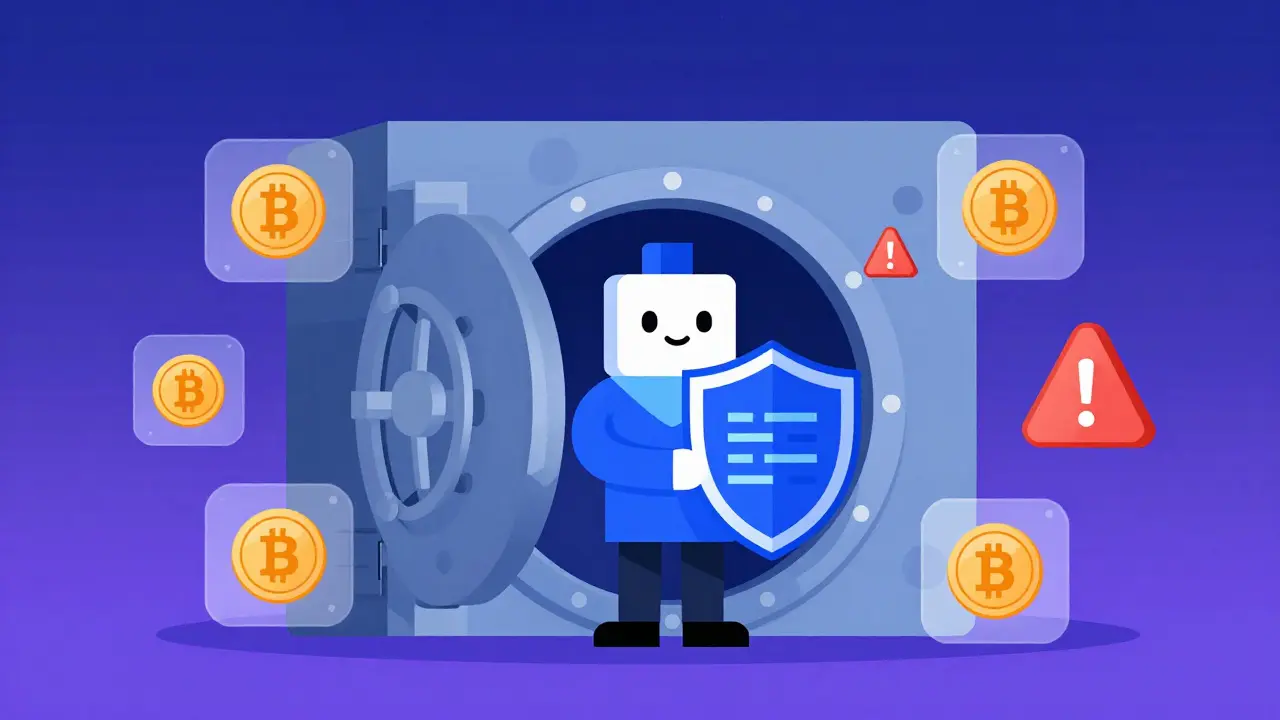
Imagine you’re running a bank vault. If someone breaks in, they go to jail. But what if the 'vault' is a decentralized network with no police, no judges, and no physical walls? In that world, security doesn’t come from locks; it comes from economics. This is the core promise of Proof-of-Stake (PoS), a consensus mechanism where validators secure the network by locking up cryptocurrency as collateral. The stick that keeps them honest is called Slashing, a penalty system that confiscates staked assets from validators who misbehave. As we move through 2026, slashing isn’t just a technical footnote-it’s the backbone of trust in decentralized finance. But is it working? And more importantly, how will it evolve?
How Slashing Actually Works
To understand the future, you first need to grasp the present. Slashing exists to solve a specific problem in PoS systems known as the "nothing at stake" problem. In older Proof-of-Work networks like Bitcoin, miners spend electricity to secure blocks. They can only mine on one chain at a time because their hardware has limited power. In PoS, however, a validator could theoretically vote for multiple competing chains without spending extra energy. Why wouldn’t they? Because if they do, the protocol slashes them.
Think of slashing as an insurance policy that burns your premium if you cause the accident. Validators lock up tokens-say, 32 ETH on Ethereum-to participate. If they act maliciously or negligently, the protocol automatically detects this behavior and destroys a portion of their stake. It’s not a fine paid to a government; it’s a mathematical execution written into smart contracts.
The most common triggers for slashing include:
- Double-signing: Proposing two different blocks for the same time slot.
- Surrounding votes: Attesting to a block that encompasses another valid attestation, effectively rewriting history.
- Double voting: Supporting two conflicting candidates for the same block.
These rules are strict. There is no appeal process. The code is law, and the law is unforgiving.
The Current Reality: Rare but Severe
You might think slashing happens all the time, given the high stakes. Surprisingly, it doesn’t. On Ethereum, the largest PoS network, slashing events have been incredibly rare since the transition in December 2020. Out of over 1 million deposited validators, fewer than 500 have ever been slashed. That’s less than 0.04% of active participants.
Why so low? Two reasons. First, professional validation services use redundant infrastructure to avoid downtime. Second, intentional attacks are economically irrational. To attack Ethereum, an adversary would need to corrupt at least one-third of the total stake. With billions of dollars locked in the network, buying that much stake costs far more than any potential profit from an attack. Slashing makes corruption prohibitively expensive.
| Offense Type | Description | Typical Penalty | Intent Required |
|---|---|---|---|
| Double-Signing | Proposing two blocks for the same slot | High (Partial or Full Stake Loss) | Malicious or Gross Negligence |
| Surrounding Votes | Voting for a block that invalidates previous votes | Medium-High | Malicious |
| Downtime | Failing to attest due to offline status | Low (Inactivity Leak, not always slashing) | Negligence |
Note that downtime usually results in an "inactivity leak" rather than immediate slashing. The network slowly drains rewards until the validator reconnects. True slashing is reserved for actions that threaten the integrity of the ledger itself.
Why Slashing Matters for Network Security
Slashing does more than punish bad actors; it changes the economic calculus of attacking a blockchain. In cryptoeconomic terms, slashing increases the "cost of corruption." Without slashing, an attacker could bribe a small number of validators to double-sign, knowing they’d keep their stake. With slashing, those bribed validators lose their money when the evidence of double-signing is submitted to the canonical chain.
This creates a powerful deterrent. Even if an attacker offers a bribe, the validator knows that if the attack fails-or if the attacker disappears-their stake is gone. The formula for cost of corruption becomes roughly N/3 × S, where N is the number of validators and S is the stake per validator. This ensures that securing the network remains cheaper than breaking it.
Furthermore, slashing fosters a culture of responsibility. Validators aren’t just passive holders; they are active guardians. This aligns their interests with the long-term health of the ecosystem. When you have skin in the game, you pay attention to uptime, software updates, and security patches.
Challenges and Criticisms of Current Systems
Despite its effectiveness, slashing isn’t perfect. One major criticism is its lack of nuance. What if a validator goes offline due to a natural disaster or a cloud provider outage? Is that negligence, or force majeure? Current protocols often treat both the same way, leading to harsh penalties for unintentional errors.
Another issue is centralization pressure. Because slashing risks are real, many individual stakers choose to delegate their tokens to large, professional validation firms like Consensys Staking or Lido. These firms have the resources to maintain redundant servers and avoid slashing. While this improves reliability, it concentrates power among a few entities, potentially undermining the decentralization ethos of blockchain.
Additionally, detecting slashing conditions requires complex cryptography. For example, proving that a validator double-signed requires aggregating evidence from multiple nodes. If the detection mechanism is slow or buggy, attackers might exploit gaps before the slash executes. This latency risk is a key area of research.

The Future: Smarter, Fairer, More Decentralized
As we look ahead from 2026, several trends are shaping the next generation of slashing mechanisms. Developers are moving beyond simple binary punishments toward more sophisticated models.
Graduated Penalties: Instead of all-or-nothing slashing, future protocols may implement tiered penalties based on severity and intent. A validator who misses one block due to a glitch might face a small fee, while one who repeatedly attempts to fork the chain faces full confiscation. This reduces the barrier to entry for smaller operators.
Oracle-Assisted Detection: Integrating off-chain data via trusted oracles could help distinguish between malicious behavior and external failures. For instance, if a global internet outage causes widespread downtime, the protocol could temporarily suspend slashing for affected regions. This adds fairness without compromising security.
Decentralized Validation Services: New architectures aim to reduce reliance on large firms. By enabling easier setup of distributed validator technology (DVT), individuals can run nodes together in groups, sharing risk and reward. If one node fails, others cover it, preventing slashing while maintaining decentralization.
Cross-Chain Slashing: As interoperability grows, validators may secure multiple chains simultaneously. Future mechanisms could allow for cross-chain slashing, where misbehavior on one network penalizes stake on another. This raises the stakes even higher for bad actors operating across ecosystems.
What This Means for You
If you’re considering staking your crypto, understanding slashing is crucial. Don’t just look at annual percentage yields (APY). Look at the validator’s track record. Have they ever been slashed? How do they handle downtime? Are they part of a decentralized collective or a single corporate entity?
For developers building on PoS chains, slashing parameters should be treated as critical security features. Test your client software rigorously. Use monitoring tools that alert you before a slashable offense occurs. Remember, prevention is infinitely cheaper than recovery.
The future of slashing isn’t about making punishments harsher; it’s about making them smarter. As blockchain networks mature, we’ll see mechanisms that balance security with fairness, encouraging participation while deterring abuse. The goal is a system where honesty is the most profitable strategy-and where mistakes don’t end your journey.
What exactly is slashing in blockchain?
Slashing is a penalty mechanism in Proof-of-Stake networks where validators lose a portion of their staked cryptocurrency for violating protocol rules, such as double-signing blocks or being offline for extended periods. It serves as an economic deterrent against malicious or negligent behavior.
Can I get slashed if I’m a solo staker?
Yes, solo stakers are subject to slashing if they commit protocol violations. However, most slashing events stem from operational errors like poor server maintenance. Using reliable hardware, stable internet, and updated client software significantly reduces this risk.
Is slashing the same on all blockchains?
No, slashing parameters vary by network. Ethereum has specific rules for double-signing and surrounding votes. Other chains like Cosmos or Polkadot may have different thresholds and penalties. Always check the documentation for the specific network you’re participating in.
How does slashing prevent attacks?
Slashing increases the financial cost of attacking a network. An attacker would need to control a significant portion of the total stake (often 33% or more) to succeed. Since slashing destroys the stake of compromised validators, the potential loss outweighs any possible gain, making attacks economically unviable.
Will slashing mechanisms become less harsh in the future?
Developers are exploring graduated penalties and oracle-assisted detection to make slashing fairer. Future systems may differentiate between malicious intent and accidental downtime, applying lighter fines for minor infractions while retaining severe penalties for deliberate attacks.
Leave a comments