
You might have seen whispers about a "TokenBot x CoinMarketCap airdrop" and wondered if you missed your chance to grab some free TokenBot tokens. Here is the cold hard truth: there is no official collaborative airdrop event between TokenBot and CoinMarketCap listed in any authoritative source as of late 2025 or early 2026. What actually exists is a price tracking relationship where CoinMarketCap lists TokenBot’s dual-ticker assets, TKB and CLANKER, allowing users to monitor market movements. The confusion often stems from TokenBot’s own platform features, which include built-in airdrop tools for community distribution, not necessarily an exchange-sponsored giveaway.
If you are holding TKB or CLANKER, or thinking about buying in, understanding what this project actually offers is far more important than chasing a phantom airdrop. TokenBot operates as a web3 social API trading platform powered by its native utility token. It allows users to launch tokens without code and distribute them via integrated airdrop mechanisms. While it doesn’t partner with CoinMarketCap for giveaways, its integration with decentralized social protocols like Farcaster has kept it relevant in niche web3 circles. Let’s break down what TokenBot really is, how its tokens perform, and why the "airdrop" narrative needs a reality check.
Decoding the TKB and CLANKER Dual Listing
The first thing that trips people up is the ticker symbol. Depending on where you look, you will see the same project referred to as either TKB or CLANKER. This isn’t two different coins; it is one ecosystem with dual listings across different exchanges. On Binance, for instance, the asset trades under the CLANKER ticker, while other platforms may use TKB. As of recent data, CLANKER has traded around $25-$26 USD, with a market capitalization hovering near $26 million. This places it firmly in the lower tier of cryptocurrencies, ranking around #747 on CoinMarketCap.
Why the dual name? It likely relates to branding shifts or specific exchange requirements, but functionally, they represent the same underlying value proposition. The total supply of TKB is capped at 1 billion tokens, with approximately 589 million currently in circulation. If you are looking at charts on CoinMarketCap, ensure you are tracking the correct ticker for your exchange to avoid confusion. The volatility here is real-this asset saw an all-time high of $193.11, meaning current prices represent a massive drop from peak enthusiasm. That decline should serve as a caution flag for anyone expecting immediate returns.
What Is TokenBot Actually Building?
Forget the airdrop hype for a second and look at the utility. TokenBot positions itself as a No-Code Token Launchpad. In plain English, this means creators can launch their own cryptocurrency projects without writing complex smart contracts. For non-technical founders, this lowers the barrier to entry significantly. The platform charges a static fee structure of 1.2% per trade, which is competitive within the launchpad sector.
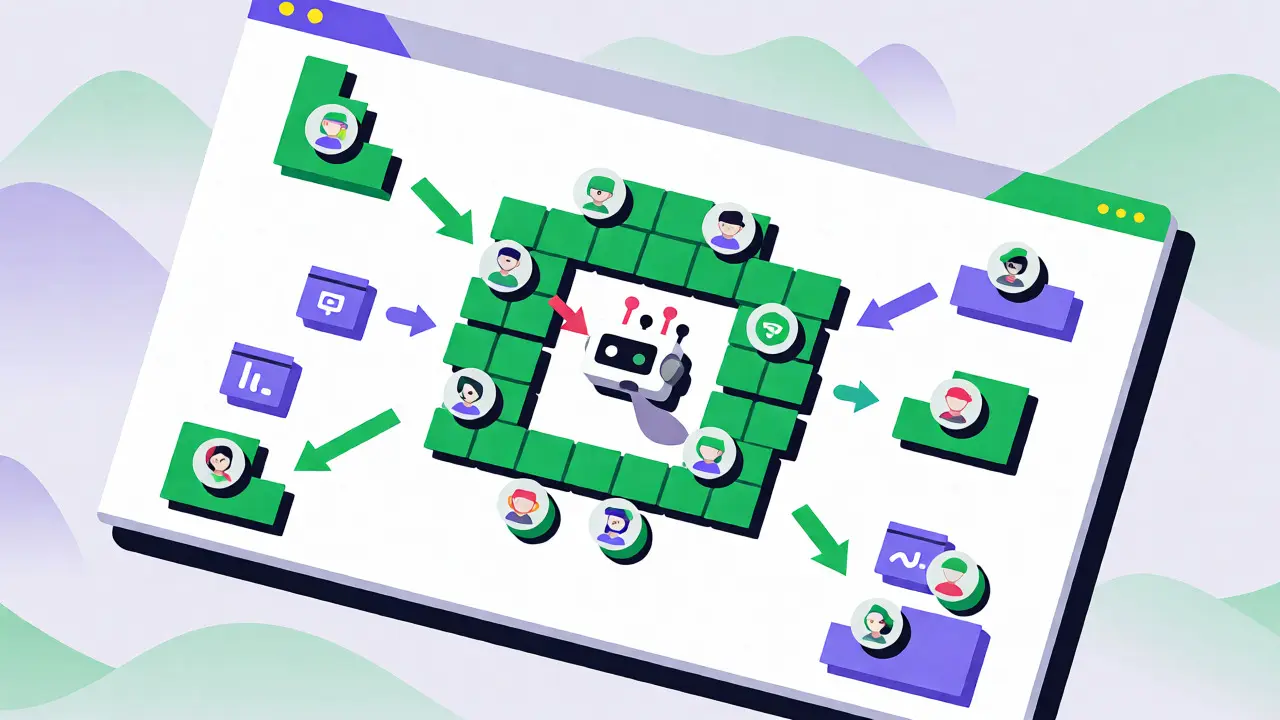
The core feature driving interest is its suite of airdrop tools. These aren't just for receiving tokens; they are designed for project owners to distribute tokens to their communities efficiently. Recently, TokenBot integrated with Farcaster, a decentralized social networking protocol. This move suggests the team is betting on the future of decentralized social media (DeSoc). By linking trading activity with social identity, they aim to create a more engaged user base. However, the minimal developer buy-in-reported as just 0.01 ETH initially-has raised eyebrows among analysts who worry about long-term commitment from the founding team.
Market Performance and Volatility Risks
Let’s talk numbers, because they matter when deciding whether to hold or fold. TokenBot has experienced significant turbulence. Data from late 2025 showed a 90-day price decline of over 40%, with short-term dips of 7-11% occurring frequently. This volatility is typical for smaller-cap altcoins, but the magnitude here is concerning. Analysts at Traders Union projected bearish trends, suggesting prices could drop further before stabilizing. Some forecasts even placed the token below $4 by the end of 2025, though longer-term predictions vary widely.
| Metric | Value/Data Point | Contextual Note |
|---|---|---|
| Current Price Range | $25 - $26 USD | Down from ATH of $193.11 |
| Market Cap | ~$26 Million | Niche player compared to Uniswap ($3.3B) |
| Circulating Supply | 588.94 Million TKB | Total Supply: 1 Billion |
| Trading Volume | ~$13.3 Million (24h) | Healthy liquidity relative to cap |
| Fee Structure | 1.2% Static | Competitive for no-code launchpads |
The disconnect between the modest market cap and the ambitious feature set creates a risky investment profile. While the trading volume suggests active interest, the lack of major institutional backing keeps it speculative. If you are watching CoinMarketCap alerts, be prepared for sharp swings. The upcoming token unlocks also play a role here; for example, a 5% supply unlock scheduled for late 2025 introduced selling pressure, which often depresses prices temporarily as new tokens hit the market.
How to Use TokenBot’s Airdrop Tools
Since there is no CoinMarketCap airdrop, you might wonder how to actually get involved. The process revolves around using the platform’s native tools. If you are a creator, you can set up a campaign to distribute tokens to early supporters. If you are a trader, you participate by engaging with these launches. The interface is designed for simplicity, aiming to let users manage distributions without deep technical knowledge.
- Connect Wallet: Link your Web3 wallet to the TokenBot platform.
- Select Project: Browse active token launches using the no-code launchpad.
- Engage: Participate in community tasks or trades to qualify for distributions.
- Distribute: Creators use the built-in tools to send tokens to eligible addresses.
This workflow is distinct from traditional exchange airdrops, which usually require completing simple social media tasks. TokenBot’s model ties rewards more closely to actual platform usage and trading activity. It is a merit-based approach, albeit one that requires more effort than clicking a button on a centralized exchange dashboard.

Comparing TokenBot to Competitors
TokenBot isn’t alone in the social trading space. It competes with platforms like ZORA and KERNEL DAO, both of which hold higher rankings on CoinMarketCap. ZORA, for instance, ranks significantly higher due to stronger brand recognition and broader adoption. TokenBot’s edge lies in its specific focus on combining trading APIs with social features, particularly through its Farcaster integration. However, this niche appeal comes at the cost of visibility.
When evaluating alternatives, consider the following:
- Liquidity: Established competitors often offer deeper order books, reducing slippage for large trades.
- Community Size: Larger networks mean more potential participants for airdrops and campaigns.
- Development Activity: Check GitHub repositories and update frequency. TokenBot’s updates have been sporadic compared to top-tier DeFi protocols.
If you are strictly looking for reliable airdrop opportunities, larger ecosystems might offer more consistent returns. TokenBot is better suited for those specifically interested in its unique social-trading hybrid model.
Final Verdict: Should You Care About the "Airdrop"?
The idea of a "TokenBot x CoinMarketCap airdrop" is largely a myth fueled by search engine confusion and wishful thinking. CoinMarketCap is a data provider, not a distributor. TokenBot does have airdrop capabilities, but they are internal tools for its users, not external marketing stunts. If you are holding TKB or CLANKER, your focus should be on the platform’s adoption rate and its ability to sustain development despite low initial investor commitment.
For now, treat TokenBot as a high-risk, high-reward play in the emerging DeSoc sector. Monitor the price action closely, keep an eye on token unlock schedules, and verify any news directly from official channels rather than relying on third-party aggregators for partnership announcements. The next time you see a headline about a "massive airdrop," pause and check the source. It might just be a tool update, not a windfall.
Is there an official TokenBot and CoinMarketCap airdrop?
No, there is no official collaborative airdrop between TokenBot and CoinMarketCap. CoinMarketCap serves as a price tracking platform for TokenBot's tokens (TKB/CLANKER), but does not host joint airdrop events.
Why is TokenBot listed as both TKB and CLANKER?
The project uses dual ticker symbols depending on the exchange. Binance lists it as CLANKER, while other platforms may use TKB. They represent the same underlying asset and ecosystem.
What are TokenBot's main features?
TokenBot is a web3 social API trading platform featuring a No-Code Token Launchpad, integrated airdrop tools for community distribution, and recent integrations with decentralized social protocols like Farcaster.
Is TokenBot a good investment in 2026?
It is considered high-risk. With a market cap around $26M and significant price volatility since its all-time high, it suits speculative investors interested in niche web3 social trading, not conservative holders.
How do I claim TokenBot airdrops?
Airdrops are typically distributed via the platform's internal tools to users who engage with specific token launches or community campaigns, rather than through a centralized exchange claim portal.
Leave a comments