It used to be simple. You downloaded an app like Binance or KuCoin, bought some Bitcoin, and called it a day. But if you are trading from India right now, that simplicity is gone. The landscape has shifted dramatically since the Financial Intelligence Unit-India (FIU) started enforcing strict registration rules. Many popular international platforms have been blocked, while domestic ones have surged in popularity. If you are wondering which apps are still safe to use and which ones will get your funds frozen, you need to understand the difference between being "banned" and being "non-compliant."
This isn't just about picking an app; it's about protecting your money. Using a non-compliant exchange in India means dealing with blocked bank transfers, missing tax reports, and zero legal recourse if things go wrong. By June 2026, the line is clear: if it’s not registered with the FIU, it’s risky business.
The Core Rule: Why FIU Registration Matters
To understand which exchanges are banned, you first need to know why they were banned. The key player here is the Financial Intelligence Unit-India (FIU-IND). This agency monitors financial transactions to prevent money laundering and terrorist financing. Under India’s Prevention of Money Laundering Act (PMLA), any entity acting as a Virtual Digital Asset (VDA) service provider must register with the FIU.
Think of the FIU registration as a license to operate legally within India’s financial system. Without it, an exchange cannot interact with Indian banks. Banks are strictly prohibited from processing payments for unregistered entities. So, when we say an exchange is "banned," it usually means one of two things:
- Website Blocking: The Ministry of Electronics and Information Technology (MeitY) has ordered internet service providers to block access to the exchange’s domain.
- Banking Freeze: Even if the website loads via a proxy, your INR deposits and withdrawals will fail because Indian banks have cut off ties with the platform.
This rule applies equally to global giants and local startups. There is no special exemption for big brands. If Binance doesn’t register, it gets blocked. If a small local app doesn’t register, it gets blocked. As of mid-2026, this compliance requirement is the single most important factor in choosing where to trade.
Which International Exchanges Are Blocked?
The crackdown on foreign platforms was swift and decisive starting in late 2023 and continuing through 2024 and 2025. Several major global exchanges lost their ability to serve Indian users directly. Here is the current status of the most well-known international names:
| Exchange Name | Status in India | Reason for Action |
|---|---|---|
| Binance | Blocked / Non-Compliant | Failed to complete FIU registration within the mandated timeframe; paid penalties but remains inaccessible via standard banking channels. |
| KuCoin | Blocked | No FIU registration; website domains blocked by MeitY. |
| Bybit | Restricted | Operates in grey areas but faces significant banking restrictions due to lack of full FIU compliance for retail Indian users. |
| Coinbase | Paused Services | Voluntarily paused new Indian user registrations while navigating regulatory complexities; existing users face withdrawal hurdles. |
| OKX | Blocked | Lacks FIU registration; payment gateways severed. |
Note that "blocked" doesn't always mean the website is technically down everywhere. Tech-savvy users might find ways to access these sites using VPNs or alternative domains. However, the real barrier is the money. You cannot deposit Rupees (INR) into these accounts through UPI, NEFT, or IMPS. Any attempt to do so risks having your bank account flagged or frozen by the Enforcement Directorate (ED).
Who Is Safe? The List of Compliant Domestic Exchanges
If international giants are off the table, where do Indian traders go? The answer lies in the domestic platforms that rushed to comply with FIU regulations. These exchanges are fully integrated with the Indian banking system and provide the necessary tax documentation.
As of 2026, the following platforms are considered safe and compliant for Indian residents:
- CoinDCX: One of the largest beneficiaries of the regulatory shift. They completed FIU registration early and saw massive user migration from Binance.
- Mudrex: Focuses on crypto mutual funds and simplified investing. Fully FIU compliant and popular among beginners.
- ZebPay: A veteran in the Indian space that successfully navigated the compliance requirements.
- Unocoin: Another established player that maintains active FIU registration.
- WazirX: After a period of uncertainty and leadership changes, WazirX has worked towards regaining compliance status, though users should verify its current FIU standing before large deposits.
- CoinSwitch Kuber: Acts as an aggregator but operates under compliant partner exchanges.
These platforms allow seamless INR deposits via UPI and offer automatic generation of transaction statements required for tax filing. They are your safest bet for long-term holding and regular trading.
The Hidden Risks of Using Banned Exchanges
You might be tempted to stick with a banned exchange like Binance because of its lower fees or wider range of altcoins. It feels familiar. But here is what happens behind the scenes when you ignore the ban.
1. Banking Blacklists Indian banks use sophisticated AI tools to detect crypto-related transactions. If you send money to a known non-compliant merchant code or an IP address associated with a banned exchange, your bank may flag your account. In severe cases, the Enforcement Directorate can freeze your entire savings account pending investigation for alleged money laundering. This is not a scare tactic; it has happened to hundreds of traders.
2. No Legal Recourse If a compliant exchange like CoinDCX hacks or freezes your account, you have a grievance redressal mechanism under Indian law. You can complain to the FIU or consumer courts. If Binance hacks your account, who do you call? The Indian police generally do not investigate fraud occurring on offshore, non-compliant platforms. You are on your own.
3. Tax Nightmares India imposes a flat 30% tax on crypto gains plus a 1% TDS (Tax Deducted at Source) on every transaction. Compliant exchanges deduct this TDS automatically and provide Form 26AS statements. Non-compliant exchanges do not. This means you have to manually track every single trade, calculate the gain, and file it yourself. Miss a detail, and the penalty can jump to 60% under Section 158BA(7) for undisclosed income.
How to Verify If an Exchange Is Legally Operating
Don't take my word for it. Don't even take the exchange's word for it. Here is how you can independently verify the status of any platform:
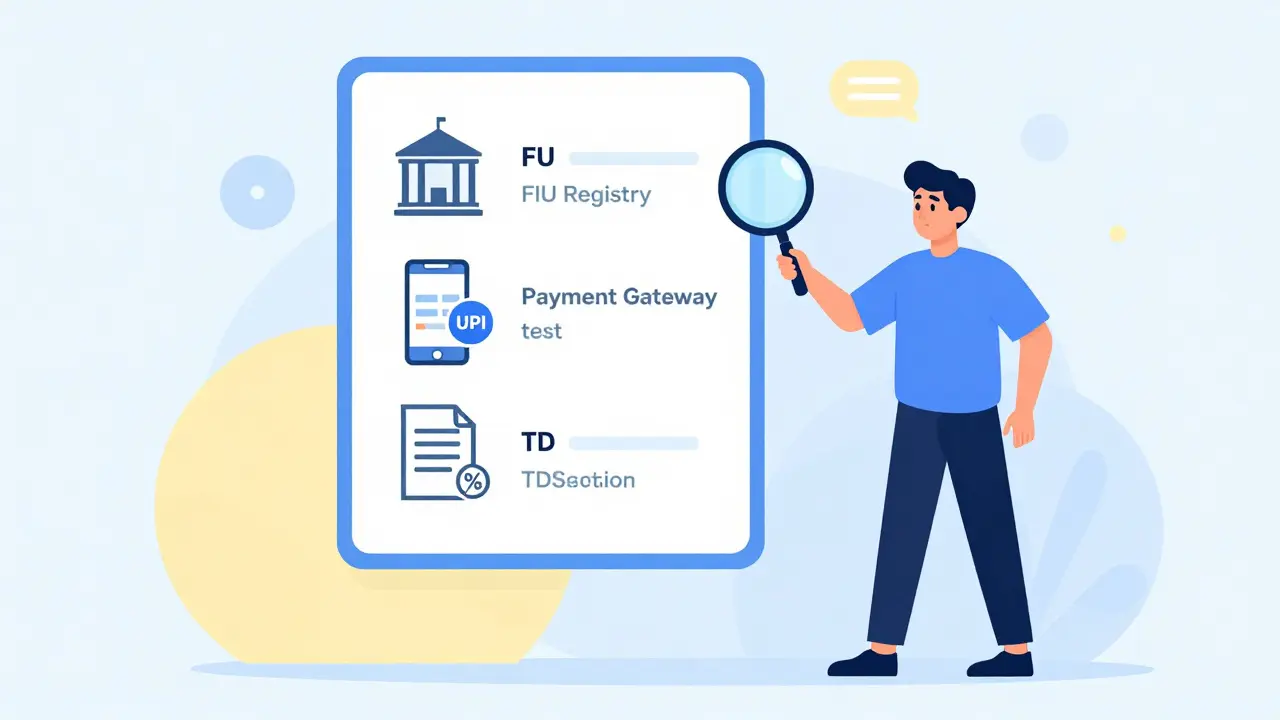
- Check the FIU Registry: Visit the official FIU-India website. They maintain a public list of registered VDA service providers. Search for the exchange name. If it’s not there, it’s illegal for them to accept your money.
- Test the Payment Gateway: Try to deposit a small amount (e.g., ₹100) via UPI. If the transaction fails repeatedly or the app asks you to send crypto to a personal wallet instead of using a corporate gateway, walk away.
- Look for TDS Deduction: Make a small trade. Check your transaction history. Does it show TDS deducted? If not, the exchange is likely operating outside the Indian tax framework.
- Review the Terms of Service: Compliant exchanges explicitly state their FIU registration number in their footer or legal pages. Non-compliant ones often hide this or use vague language about "global compliance."
What About Decentralized Exchanges (DEXs)?
A common question is: "Are decentralized exchanges like Uniswap or PancakeSwap banned?" The answer is nuanced. DEXs are protocols, not companies. They don't have a central server to block and don't hold your fiat currency. Therefore, you can technically access them via a web browser.
However, the risk shifts entirely to you. To use a DEX, you need a Web3 wallet (like MetaMask) funded with crypto. How do you get that crypto? If you buy it from a banned CEX (Centralized Exchange) or a peer-to-peer (P2P) seller who is using blacklisted bank accounts, you inherit their risk. Furthermore, the government is increasingly monitoring smart contract interactions. While DEXs aren't "banned" in the same way Binance is, using them without a paper trail makes tax reporting incredibly difficult and risky. For most Indian investors, sticking to FIU-compliant CEXs is the only pragmatic choice.
The Future: What Changes in 2026 and Beyond?
The regulatory environment is stabilizing, but it is getting stricter. The Finance Bill updates introduced in 2025 mandated that all registered exchanges must retain user data for up to six years. This means privacy advocates’ fears about data retention are becoming reality. Your trading history is safe from hackers, but it is also permanently visible to tax authorities.
We are also seeing the rise of "Crypto-as-a-Service" models where traditional financial institutions integrate compliant crypto trading into their existing apps. Expect to see more collaboration between banks and FIU-registered exchanges. The era of wild west trading is over. The future belongs to transparency, compliance, and integration with the formal economy.
Is cryptocurrency itself banned in India?
No, buying, selling, and holding cryptocurrency is not illegal in India. However, the method of doing so is heavily regulated. You must use FIU-registered exchanges to ensure your transactions are legal and your bank accounts remain safe.
Can I use Binance in India in 2026?
Technically, you might be able to access the website via a VPN, but you cannot legally deposit or withdraw INR. Using Binance exposes you to banking freezes and tax complications. It is strongly advised to switch to a compliant Indian exchange like CoinDCX or Mudrex.
What happens if I continue trading on a banned exchange?
You risk having your bank accounts frozen by the Enforcement Directorate for suspected money laundering. Additionally, you will have to manually calculate and pay your crypto taxes, facing high penalties if you make errors. You also lose legal protection in case of exchange hacks or fraud.
How much tax do I pay on crypto profits in India?
India charges a flat 30% tax on all crypto gains, regardless of your income slab. There are no deductions for losses incurred in other trades. Additionally, a 1% TDS is deducted on every transaction above a certain threshold. Failure to report these gains can lead to penalties of up to 60%.
Which Indian crypto exchanges are currently FIU compliant?
As of mid-2026, major compliant exchanges include CoinDCX, Mudrex, ZebPay, Unocoin, and CoinSwitch. Always verify the current status on the official FIU-India website before depositing funds, as regulations can change.
Will international exchanges like Coinbase return to India?
They can return, but only if they obtain FIU registration. Some global players are exploring this path, but it involves significant legal and operational changes. Until then, they remain restricted for Indian users seeking fiat on-ramps.
Suman Patil
21 06 26 / 07:53 AMbro this is exactly what we needed to read right now. i was so confused about the whole FIU thing and why my binance account was acting up. basically if its not on that list, dont touch it. simple as that. zebpay and unocoin are still solid for us locals who want to sleep at night without worrying about the ED knocking on our door. :)
Kumaran sowkarpet
22 06 26 / 01:37 AMyaar finally someone explained it clearly. i switched to coindcx last month after hearing all these rumors and its smooth sailing. no more upi failures or weird bank queries. just deposit trade and withdraw. peace of mind is worth the slightly higher fees compared to those offshore giants. keep spreading the word guys! :)
Josh Dodson
22 06 26 / 03:28 AMi mean its kinda scary how fast they moved on this. i thought we had more time to figure out the tax stuff. but yeah if ur bank freezes ur ac because of some random crypto tx then its over. better safe than sorry i guess. gonna check my forms real quick lol
sreeja boora
22 06 26 / 23:53 PMThe regulatory framework in India is designed to protect the financial sovereignty of the nation and ensure that capital flows are transparent and accountable. It is imperative for citizens to adhere to these guidelines strictly. The use of non-compliant platforms undermines the efforts of the Financial Intelligence Unit and poses a significant risk to the integrity of our banking system. We must prioritize national security and legal compliance over convenience or speculative gains. Those who choose to ignore these rules do so at their own peril and should not expect protection from state institutions.
Mauricio Contreras Loredo
24 06 26 / 22:52 PMoh wow look at you sreeja playing patriot again. yeah sure lets pretend every indian trader is trying to launder money for terrorists. most of us just wanted to buy some doge and hold it. but hey thanks for reminding me that my savings account is basically a target for the ed now. great way to start the day.
Grace Newman
26 06 26 / 20:09 PMI have been monitoring the digital currency space for years and I can tell you that this is merely the beginning of a much larger surveillance apparatus. The FIU registration is not about safety; it is about creating a permanent, immutable ledger of your financial behavior that will be accessible to various government agencies indefinitely. They claim it is for anti-money laundering, but we know that data retention laws are expanding rapidly. By using these compliant exchanges, you are voluntarily handing over your private financial history to a centralized authority that has no incentive to protect your privacy. The 'safe' alternatives are actually the most dangerous for your long-term anonymity.
Filbert Reeves
27 06 26 / 21:28 PMgrace is onto something here but she doesnt see the full picture yet. think about it. they block the big ones like binance because they cant control them. but the local ones? they are owned by people with connections. its all a setup. they want you on the grid so they can track every satoshi you move. i tried using a vpn to access kucoin and my isp flagged me immediately. its not an accident. its a honeypot. once you put your money in the indian system there is no getting it out without paying the 30% tax plus whatever extra fees they invent next year. its a trap for the little guy while the whales find ways around it. always have.
Sylvia Mossman
29 06 26 / 07:44 AMYou are all completely missing the point. The problem isn't the regulations, it's the incompetence of the Indian exchanges. CoinDCX crashes every time there is high volume. Mudrex has terrible spreads. You are telling people to switch to broken domestic platforms because the government said so? That is insane. Binance works fine if you know how to use P2P correctly. Sure, it's risky, but at least the platform doesn't freeze during a bull run. Stop being sheep and learn how to navigate the grey areas properly.
Fede Faith
30 06 26 / 08:36 AMSylvia, I understand your frustration with the technical issues, but advocating for continued use of banned platforms is genuinely harmful advice. The risk of having your bank account frozen is not theoretical; it is happening daily. I have seen friends lose access to their life savings because they insisted on using P2P channels linked to non-compliant entities. The inconvenience of a crashing app is temporary; a frozen bank account can take months to resolve. Please consider the severity of the consequences before encouraging others to engage in activities that violate banking protocols. There is a reason these exchanges are blocked, and it is not just bureaucratic red tape.
Greg Lewis
1 07 26 / 11:00 AMthe concept of ownership is fading anyway. when you trade on any exchange whether its binance or coindcx you are just holding an IOU. the only true freedom is self custody. but even then the network itself is monitored. so why bother with the hassle of p2p or dealing with indian banks? just hodl on cold storage and forget about it. let the regulators fight over the centralized platforms. they are chasing shadows while the real value moves off-chain. interesting times indeed.
pankaj chawla
1 07 26 / 20:05 PMGreg makes a valid point about self-custody but for the average retail investor in India that is not feasible. Most people need liquidity and easy on-ramps. The FIU compliant exchanges provide that bridge. While I agree that centralization is a risk, the immediate threat is regulatory action against individuals. Until the infrastructure for seamless, compliant self-custody exists, we have to work within the system. CoinSwitch and ZebPay are doing a decent job of balancing compliance with usability. Let's support them until they improve.
Sonya O'Brien
2 07 26 / 01:30 AMI have been following this situation closely since the initial announcements back in 2023, and it is quite fascinating to observe how the market has adapted. Initially, there was a lot of panic and confusion, with many users attempting to migrate their funds hastily, which led to significant slippage and losses. However, as the dust settled, the compliant exchanges emerged stronger, benefiting from the influx of users seeking stability and legal assurance. It is important to note that while the fees might be slightly higher on these domestic platforms, the cost of potential legal complications and the stress associated with banking freezes far outweighs the marginal savings offered by international exchanges. Furthermore, the tax transparency provided by these registered entities simplifies the annual filing process considerably, allowing investors to focus on their portfolio performance rather than navigating complex tax codes manually. Ultimately, the shift towards compliance represents a maturation of the cryptocurrency sector in India, aligning it more closely with global standards of financial regulation and consumer protection.
Eric Scheinberg
3 07 26 / 18:08 PMThe regulatory landscape requires strict adherence. Compliance is mandatory. Non-compliance results in penalties. Users must verify FIU status. This ensures systemic integrity.
Jessica Lane
5 07 26 / 18:07 PMThis is such a comprehensive breakdown and I really appreciate the clarity on the tax implications. As someone who is new to crypto investing in India, the idea of manually tracking every transaction and calculating gains sounds absolutely daunting. Knowing that platforms like Mudrex handle the TDS automatically gives me so much peace of mind. I was initially hesitant to move away from Binance due to habit, but reading about the banking freezes really opened my eyes. Could you elaborate more on how the data retention policies might affect individual privacy in the long term? I am curious about the balance between regulatory oversight and user confidentiality.
Nick Rice
7 07 26 / 01:16 AMJessica you are asking the right questions but you need to accept the reality. Privacy is dead in the crypto space for fiat-onramp users. If you want privacy go fully decentralized and never touch rupees again. But if you want to play in the regulated sandbox you give up your data. That is the trade-off. CoinDCX and others are just intermediaries feeding data to the government. Do not expect them to fight for your privacy. They are incentivized to cooperate. So yes your trading history is visible. Get used to it or get off the grid completely. There is no middle ground anymore.