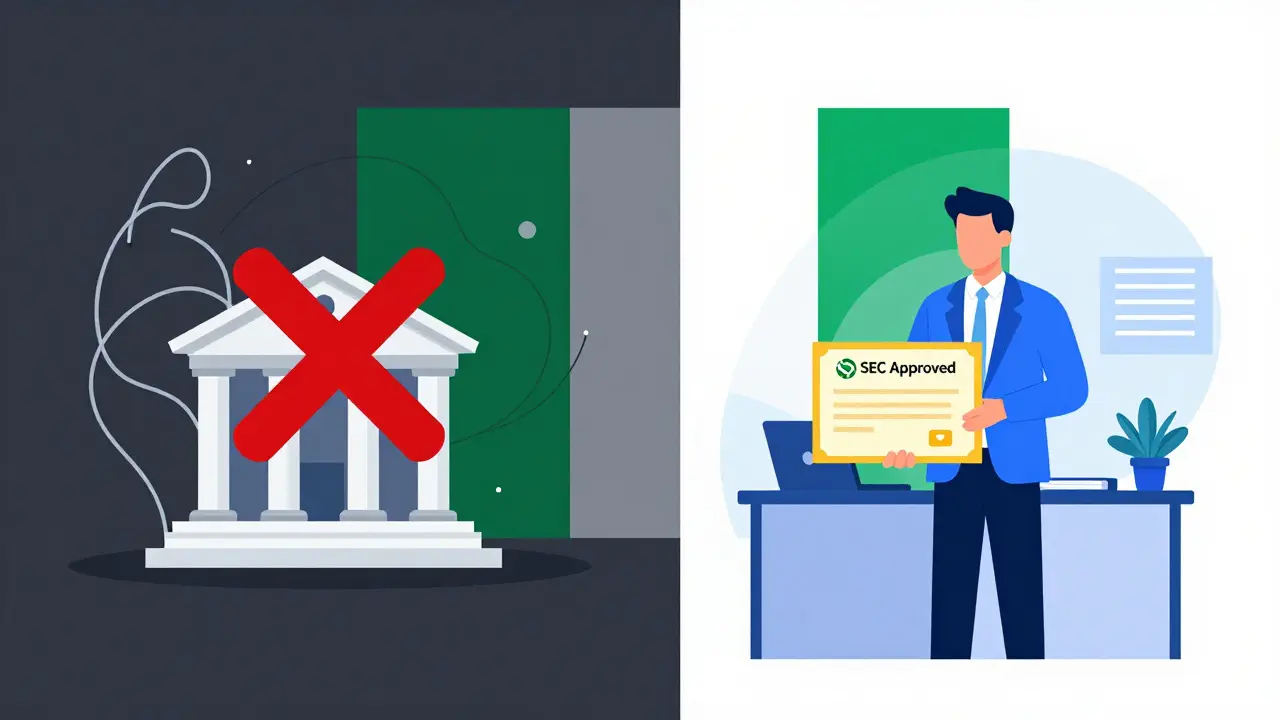
For years, the question of which crypto exchanges are banned in Nigeria was simple: all of them were effectively off-limits. But by mid-2026, that answer has shifted dramatically. If you are looking for a list of prohibited platforms to avoid legal trouble, you need to understand that Nigeria no longer maintains a blanket ban on cryptocurrency trading. Instead, the country operates under a strict licensing regime established by the Investments and Securities Act (ISA) 2025.
The reality is not about specific brand names being blacklisted globally; it is about whether an exchange holds a license from the Nigerian Securities and Exchange Commission (SEC). Unlicensed platforms face functional prohibition through domain blocking and banking restrictions, while licensed entities operate legally with full access to the financial system. This distinction is critical for anyone managing digital assets in West Africa's largest economy.
The Shift from Prohibition to Licensing
To understand why certain exchanges are inaccessible today, you have to look at how quickly the landscape changed. In 2021, the Central Bank of Nigeria (CBN) issued directives prohibiting banks from servicing crypto businesses. This created a de facto ban that forced users into risky peer-to-peer (P2P) markets. However, this stance reversed in late 2023 when the CBN lifted restrictions, allowing banks to service licensed crypto firms again.
The definitive change came in March 2025, when President Bola Ahmed Tinubu signed the Investments and Securities Act (ISA) 2025 into law. This legislation replaced the outdated 2007 framework and explicitly classified digital assets as securities. Under this new rule, any Virtual Asset Service Provider (VASP)-including exchanges-must register with the SEC to operate legally. The act does not ban cryptocurrencies; it bans unregulated intermediaries.
This shift aligns Nigeria with global standards for consumer protection and anti-money laundering (AML). The government recognized that banning crypto entirely failed to stop usage; between July 2024 and June 2025 alone, Nigeria received an estimated $92.1 billion in cryptocurrency value. Rather than fighting adoption, regulators chose to channel it through compliant, monitored channels.
Is Binance Banned in Nigeria?
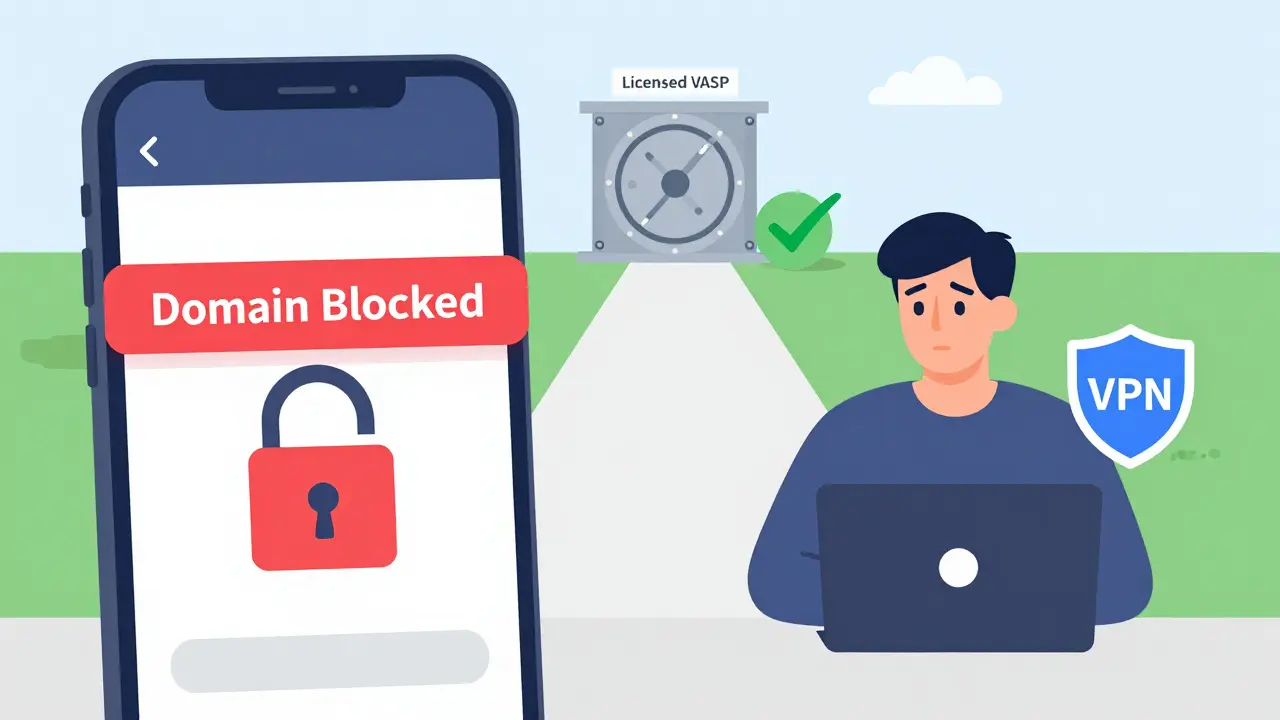
Binance is the most common name associated with restrictions in Nigeria, but calling it "banned" requires nuance. In February 2024, Binance suspended Naira trades on its P2P platform. Shortly after, local telecommunications providers blocked access to Binance’s domain and related websites. For the average user trying to buy Bitcoin with Naira directly through the app, Binance appears inaccessible.
However, this is a functional restriction, not a total prohibition. Nigerian users can still maintain Binance accounts and withdraw funds to external wallets if they already hold crypto. The platform continues to support crypto-to-crypto transactions. Users often bypass domain blocks using Virtual Private Networks (VPNs), though this operates in a regulatory gray area. The key takeaway is that Binance has not been granted a license to offer fiat-on-ramp services (converting Naira to crypto) within Nigeria. Therefore, while you cannot easily deposit Naira, you are not legally barred from holding assets on the platform if acquired through other means.
| Exchange | Licensing Status | Naira Trading | Domain Access |
|---|---|---|---|
| Binance | Unlicensed | Suspended (P2P only via workarounds) | Blocked by ISPs |
| Quidax | SEC Licensed | Active & Legal | Open |
| Busha | SEC Licensed | Active & Legal | Open |
| Coinbase | Unlicensed | Limited/No Direct Fiat Support | Generally Open |
Who Can You Legally Use? The Licensed List
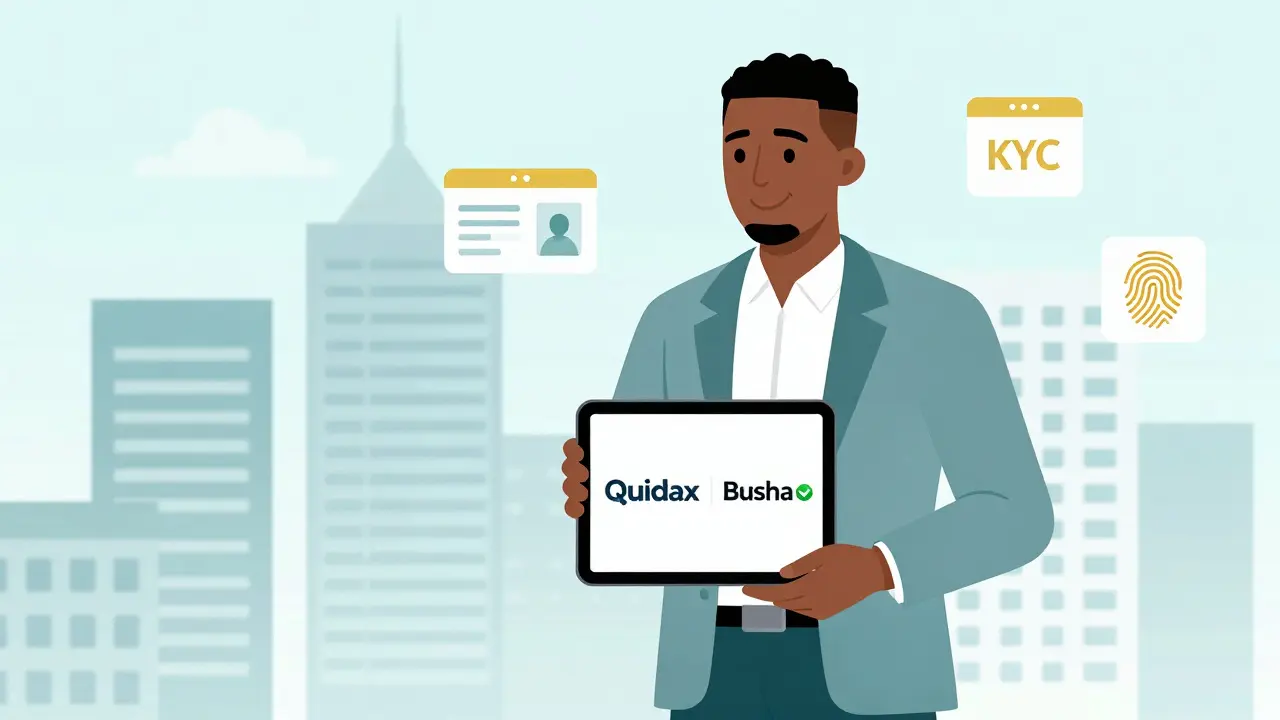
If you want to trade without fear of account freezes or legal penalties, you must use an exchange approved by the SEC. As of mid-2026, the primary licensed domestic platforms are Quidax and Busha. These platforms received early approvals in 2024 and serve as the models for compliance.
Using these licensed exchanges offers significant advantages. They implement robust Know Your Customer (KYC) procedures and Anti-Money Laundering (AML) checks required by the CBN. More importantly, they provide direct integration with Nigerian banks. You can deposit Naira via bank transfer or debit card and receive immediate confirmation. Dispute resolution mechanisms are also clearer because these platforms operate under the jurisdiction of Nigerian law.
The SEC continues to review applications from other domestic and international firms. The regulatory sandbox program allows innovative startups to test services under supervision, but full licensing remains a rigorous process involving technical audits and financial vetting. Until a platform appears on the official SEC registry of licensed VASPs, it should be considered unauthorized for fiat operations.
Risks of Using Unlicensed Platforms
Why do regulators block domains like Binance’s if users can just use a VPN? The answer lies in financial security and tax compliance. The Nigeria Tax Administration Act (NTAA) 2025, set to take effect in 2026, imposes strict reporting requirements on VASPs. Licensed exchanges must report transaction data to help combat fraud and ensure tax collection.
When you use an unlicensed platform, you fall outside this protective net. There is no recourse if the exchange collapses, suffers a hack, or refuses withdrawals. Furthermore, the NTAA introduces heavy penalties for non-compliance. Defaulting VASPs face initial fines of ₦10 million ($6,693) in the first month of violation, plus ₦1 million ($669) for each subsequent month. While these fines target the exchanges, the ripple effect includes frozen assets and limited customer support for users.
Another risk involves the Economic and Financial Crimes Commission (EFCC). Regulators have enhanced investigative tools, including access to telecommunications records, to track illicit flows. Using unlicensed channels for large transactions increases scrutiny. While personal investing is not illegal, facilitating money laundering or Ponzi schemes through unregulated apps is a serious criminal offense under the ISA 2025.
How to Verify an Exchange’s Status
With many international platforms marketing to Nigerian users, it is easy to get confused. Here is how to determine if an exchange is safe to use for Naira conversions:
- Check the SEC Registry: Visit the official website of the Nigerian Securities and Exchange Commission. They publish a list of licensed Investment Advisers and Dealing Agents. Look specifically for Virtual Asset Service Providers.
- Look for Local Banking Integration: If an exchange allows seamless Naira deposits via major Nigerian banks (GTBank, Zenith, UBA, etc.) without requiring third-party P2P agents, it is likely licensed.
- Review KYC Requirements: Licensed platforms enforce strict identity verification. If a site allows anonymous trading with high limits, it is almost certainly operating outside the law.
- Avoid Domain Block Workarounds: If you need a VPN to access the site, treat it as restricted. While not always illegal for individual users, it signals that the platform lacks regulatory standing.
Future Outlook: What Comes Next?
Nigeria’s approach represents a middle path between total prohibition and laissez-faire operation. By 2026, the market is stabilizing around this regulated model. Industry analysts predict more foreign exchanges will seek licenses to tap into the $92+ billion annual flow of crypto value. This competition could improve fees and user experience on licensed platforms like Quidax and Busha.
Regulators are also expected to issue clearer guidelines on Decentralized Finance (DeFi) protocols and stablecoins. Currently, these areas remain somewhat ambiguous. However, the core principle remains unchanged: if you interact with the Nigerian financial system (Naira), you must do so through a licensed intermediary. Personal holdings of crypto in private wallets remain legal, provided they were acquired through compliant channels or held before the current regulations took effect.
For investors, the message is clear. The era of wild west crypto trading in Nigeria is over. The barriers to entry for exchanges have risen, but the safety and legitimacy for users have improved significantly. Stick to the SEC-approved list, keep your records for tax purposes under the NTAA, and avoid the temptation of unverified offshore platforms that promise higher yields but carry existential risk.
Is it illegal to own cryptocurrency in Nigeria?
No, owning cryptocurrency is not illegal in Nigeria. The ban applies to unlicensed exchanges and banks servicing them without proper authorization. Individuals can hold digital assets in private wallets or on licensed platforms like Quidax and Busha.
Can I still use Binance in Nigeria?
You can technically access Binance using a VPN, but you cannot easily deposit or withdraw Naira through official channels. Binance suspended its P2P Naira trading in 2024. Using the platform carries risks regarding customer support and regulatory compliance, as it is not SEC-licensed for fiat operations in Nigeria.
Which crypto exchanges are licensed by the SEC in Nigeria?
As of 2026, the primary licensed exchanges include Quidax and Busha. These platforms have undergone SEC vetting and comply with AML/KYC regulations. Always check the latest SEC registry for updates, as new licenses may be issued.
What happens if I use an unlicensed exchange?
Using an unlicensed exchange exposes you to higher risks of fraud, lack of customer support, and potential asset freezing. Additionally, the Nigeria Tax Administration Act 2025 imposes strict reporting rules. Transactions on unlicensed platforms may not be protected under Nigerian consumer laws, and you may face difficulties proving ownership during disputes.
Will the crypto ban return in Nigeria?
It is unlikely that a total ban will return. The government has invested heavily in the regulatory framework (ISA 2025) to capture tax revenue and protect consumers. The focus is now on enforcement and licensing rather than prohibition, recognizing the massive volume of crypto activity in the country.
Leave a comments