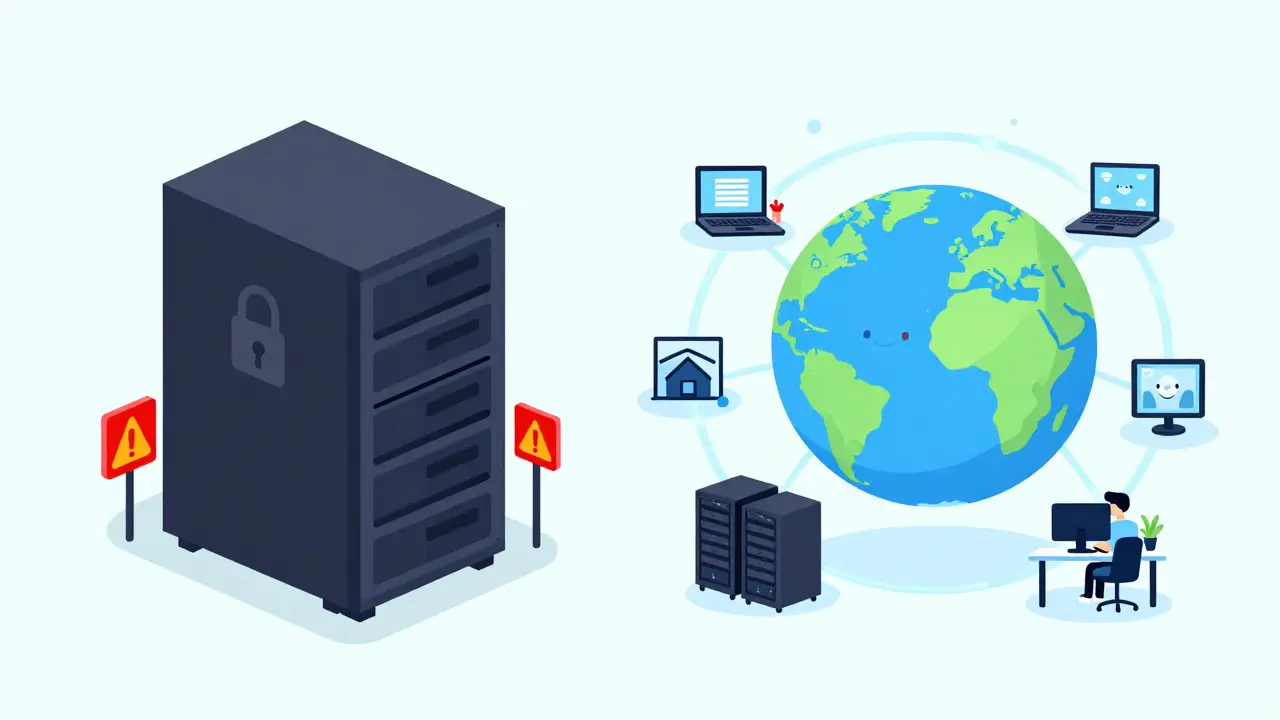
Imagine you have a secret document. Instead of locking it in one high-security vault owned by a bank, you shred it into tiny pieces, encrypt each piece with a unique code, and mail those pieces to ten different friends across the world. No single friend has the whole picture. If one friend loses their piece or moves away, you still have nine others. And only you hold the key to reassemble them.
That is exactly how decentralized storage works.
We are used to storing our photos, videos, and files on services like Google Drive, Dropbox, or Amazon S3. These are centralized systems. They rely on massive data centers owned by one company. If that company gets hacked, goes bankrupt, or decides to censor your content, your data is at risk. Decentralized storage flips this model on its head. It distributes your data across a global network of independent computers, making it nearly impossible to lose, hack, or censor.
How Does Decentralized Storage Actually Work?
To understand decentralized storage, we need to look under the hood. It isn't magic; it’s clever engineering combining cryptography and peer-to-peer networking.
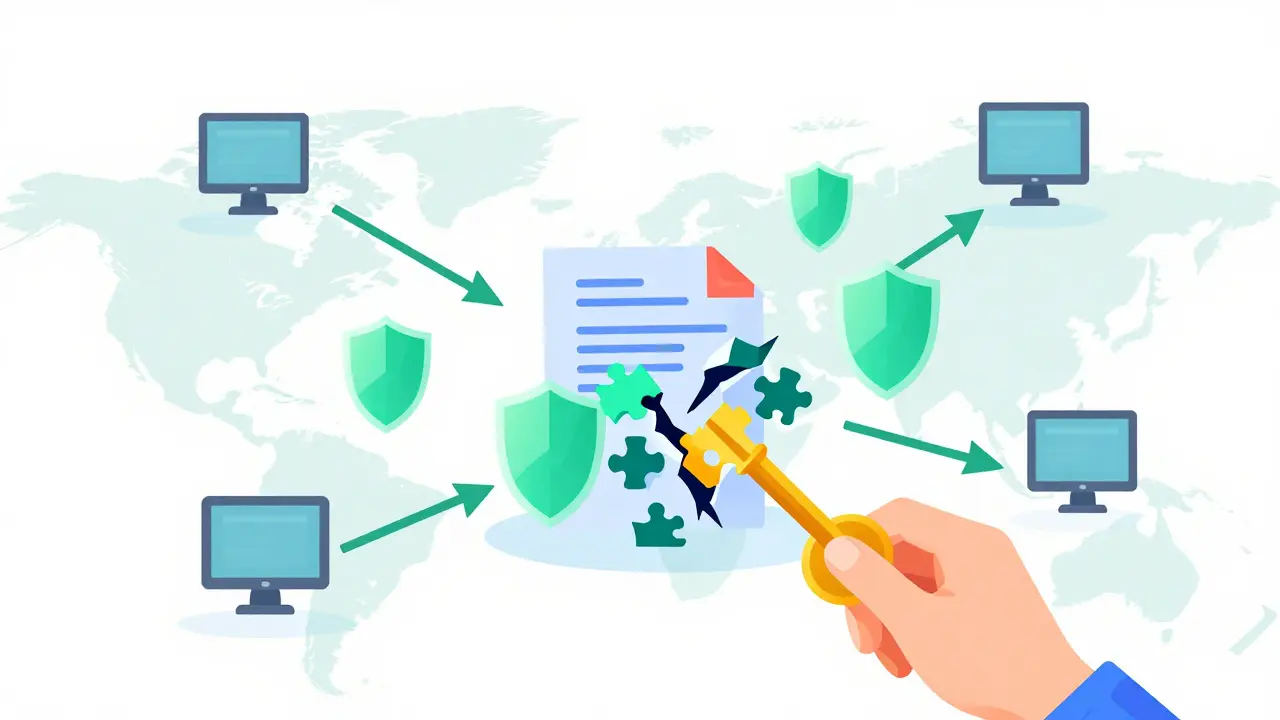
When you upload a file to a decentralized network, here is what happens:
- Fragmentation: The system breaks your file into smaller chunks, often called "shards."
- Encryption: Each shard is encrypted. This happens on your device before it ever leaves your computer. You keep the private decryption key. No one else-not even the people storing your data-can read it.
- Distribution: These encrypted shards are sent to different nodes (computers) around the world. These nodes might be servers in Germany, a laptop in Brazil, or a hard drive in New Zealand.
- Redundancy: To ensure safety, multiple copies of each shard are stored on different nodes. If one node goes offline, the network pulls the data from another copy.
- Retrieval: When you want your file back, the network gathers the necessary shards from various nodes and reassembles them. But remember: without your decryption key, they remain just scrambled bits of data.
This process eliminates the "single point of failure" problem. In traditional cloud storage, if the central server crashes, everyone loses access. In a decentralized network, thousands of nodes must fail simultaneously for your data to disappear.
The Role of Blockchain and Cryptocurrency
You might wonder: why does this involve blockchain? After all, blockchain is famous for cryptocurrencies like Bitcoin, not for storing cat videos.
Blockchain acts as the trust layer. In a decentralized network, you don’t know who owns the hard drives storing your data. How do you ensure they actually store it and don’t just delete it to save space? How do you pay them fairly?
This is where smart contracts and native tokens come in. Platforms use blockchain to create automatic agreements. When you pay to store data, the payment is held in escrow. The node providers prove they are storing the data correctly using cryptographic proofs. If they succeed, they get paid in cryptocurrency. If they fail, they don’t get paid, and the network replaces their service.
This creates a self-sustaining economy. People rent out their unused hard drive space to earn money, while users get cheap, secure storage. It turns idle hardware into a global utility.
Key Players in the Decentralized Storage Space
Several platforms have emerged to make this technology accessible. Here are the most prominent ones:
| Platform | Underlying Tech | Currency | Best For |
|---|---|---|---|
| Filecoin | Built on top of IPFS (InterPlanetary File System) | FIL | Long-term archival and enterprise-grade storage |
| Sia | Independent blockchain | Siacoin (SC) | Cost-effective bulk storage |
| Storj | Ethereum-based | STORJ | Secure backups and video streaming |
| Arweave | Endowment model (one-time fee) | AR | Permanent, immutable data storage |
IPFS deserves special mention. Launched between 2013-2015, it pioneered the concept of a peer-to-peer hypermedia protocol. While IPFS itself doesn’t have a built-in incentive layer (meaning it doesn’t automatically pay people to store data), it provides the foundational addressing system that many other projects, including Filecoin, build upon.
Decentralized vs. Centralized Storage: The Real Differences
Let’s break down why you might choose decentralized over the familiar centralized options like AWS or Google Cloud.
Security and Privacy: In centralized storage, the provider holds the keys. They can be subpoenaed by governments, hacked by criminals, or misused by insiders. With decentralized storage, your data is encrypted client-side. The providers only see gibberish. Even if a hacker breaches ten nodes, they only get fragments of encrypted data, which is useless without your key.
Censorship Resistance: Because no single entity controls the network, it is incredibly difficult to censor content. Governments or corporations cannot easily take down files because there is no central server to shut down. This makes decentralized storage vital for journalists, activists, and anyone concerned about free speech.
Cost: Centralized providers charge for profit margins, electricity, and physical infrastructure maintenance. Decentralized networks leverage existing, underutilized hardware. This competition among node providers often drives prices down significantly. For example, Sia has historically offered storage costs a fraction of what Amazon S3 charges.
Uptime: Centralized servers go down. Maintenance windows happen. Natural disasters affect data centers. Decentralized networks are resilient. As long as some nodes are online, your data is accessible. This redundancy ensures higher availability.
Who Should Use Decentralized Storage?
Is decentralized storage right for everyone? Not necessarily. It’s important to understand the trade-offs.
It is ideal for:
- Developers and Web3 Projects: Building dApps (decentralized applications) requires decentralized data layers to maintain the ethos of decentralization.
- Archivists and Researchers: Storing historical records, scientific data, or legal documents that must remain tamper-proof and accessible forever.
- Privacy Advocates: Individuals who want to ensure their personal data is never mined, sold, or accessed by third parties.
- Content Creators: Filmmakers and musicians who want to distribute raw footage or music without relying on a single platform that could ban them.
It might not be suitable for:
- High-Speed Real-Time Applications: Retrieving data from multiple global nodes can sometimes be slower than fetching it from a local centralized server. If you’re running a high-frequency trading platform, latency matters more than censorship resistance.
- Users Who Lose Keys Easily: In decentralized storage, there is no "forgot password" button. If you lose your encryption key, your data is gone forever. There is no customer support team to reset it.
- Simple Photo Backups for Non-Tech Users: If you just want to snap a photo and have it appear instantly on your phone and tablet, iCloud or Google Photos offers a smoother user experience today.

Real-World Examples and Use Cases
Let’s look at how this plays out in practice.
A law firm might archive sensitive client contracts on a blockchain-backed storage network. If a malicious actor tries to alter a contract later, the cryptographic hash-a unique digital fingerprint of the file-will change. The blockchain will immediately flag the mismatch, proving the document was tampered with.
A freelance developer in Wellington might lease out 500 gigabytes of unused hard drive space on Filecoin. They earn FIL tokens passively while contributing to the network’s infrastructure. Meanwhile, a filmmaker in Berlin stores raw 4K footage across the same network. Even if three nodes go offline during a storm, the network retrieves the data from other nodes, ensuring the project continues uninterrupted.
These examples show that decentralized storage isn’t just theoretical. It’s solving real problems for professionals who need reliability, security, and control.
Challenges and Limitations
Despite its benefits, decentralized storage faces hurdles.
Regulatory Uncertainty: Because it resists censorship, regulators in some countries view it with suspicion. Laws regarding data sovereignty (where data physically resides) are complex when data is scattered globally.
User Experience: Managing wallets, keys, and tokens adds friction. For the average consumer, clicking "Upload" on Dropbox is easier than interacting with a crypto wallet.
Data Permanence Risks: While redundant, data isn’t inherently permanent unless specifically designed to be (like on Arweave). If enough nodes stop hosting a file and no one pays to renew the storage contract, the data can become unavailable. This is known as "data churn."
The Future of Data Storage
We are standing at an inflection point. As cloud computing costs rise and privacy concerns grow, decentralized storage is moving from niche tech to mainstream consideration. Hybrid models are emerging, where companies use centralized storage for speed and decentralized storage for backup and archival.
As bandwidth improves and protocols mature, the gap in user experience will close. Eventually, you might not even know your data is decentralized-it will just work, securely and affordably, behind the scenes.
Is decentralized storage safer than cloud storage?
Yes, in terms of hacking and censorship. Decentralized storage uses end-to-end encryption and distributes data across many nodes, so there is no single target for hackers. However, it requires you to manage your own encryption keys. If you lose your key, you lose access permanently, whereas cloud providers often offer recovery options.
Can I use decentralized storage for my personal photos?
You can, but it may not be the most convenient option yet. Services like Storj and Filecoin are geared more towards developers and businesses. For casual users, the process of managing wallets and keys can be cumbersome compared to the seamless experience of Google Photos or iCloud.
How much does decentralized storage cost?
It is generally cheaper than traditional cloud storage. Prices vary by platform and demand, but services like Sia have offered rates significantly lower than Amazon S3. Costs are paid in cryptocurrency, so price fluctuations in crypto markets can affect the USD value of your storage fees.
What happens if a node goes offline?
Nothing bad happens to your data. Decentralized networks store multiple redundant copies of each data shard across different nodes. If one node fails, the network automatically retrieves the data from another copy. This redundancy ensures high availability and resilience.
Is decentralized storage anonymous?
It offers strong privacy, but not necessarily complete anonymity. Your data is encrypted, so providers can’t see what you’re storing. However, transactions on the blockchain are public. If you link your identity to your wallet address, someone could trace your activity. Using privacy-focused tools can enhance anonymity further.
Do I need to buy cryptocurrency to use these services?
Most direct platforms require you to pay with their native token (e.g., FIL for Filecoin, SC for Sia). However, some user-friendly interfaces allow you to pay with fiat currency (like USD) via credit card, converting it to the necessary token automatically in the background.
What is the difference between IPFS and Filecoin?
IPFS is a protocol for addressing and retrieving files in a distributed way. It doesn’t have a built-in incentive system. Filecoin is a marketplace built on top of IPFS that incentivizes people to store data by paying them with FIL tokens. Think of IPFS as the language and Filecoin as the economy that keeps the network running.
Can decentralized storage prevent data loss?
It significantly reduces the risk of data loss due to server failures or hacks. However, it does not protect against user error, such as deleting files or losing encryption keys. Additionally, if storage contracts are not renewed, data may eventually be removed from the network unless a permanent solution like Arweave is used.
Is decentralized storage legal?
How fast is decentralized storage compared to AWS?
Generally, decentralized storage is slower for reading and writing large files because data must be fetched from multiple geographic locations. Centralized clouds like AWS optimize for low latency. Decentralized storage is better suited for archival, backups, and static content where speed is less critical than security and cost.
Leave a comments