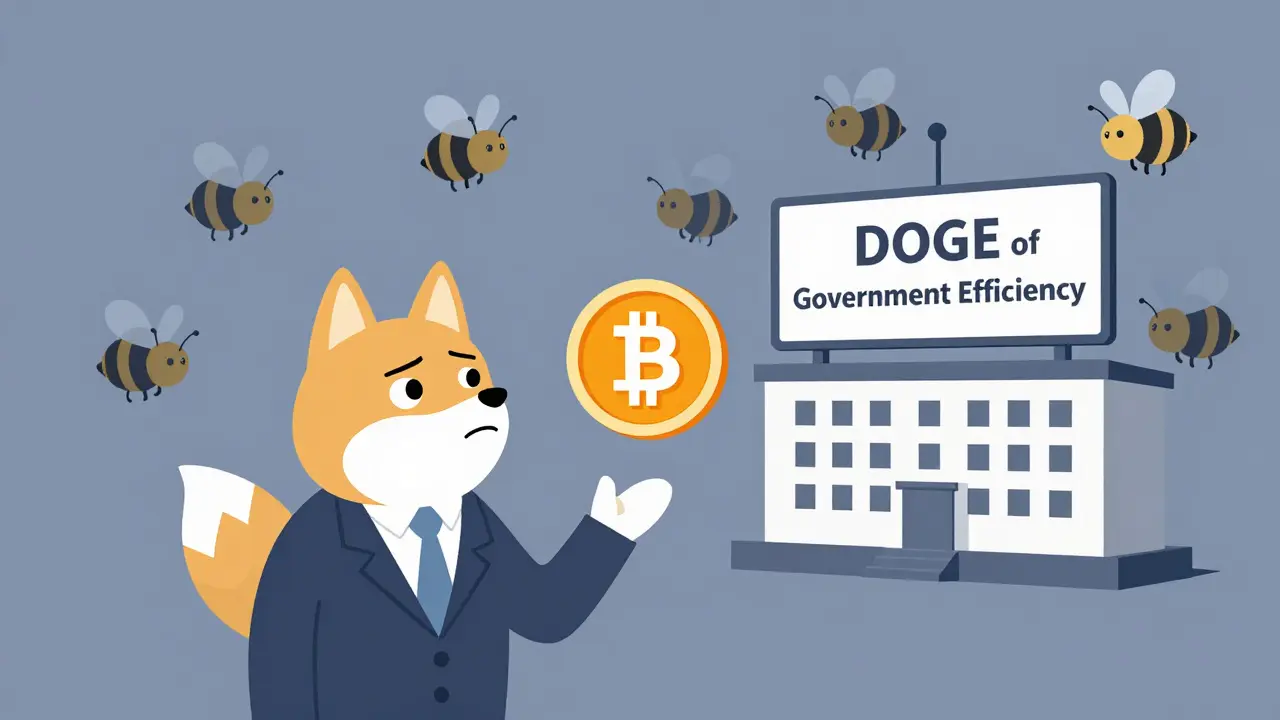
The DOGE token tied to dogegov.com isn't Dogecoin. It’s not Elon Musk’s meme coin. It’s not even officially connected to the U.S. government - despite what the name suggests. This is a real cryptocurrency with its own rules, risks, and confusing market data. If you’ve seen ads, tweets, or exchange listings for "Department Of Government Efficiency (DOGE)" and wondered if it’s legit, here’s what you need to know - no fluff, just facts.
What Exactly Is DOGE on dogegov.com?
The Department Of Government Efficiency (DOGE) is a cryptocurrency token launched in late 2025, built on the Ethereum blockchain. It uses the same ticker symbol - DOGE - as the popular Dogecoin, which has caused massive confusion. But unlike Dogecoin, this token has no official ties to the original Doge community or Elon Musk. Its website, dogegov.com, leans hard into the name of a real U.S. government initiative: the Department of Government Efficiency, created by executive order on January 20, 2025. That federal agency aims to cut waste in government IT and streamline bureaucracy. The crypto project is clearly trying to ride that name recognition - even though there’s no legal connection.Key Technical Features
This token was designed with specific rules meant to build trust - or at least appear trustworthy.- Zero transaction fees: Buying, selling, or transferring DOGE costs nothing. No taxes. No hidden charges.
- Renounced contract: The original developers gave up control of the smart contract. That means they can’t freeze wallets, change supply, or pull a rug pull. Once deployed, it’s immutable.
- LP tokens burned: Liquidity Provider tokens - which are usually locked to keep trading stable - were permanently removed from circulation. This signals the team isn’t planning to pull liquidity out later.
- Fixed supply: The maximum supply is capped at 1 billion DOGE. As of March 2026, 979 million are already in circulation. That leaves just 21 million tokens left to be released - if they ever are.
Market Data: Why Numbers Don’t Add Up
Here’s where things get messy. The DOGE token from dogegov.com doesn’t have one clean price. It has multiple listings - and they don’t match.| Platform | Price (USD) | 24h Volume | Market Cap | 24h Change |
|---|---|---|---|---|
| Bybit | $0.00217 | $420,000 | $2.12M | +1.93% |
| CoinMarketCap | $0.002196 | $801,537 | $2.15M | +1.50% |
| CoinGecko (Version A) | $0.002196 | $1.06M | $9.97M | -22.70% |
| CoinGecko (Version B) | $0.01099 | $89,698 | $10.75M | +20.60% |
| Binance | $0.00218 | $6,149 | $74.79M | +0.93% |
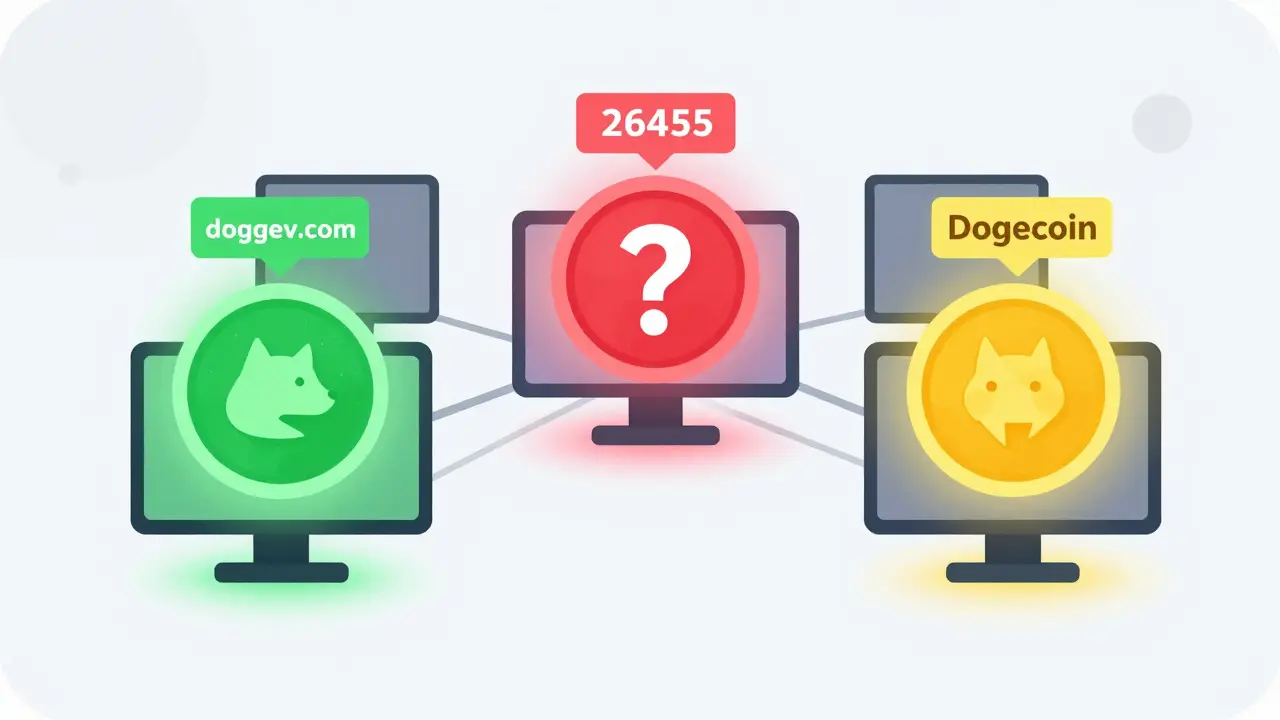
Notice the mismatch? Binance lists a $74.79 million market cap - more than 30 times higher than CoinMarketCap’s $2.15 million. CoinGecko shows two different versions of DOGE with wildly different prices. One trades at $0.002, another at $0.011. The trading volume jumps from $6K to over $1 million depending on the source.
This isn’t a glitch. It’s a red flag. There are likely two possibilities:
- There are multiple DOGE tokens with similar names on the blockchain, and tracking sites are mixing them up.
- One version is legitimate; others are clones or scams trying to piggyback on the name.
Even the fully diluted valuation (FDV) is confusing. CoinGecko reports an FDV of $9.97 million - which matches the current market cap - meaning all tokens are already out. But Binance’s FDV implies a much larger supply. If you’re trading this, you’re not just betting on price. You’re betting on which data source is right.
Why the Confusion With the U.S. Government?
On January 20, 2025, the U.S. government launched the Department of Government Efficiency (DOGE) to cut federal spending and modernize outdated tech systems. It’s real. It has a website. It has staff. It’s not crypto.The DOGE token from dogegov.com has no official connection. But the timing is suspicious. The token launched just weeks after the government’s announcement. The name, the acronym, the domain - it all feels like a deliberate attempt to confuse people into thinking this is a government-backed project.
That’s not illegal - but it’s misleading. The government hasn’t endorsed it. It hasn’t even acknowledged it. And if you’re holding this token thinking it’s tied to federal policy, you’re wrong. This is pure speculation, dressed up with political branding.
Is This Token Safe?
The technical design is clean: no fees, no control, no rug pull risk. That’s rare. But safety isn’t just about code. It’s about liquidity, trust, and clarity.- Pros: No fees, renounced contract, LP burned, no team can manipulate supply.
- Cons: Wildly inconsistent data, low trading volume on most platforms, unclear ownership, name confusion, and no active development team.
Most DOGE tokens with market caps under $10 million have little to no community or development activity. This one doesn’t have a GitHub repo, no roadmap, no Discord with active devs. It’s just a token with a name and a website. That’s not enough.
Also, trading volume is shrinking on some platforms. One CoinGecko listing showed a 22.7% drop in volume in 24 hours. That’s a sign of fading interest. If nobody’s trading it, you won’t be able to sell when you want to.

Should You Buy DOGE from dogegov.com?
If you’re looking for a serious investment, the answer is no.This token doesn’t offer utility. It doesn’t have a product. It doesn’t have a team. It’s a name, a domain, and a token contract. The fact that it trades on Binance and Bybit makes it look legit - but those exchanges list hundreds of low-volume tokens with no due diligence. Listing doesn’t mean approval.
If you’re a high-risk trader and you’re okay with gambling on confusion - then maybe. The 24-hour price swings on some platforms go over 20%. That’s not investing. That’s roulette.
And remember: if the U.S. government ever decides to take legal action over the name "DOGE," this token could vanish overnight. No warning. No refund.
What’s Next?
The DOGE token from dogegov.com is a product of timing, not technology. It’s a gamble on name recognition, not innovation. It’s not the future of finance. It’s a footnote in crypto history - unless someone decides to turn it into something real.For now, treat it like a meme. Not an asset. Not a project. Just a coin with a catchy name and a lot of conflicting data.
Is Department Of Government Efficiency (DOGE) the same as Dogecoin?
No. Dogecoin (DOGE) is the original meme coin created in 2013 with a community of millions. Department Of Government Efficiency (DOGE) is a separate token launched in 2025 that uses the same ticker and a similar name to confuse people. They have different blockchains, supply, and development teams.
Is DOGE from dogegov.com backed by the U.S. government?
No. The U.S. government created a real Department of Government Efficiency in January 2025 to improve federal efficiency - but it has nothing to do with cryptocurrency. The DOGE token is an unofficial project that borrowed the name for marketing. There is no legal or financial connection.
Why are there so many different prices for DOGE?
There are likely multiple DOGE tokens on the blockchain with similar names. Tracking sites like CoinGecko and CoinMarketCap sometimes mislabel them, leading to conflicting prices. One listing might be the real dogegov.com token, while others are clones or scams. Always check the contract address before trading.
Can I trust the 0% tax and renounced contract?
Technically, yes - those features reduce the risk of scams like rug pulls. But they don’t guarantee value. Many legitimate tokens have these features and still go to zero. The lack of a development team or roadmap means there’s no one building future utility. The code is safe, but the project isn’t.
Where can I buy DOGE from dogegov.com?
It’s listed on Binance, Bybit, and a few smaller exchanges. But trading volume is low and inconsistent. Always verify the contract address (0x8f...7a9c) before trading. Don’t trust any exchange listing without checking the token’s official site and blockchain explorer.
What’s the risk of holding DOGE from dogegov.com?
High. The biggest risks are: 1) Confusion with the real government agency, which could lead to legal action; 2) Low liquidity - you might not be able to sell when you want to; 3) Data inconsistency - you won’t know if your price is accurate; and 4) No development - there’s no plan to grow or improve the project.
Henrique Lyma
14 03 26 / 11:40 AMThe entire DOGE token thing is just another crypto clown show. Zero fees? Renounced contract? Please. That’s like saying a used car salesman is trustworthy because he didn’t steal the steering wheel. The branding is a cynical play on government buzzwords - exploiting public trust in bureaucracy while having zero legal grounding. And don’t get me started on the market data chaos - Binance listing it at $74M while CoinGecko says $10M? Either the data’s poisoned or someone’s laundering liquidity through shell wallets. Either way, this isn’t a token - it’s a phishing page with a blockchain.
Anastasia Thyroff
15 03 26 / 16:07 PMOMG this is wild 🤯 I just saw a tweet from someone saying they bought DOGE because they thought it was government-backed and now they’re crying in a Discord voice channel. Like… how do you not read the first sentence? The name is DOGE. Not DOGEgov. Not DOGE.gov. Just DOGE. And yet people are treating it like a Treasury bond. The delusion here is more dangerous than the rug pull.
Christopher Hoar
16 03 26 / 06:25 AMlol the fact that coinmarketcap even lists this is a joke. they dont vet anything anymore. just throw any ticker with a .com domain on there and call it a day. i saw this on binance and thought it was a glitch. turned out it was real. the devs are probably just some guy in a basement using his cousin’s ethereum node. no roadmap no team no discord. just a contract and a website that looks like a 2017 wordpress template. if you’re holding this you’re not investing you’re just donating to a meme.
Sarah Zakareckis
18 03 26 / 03:28 AMLet’s reframe this: the technical specs are actually impressive - renounced contract, burned LP, fixed supply. That’s not something you see every day in a low-cap token. The problem isn’t the code. It’s the narrative. This project didn’t build utility. It built confusion. And confusion doesn’t create value - it creates arbitrage opportunities for whales. If the team ever decided to add a real use case - say, a gov API connector or a transparency dashboard - this could pivot. But as it stands? It’s a ghost town with a nice contract.
Robert Kunze
18 03 26 / 07:44 AMi dont know why people are so mad about the name. its not illegal. its not even unethical. people use similar names all the time. look at all the apple clones on the android store. the real issue is the price discrepancies. how can coingecko have two different listings? that’s a data problem not a scam problem. maybe the token got forked. maybe there’s a version 2.0. maybe the community split. instead of screaming scam, someone should audit the contracts. the real risk is not the name - its not knowing which version you’re buying.
Katrina Smith
19 03 26 / 22:23 PMso the government created a department called DOGE… and now this coin is called DOGE… and people are mad? i mean… congrats on inventing the internet. this is crypto 101. name squatting. brand hijacking. if you cant handle a meme coin using a government acronym then maybe you should go back to buying treasury bonds. also… who cares if the market cap is inconsistent? every coin has fake volume. even btc has bots. this is just the next phase.
Heather James
20 03 26 / 13:42 PMJust a token. No team. No roadmap. No future. Just a name borrowed from a real agency and a contract that won’t cheat you. That’s it. No need to overthink it. It’s not a scam. It’s not an investment. It’s a digital doodle with a ticker symbol. Trade it if you want. Just don’t call it finance.
George Hutchings
21 03 26 / 05:10 AMIt’s funny how people panic about the name but ignore the real red flag: zero development activity. No GitHub. No blog. No Twitter updates since launch. If you’re building something revolutionary, you don’t disappear after deploying the contract. You engage. You iterate. You explain. This? This is a one-time stunt. A grab for attention. A flash in the pan. And that’s okay - if you’re not looking for returns. Just don’t pretend it’s anything else.
Sahithi Reddy
21 03 26 / 09:32 AMWhy is everyone so focused on the government connection? The real story is the liquidity burn. That’s rare. That’s bold. That’s a signal. Even if the branding is sketchy, the mechanics are clean. If you’re going to call it a scam, you have to explain why the team would burn LP and renounce ownership just to vanish. That doesn’t make sense. Maybe they’re waiting. Maybe they’re anonymous. But they didn’t steal. They left the door open. That’s more than most.
shreya gupta
21 03 26 / 16:12 PMIt is deeply concerning that this token is being traded on regulated exchanges without clear disclaimers. The U.S. government has a public entity with the same acronym. This is not merely a coincidence - it is a deliberate act of market manipulation. Financial regulators must intervene. Investors are being misled. This is not a meme. This is a violation of consumer protection norms. The lack of official clarification from the Department of Government Efficiency is negligent. This must be addressed immediately.
Tony Weaver
22 03 26 / 20:19 PMThe market cap inconsistencies alone should disqualify this from any serious consideration. CoinGecko listing two versions with a 5x price difference? That’s not a bug - that’s a feature of a poorly indexed token. And Binance’s $74M market cap? That’s mathematically impossible given the circulating supply. Either they’re using a different token entirely, or they’re inflating volume with wash trading. Either way, this isn’t a crypto project - it’s a data integrity failure masquerading as an asset. If you’re holding this, you’re not investing - you’re playing roulette with a loaded die.
anshika garg
24 03 26 / 20:02 PMI think we’re missing the philosophical angle. This token is a mirror. It reflects our collective hunger for meaning - even in chaos. We want to believe that something called "Department of Government Efficiency" could be real. That someone, somewhere, is fixing the system. So we latch onto a token with a name that sounds official. It’s not about the code. It’s about the longing. The fact that people are confused? That’s the art. The confusion is the message. Maybe this isn’t a scam. Maybe it’s a performance piece.
Marie Vernon
26 03 26 / 01:42 AMCan we just agree that naming something after a government agency is a bad idea? Like… even if it’s legal, it’s just… rude? It’s like naming your kid "FBI" and then acting surprised when people get weird. The token’s features are fine - but the name? It’s a liability. The moment the government says "we’re not affiliated," this thing loses 90% of its value. And they will. They always do. This isn’t innovation. It’s a social experiment in how far you can push naming conventions before the backlash hits.
Anastasia Danavath
27 03 26 / 14:31 PMjust bought 10k DOGE 💸🔥 if the gov ever takes it down i’ll be sad but at least i had fun. also the 24h swing was +20% so i’m already 2x. who needs a roadmap when you got vibes? 🤷♀️
Sarah Hammon
28 03 26 / 17:08 PMHey everyone - I checked the contract address on Etherscan. The DOGE from dogegov.com is indeed the one with the renounced contract and burned LP. The other listings? They’re clones. One has a different supply. One has a hidden mint function. One even has a transfer tax. So if you’re trading this, always check the address: 0x8f...7a9c. That’s the real one. The rest? Scams. Don’t let the price confusion fool you. The real token is clean. It’s just… lonely. No dev team. No community. Just code. And that’s okay - if you know what you’re holding.
iam jacob
28 03 26 / 22:37 PMi just want to say… i’m so tired. i’ve been holding this for 6 months. i thought it was going to be the next big thing. now i see it’s just… nothing. no one talks about it. no one cares. i check the price every day hoping it’ll go up. it never does. i feel like i’m holding a ghost. and i don’t even know why i still have it. i just… can’t sell. i think i’m addicted. someone help me.
Jerry Panson
30 03 26 / 10:26 AMWhile the technical architecture of this token demonstrates commendable transparency, the operational ambiguity surrounding its nomenclature constitutes a material risk to market integrity. The conflation of a publicly recognized governmental entity with an unregulated digital asset introduces systemic confusion. Regulatory bodies must issue a formal clarification. Absent such action, this instrument cannot be considered a viable asset class. Furthermore, the discrepancies in market data across platforms suggest a failure of indexing protocols - a failure that may constitute negligence on the part of the data aggregators.
Ross McLeod
31 03 26 / 00:52 AMLet’s be brutally honest - this token is a graveyard of potential. The features are beautiful, yes. Renounced contract? Burned LP? Zero fees? That’s the kind of design you’d expect from a team with vision. But vision without execution is just a dream. And this project has no execution. No team. No roadmap. No community. No whitepaper. No Twitter. No Discord. Just a website that looks like it was built by someone who Googled "how to make a crypto site in 2014". The code is clean. The project is dead. And that’s the saddest part. Not the scam. Not the confusion. The silence.
Steph Andrews
1 04 26 / 16:36 PMI’m from the U.S. and I’ve been following the real DOGE agency since January. I work in public tech. I can tell you - they’re not involved. But honestly? I kinda love that someone made this coin. It’s like a weird, beautiful protest. A joke that got real. A meme that got a contract. Maybe it’s stupid. Maybe it’s dangerous. But it’s also… kind of poetic. A government trying to fix bureaucracy… and someone out there made a coin called DOGE just to say "you’re doing it wrong." I don’t hold it. But I respect it.
Graham Smith
3 04 26 / 14:30 PMLet’s cut through the noise. This isn’t about crypto. This is about information asymmetry. The fact that CoinGecko has two listings with wildly different metrics isn’t a technical error - it’s a market manipulation vector. Someone is front-running the data feeds. Pumping one version, dumping another. The token’s features are irrelevant. The real vulnerability is in the aggregation layer. This isn’t a coin. It’s a data poisoning experiment. And the exchanges? They’re just the unwitting stage.