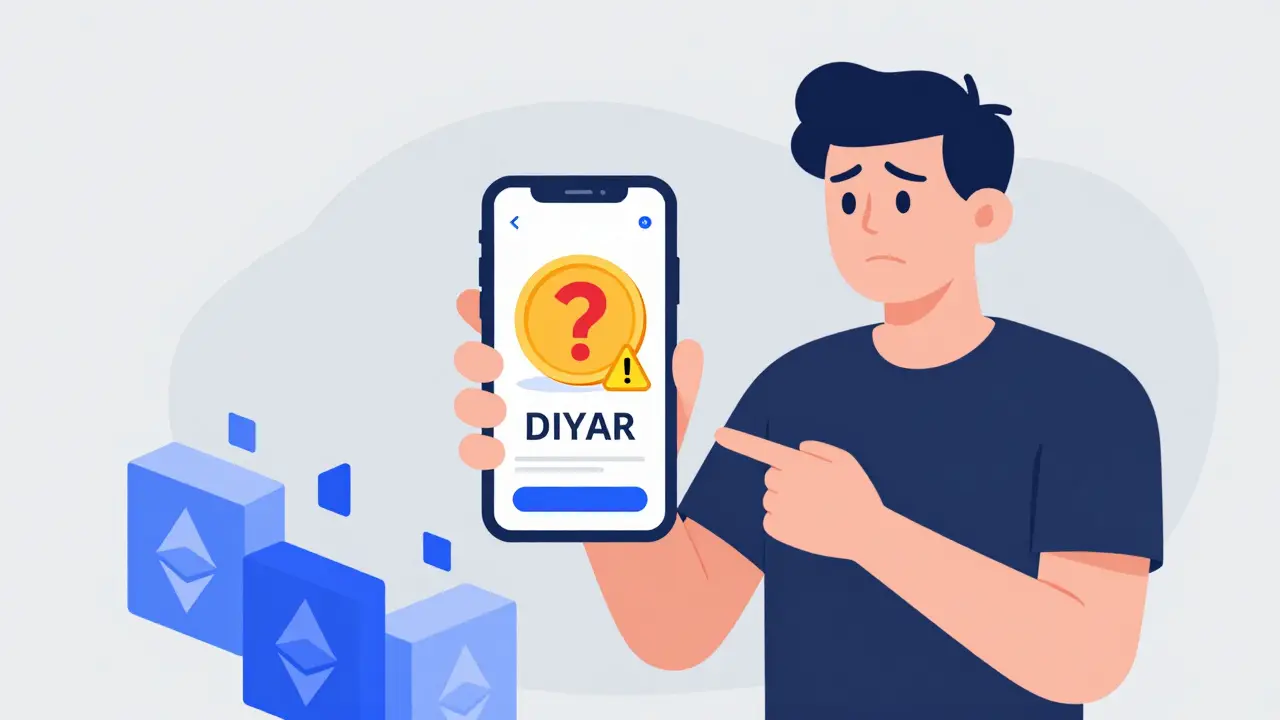
Buying a crypto coin because you support a local football team sounds like a great idea on paper. You get to back your club, maybe vote on some decisions, and hopefully watch the value go up. But when it comes to Diyarbekirspor Token (DIYAR), the reality is much more complicated. If you are looking at this token right now, you probably noticed something strange: the price exists, but the circulating supply says zero. That is not a glitch in your browser. It is a major red flag that every investor needs to understand before sending any money.
This article breaks down exactly what DIYAR is, who created it, why the data looks so contradictory, and whether it is safe to buy. We will look past the marketing hype and focus on the hard numbers from November 2025 through June 2026. By the end, you will know if this token is a legitimate investment or a digital ghost town.
What Exactly Is Diyarbekirspor Token?
Diyarbekirspor Token is a cryptocurrency fan token launched in 2021 by Diyarbekirspor Football Club, a professional team based in Diyarbakır, Turkey. Also known as DIYAR, it was created to help fans engage with the club. The idea behind fan tokens is simple: supporters buy the token to unlock perks like exclusive gifts, direct communication channels with the team, and sometimes voting rights on minor club decisions.
The token runs on the Ethereum blockchain. This means it uses the same underlying technology as thousands of other cryptocurrencies. However, unlike major projects that publish detailed technical documentation, smart contract audits, or API guides for developers, DIYAR’s technical footprint is incredibly thin. The primary source of information is a whitepaper version 2.0 published by Bitexen Club, the Turkish exchange platform that issued the token. There is no public GitHub repository with active code commits since January 2023, which suggests development has stalled or stopped entirely.
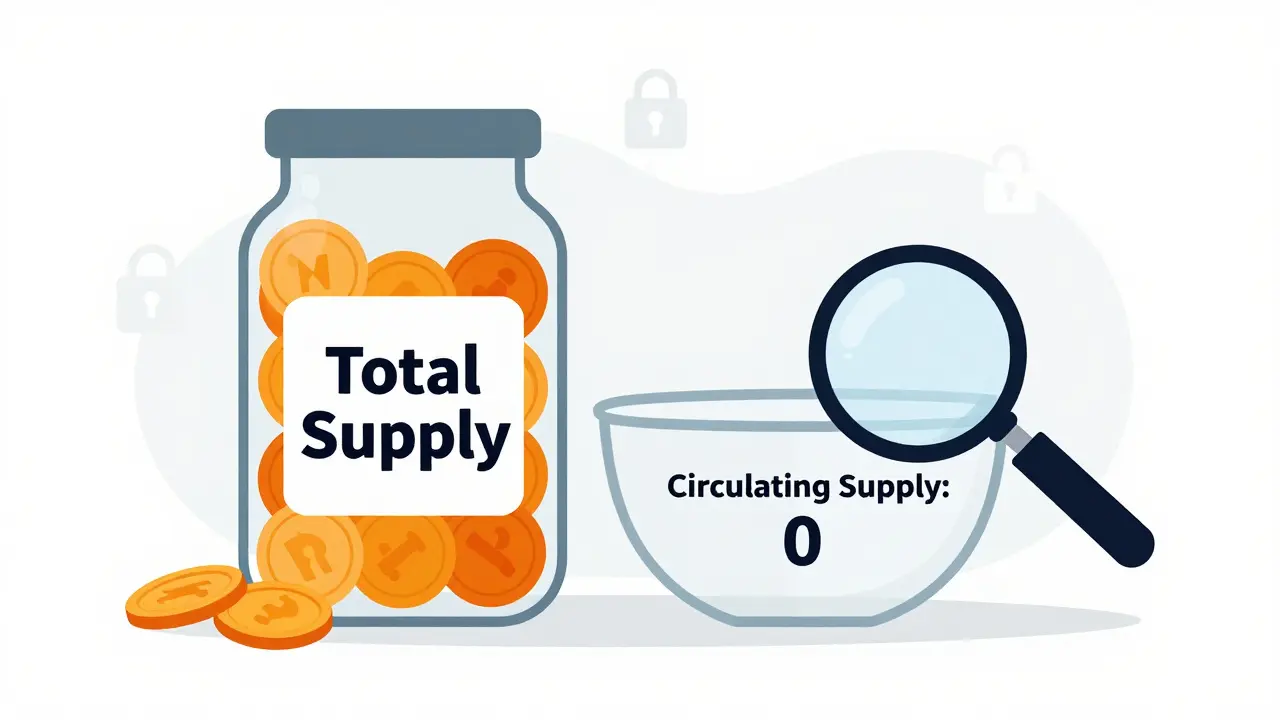
The Supply Paradox: Why Does Circulating Supply Say Zero?
Here is where things get weird. According to data from major tracking platforms like Coinbase and Bitget, the total supply of DIYAR is capped at 1,000,000 tokens. About 599,749 of those were minted. So, where are they? Market data from late 2025 consistently reports a circulating supply of 0.
In crypto terms, "circulating supply" refers to the number of tokens currently available for trading by the public. If this number is zero, it implies that all tokens are locked, held by the creators, or simply do not exist in liquid wallets. Yet, paradoxically, trading volume reports show small amounts of activity-around $21,000 to $23,000 in a single day. How can you trade something that supposedly isn’t circulating? This contradiction often points to one of two scenarios:
- Data Reporting Errors: The exchanges listing the token may be pulling incorrect data from the blockchain, showing phantom volume.
- Liquidity Manipulation: The token might be trapped in a private liquidity pool controlled by the issuer, making real buying and selling nearly impossible for average users.
For an investor, this lack of transparency is dangerous. You cannot accurately calculate market capitalization or assess demand if the basic supply metrics don’t make sense. When Coinbase lists a token with zero circulating supply but still shows a price, it is usually a sign that the asset is illiquid and highly risky.
Price Performance and Market Reality
Let’s look at the numbers. As of November 2025, DIYAR was trading between $0.0195 and $0.023 depending on the exchange. This price is roughly 67% below its all-time high of $0.0588. While a drop in price is normal in crypto, the context matters. The token holds a market rank of #4,724. To put that in perspective, there are tens of thousands of cryptocurrencies. Being ranked that low means DIYAR has virtually no global recognition.
Compare this to established fan tokens. FC Barcelona’s BAR token trades with millions of dollars in daily volume. Paris Saint-Germain’s PSG token does the same. These tokens have active communities, clear utility, and deep liquidity. DIYAR, by contrast, sees less than $25,000 in daily volume. That is not enough volume to support serious trading. If you try to sell a large amount of DIYAR, you could crash the price instantly because there aren’t enough buyers waiting on the other side.
| Feature | Diyarbekirspor (DIYAR) | FC Barcelona (BAR) | Paris Saint-Germain (PSG) |
|---|---|---|---|
| Market Rank | #4,724 | Top 50 | Top 50 |
| Daily Volume | ~$22,000 | ~$1.2 Million | ~$2.8 Million |
| Circulating Supply Clarity | Reported as 0 (Conflicting) | Clear & Transparent | Clear & Transparent |
| Utility | Basic engagement/gifts | Voting, merch, experiences | Voting, merch, experiences |
| Exchange Availability | Limited (Bitexen, indirect swaps) | Major Global Exchanges | Major Global Exchanges |
Who Created DIYAR and Is It Legitimate?
The token was issued by Bitexen Club, a Turkish cryptocurrency exchange. Bitexen claims to be registered under Turkey’s Banking Regulation and Supervision Agency (BDDK) regulations. This registration is a good sign regarding legal compliance within Turkey, but it does not guarantee the success or safety of the specific token they issue.
However, legitimacy goes beyond just having a license. A legitimate project typically features:
- Active social media communities with real discussions.
- Regular updates on development progress.
- Transparent partnerships with third-party auditors.
DIYAR fails on all three counts. On Twitter/X, the hashtag #DIYAR averages only 17 posts per month, mostly from promotional accounts with very low engagement. Reddit has zero dedicated discussion threads for the token. Trustpilot and other review sites have no user feedback for Bitexen’s DIYAR offering. In the world of crypto, silence from the community is often louder than noise. It suggests that people are either not interested or unable to use the token effectively.
How to Buy DIYAR (And Why You Should Think Twice)
If you still decide you want to own DIYAR, the process is not straightforward. You cannot simply buy it on Binance or Coinbase directly. Here is the typical path outlined by guides from late 2025:
- Create an account on a supported exchange like Bitget or a decentralized platform that lists DIYAR.
- Buy a stablecoin like USDT (Tether) using fiat currency.
- Transfer the USDT to a wallet that supports Ethereum-based tokens.
- Swap the USDT for DIYAR via a trading pair.
Notice the friction involved. Major exchanges explicitly state that DIYAR is not tradable on their main platforms. This forces users into secondary markets or smaller exchanges where fees are higher and security risks are greater. Additionally, most of the documentation is in Turkish. If you do not speak the language, you are navigating a financial product without clear instructions, which is a recipe for mistakes.

Risks You Need to Know Before Investing
Investing in niche fan tokens like DIYAR carries significant risks that differ from buying Bitcoin or Ethereum.
Liquidity Risk: With reported zero circulating supply and low volume, you might find yourself unable to sell your tokens when you want to exit. You could hold the asset indefinitely with no buyer in sight.
Utility Risk: The promised perks-exclusive gifts and communication-are vague. Without concrete examples of what these gifts are worth or how often they are delivered, the token’s intrinsic value is questionable. Unlike BAR or PSG tokens, which have integrated voting systems for actual club decisions, DIYAR’s utility remains largely theoretical.
Regulatory Risk: While Bitexen is registered in Turkey, international regulations on fan tokens are still evolving. If regulatory bodies classify these tokens as securities rather than utility assets, trading could be restricted globally, further reducing liquidity.
Is DIYAR Worth Your Money in 2026?
Based on the available data, DIYAR appears to be a stagnant project. The combination of zero circulating supply, minimal trading volume, lack of community engagement, and absent development updates makes it a high-risk asset. While Bitget’s analysis mentions potential growth in a bull market, this is speculation without foundation. Markets reward projects with active users, clear utility, and transparent governance. DIYAR currently lacks all three.
If you are a die-hard fan of Diyarbekirspor and want to support the club financially, consider buying official merchandise or tickets. Those methods provide direct value to the team without exposing you to the volatility and opacity of a poorly performing cryptocurrency. For investors seeking returns, there are far better opportunities in the crypto space with proven track records and liquid markets.
What is the current price of Diyarbekirspor Token (DIYAR)?
As of late 2025 and early 2026, DIYAR has been trading around $0.0195 to $0.023. However, prices can fluctuate wildly due to low liquidity. Always check multiple sources for the most recent rate.
Why does DIYAR have a circulating supply of zero?
A circulating supply of zero despite existing total supply usually indicates that tokens are locked by creators, held in private wallets, or that there is a data reporting error on exchanges. It makes accurate valuation difficult and suggests poor liquidity.
Can I buy DIYAR on Binance or Coinbase?
No, DIYAR is not directly listed on major exchanges like Binance or Coinbase. Users must use indirect methods, such as swapping stablecoins on smaller platforms like Bitget or decentralized exchanges, which increases risk and complexity.
What is the utility of the DIYAR token?
The token is designed for fan engagement, offering access to exclusive gifts and communication with the Diyarbekirspor club. However, specific details on the value or frequency of these rewards are scarce compared to larger fan tokens.
Is DIYAR a safe investment?
DIYAR is considered a high-risk asset due to its low market ranking, lack of transparent circulating supply, minimal community activity, and limited liquidity. It is not recommended for conservative investors.
Jay Sharma
30 06 26 / 12:09 PMit is not a glitch. it is the whole point. they want you to think there is supply so you feel safe, but the zero circulating number means the insiders hold every single coin in a dark wallet while we chase ghosts on bitget. classic pump and dump setup disguised as community engagement. wake up sheeple.
Fiona Ellis
1 07 26 / 23:02 PMI honestly cannot believe people are still falling for these fan token schemes 😩 It is just a way for clubs to squeeze money out of desperate supporters who think buying a jpeg gives them a voice. The fact that the code hasn't been touched since 2023 should terrify anyone with a pulse 🚩📉
Mélanie Boulay
3 07 26 / 13:14 PMWhile I understand the allure of supporting local teams through digital assets, one must consider the broader implications of such opaque financial instruments, particularly when the underlying data suggests a complete lack of liquidity and transparency, which ultimately undermines the very trust that sports communities rely upon to function effectively over time.
nancy jarecki
3 07 26 / 19:23 PMThe fundamental flaw here is the misalignment of incentive structures within the smart contract deployment. Bitexen has created a closed-loop ecosystem where the utility value is decoupled from market mechanics, resulting in a liquidity trap that only benefits the initial capital allocators. It is amateurish at best, malicious at worst.
Robert Hundley
5 07 26 / 07:01 AMHey everyone! Just wanted to say that if you love the team, buy a scarf instead! :) Crypto is too risky for hobbies. Keep your money in your pocket and cheer louder at the stadium! That is real passion! (Y)
Melissa L
6 07 26 / 14:09 PMi dont get why ppl bother. its just a scam token. waste of time really. stay away from this stuff unless u wanna lose cash lol
Rob Morton
7 07 26 / 23:37 PMIt is interesting to consider how the concept of ownership changes in this context. If the supply is zero, do we own anything? Or are we merely renting hope from an entity that has no obligation to deliver value? This raises questions about the nature of digital scarcity itself.
Routh Middaugh
7 07 26 / 23:57 PMI think we need to look at this from all angles; however, the data speaks for itself!!! Zero supply is a huge red flag!! Why would anyone invest in something with no liquidity??? It makes no sense at all!!!
Daniel J. Cox
8 07 26 / 17:51 PMIn Turkey, we have seen many projects like this come and go. The culture of quick money often overshadows sustainable development. It is sad to see a club's name attached to such a hollow project. Respect the sport, not the speculation. :)
Abby Martin
10 07 26 / 04:20 AMLet me tell you something, folks. This is exactly why I hate crypto bros. They ruin everything good by trying to monetize it. Supporting a team should be about heart, not hoping for a 10x return on a worthless token. Grow up and support the club properly or leave them alone.
ross harris
11 07 26 / 01:23 AMThe spectral echo of DIYAR reverberates through the hollow corridors of modern finance, a ghostly reminder of our collective delusion. We dance around the zero-supply abyss, blind to the precipice, mistaking the silence of the blockchain for peace rather than the grave quiet of dead capital. It is a tragic ballet of greed.
Carl Belgrave
12 07 26 / 09:13 AMThis is what happens when you let unregulated foreign exchanges touch American dollars. Bitexen is a joke. We need strict laws to protect our investors from these overseas scams. Stop buying garbage tokens and support real US businesses!
Maurice Flynn
13 07 26 / 12:26 PMLook, I am just a guy who likes football and tech. To me, this seems like a failed experiment. The philosophy behind fan tokens was cool, but execution matters. If the devs stopped coding in 2023, the dream is over. Move on to better things.