![What is [Fake]COINBASE (COIN)? Exposing the Crypto Impersonation Scam](/uploads/2026/08/what-is-fake-coinbase-coin-exposing-the-crypto-impersonation-scam.webp)
Have you ever seen a cryptocurrency listing that looked exactly like a major exchange’s official token but had a suspicious tag like [Fake]COINBASE? If so, you are likely looking at one of the most pervasive scams in the digital asset space. This isn't a new investment opportunity; it is a deliberate impersonation scheme designed to steal your money by mimicking the brand reputation of Coinbase, the world's largest US-based cryptocurrency exchange.
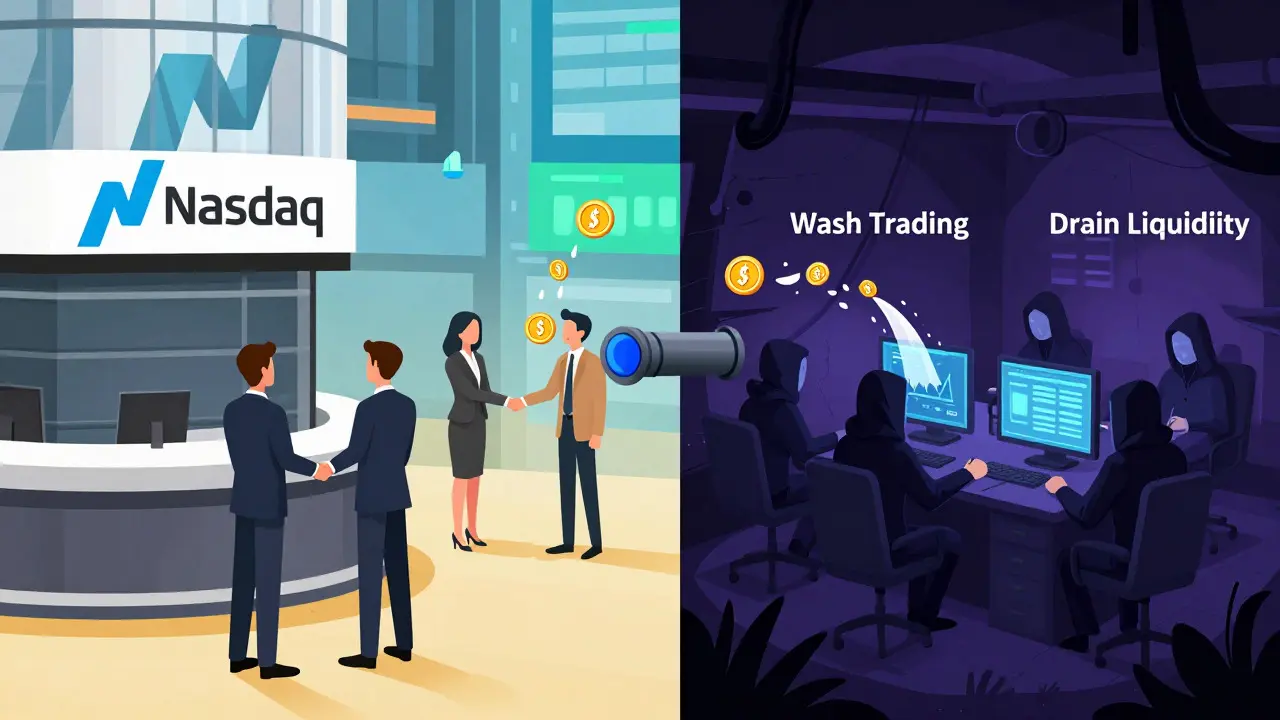
The core confusion stems from the ticker symbol COIN. Legitimate investors know that Coinbase trades as a stock on the Nasdaq under this ticker since its IPO in April 2021. However, scammers have created dozens of worthless tokens using similar names and tickers on decentralized exchanges. These tokens hold no value, have no utility, and exist solely to trick users into buying them before the liquidity vanishes. Understanding what [Fake]COINBASE actually is requires peeling back the layers of deception used by these fraudsters.
How the Impersonation Scam Works
The mechanics behind [Fake]COINBASE are surprisingly simple yet highly effective because they exploit trust. Scammers do not need to build complex technology or create real demand. Instead, they rely on visual mimicry and data manipulation. According to the Massachusetts Attorney General's Office, impersonation scams involving fake cryptocurrency projects that mimic legitimate exchanges accounted for 37% of all reported crypto fraud cases between 2022 and 2023. The average victim lost $1,850 per incident during this period.
The process typically follows a predictable lifecycle documented by blockchain forensics firm Elliptic. First, fraudsters create fake listings on reputable tracking platforms like CoinMarketCap or CoinGecko. They often use stolen credentials or pay small fees on dark web markets-averaging around $350-to get these pages live. Next, they pump the price using wash trading, where they buy and sell the token among their own wallets to generate artificial volume. Reports indicate that up to 97% of the trading volume on these fake tokens is fabricated. Finally, once enough unsuspecting buyers enter the market, the scammers drain the liquidity pool. The average lifespan of such a scam is merely 26.7 hours.
| Feature | Coinbase Global (Nasdaq: COIN) | [Fake]COINBASE Tokens |
|---|---|---|
| Platform | Nasdaq Stock Exchange | Decentralized Exchanges (e.g., PancakeSwap, Uniswap) |
| Issuer | Coinbase Global, Inc. (Public Company) | Anonymous Scammers |
| Utility | Equity ownership in the company | None (Worthless speculative assets) |
| Regulation | SEC Regulated | Unregulated / Offshore |
| Price Source | Real-time stock market data | Manipulated liquidity pools |
Red Flags That Reveal the Fraud
You don't need to be a blockchain expert to spot these scams. There are several glaring inconsistencies that appear across almost every [Fake]COINBASE variant. Security researchers at Chainalysis identified 1,247 fake 'Coinbase' token variants in the second quarter of 2023 alone. Ninety-two percent of them shared identical scam patterns that serve as immediate warning signs.
The first major red flag is the name itself. As Dr. Nicholas Weaver, a senior researcher at ICANN, noted in his September 2023 Crypto Fraud Report, any token explicitly using the prefix "[Fake]" in its listings is definitively fraudulent. Legitimate projects never self-identify as fake. This is often a tactic to bypass automated filters on tracking sites while still signaling to human victims that it is related to the brand.
Second, look at the historical data. Many of these fake listings display future-dated information. For example, some pages listed August 22, 2025, as an "all-time high" long before that date occurred. Others show impossible metrics, such as a total supply of 270 million tokens with zero tokens currently in circulation, yet somehow displaying a market cap of billions of dollars. These mathematical impossibilities are telltale signs of a poorly constructed scam page.
Third, check the development activity. Real cryptocurrencies like Bitcoin and Ethereum have thousands of commits on GitHub, active developer communities, and transparent roadmaps. In contrast, [Fake]COINBASE shows zero development activity. There are no whitepapers, no team members, and no functional product. It is a hollow shell designed only to accept deposits.
The Scale of the Threat
The prevalence of these scams has exploded in recent years. The Federal Trade Commission reported 46,000 cryptocurrency impersonation scam complaints in the first quarter of 2023, resulting in $139 million in losses. Coinbase was identified as the most impersonated brand in their March 2023 Consumer Sentinel Network Data Book. The Anti-Phishing Working Group observed a 147% year-over-year increase in cryptocurrency impersonation scams in the first half of 2023, with Coinbase targeted in 38% of those cases.
Why is Coinbase such a frequent target? Its massive user base makes it a prime candidate for social engineering. Users already trust the brand, so when they see a token named after it, they lower their guard. The Securities and Exchange Commission's Crypto Task Force identified 1,842 fake crypto projects impersonating established brands in Q3 2023, a significant jump from 732 in the same period the previous year. Industry analysts at Gartner projected that cryptocurrency impersonation scams would account for $2.1 billion in losses in 2023, representing 22% of all crypto fraud.
The geographic origin of these scams is also telling. Coinbase's 2023 Q2 transparency report confirmed they issued 1,247 takedown notices for fake COINBASE tokens. Their fraud analytics revealed that 63% of these operations originated from offshore locations, including Nigeria, Russia, and Vietnam, making legal recourse nearly impossible for individual victims.
Real Stories: What Happens to Victims?
Behind the statistics are real people who have lost life savings. On Reddit's r/CryptoScams forum, 87 verified victim reports were documented between July and September 2023. The stories are strikingly similar. Victims discover the token on a fake CoinMarketCap listing, convinced by the professional-looking design and inflated market cap. They connect their wallets to a decentralized exchange like PancakeSwap and purchase the tokens.
Within minutes, or sometimes seconds, the rug pull occurs. One user, u/CryptoLearner2023, reported losing $3,200 after the token's liquidity was removed just 12 minutes after their purchase. Trustpilot reviews for entities claiming to offer "Coinbase Coin" averaged a dismal 1.2 out of 5 stars, with 94% of reviewers citing "scam tokens" in their feedback. The median loss recorded by the Massachusetts Attorney General's Office for [Fake]COINBASE variants specifically was $2,150 per victim.
Recovery is exceptionally difficult. Chainalysis documented a success rate of only 4.2% for recovering funds from these types of scams. When recovery does happen, it takes an average of 11.3 months. Furthermore, many victims fall prey to secondary scams. Marin Barrett Law reported an alert in October 2023 about "support recovery scams," where fraudsters contact victims claiming they can help recover the lost funds for an upfront fee. This perpetuates the cycle of theft, leaving victims even deeper in debt.
How to Protect Yourself
Given the sophistication of these attacks, vigilance is your best defense. Here is a practical checklist to ensure you are interacting with legitimate assets:
- Verify the Ticker and Platform: Remember that Coinbase's actual equity is traded on Nasdaq under the ticker COIN. It is not a cryptocurrency token on Ethereum or BNB Chain. If you see a "COINBASE" token on a decentralized exchange, it is fake.
- Check Official Sources: Always refer to Coinbase's official security page. Their guidelines, updated in September 2023, explicitly state: "Coinbase does not have, nor will we ever issue, a COINBASE cryptocurrency token. Any website or exchange listing such a token is fraudulent."
- Suspicious Metrics: Be wary of tokens with zero circulating supply but high market caps, or those with future-dated all-time highs. These are technical impossibilities in legitimate finance.
- Community Presence: Look for active, organic communities on Twitter, Discord, or Telegram. Scam tokens often have bot-filled channels or no community presence at all beyond the initial hype.
- Beware of Urgency: Scams thrive on FOMO (Fear Of Missing Out). If a token promises guaranteed returns of 300-500% within 30 days, it is a scam. Legitimate crypto markets rarely offer such consistent, high-yield guarantees.
The Commodity Futures Trading Commission's Crypto Fraud Task Force highlighted that these scams typically promise unrealistic returns far exceeding legitimate market performance. For context, Bitcoin's 30-day average return is historically around 2.1%. Anything significantly higher without a clear, verifiable utility model should be treated with extreme skepticism.
Conclusion: Stay Skeptical
The [Fake]COINBASE phenomenon is a stark reminder of the wild west nature of decentralized finance. While blockchain technology offers incredible opportunities, it also provides cover for bad actors. By understanding the tactics used in these impersonation scams-from fake listings to manipulated liquidity-you can protect your capital. Always double-check contract addresses, verify information through multiple authoritative sources, and remember that if an opportunity looks too good to be true, especially when wearing the mask of a trusted brand, it almost certainly is.
Is there an official Coinbase cryptocurrency token?
No. Coinbase Global, Inc. is a publicly traded company on the Nasdaq with the stock ticker COIN. They do not issue their own native cryptocurrency token. Any token named "COINBASE," "COIN," or similar variations found on decentralized exchanges or crypto tracking sites is an unofficial, unauthorized, and likely fraudulent imitation.
Why do fake coins use the label [Fake] in their name?
The label [Fake] is often used to bypass automated content filters on cryptocurrency tracking websites like CoinMarketCap or CoinGecko. Scammers know that exact duplicates of popular names might be flagged, so adding a prefix allows the listing to go live. Unfortunately, many inexperienced investors overlook this tag, assuming it refers to a parody project or a meme coin rather than a direct financial scam.
Can I recover my money if I bought a fake COINBASE token?
Recovery is extremely difficult. Because these transactions occur on decentralized blockchains, they are irreversible. Blockchain analysis firms report a success rate of only about 4.2% for fund recovery in these cases, and it can take over a year. Additionally, beware of secondary scams where individuals claim they can hack the blockchain to return your funds for a fee-these are also scams.
How can I distinguish between Coinbase stock and a crypto token?
Coinbase stock (COIN) is purchased through traditional brokerage accounts (like Fidelity, Robinhood, or Charles Schwab) and trades on the Nasdaq stock exchange. It represents equity ownership in the company. A crypto token is purchased using a digital wallet (like MetaMask) on a decentralized exchange. If you are buying it with Bitcoin or Ethereum on a site like PancakeSwap, it is not the official Coinbase stock.
Are all tokens with the ticker COIN scams?
Not necessarily, but you must exercise extreme caution. While Coinbase uses COIN for its stock, other legitimate projects may use similar tickers. However, in the context of "COINBASE" branding, any crypto token is suspect. Always verify the contract address against official announcements from the project's verified social media channels. Never rely solely on a ticker symbol, as these are not unique identifiers on blockchains.
Leave a comments