You’ve probably seen the Bitcoin Fear and Greed Index pop up in your feed. It’s a popular sentiment tracker for the broader market. But if you are looking for FEAR crypto, you aren’t looking at that index. You are looking at a specific, niche asset tied to the horror gaming genre.
FEAR (ticker: FEAR) is a utility and governance token powering a blockchain-based ecosystem focused on horror-themed games, non-fungible tokens (NFTs), and interactive media. Unlike broad gaming platforms that host thousands of different titles, FEAR is built around a specific universe. It aims to merge traditional high-quality horror storytelling with Web3 mechanics like digital ownership and play-and-earn incentives.
If you are wondering whether this is a legitimate project or just another low-cap meme coin, the answer lies in its structure. It is not a joke; it is a specialized attempt to bring the thrill of horror games into the decentralized economy. Here is what you need to know about how it works, where it lives on the blockchain, and why someone might want to hold it.
The Core Concept: Horror Meets Blockchain
Most blockchain games struggle with one major issue: they feel like work. They are often repetitive clickers designed solely to generate yield. The FEAR project tries to solve this by prioritizing the "game" part of GameFi. The central entity here is the FEAR Ecosystem, which combines atmospheric horror narratives with blockchain utility.
The idea is simple. Players engage with horror titles-ranging from survival puzzles to adventure stories-and use the FEAR token within that experience. Instead of just mining tokens by clicking buttons, players earn rewards through achievements, leaderboard placements, and event participation. Conversely, they spend FEAR to buy upgrades, access exclusive modes, or purchase in-game assets.
This model relies on the concept of "play-and-earn." The entertainment value comes first. If the game isn’t scary or fun, the token has no underlying demand. This is a crucial distinction from purely financialized projects where the only goal is price appreciation.
How the FEAR Token Works
To understand the value proposition, you have to look at what the token actually does. In most ecosystems, a utility token serves three main functions. FEAR follows this standard pattern closely.
- In-Game Currency: This is the bread and butter. You use FEAR to buy character skins, weapons, or access passes within the horror titles. Developers also use it as a reward mechanism. Complete a difficult level? You might get FEAR. Win a tournament? More FEAR.
- Staking and Rewards: Holders can lock up their tokens in staking pools. In exchange for locking their assets, they receive additional FEAR or special NFTs. This helps reduce circulating supply and incentivizes long-term holding rather than immediate selling.
- Governance: While still evolving in many small-cap projects, FEAR holders may eventually vote on future game content, story directions, or platform parameters. This gives the community a say in how the universe expands.
The token is technically a multichain asset. It was likely issued as an ERC-20 token on Ethereum but has been bridged to lower-fee networks like Binance Smart Chain (BEP-20) or Polygon. This is standard practice for gaming tokens. Ethereum gas fees are too high for buying a $1 skin, so developers move daily transactions to cheaper chains while keeping Ethereum for liquidity and major exchanges.
The Role of NFTs in the FEAR Universe
You cannot talk about FEAR without talking about NFTs. In this ecosystem, NFTs are not just profile pictures. They represent tangible in-game assets. Think of them as digital collectibles that have actual utility.
An NFT in the FEAR world could be a rare weapon, a unique character skin, or even a piece of land within a game map. These are typically minted as ERC-721 or ERC-1155 contracts on EVM-compatible networks. Because they are on the blockchain, you truly own them. You can trade them on secondary markets, rent them out to other players, or upgrade them using FEAR tokens.
This creates a circular economy. Players buy NFTs with FEAR. They use those NFTs to earn more FEAR. They then sell the NFTs or spend the earned tokens. The health of this loop depends entirely on player activity. If people stop playing the games, the demand for both the tokens and the NFTs drops sharply.
Technical Architecture: Off-Chain Gameplay, On-Chain Economy
Here is a technical detail that matters for performance. The FEAR games do not run entirely on the blockchain. Running complex 3D horror games directly on-chain is currently impossible due to speed and cost limitations.
Instead, the project uses a hybrid model. The actual gameplay-the graphics, the physics, the anti-cheat systems-runs on centralized servers. This ensures smooth performance and fast load times. However, critical economic actions are recorded on the blockchain. When you buy an item, claim a reward, or mint an NFT, that transaction is verified on-chain via smart contracts.
This architecture offers the best of both worlds. You get the quality of a traditional PC or mobile game, combined with the verifiable ownership of Web3. APIs connect the game backend to your wallet, allowing seamless transfers between your in-game inventory and your crypto holdings.
Risks and Challenges
No discussion of a micro-cap gaming token is complete without addressing the risks. FEAR is not a blue-chip asset like Bitcoin or Ethereum. It carries significant volatility and specific project-level dangers.
- Liquidity Risk: As a low-cap token, trading volume can be thin. This means large buys or sells can cause drastic price swings. You might find it difficult to exit a position quickly without slippage.
- Adoption Dependency: The token’s value is tied directly to the popularity of the games. If the studio fails to release engaging content or loses its player base, the token loses its utility. It becomes a speculative shell.
- Platform Risk: Since much of the gameplay happens off-chain, the project relies on the developers maintaining the servers. If the team abandons the project, the tokens and NFTs may retain some speculative trading value, but their practical use vanishes.
- Regulatory Uncertainty: Play-to-earn models face increasing scrutiny. Regulators in various jurisdictions are examining whether these tokens constitute securities. Changes in law could impact how the token is traded or used.
Who Is FEAR For?
FEAR is not for everyone. It appeals to a very specific intersection of interests. You should consider this token if you are a gamer who enjoys the horror genre and already understands Web3 wallets. The learning curve for a crypto-native user is moderate. You will need to set up a wallet like MetaMask, fund it with ETH or BNB for gas, and bridge tokens to the correct network.
For a non-crypto gamer, the barrier to entry is higher. You need to learn about seed phrases, network switches, and private key security. If you are not comfortable managing your own digital assets, this ecosystem might be frustrating.
Investors should view FEAR as a high-risk, high-reward play on the niche horror gaming sector. It is not a store of value. It is a bet on the success of a specific creative vision and the ability of the development team to execute their roadmap.
Comparison: FEAR vs. Generalist Gaming Tokens
| Feature | FEAR Token | Generalist Gaming Tokens (e.g., GALA, IMX) |
|---|---|---|
| Focus | Niche Horror Genre | Broad Gaming Infrastructure |
| Diversification | Low (Tied to specific IP) | High (Multiple studios/games) |
| Audience | Horror Fans & Collectors | General Gamers & Developers |
| Risk Profile | Higher (Single point of failure) | Moderate (Ecosystem spread) |
| Utility | In-game purchases, specific NFTs | Gas, publishing, cross-platform tools |
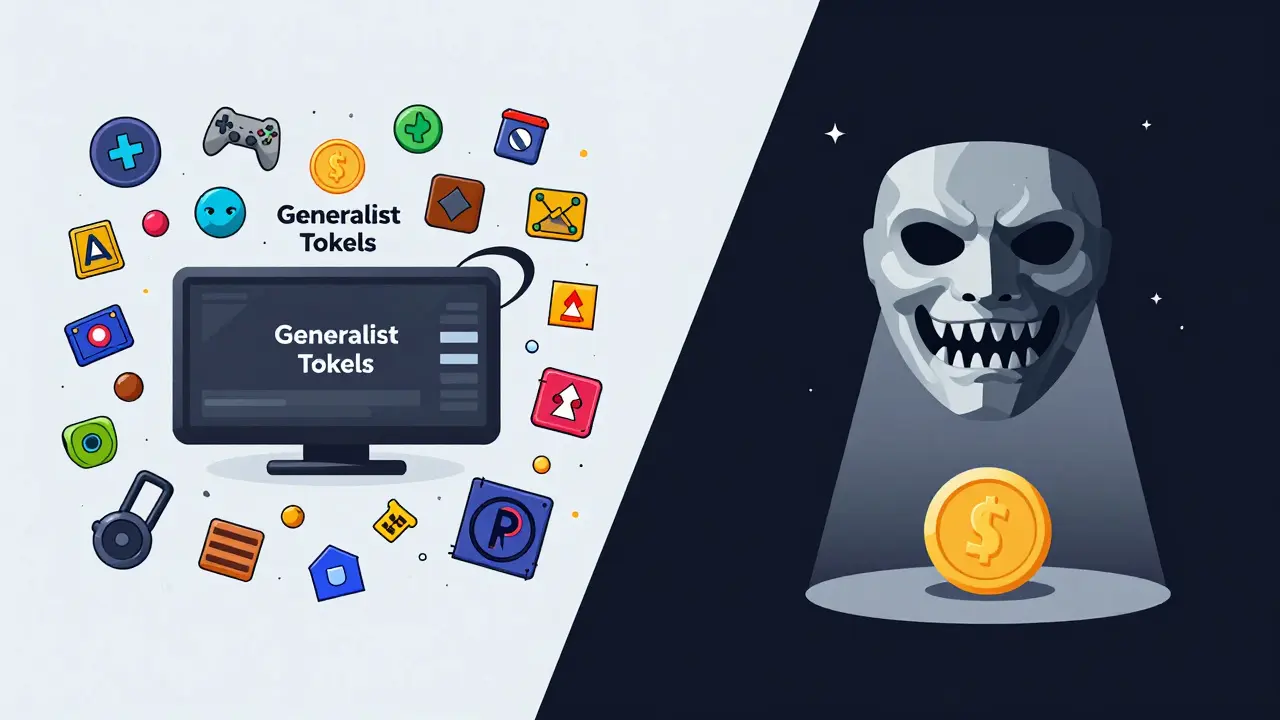
As the table shows, FEAR trades breadth for depth. It doesn’t try to be everything to everyone. It tries to be the definitive token for horror gamers. This makes it vulnerable if the genre falls out of favor, but potentially more rewarding if it captures a loyal, passionate community.
Getting Started with FEAR
If you decide to explore the ecosystem, the process is straightforward for those familiar with DeFi. First, ensure you have a compatible wallet installed. Next, acquire FEAR tokens from a supported decentralized exchange (DEX) or centralized exchange (CEX). Always verify the contract address to avoid scams, as fake tokens are common in the crypto space.
Once you have the tokens, visit the official FEAR portal. Connect your wallet to view your balance, stake tokens, or browse the NFT marketplace. Many projects offer free-to-play modes to help new users test the waters before spending any money. Use this time to evaluate the game quality yourself. Does the horror atmosphere resonate with you? Is the gameplay engaging? Your subjective experience is the best indicator of the token’s long-term viability.
Final Thoughts on the FEAR Ecosystem
FEAR represents an interesting experiment in vertical integration within GameFi. By focusing on a single, emotionally charged genre, it attempts to build a stronger brand identity than generic gaming platforms. Success depends on execution. Can the studio deliver high-quality horror experiences consistently? Can they maintain a healthy token economy that rewards players without inflating the supply?
Keep an eye on their development updates, community engagement, and game releases. In the world of niche crypto assets, momentum is everything. If the games are good, the token has a chance. If they are not, it will fade into obscurity like so many others.
Is FEAR crypto the same as the Fear and Greed Index?
No. The Fear and Greed Index is a sentiment indicator for the entire cryptocurrency market, primarily tracking Bitcoin. FEAR (FEAR) is a specific utility token associated with a horror gaming ecosystem. They are completely unrelated.
Which blockchain is FEAR token on?
FEAR is a multichain token. It typically exists as an ERC-20 token on Ethereum and may be bridged to other networks like Binance Smart Chain (BSC) or Polygon to facilitate lower transaction fees for gaming interactions.
Can I make money playing FEAR games?
Yes, the project operates on a play-and-earn model. Players can earn FEAR tokens through achievements, leaderboards, and events. However, earnings are usually modest and depend on skill and time invested, not passive income.
What are the main risks of investing in FEAR?
The main risks include high price volatility due to low liquidity, dependence on the success of specific video games, and regulatory uncertainty surrounding play-to-earn tokens. If the games fail to attract players, the token value may drop significantly.
Do I need to buy FEAR tokens to play the games?
Many projects in this space offer free-to-play options. You can often start playing without tokens, but purchasing FEAR allows you to buy premium items, NFTs, or access exclusive features that enhance the experience.
How do I buy FEAR tokens?
You can buy FEAR on supported decentralized exchanges (DEXs) or centralized exchanges (CEXs) that list the token. Always verify the official contract address from the project's website to avoid counterfeit tokens.
Leave a comments