
Imagine a world where you don't just listen to music-you help create it, own a piece of the AI that made it, and get paid for every second of feedback you give. That’s the promise behind HAiO, a Web3 music platform powered by multiple AI Agents that automate the entire music value chain from creation to monetization. But is it just another buzzword-heavy project, or does it actually solve the broken royalty system in the music industry?
If you’ve been watching the crypto space, you know that "AI + Blockchain" projects are everywhere. Most fail to deliver real utility. HAiO tries to stand out by focusing on one specific niche: democratizing music production through artificial intelligence and decentralized ownership. It’s not just a streaming service like Spotify; it’s an ecosystem where listeners, creators, and developers all have a stake in the outcome.
The Core Problem HAiO Tries to Solve
Let’s be honest about the traditional music industry. For decades, artists have fought for fair pay while major labels and streaming platforms took the lion’s share of revenue. The average payout per stream on legacy platforms is often less than a fraction of a cent. This opaque system leaves independent musicians struggling to survive.
HAiO addresses this by flipping the script. Instead of a centralized corporation deciding who gets paid, the platform uses smart contracts to distribute rewards transparently. According to their official documentation, up to 90% of revenue goes directly to creators and contributors. This isn’t just a marketing claim; it’s built into the protocol’s logic. When you interact with the platform-whether by listening, rating tracks, or staking tokens-the blockchain records your contribution and calculates your reward automatically.
The platform also tackles the issue of creative barriers. Not everyone can play an instrument or produce beats professionally. HAiO uses advanced AI agents to generate high-quality music, allowing anyone to participate in the creative process. You don’t need a studio; you need a wallet and an idea.
How the HAiO Ecosystem Works
HAiO isn’t a single app. It’s a collection of specialized tools designed to cover every stage of the music lifecycle. Understanding these components is key to seeing how the HAIO token adds value.
- HAiO Music: This is the consumer-facing streaming service. Unlike Spotify, which relies on human-curated playlists, HAiO integrates AI-generated tracks seamlessly. Users can discover new sounds created by algorithms trained on vast musical datasets.
- Tune & Reward: This feature turns listeners into active participants. When you rate or provide feedback on AI-generated tracks, you’re essentially helping the AI learn what works. In return, you earn HAIO tokens. It’s a reinforcement learning loop where user preference directly improves the product and rewards the user.
- Agent Fi: This is where the financial mechanics get interesting. Agent Fi allows users to co-own AI Agents via NFTs. Think of these agents as digital musicians. If an agent creates a hit song, the owners of its NFT share in the revenue. This introduces a speculative and passive income element to music consumption.
- Music Licensing for Creators: A B2B solution that helps businesses find and license AI-generated music for games, videos, and ads. This opens up a new revenue stream that doesn’t rely solely on consumer streaming.
- Developer Expansion Program: By offering APIs and SDKs, HAiO lets third-party developers build on top of its infrastructure. This expands the ecosystem beyond the native app, potentially integrating HAiO’s AI into other metaverse or gaming platforms.
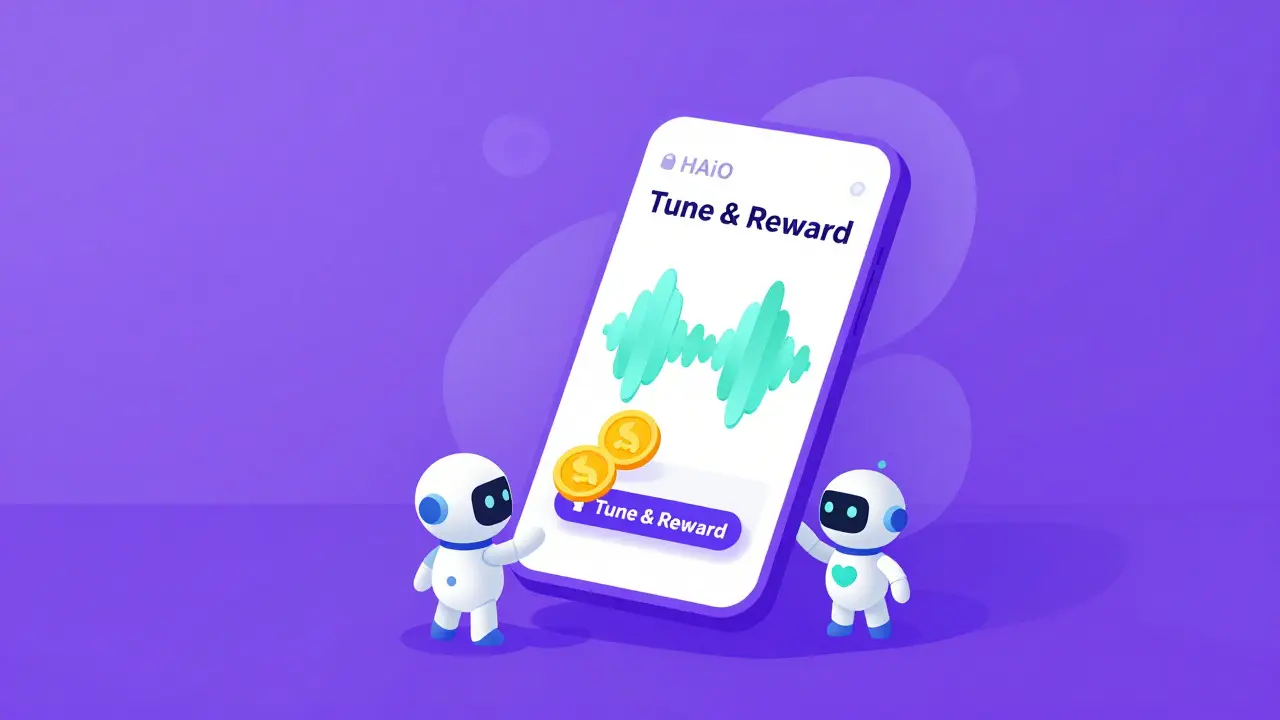
The HAIO Token: Utility and Economics
Every Web3 platform needs a token to function, and HAIO is no exception. But what exactly do you use it for? It’s not just a vehicle for speculation; it has defined utility within the ecosystem.
First, HAIO is used for governance. Holders can vote on platform upgrades, new features, and treasury spending. Second, it’s the medium of exchange for transactions. Whether you’re buying an NFT representing an AI agent or paying for premium licensing, you’ll need HAIO. Third, it serves as the reward mechanism. As mentioned earlier, users earn tokens for contributing data and feedback.
From a supply perspective, the total maximum supply is capped at 1 billion HAIO tokens. As of late 2025, reports indicated a circulating supply of around 176 million tokens, meaning roughly 17.6% of the total supply was in circulation. This relatively low float can lead to higher volatility, as seen when the token price fluctuated between $0.02 and $0.04 during peak interest periods.
| Feature | HAiO (HAIO) | Audius (AUDIO) | Traditional Streaming |
|---|---|---|---|
| Primary Focus | AI-Generated Music & Co-Ownership | Decentralized Human Music Distribution | Centralized Catalog Streaming |
| Revenue Share to Creators | Up to 90% | Variable (Community Governed) | <10% (after label cuts) |
| User Role | Listener, Creator, Owner | Listener, Artist | Passive Consumer |
| Market Cap (Late 2025) | ~$22 Million | ~$215 Million | N/A (Private Companies) |
| Technology Base | Blockchain + AI Agents | Blockchain Storage | Proprietary Servers |
Real-World Adoption and User Experience
Ideas are cheap; execution is everything. So, how is HAiO performing in the real world? The data presents a mixed picture, which is typical for early-stage Web3 projects.
On the positive side, there are success stories. Independent creators have reported securing sync licenses for AI-generated tracks through the platform’s B2B arm. One user noted earning significant ETH revenue from a mobile game integration, proving that the licensing model works. The community is also growing, with over 42,500 active monthly users reported in late 2025. The demographic skews young, with 68% of users aged 18-34, suggesting strong appeal among Gen Z and millennial tech-savvy listeners.
However, the friction points are real. Many users report a steep learning curve. Connecting wallets, understanding gas fees, and navigating the dApp interface can be daunting for non-crypto natives. Community polls revealed that nearly two-thirds of users struggled with MetaMask integration initially. Furthermore, the rewards for casual listeners are currently modest. One Reddit user reported earning less than a dollar after 15 hours of feedback, raising questions about whether the incentive structure is sustainable long-term.
Expert opinions reflect this caution. Analysts praise the technical architecture but warn that mass adoption hinges on solving the "cold start" problem: getting enough high-quality AI music and enough engaged listeners to make the network effect work. Without critical mass, the reinforcement learning loop stalls.

Roadmap and Future Outlook
HAiO is aware of its limitations and has outlined steps to address them. The development roadmap for late 2025 and early 2026 focuses on scalability and accessibility.
Key upcoming milestones include the integration of Layer-2 solutions to reduce transaction costs, a move essential for making micro-rewards viable for everyday users. A dedicated mobile app is scheduled for launch in early 2026, which should significantly lower the barrier to entry compared to browser-based dApps. Additionally, partnerships with established distributors like DistroKid could bridge the gap between traditional artists and the Web3 ecosystem, bringing more content to the platform.
Regulatory challenges remain a wildcard. The SEC and other bodies are still defining the legal status of AI-generated content and token-based rewards. HAiO’s model of co-ownership via NFTs may face scrutiny regarding intellectual property rights. However, if they navigate these hurdles successfully, they could set a precedent for how AI assets are owned and traded globally.
Is HAiO Worth Your Attention?
HAiO represents a bold experiment in merging artificial intelligence with decentralized finance. It’s not for everyone. If you’re looking for a simple way to listen to your favorite pop stars, stick with Spotify. But if you’re interested in the future of creator economies, AI art, and blockchain ownership, HAiO offers a unique playground.
The potential upside is significant: owning a piece of an AI that generates profitable music. The downside is the current immaturity of the platform, including usability issues and regulatory uncertainty. As with any crypto investment, do your own research, start small, and understand that you’re betting on technology that is still being built.
What is the HAiO token used for?
The HAIO token is used for governance voting, purchasing NFTs that represent AI agents, paying for licensing fees, and rewarding users for providing feedback on music tracks through the Tune & Reward system.
How does HAiO differ from Audius?
While Audius focuses on decentralizing the distribution of human-created music, HAiO specializes in AI-generated music. HAiO allows users to co-own the AI agents that create the music via NFTs, whereas Audius primarily supports artists uploading their own existing work.
Can I earn money using HAiO?
Yes, there are multiple ways to earn. Listeners can earn small amounts of HAIO tokens by rating tracks. Owners of AI Agent NFTs can earn revenue shares from streams and licenses. Developers can earn by building integrations using HAiO's API.
What is the total supply of HAIO tokens?
The maximum total supply of HAIO tokens is capped at 1 billion. As of late 2025, approximately 176 million tokens were in circulation, though this number changes as new tokens are released according to the project's emission schedule.
Is HAiO safe to invest in?
Like all cryptocurrencies, HAiO carries risk. It is a newer project with a smaller market cap compared to established competitors, leading to higher volatility. Regulatory uncertainty surrounding AI copyright and token securities also poses potential risks. Always conduct thorough research before investing.
Leave a comments