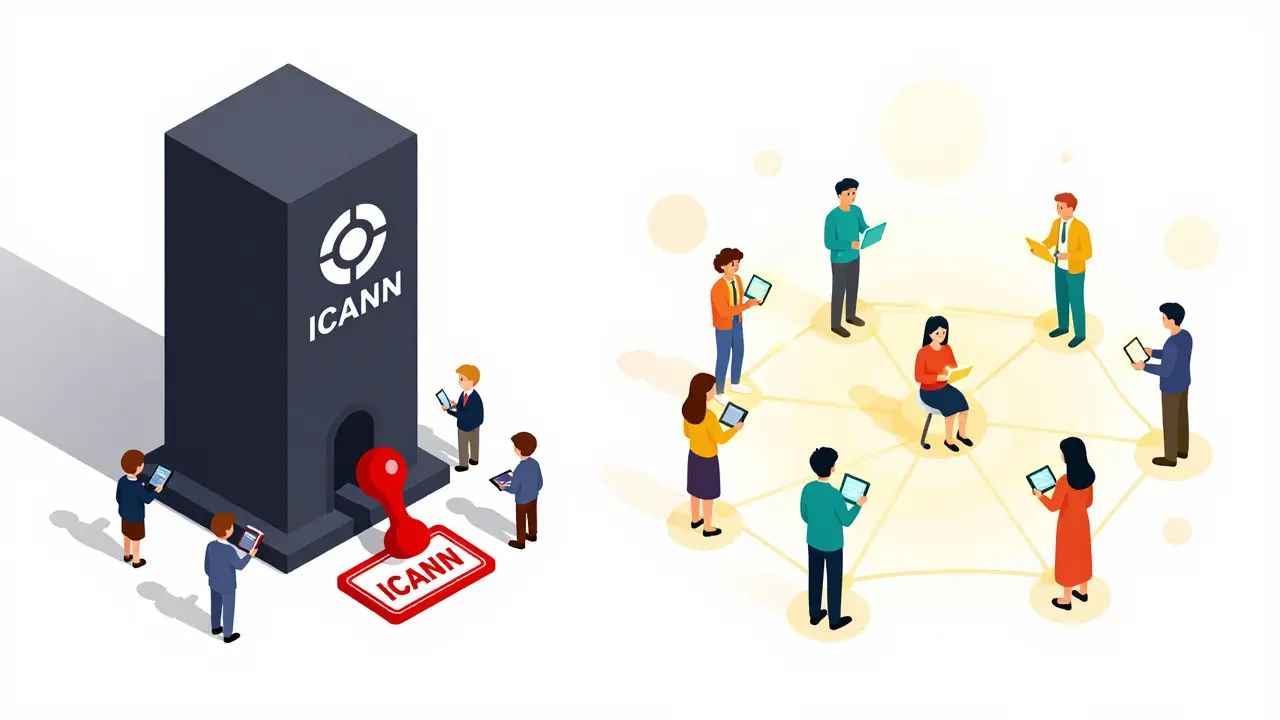
Imagine if the phonebook for the entire internet was owned by a single company. If that company decided you didn't like what they had to say, they could erase your number from the book. That is essentially how the current Domain Name System (DNS) works, managed by centralized bodies like ICANN. Now, imagine a version of that phonebook where no one owns it, everyone can add entries, and no one can delete yours without a consensus. This is the promise of Handshake (HNS).
Handshake is not just another cryptocurrency hoping to reach the moon. It is a decentralized naming protocol built on a blockchain designed to take control of top-level domains (TLDs) away from central authorities. Instead of paying fees to registrars who answer to governments or corporations, users in the Handshake network bid for TLDs using the native Handshake coin (HNS). But does this ambitious project actually work? And is HNS a smart investment or a niche experiment?
How Handshake Changes Internet Naming
To understand Handshake, you first need to understand the problem it solves. Today, when you type "google.com" into your browser, your computer asks a server managed by ICANN to find the IP address associated with that name. ICANN decides which organizations get to manage extensions like .com, .org, or .net. This creates a single point of failure and a target for censorship.
Handshake protocol changes this by creating a decentralized root zone file. Think of it as a peer-to-peer database that every participant in the network validates. When you register a name on Handshake, you aren't renting it; you are owning it on the blockchain. The system uses a mechanism called Vickrey auctions to allocate these names. Every two weeks, new names become available for bidding. Users place bids in HNS, and the highest bidder wins the right to manage that TLD.
This process ensures that valuable names go to those who value them most, while preventing spam through economic costs. Unlike traditional DNS where you pay an annual renewal fee to a registrar, Handshake requires you to hold and spend HNS tokens to maintain your domain. This ties the utility of the token directly to the usage of the network.
The Technology Behind HNS
Handshake isn't built on Ethereum or Solana. It runs on its own dedicated blockchain, which is a crucial distinction. The network is based on UTXO model (Unspent Transaction Output), similar to Bitcoin. This means it doesn't rely on accounts and balances but rather on inputs and outputs of transactions. This design choice brings several benefits:
- Security: By mimicking Bitcoin's proven architecture, Handshake inherits high security standards.
- Efficiency: The underlying software stack, known as Bcoin, was originally developed as a high-performance alternative to Bitcoin Core, offering faster processing capabilities.
- Simplicity: Without complex smart contracts, the risk of bugs and exploits is significantly lower compared to general-purpose blockchains.
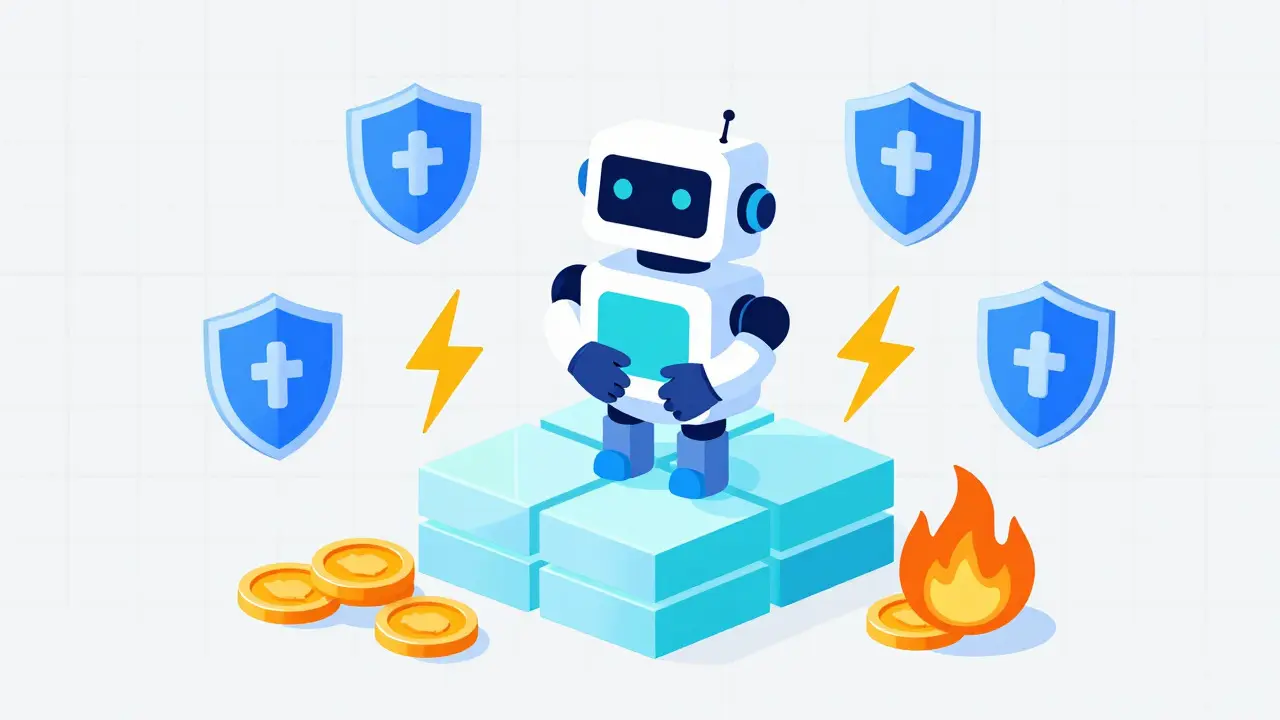
The burning mechanism is another key feature. When you register, renew, or transfer a domain, a portion of the HNS used in the transaction is burned (destroyed forever). This reduces the total supply over time, creating deflationary pressure. It also acts as a deterrent against spam registrations because registering thousands of fake domains becomes prohibitively expensive.
Handshake vs. Traditional DNS and ENS
You might wonder how Handshake compares to other naming systems. Let's look at the three main players in the space:
| Feature | Traditional DNS (ICANN) | Ethereum Name Service (ENS) | Handshake (HNS) |
|---|---|---|---|
| Governance | Centralized (ICANN) | Decentralized (Ethereum DAO) | Decentralized (Peer-to-Peer) |
| Scope | Global Internet (.com, .org) | Crypto/Web3 (.eth) | Global Internet (New TLDs) |
| Censorship Resistance | Low | High | High |
| Compatibility | Native | Requires Browser Extension | Backwards Compatible with DNS |
| Underlying Tech | Central Servers | Ethereum Smart Contracts | UTXO Blockchain (Bcoin) |
The biggest advantage Handshake has over Ethereum Name Service (ENS) is compatibility. ENS names (like alice.eth) only work if you have a special browser extension or wallet. Handshake aims to be backwards compatible with standard DNS. This means that in theory, once enough people use Handshake resolvers, anyone could access a Handshake domain without installing extra software. This lowers the barrier to entry for mainstream adoption.
Tokenomics: Supply, Demand, and Price
The economics of HNS are designed to align incentives. Here are the hard numbers you need to know as of mid-2026:
- Max Supply: 2,040,000,000 HNS
- Circulating Supply: Approximately 670-680 million HNS (roughly 33% of max supply)
- Price Range: Highly volatile, trading between $0.0015 and $0.005 in recent months
- Market Cap: Micro-cap status, often under $5 million
Why is the price so low? Handshake is a specialized tool, not a speculative meme coin. Its value is derived from its utility in securing the internet's root zone. However, limited adoption means limited demand for the token. Most of the supply is still locked or uncirculated, waiting to be released or claimed. As more developers build on Handshake and more users register domains, the burn rate increases, which should theoretically support the price. But until then, expect high volatility.
Is Handshake Safe and Secure?
Security is Handshake's strongest selling point. In the traditional web, you trust Certificate Authorities (CAs) to verify that a website is who it says it is. These CAs have been hacked before, leading to phishing attacks. Handshake replaces this trust model with cryptographic proof. When you visit a site secured by Handshake, your browser verifies the public key stored on the blockchain. No middleman is involved.
However, there are risks. Because Handshake is a newer technology, the ecosystem of tools and wallets is smaller than Ethereum or Bitcoin. You need to use specific platforms like Namebase to interact with the network easily. If you run your own node, you need technical knowledge of command-line interfaces. For the average user, relying on third-party services introduces some counterparty risk, though less than with centralized banks.

Who Should Use Handshake?
Handshake isn't for everyone. If you just want to buy a .com domain for your small business blog, stick with GoDaddy or Namecheap. The convenience outweighs the decentralization benefits for most casual users. Handshake is ideal for:
- Privacy Advocates: People who want to ensure their online identity cannot be seized or censored by governments.
- Web3 Developers: Builders creating decentralized applications (dApps) that need a censorship-resistant naming layer.
- Investors in Infrastructure: Those who believe the future of the internet will be fully decentralized and want exposure to foundational protocols.
It is also worth noting that Handshake is community-driven. There is no massive marketing budget from a tech giant. Progress happens because developers care about the mission. This makes it resilient but slow-moving.
Getting Started with HNS
If you want to try Handshake, here is the path forward. First, you need HNS tokens. You can buy them on major exchanges like Coinbase, Kraken, or Weex. Once you have HNS, you can move it to a non-custodial wallet or use a platform like Namebase to participate in auctions. Keep an eye on the auction schedule, as names open up every two weeks. Bidding requires strategy; since it’s a Vickrey auction, you don't necessarily pay your bid amount, but the second-highest bid sets the price. Read the documentation carefully before placing your first bid.
Can I use Handshake domains on regular browsers?
Not yet natively. Currently, you usually need a Handshake-aware resolver or a browser extension to access Handshake domains. However, the goal of the protocol is eventual seamless integration with standard DNS, allowing normal browsers to resolve these addresses automatically in the future.
What happens if I lose my HNS private key?
If you lose your private key, you lose access to your HNS tokens and any domains registered under that key. Unlike traditional domains where you can recover access via email, Handshake is self-custodial. Backup your seed phrase securely.
Is Handshake better than Ethereum Name Service (ENS)?
It depends on your needs. ENS is more established within the Web3 crypto community. Handshake aims for broader internet compatibility by targeting the root DNS layer. Handshake offers higher censorship resistance for global infrastructure, while ENS is easier to use for crypto-native users today.
How does the burning mechanism affect HNS price?
Burning removes HNS from circulation permanently. As more domains are registered and renewed, more tokens are burned. This reduces supply. If demand remains steady or grows, basic economics suggests upward pressure on price. However, with low current adoption, the burn rate is modest.
Where can I buy Handshake (HNS)?
You can purchase HNS on several centralized exchanges including Coinbase, Kraken, and Weex. Always check the latest listings as exchange support can change. For direct interaction with the protocol, you may also use platforms like Namebase.
Leave a comments