
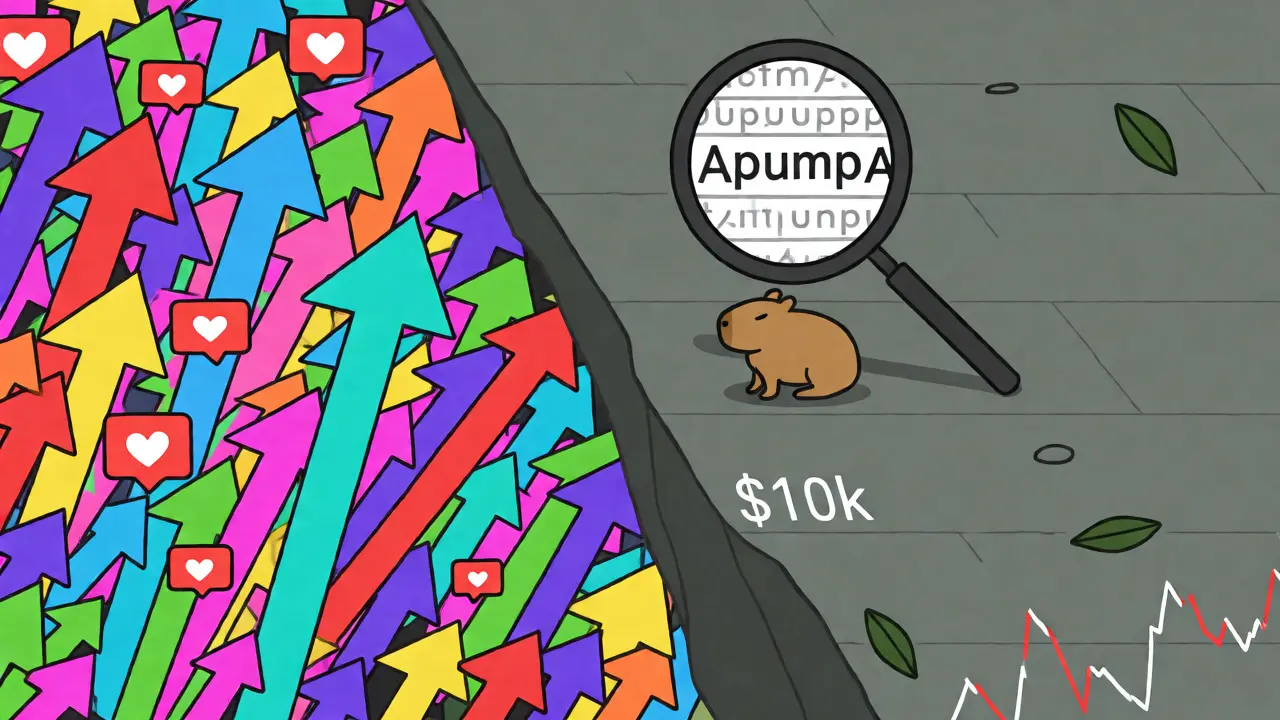
You’ve probably seen a capybara wearing headphones or holding a coffee cup in your X feed. Maybe you saw the ticker KAPPY flashing green during a random pump and wondered if this was the next big thing. Or maybe you’re just confused because someone told you it’s an AI project, while another person swears it’s a DeFi protocol on Ethereum. Here’s the cold, hard truth: as of November 2026, Kappy isn’t a high-tech AI revolution or a robust financial network. It’s a tiny, highly speculative meme token on the Solana blockchain, born from the chaotic world of Pump.fun.
If you are trying to figure out what Kappy actually is before throwing money at it, you need to separate the marketing noise from the on-chain reality. This guide breaks down exactly what KAPPY is, where it lives, why its price looks the way it does, and the specific risks hiding behind that cute anime mascot.
The Core Identity: Not a Blockchain, But a Token
First things first: Kappy is not a blockchain. It doesn’t have its own miners, validators, or block production schedule. If you send KAPPY, you are using the Solana network. You pay fees in SOL, not KAPPY. The asset itself is a fungible token created via Pump.fun, a platform known for launching thousands of memecoins with minimal barriers to entry.
The project launched on November 20, 2024. Its official contract address on Solana is CEhFvMotKm3zucKUBEHVvTaxQ4e9QVPaAjSfkzFLpump. This address is crucial. Because "Kappy" is a common name, there are other tokens with similar tickers. If you buy the wrong one, you might end up with a worthless copycat. Always verify the mint address matches the one above.
The branding leans heavily into internet culture. The tagline is blunt: “Just a capybara that doesn't give a f*ck.” The narrative combines three trendy buzzwords-capybaras, anime aesthetics, and Artificial Intelligence. The idea is that AI will bring the character to life, perhaps through social media bots or interactive content. However, do not confuse the concept with the product. There is no evidence of a proprietary AI engine powering the token’s utility. It’s a story, not software.
Market Status: Tiny Cap, Zero Liquidity
Let’s look at the numbers, because they tell a stark story. As of late 2026, KAPPY sits deep in the long tail of cryptocurrency rankings. CoinGecko places it around rank #10,700 globally. That means it is smaller than tens of thousands of other assets.
| Metric | Value | Context |
|---|---|---|
| Price | ~$0.0000105 | Near all-time low |
| Market Cap | ~$10,500 | Micro-cap territory |
| Circulating Supply | ~999.6 Million | Almost fully diluted |
| 24h Volume | $0 - $2.50 | Extremely illiquid |
| All-Time High | $0.008451 | Down ~99.9% from peak |
The most alarming stat here is the trading volume. On many days, KAPPY records zero trades over 24 hours. When there is activity, it’s often just a few dollars worth of swaps on Raydium, a decentralized exchange on Solana. This lack of liquidity is dangerous. If you buy $100 worth of KAPPY, you might find it impossible to sell without crashing the price further because there are no buyers waiting on the other side.
The token has fallen roughly 99.9% from its all-time high. It is currently hovering just 1% above its all-time low. This pattern is typical for Pump.fun launches that fail to sustain community momentum after the initial hype cycle dies down.
The Tech Stack: Solana and Raydium
Since KAPPY is a Solana token, it inherits Solana’s speed and low transaction costs. But it also inherits Solana’s congestion issues and reliance on the broader ecosystem for security. You don’t stake KAPPY to secure the network; you stake SOL. You don’t use KAPPY to pay gas fees; you use SOL.
Where can you trade it? Almost exclusively on decentralized exchanges (DEXs). Raydium is the primary venue listed on aggregators like CoinGecko. Major centralized exchanges like Binance, Coinbase, or Kraken do not list KAPPY. This limits accessibility. To buy it, you need a Solana-compatible wallet like Phantom, Backpack, or Trezor Suite, some SOL for gas, and the ability to navigate a DEX interface.
Wallet compatibility is straightforward. Any wallet that supports SPL tokens (Solana Program Library standard) can hold KAPPY. However, remember that holding the token in a wallet doesn’t mean the project is active. It just means the ledger recognizes your balance.
Conflicting Narratives: AI vs. DeFi vs. Meme
Here is where confusion creeps in. Different data providers describe KAPPY differently, which suggests poor documentation or conflicting projects.
- CoinGecko & Pump.fun: Classify it strictly as a Solana Meme Coin. They note the launch date as late 2024 and highlight the capybara/anime theme.
- Coinpaprika: Describes Kappy as a DeFi project launched in 2023 on Ethereum Proof-of-Stake, claiming features like staking and governance.
Which one is right? The evidence favors CoinGecko and Pump.fun. The contract address ending in pump is a signature of the Pump.fun launchpad on Solana. The creation date of November 2024 aligns with the boom in Solana memecoins. The Coinpaprika description likely refers to an older, unrelated project or contains outdated/incorrect metadata. There is no verified smart contract audit, no GitHub repository with active code commits, and no whitepaper detailing how KAPPY functions as a DeFi protocol. Treat the "DeFi" claims with extreme skepticism.

Risk Assessment: Why This Is High Stakes
If you are considering buying KAPPY, you aren’t investing in technology. You are speculating on attention. Here are the concrete risks:
- Liquidity Trap: With near-zero daily volume, exiting a position can be harder than entering it. Slippage-the difference between the expected price and the executed price-can be massive even for small orders.
- No Utility Evidence: The promise of "AI integration" remains unproven. There are no apps, games, or tools currently live that require KAPPY to function.
- Team Anonymity: There is no public team page, no LinkedIn profiles of founders, and no legal entity disclosed. The creator is identified only by a truncated wallet address. In crypto, anonymity isn’t always bad, but combined with zero development updates, it raises red flags.
- Copycat Risk: Multiple tokens named "Kappy" exist. Buying the wrong one results in total loss.
Is there upside? Sure. Meme coins are volatile. If a viral tweet catches fire, or if the "AI Capybara" narrative gains traction on TikTok, the price could spike 10x or 100x overnight. But statistically, most Pump.fun tokens go to zero. The odds are stacked against long-term survival for assets with this profile.
How to Buy (And Sell) KAPPY Safely
If you decide to take the gamble, follow these steps to minimize errors:
- Get a Wallet: Install Phantom or Backpack. Secure your seed phrase offline.
- Fund with SOL: Buy Solana on a major exchange and transfer it to your wallet.
- Verify the Contract: Copy the exact address:
CEhFvMotKm3zucKUBEHVvTaxQ4e9QVPaAjSfkzFLpump. Do not search for "Kappy" in the swap box; paste the address instead. - Use a DEX Aggregator: Use Jupiter or Raydium directly. Set slippage tolerance higher (e.g., 5-10%) because the market is thin.
- Execute Small: Don’t dump your entire portfolio. Test with a small amount first to ensure you can sell it back.
Is Kappy (KAPPY) a good investment?
It is a high-risk speculative asset, not a traditional investment. With a market cap under $15k and negligible trading volume, it lacks the stability and liquidity of established cryptocurrencies. Only invest what you can afford to lose entirely.
Does Kappy have its own blockchain?
No. KAPPY is a token issued on the Solana blockchain. It relies on Solana's infrastructure for transactions and security. You cannot mine KAPPY.
Why is Kappy trading on Raydium?
Raydium is a decentralized exchange (DEX) on Solana. Since KAPPY is not listed on centralized exchanges like Binance or Coinbase, Raydium serves as the primary marketplace where users swap SOL for KAPPY.
Is the AI feature in Kappy real?
There is no verified technical documentation proving an active AI product integrated with the token. The "AI" aspect appears to be part of the branding and social media narrative rather than a functional utility driving token demand.
How many KAPPY tokens are there?
The maximum supply is capped at 1 billion tokens. Approximately 99.9% of this supply is already circulating, meaning there is little room for inflationary pressure from new unlocks, but also little room for scarcity-driven pumps.
Leave a comments