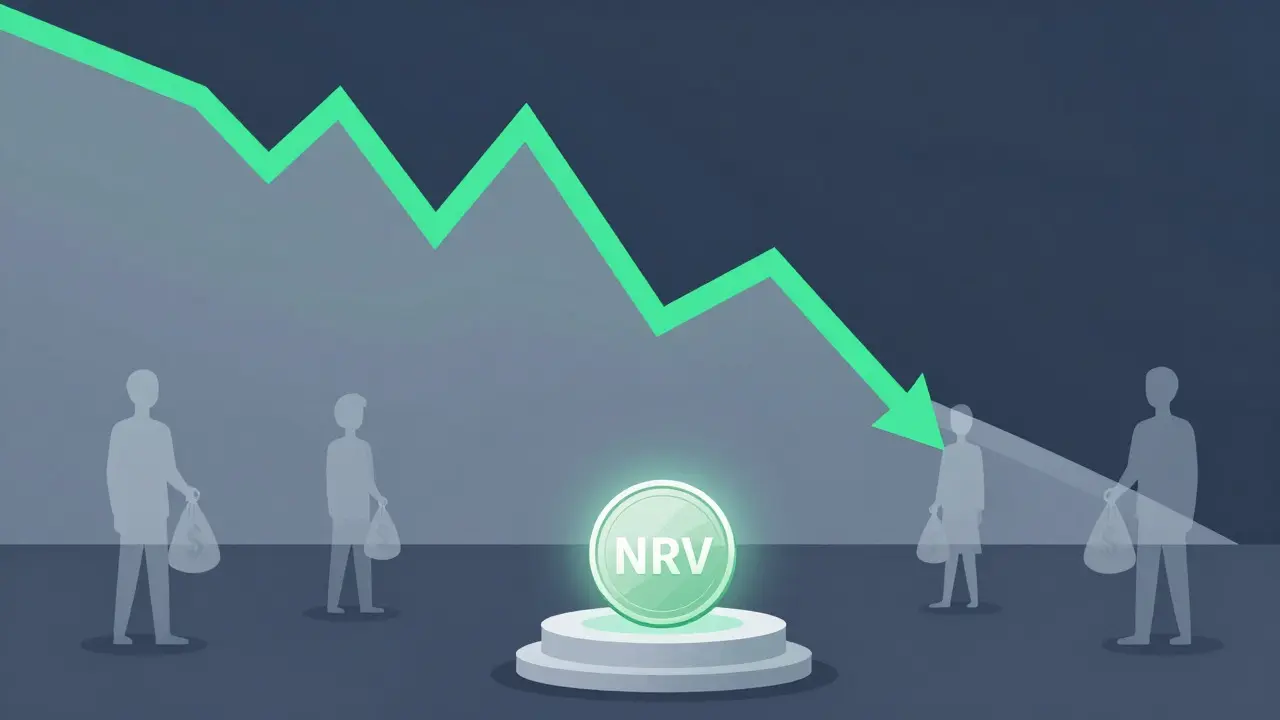
Imagine finding a coin that was once hyped by some of the biggest names in crypto, only to find it trading for fractions of a penny today. That is exactly what happens when you look at Nerve Finance. If you stumbled upon the ticker symbol NRV and are wondering if this is your next big investment or a cautionary tale from the 2021 bull run, you are asking the right questions. The short answer? It is a specialized tool for swapping stablecoins on the Binance Smart Chain, but its market presence has faded significantly since its launch.
To understand where Nerve Finance stands today, we need to strip away the hype and look at the mechanics, the history, and the hard numbers. This isn't just about price charts; it is about understanding how decentralized finance (DeFi) protocols rise, stabilize, and sometimes fade into obscurity.
What Exactly Is Nerve Finance?
Nerve Finance is a specialized Automated Market Maker (AMM) designed specifically for trading stablecoins and pegged synthetic assets with minimal slippage. It operates on the Binance Smart Chain (BSC), leveraging the network's low transaction fees compared to Ethereum.
In simple terms, an AMM is a type of decentralized exchange (DEX) that uses liquidity pools instead of traditional order books. You don't match buyers with sellers directly. Instead, you trade against a pool of funds provided by other users. Most AMMs, like Uniswap, are generalists-they handle any pair of tokens. Nerve Finance, however, is a specialist. It focuses almost entirely on "stableswaps."
Why does this distinction matter? When you swap one dollar-pegged asset for another-say, converting USDT to USDC-you expect the value to remain exactly $1. General AMMs often introduce "slippage," meaning you might get slightly less than $1 back due to price impact. Nerve Finance’s algorithm is optimized to keep this slippage near zero, making it theoretically more efficient for arbitrageurs and traders who move large amounts of stablecoins around.
The History: From Hype to Quiet
Launched on March 1, 2021, Nerve Finance entered the market during the peak of the DeFi boom. The timing was aggressive, but the backing was impressive. Early funding came from prominent firms including CMS Holdings, Primitive Ventures, Alameda Research, and Three Arrows Capital (3AC). At the time, these names carried significant weight in the crypto community.
The initial excitement drove the NRV token price to an all-time high of $6.86 on May 3, 2021. However, as the broader crypto market cooled and the landscape shifted, Nerve Finance struggled to maintain momentum. By late 2023, the token had crashed over 99% from its peak, trading in the range of $0.0006 to $0.0015 depending on the exchange. This dramatic decline reflects not just market sentiment, but a fundamental shift in user adoption and protocol activity.
How the NRV Token Works
The NRV token serves as the governance token for the Nerve Finance protocol. Holders can use NRV to vote on proposals regarding platform development, fee structures, and treasury management.
Here are the key metrics surrounding the token as of recent data:
- Circulating Supply: Approximately 46.2 million NRV
- Maximum Supply: Between 136.18 million and 150.55 million (sources vary)
- Primary Use Case: Governance and staking for liquidity incentives
- Trading Pairs: Primarily NRV/USDT on exchanges like Gate.io and PancakeSwap
Unlike utility tokens that grant access to specific features, NRV is primarily a governance instrument. In many DeFi projects, governance tokens also capture a portion of the protocol's revenue. However, Nerve Finance’s ability to generate and distribute meaningful revenue has been limited by its shrinking user base.

Market Performance and Liquidity Analysis
Let’s talk numbers, because they tell a stark story. As of late 2023, Nerve Finance ranked #3341 on CoinMarketCap with a market capitalization of roughly $30,000 USD. To put that in perspective, major competitors like Uniswap boast market caps in the billions. Even smaller niche protocols often command valuations in the millions.
| Metric | Nerve Finance (NRV) | Uniswap | PancakeSwap |
|---|---|---|---|
| Market Cap | ~$30,000 | ~$3.8 Billion | ~$1.4 Billion |
| Total Value Locked (TVL) | ~$1.66 Million | ~$4.5 Billion | ~$2.1 Billion |
| 24-Hour Volume | ~$66 | ~$785 Million | ~$150 Million |
| Primary Focus | Stablecoin Swaps (BSC) | General AMM (Multi-chain) | General AMM (BSC) |
The most telling metric here is the Market Cap to TVL ratio. For Nerve Finance, this ratio is approximately 0.018. In healthy DeFi protocols, this ratio typically ranges between 0.1 and 1.0. A ratio this low suggests one of two things: either the token is severely undervalued relative to the assets locked in the protocol, or the protocol is failing to capture value effectively. Given the lack of active development and user growth, the latter appears more likely.
Risks and Red Flags for Investors
If you are considering buying NRV, you need to be aware of several significant risks. First, there is the issue of liquidity. With only $1.66 million in Total Value Locked (TVL), the pools are shallow. Even though Nerve Finance is designed for low slippage, low liquidity means that larger trades will still impact prices significantly. You might try to sell a modest amount of NRV and find that the available buy orders aren't deep enough to execute your trade at a fair price.
Second, consider the development status. On-chain analysis shows only 127 unique addresses interacting with Nerve Finance contracts in a typical month. GitHub repositories show no commits since mid-2022. Social media channels are largely inactive. In the fast-moving world of DeFi, silence often signals abandonment. Industry analysts have noted that protocols with such low activity levels and inactive development teams have a very high failure rate.
Third, the collapse of its early backers adds another layer of uncertainty. Alameda Research and Three Arrows Capital both filed for bankruptcy in 2022. While their direct involvement in Nerve Finance's day-to-day operations was likely minimal, their exit removed potential avenues for strategic support or revival efforts.
Is Nerve Finance Still Useful?
Technically, yes. The smart contracts are still operational on the Binance Smart Chain. If you hold BUSD, USDT, and USDC and want to swap them with minimal slippage, Nerve Finance’s algorithm still works as intended. For small transactions, it remains a functional tool.
However, convenience is not the same as viability. Competitors like Curve Finance have expanded to multiple chains, offering similar stableswap functionality with deeper liquidity and more active communities. For most users, switching to a more established protocol reduces risk without sacrificing much in terms of efficiency.
Conclusion: What Should You Do?
Nerve Finance represents a fascinating case study in the lifecycle of DeFi projects. It launched with strong backing and a clear technical advantage but failed to sustain user engagement and development momentum. Today, it exists in a state of dormancy-a "zombie protocol" that is technically alive but economically inactive.
If you already hold NRV, monitor the situation closely. Look for signs of renewed development activity, increased TVL, or announcements of new partnerships. Until then, treat it as a speculative position with high risk. If you are looking to enter the stablecoin swap space, consider more liquid alternatives first. In DeFi, liquidity is king, and Nerve Finance currently sits on a very small throne.
Is Nerve Finance (NRV) a good investment in 2026?
Based on current data, NRV carries extremely high risk. With a market cap under $30,000, negligible trading volume, and inactive development, it lacks the fundamentals of a growing investment. It is better suited for speculative traders who understand the risks of "zombie" protocols rather than long-term investors.
What is the difference between Nerve Finance and Uniswap?
Uniswap is a general-purpose AMM that handles all types of token pairs using a constant product formula. Nerve Finance is a specialized stableswap AMM designed specifically for assets pegged to the same value (like USDT and USDC) to minimize slippage. Uniswap is multi-chain and highly liquid; Nerve Finance is limited to Binance Smart Chain and has very low liquidity.
Where can I buy NRV tokens?
NRV tokens are primarily traded on decentralized exchanges like PancakeSwap (v2) and centralized exchanges like Gate.io. Due to low liquidity, you may experience higher slippage when buying or selling. Always check the current pool depth before executing a trade.
Why did Nerve Finance's price drop so much?
The price drop is attributed to a combination of factors: the end of the 2021 DeFi bull market, the collapse of major backers like Alameda Research, competition from larger protocols like Curve Finance, and a gradual loss of user interest and liquidity. The lack of continued development further eroded confidence.
Is Nerve Finance safe to use?
From a technical standpoint, the smart contracts are still operational. However, safety in DeFi also depends on liquidity and active maintenance. With low liquidity, your trades may suffer from unexpected slippage. Additionally, the lack of recent code updates means any potential vulnerabilities may not be patched promptly. Use with caution and never invest more than you can afford to lose.
Leave a comments