
Most people think stablecoins are just digital versions of the US dollar. You send dollars, you get tokens. Simple enough. But Orby Network is a decentralized lending protocol on the Cronos blockchain that lets users mint USC, an overcollateralized stablecoin, without paying interest on their debt. This changes the game for DeFi users who want leverage or liquidity but hate losing money to borrowing fees.
If you’ve been watching the crypto space in 2026, you know that "interest-free" sounds too good to be true. It usually is. But with Orby’s USC token, the cost isn’t cash-it’s risk. You lock up collateral, you borrow USC, and if your collateral drops too low, you lose it. There are no monthly payments. Just a tight peg to $1.00 and a system designed to keep things stable through liquidations rather than loan shark tactics.
Key Takeaways
- USC is not a fiat-backed stablecoin: Unlike USDC or USDT, USC is backed by crypto collateral locked in smart contracts on Cronos.
- No interest on loans: Borrowing USC costs zero percent interest. The protocol makes money from liquidation penalties and Stability Pool rewards instead.
- Watch out for ticker confusion: Do not confuse Orby’s USC on Cronos with Classic USD (USC) on Ethereum Classic. They are completely different projects.
- Yield comes from participation: Holders earn by depositing USC into the Stability Pool or staking ORB tokens in the Vault.
How Orby Network Works: The Basics
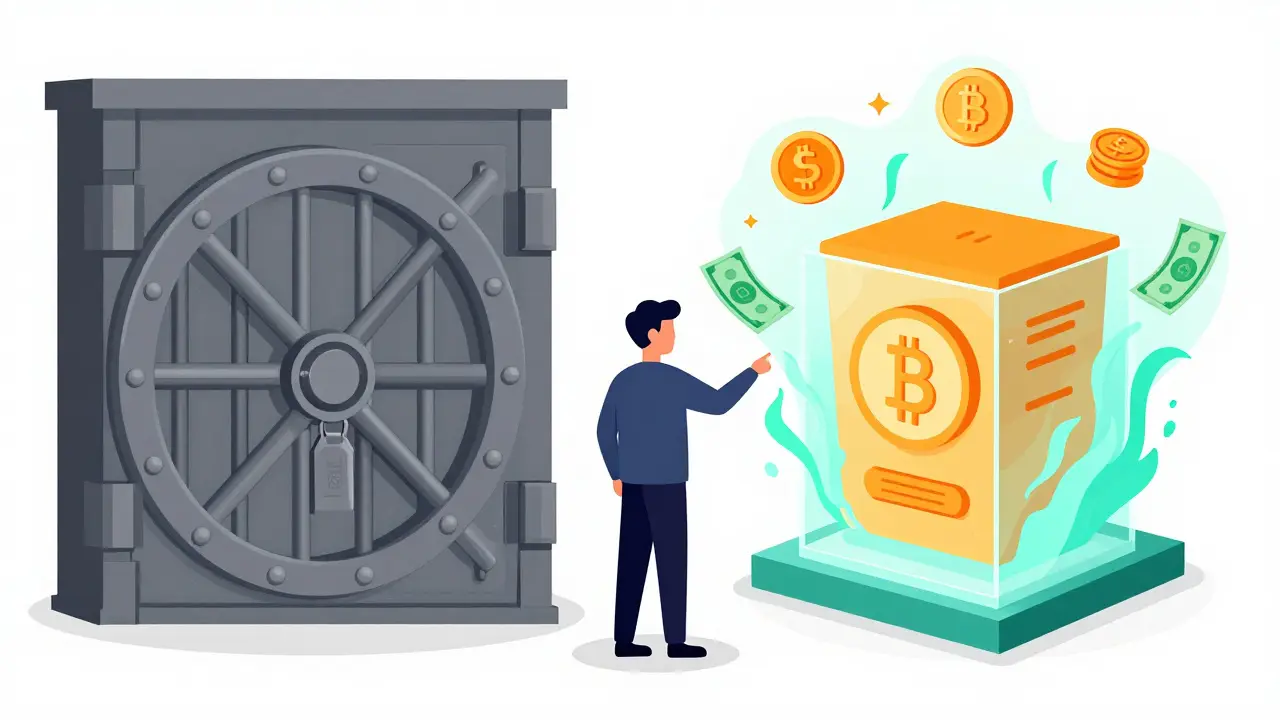
To understand Orby Network, you have to forget how traditional banks work. In a bank, you pay interest because the bank takes on the risk of lending your money to someone else. In Orby, you take the risk yourself.
Here is the flow:
- You connect a wallet compatible with Cronos Chain is an EVM-compatible blockchain built using the Cosmos SDK, serving as the infrastructure for Orby Network.
- You deposit eligible crypto assets (like CRO or other supported tokens) into the protocol.
- The protocol calculates how much USC you can mint based on a minimum collateralization ratio.
- You mint USC. You now hold a stablecoin pegged to $1.00.
- You use that USC elsewhere, or hold it. You never pay interest on the debt.
The catch? If the price of your collateral crashes, your position gets liquidated. The protocol sells your collateral to cover the USC you borrowed. This mechanism replaces the need for interest payments. The "fee" is the potential loss of your collateral during volatile market swings.
USC vs. Other Stablecoins: What Makes It Different?
There are hundreds of stablecoins. Why does USC matter? The main difference is the backing model. Let’s break down the three main types you’ll encounter in 2026.
| Feature | Fiat-Backed (e.g., USDC) | Classic USD (USC on ETH Classic) | Orby Network (USC on Cronos) |
|---|---|---|---|
| Backing | Cash & Treasuries in bank accounts | Cash & Short-dated US Gov obligations | Crypto Collateral (Overcollateralized) |
| Chain | Ethereum, Solana, etc. | Ethereum Classic | Cronos |
| Borrowing Cost | N/A (Not a lending protocol) | N/A (Not a lending protocol) | 0% Interest (Liquidation Risk only) |
| Regulation | High (MSB Licenses) | High (Licensed MSB by Brale) | Low (Decentralized Protocol) |
Note the ticker collision here. There is another token called USC-Classic USD. It is issued by Brale, a regulated entity in the US, and sits on the Ethereum Classic blockchain. It is fully backed by fiat. Orby’s USC is on Cronos and backed by crypto. If you see "USC" on a chart, check the chain. Mixing these up could lead to buying the wrong asset entirely.
Earning Yield with USC and ORB
Minting USC is free of interest, but holding it doesn’t automatically generate passive income like a savings account. To make money with Orby, you have to participate in its two main revenue-sharing mechanisms: the Stability Pool and the Vault.
The Stability Pool
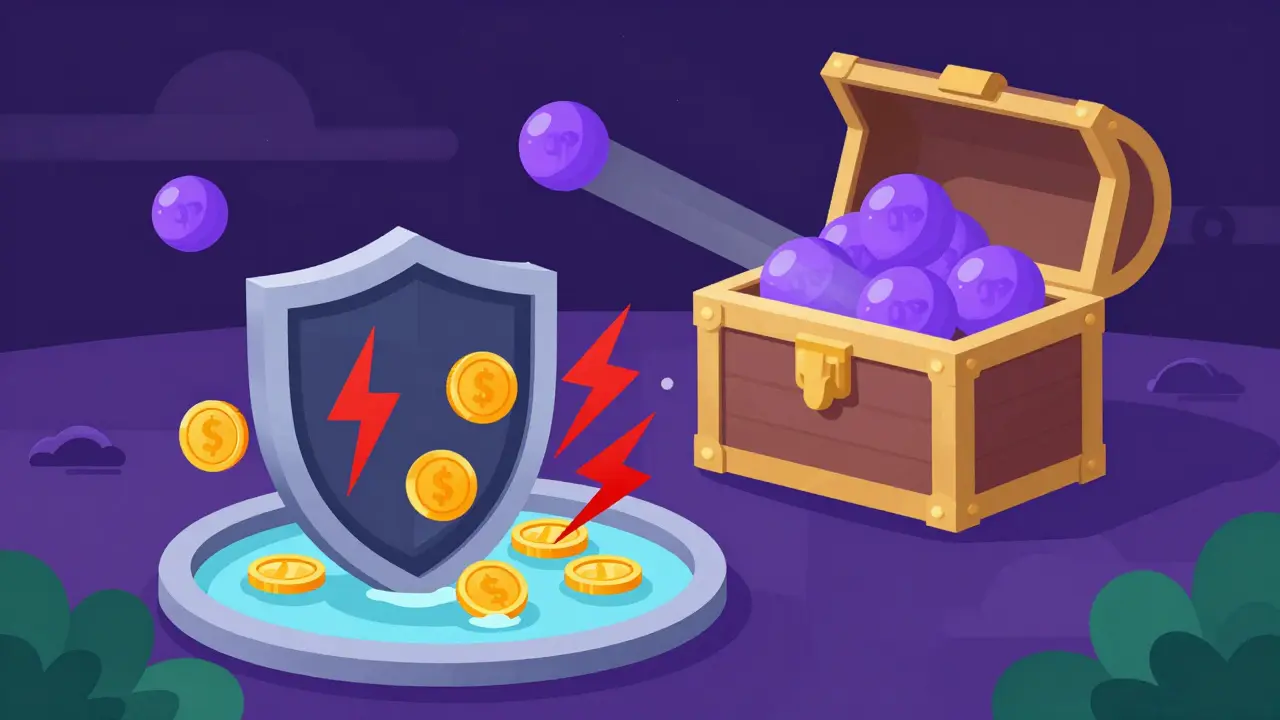
When someone’s collateral value drops below the safety threshold, their position is liquidated. Who buys that discounted collateral? The Stability Pool. Users who deposit USC into this pool help facilitate these liquidations. In return, they receive a share of the liquidation profits (the discount gained when selling the collateral) and a portion of protocol revenue. It’s essentially insurance underwriting. You provide the liquidity to absorb bad debts, and you get paid for the risk.
The Vault
This component is tied to the governance and utility token of the ecosystem, ORB Token is the governance and utility token of the Orby Network ecosystem, used for staking in the Vault to earn protocol fees.. Users can deposit ORB or esORB (escrowed ORB) into the Vault. These stakers earn a share of the fees generated by the entire protocol. This creates a link between the stablecoin’s usage and the governance token’s value. If more people borrow USC, more fees are generated, and more rewards go to ORB stakers.
Risks and Red Flags to Watch
I’m going to be direct here. While the interest-free model is attractive, it comes with specific risks that aren’t always obvious to new users.
- Lack of Transparency: As of mid-2026, public profiles for Orby Network do not disclose the founding team, corporate entity, or exact launch date. In crypto, anonymity isn’t illegal, but it does mean you can’t sue anyone if something goes wrong. There is no central authority to call.
- Missing Audit Data: Major listings like CoinMarketCap and Coinbase list USC, but there are no widely cited third-party security audits or bug-bounty programs mentioned in primary sources. Smart contract risk is real. If there is a code exploit, your collateral is gone.
- Liquidation Volatility: Because there is no interest buffer, the protocol relies heavily on liquidations to maintain the peg. In a fast-moving market, if oracles (price feeds) lag, your collateral might be sold at a loss before you can add more funds.
- Supply Discrepancies: Market data shows a circulating supply of around 13-18 million USC, but a Fully Diluted Valuation (FDV) that implies billions in potential future supply. This suggests a large amount of USC may yet to be minted or unlocked, which could impact long-term stability if demand doesn’t match supply growth.
Is Orby Network Right for You?
Orby Network serves a very specific niche. It is not for the casual investor who wants to park dollars safely. It is for DeFi natives on the Cronos chain who want leverage without bleeding capital to interest rates.
If you are a trader who wants to stay long on CRO but needs USD liquidity to buy dips on other chains, USC is efficient. You lock your CRO, mint USC, and use the USC elsewhere. You don’t pay interest every hour. You just manage your collateral ratio.
However, if you are looking for a regulated, insured, fiat-backed store of value, stick to USDC or USDT. Orby’s USC is a tool for active management, not passive storage. Always verify the contract addresses yourself, check the current collateralization ratios on the dashboard, and never deposit more than you can afford to lose in a flash crash.
Is USC a centralized or decentralized stablecoin?
USC is a decentralized, overcollateralized stablecoin. It is minted by users locking crypto collateral into smart contracts on the Cronos blockchain, rather than being issued by a central company holding fiat reserves.
Why is there no interest on USC loans?
The protocol eliminates interest payments by shifting the cost to liquidation risks and Stability Pool incentives. The revenue comes from the spread on liquidated collateral and protocol fees shared with ORB stakers, rather than charging borrowers directly.
What is the difference between Orby USC and Classic USD (USC)?
They are completely different. Orby USC is a crypto-collateralized stablecoin on the Cronos blockchain. Classic USD (also ticker USC) is a fiat-backed stablecoin on the Ethereum Classic blockchain, issued by the regulated entity Brale.
Can I lose my collateral on Orby Network?
Yes. If the value of your deposited collateral drops below the required collateralization ratio, your position will be liquidated. The protocol will sell your collateral to repay the USC debt, potentially leaving you with nothing if the market moves sharply.
Does Orby Network have security audits?
Publicly available information as of 2026 does not highlight specific third-party security audit reports or bug bounty programs. Users should exercise caution and perform their own due diligence on the smart contract code before depositing significant assets.
Leave a comments