You’ve probably seen the ticker P2PS flash across a chart with a price that looks impossible for a small-cap coin. One day it’s fractions of a cent; the next, data aggregators show it trading at hundreds of dollars with a market cap in the trillions. It feels like a glitch. In crypto, when numbers look this good, they usually hide something messy. So, what exactly is the P2P Solutions Foundation, and why does its token, P2PS, behave so strangely?
This isn’t just another meme coin or a failed startup from 2017. P2PS has a specific technical origin, a clear (if niche) use case, and a set of red flags that every investor needs to understand before touching it. Let’s strip away the hype and look at the actual mechanics, the team behind it, and whether this token holds any real value in 2026.
The Core Concept: Secure Peer-to-Peer Data Transfer
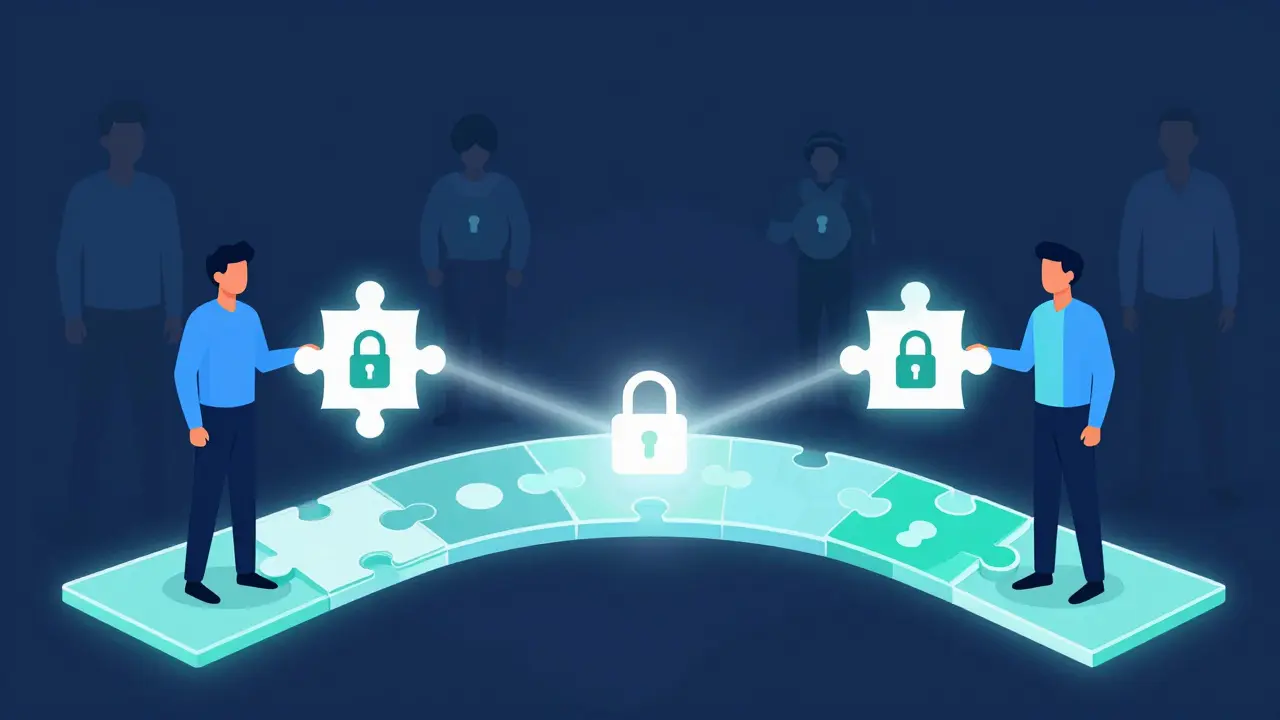
At its heart, the P2P Solutions Foundation is an organization that aims to solve a massive problem: data insecurity. According to their whitepaper, released in December 2017, global losses due to privacy breaches and data theft cost roughly USD 500 billion per year. Their solution? A blockchain-enabled platform that allows two parties to exchange sensitive files-like medical records, banking data, or government documents-without any third party (including network admins or ISPs) being able to intercept or interfere with the transfer.
Think of it as a highly secure, decentralized Dropbox mixed with Signal encryption, but powered by cryptocurrency. The platform, launched officially on April 27, 2019, positions itself not as a general-purpose smart contract chain like Ethereum, but as an application-layer overlay focused purely on secure digital asset delivery. They call it a "push-back system," a term dating back to their initial concept phase in 2010, suggesting this idea has been brewing long before the ICO boom.
The key promise here is interference-free communication. In traditional cloud storage, your provider can see your metadata, censor content, or suffer hacks. P2PS claims to eliminate that middleman entirely using peer-to-peer networking protocols combined with Ethereum’s immutability for transaction records.
Token Mechanics: What Does P2PS Actually Do?
To make sense of the token, you have to separate the platform from the currency. P2PS is the native utility token of this ecosystem. It is built as a standard ERC-20 token on the Ethereum network. This means it doesn’t have its own blockchain; it rides on Ethereum’s security and infrastructure.
So, why do you need the token? According to Coinbase and the official project documentation, P2PS serves three main functions:
- Access Fee Payment: Users must pay P2PS tokens to upload, store, or transfer files on the platform. It acts as the fuel for the service.
- Merchant Currency: Within the closed P2PS ecosystem, merchants accept only P2PS for goods and services. You can’t use USDT or ETH directly; you must swap them for P2PS first.
- Staking/Security: While less explicitly detailed in public docs, many such platforms require nodes or validators to stake tokens to ensure network integrity, though P2PS focuses more on the user-side utility.
Because it’s an ERC-20 token, you can hold it in any wallet that supports Ethereum standards, such as MetaMask, Trust Wallet, or Ledger. However, remember that holding the token doesn’t automatically grant you access to the enterprise-grade security features unless you are actively using the platform’s software.
The Team and Origins: Who Is Behind This?
Transparency is often the first casualty in crypto projects, but P2PS has some named faces. The project was founded by a team based in Nevis, a jurisdiction known for favorable corporate laws but also for opacity. Key figures include:
- Jameel A. Shariff: Chief Executive Officer and Council Member. He is the public face of the project, often cited in press releases and community updates.
- Amos Henry Jr.: Chief Business Development Officer and Council Member, responsible for partnerships and growth strategies.
- A. Manikfan: Project Manager, overseeing technical execution.
- Janeth Cresencio: Community Manager, handling user support and social media engagement.
Interestingly, there is a common confusion online. Some data aggregators incorrectly list the foundation as a Swiss non-profit dedicated to the "Radworks ecosystem." This is a data error. P2P Solutions Foundation is distinct from Radworks. Always verify sources against the official site to avoid mixing up these entities.
Price Action and Market Anomalies: Why the Numbers Look Broken
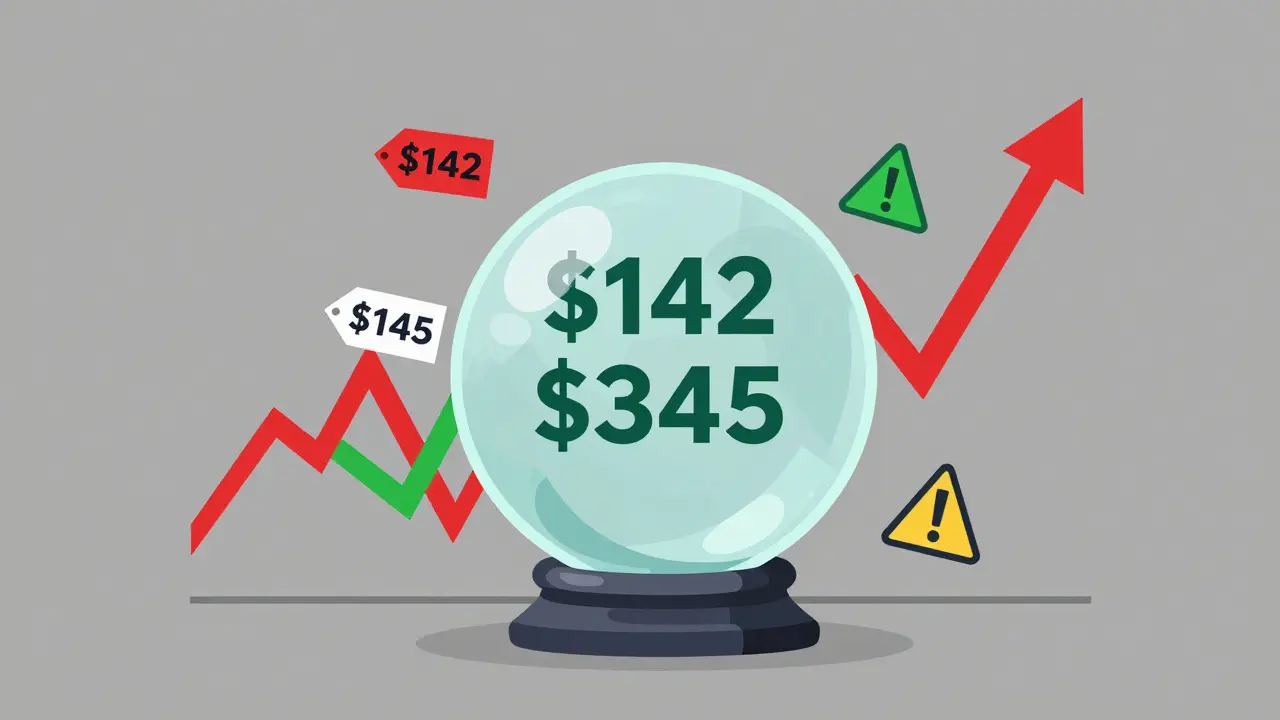
If you’ve looked at P2PS charts recently, you’re probably confused. Here’s the reality check: P2PS exhibits extreme volatility and pricing discrepancies that scream "illiquid market."
| Data Source | Reported Price (USD) | Market Cap Status | Circulating Supply |
|---|---|---|---|
| CoinGecko | $345.77 (ATH) | High Volatility | Unclear |
| CoinMarketCap | $142.18 - $189.72 | ~$494 Billion (Theoretical) | 10 Billion Total |
| Coinbase | $318.55 | $0.00 (No Active Trading) | 0 (Unverified) |
| Crypto.com | $169.89 | Variable | Not Specified |
Notice the spread? Prices range from $142 to $345 depending on who you ask. More importantly, look at the market cap. CoinMarketCap calculates a fully diluted valuation (FDV) of nearly $1.89 trillion based on a total supply of 10 billion tokens. But Coinbase lists the circulating supply as zero. How can a token have a trillion-dollar valuation if no one is actually trading it?
This happens because of thin liquidity. When very few tokens are available for trade on exchanges, a single large buy order can spike the price dramatically. Conversely, a small sell-off crashes it. The "market cap" shown on some sites is a mathematical artifact of multiplying the last traded price by the total supply, ignoring how many tokens are actually locked up or illiquid. This makes P2PS a high-risk speculative asset rather than a stable investment.
Risks and Red Flags: What You Need to Know Before Buying
Let’s be direct: P2PS is classified as a high-risk token by security platforms like De.Fi. Here’s why you should proceed with caution:
- Lack of Audits: There are no publicly available, independent smart contract audits from firms like CertiK or OpenZeppelin. For a project handling sensitive medical and banking data, this is a significant gap.
- Regulatory Ambiguity: Handling health data requires HIPAA compliance in the US and GDPR in Europe. The project materials do not explicitly state compliance with these frameworks, which could lead to legal shutdowns.
- Exchange Delistings: Major centralized exchanges like KuCoin do not support P2PS. You’ll find it on smaller venues like Biconomy.com or via decentralized exchanges (DEXs). This limits your ability to exit quickly if the market turns.
- Data Conflicts: As seen above, major trackers disagree on basic metrics. This lack of standardized data makes fundamental analysis nearly impossible.
If you are looking for a safe, long-term hold, P2PS likely doesn’t fit that profile. It fits the profile of a niche utility token with speculative price action driven by low liquidity.
How to Buy and Store P2PS Safely
If you decide to take the risk, here is the most secure way to acquire and store P2PS tokens in 2026. Since major CEXs don’t list it, you’ll need to use a DEX or a smaller exchange.
Step 1: Choose a Compatible Wallet
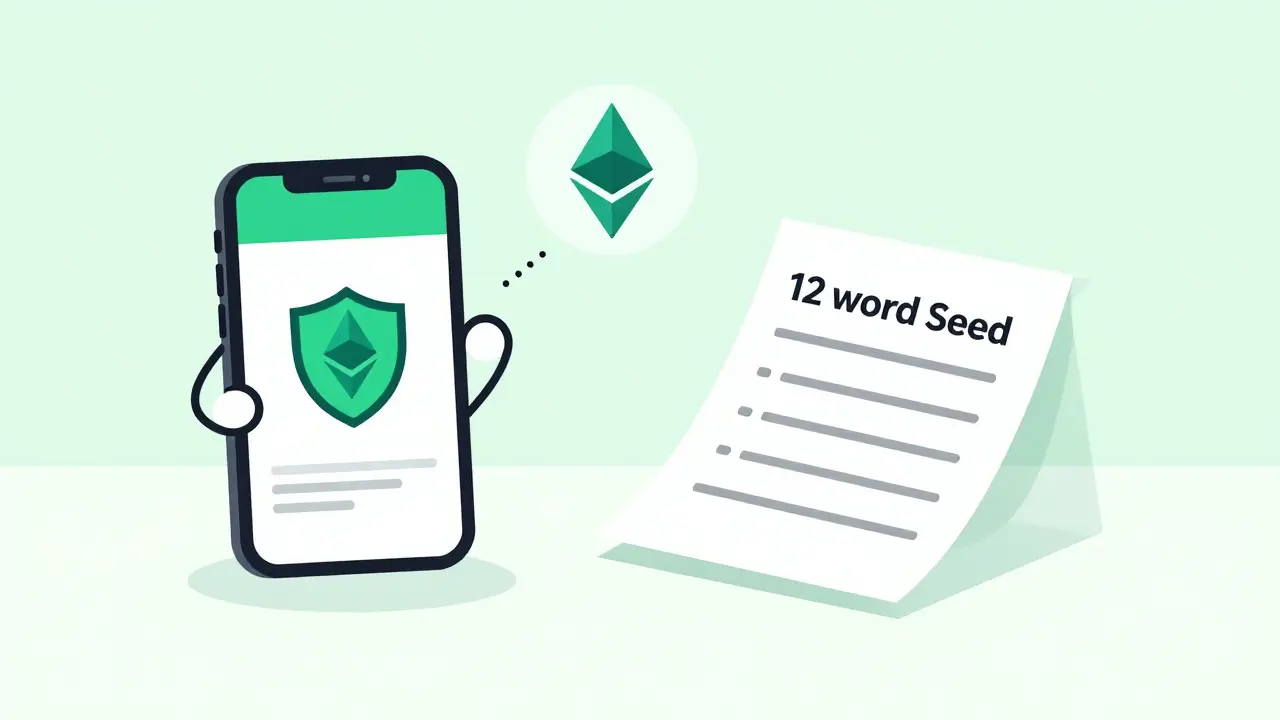
Since P2PS is an ERC-20 token, you need an Ethereum-compatible wallet. MetaMask is the industry standard for this. Download it from the official website or app store-never from a link in an email. Create a new wallet and write down your 12-word seed phrase on paper. Never store it digitally.
Step 2: Acquire Ethereum (ETH)
You cannot buy P2PS directly with fiat on most platforms. First, buy ETH on a major exchange like Coinbase, Binance, or Kraken. Withdraw the ETH to your MetaMask wallet address. Keep enough extra ETH in the wallet to pay for gas fees (transaction costs on the Ethereum network).
Step 3: Swap on a Decentralized Exchange (DEX)
Connect your MetaMask wallet to a DEX that lists P2PS, such as Uniswap or SushiSwap (verify the correct contract address for P2PS to avoid scams). Search for the P2PS token pair (usually P2PS/ETH). Enter the amount of ETH you want to swap, review the slippage tolerance (set it higher if the price is volatile), and confirm the transaction.
Step 4: Verify the Transaction
Wait for the block confirmation on Etherscan. Once confirmed, the P2PS tokens should appear in your wallet. Double-check the balance against the explorer to ensure you received the correct amount.
Final Thoughts: Is P2PS Worth Your Attention?
The P2P Solutions Foundation offers a compelling vision: a world where your sensitive data moves freely without fear of interception. The technology stack-leveraging Ethereum for transparency and peer-to-peer networks for privacy-is sound in theory. However, the execution remains opaque. The lack of audits, regulatory clarity, and consistent market data puts P2PS in the "high risk, high reward" category.
For developers building dApps in healthcare or finance, the underlying protocol might offer interesting tools. For investors, treat P2PS as a speculative play. The price swings are too wild for passive holding, and the liquidity is too thin for large positions. Do your own research, start small, and never invest more than you can afford to lose.
Is P2PS a scam?
There is no definitive evidence that P2PS is a outright scam, as it has a functioning team, a published whitepaper, and active trading on several exchanges. However, it is flagged as "high-risk" by security firms due to lack of audits, opaque supply data, and extreme price volatility. Proceed with extreme caution.
Where can I buy P2PS token?
Major exchanges like Coinbase and KuCoin do not currently support direct P2PS trading. You can typically find P2PS on decentralized exchanges (DEXs) like Uniswap or smaller centralized platforms like Biconomy.com. You will need ETH to swap for P2PS.
What is the total supply of P2PS?
The total supply of P2PS tokens is fixed at 10,000,000,000 (10 billion). However, the circulating supply is unclear and often reported as zero or negligible on major trackers, indicating that most tokens may be locked or illiquid.
Does P2PS work on Bitcoin?
No. P2PS is an ERC-20 token built on the Ethereum blockchain. During its ICO, it accepted Bitcoin (BTC) as payment, but the token itself lives exclusively on Ethereum.
Who is the CEO of P2P Solutions Foundation?
Jameel A. Shariff is the Chief Executive Officer and a Council Member of the P2P Solutions Foundation. He leads the strategic direction of the project.
Meg Gran
8 06 26 / 19:38 PMlol another "secure" data platform that looks like a rug pull waiting to happen. the price discrepancies are hilarious, who actually trades this? 🙄
Mark Corpuz
9 06 26 / 04:11 AMThe article provides a comprehensive overview of the technical and financial aspects of P2PS. It is crucial for investors to understand the distinction between the platform's utility and the token's speculative nature. The lack of independent audits is indeed a significant concern for any project handling sensitive data.
Steven Jacobowitz
10 06 26 / 11:54 AMI mean, look at the FDV. Trillions? For a token with zero liquidity on Coinbase? That’s not investing, that’s gambling with extra steps. The jargon about "push-back systems" sounds cool until you realize no one is using it. Why would a hospital trust an unaudited ERC-20 token over established HIPAA-compliant cloud providers? The risk/reward ratio is completely broken here.
Sylvia Mossman
12 06 26 / 09:35 AMYou people are so naive if you think this is just a "niche" play. This is a classic pump-and-dump structure disguised as tech innovation. The team hiding in Nevis? Red flag #1. No audits? Red flag #2. Price spikes from thin liquidity? Red flag #3. Stop pretending this is legitimate infrastructure. It’s a casino chip.
Lee Paige
13 06 26 / 21:42 PMThis entire ecosystem is a front for data harvesting by foreign entities. The "peer-to-peer" narrative is a lie designed to bypass national security protocols. Who do we really think controls these servers? The fact that they operate out of tax havens like Nevis while claiming to secure US medical records is deeply suspicious. We need strict regulations on all such blockchain projects immediately.
Alexis Abster
15 06 26 / 13:21 PMOh my god, can we please stop doom-scrolling? Yes, it’s risky, but isn’t there *some* value in decentralized storage? I feel like everyone is so quick to dismiss it without understanding the vision. Imagine a world where your health data is truly yours! Isn’t that worth exploring, even if the execution is messy right now? Let’s be optimistic!
Brad Ranks
17 06 26 / 08:46 AMWait wait wait hold up. Did someone say trillions? 😱 I thought I was dreaming. Okay, serious face now. The chart looks like a seismograph during an earthquake. If you’re buying this, make sure you have a strong stomach. I’m just watching from the sidelines, popping popcorn. 🍿
Caitlin Donahue
17 06 26 / 13:00 PMi dunno guys, seems sketchy af. why would u pay in crypto for something so important? feels like a scam tbh. keep ur money safe ppl.
Karthikeyan S
18 06 26 / 06:45 AMu all r missing the point 😡 this is how the elite drain ur wallets. simple math: low supply + high hype = profit for insiders. dont be a sheep 🐑💀
Alexander DeVries
19 06 26 / 14:29 PMWhile the risks are evident, it is important to approach this with a structured mindset. Understanding the mechanics of illiquid markets is a valuable lesson in itself. Do not let fear drive your decisions; let analysis guide you. Stay disciplined and protect your capital.
Yogendra Dwivedi
21 06 26 / 02:24 AMI am curious about the long-term viability of such models. In India, we are seeing similar attempts at decentralized identity and data management, but they usually fail due to regulatory pushback. Has anyone looked into whether P2PS has any partnerships in emerging markets? It seems too isolated to survive alone.
aaliyah zahid
22 06 26 / 04:49 AMSure, because nothing says "trustworthy healthcare provider" like a token that costs $300 on one site and $100 on another. Classic.