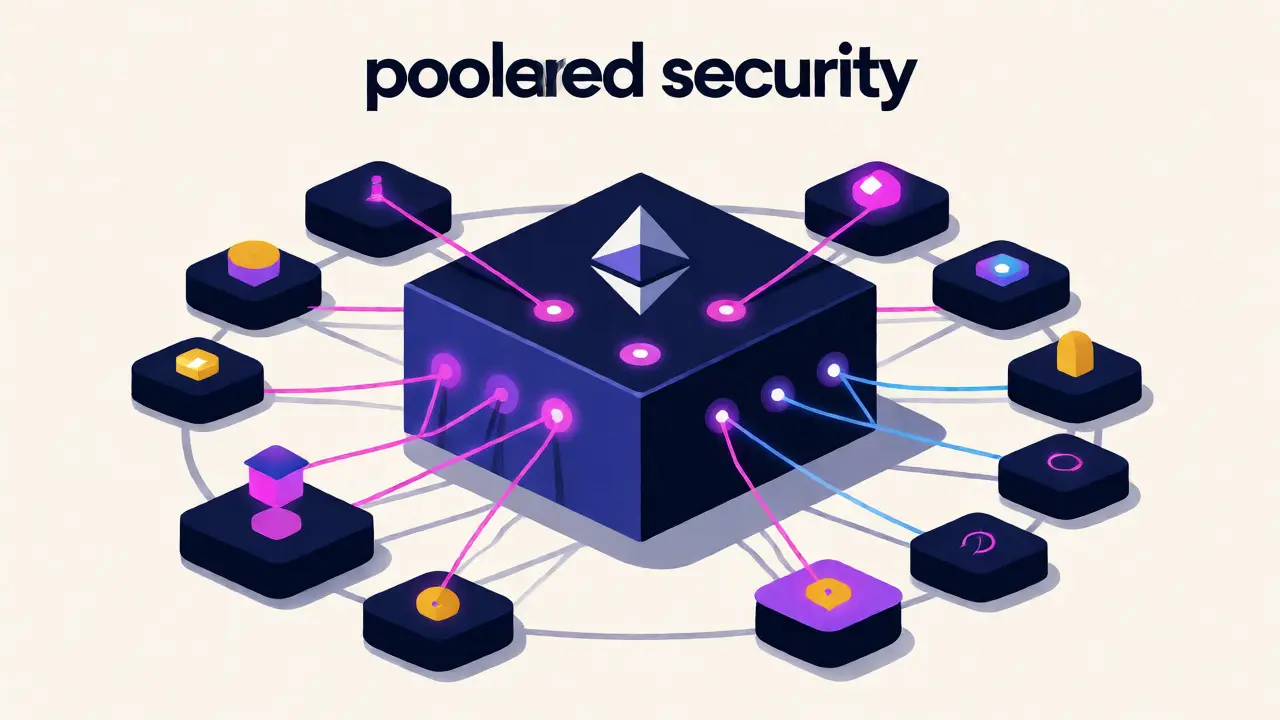
You already know that staking your crypto keeps the network running. But what if you could use that same locked-up capital to secure multiple networks at once? That’s the core idea behind Restaking. It’s not just a buzzword; it’s a fundamental shift in how blockchain security works, allowing validators to redeploy their staked assets across various protocols without selling them.
If you’ve been holding ETH or other proof-of-stake assets, you might have heard about EigenLayer, the protocol that popularized this concept. Launched on mainnet in March 2024, EigenLayer has quickly become a cornerstone of the Ethereum ecosystem, locking up over $20 billion in value by late 2024. But does restaking actually make sense for you? Or is it just another layer of complexity with hidden risks?
This guide breaks down exactly what restaking is, how it differs from standard staking, and whether the potential 8-12% APY is worth the added technical hurdles. We’ll look at real user experiences, the mechanics of slashing, and the future of this rapidly evolving sector.
The Core Concept: Pooled Security
Traditional staking is siloed. If you stake ETH on Ethereum, you’re securing Ethereum. Period. You can’t easily lend that security to a new Layer 2 network or a decentralized oracle service. These new services, known as Actively Validated Services (AVSs), historically had to bootstrap their own security from scratch. This meant they needed their own token incentives and validator sets, which is expensive and slow.
Restaking solves this by creating a marketplace for security. Think of it like renting out an apartment you already own. You don’t need to buy a second apartment to rent it out; you just list the one you have. In crypto terms, validators allow their staked ETH to be used by AVSs to verify data or execute transactions. The AVS pays for this security, and the validator earns extra yield.
This system relies on two main ideas:
- Pooled Security: Instead of each new protocol building its own fortress, they share Ethereum’s massive security budget.
- Free-Market Dynamics: Validators choose which AVSs to support based on risk and reward. If an AVS offers high yields but has sloppy code, validators might skip it. If it’s reliable, they flock to it.
Sreeram Kannan, a professor at the University of Washington and founder of EigenLayer, describes this as an "internet bond market." Capital flows efficiently to where security is needed most, rather than being trapped in isolated silos.
Native vs. Liquid Restaking: Which Path Fits You?
Not everyone runs their own validator node. In fact, most people don’t. This has led to two distinct ways to participate in restaking.
| Feature | Native Restaking | Liquid Restaking |
|---|---|---|
| Who it's for | Technical users running their own nodes | Retail investors using exchanges or apps |
| Requirement | 32 ETH minimum + hardware (16GB RAM, 1TB SSD) | Any amount of ETH via LST/LRT providers |
| Complexity | High (manual software management) | Low (automated via smart contracts) |
| Risk Exposure | Direct slashing penalties from AVSs | Indirect exposure via token depegging/slashing |
| Popular Tools | EigenLayer CLI, custom clients | EtherFi (eETH), Renzo Protocol, Puffer Finance |
Native Restaking is exclusive to those who operate their own validator nodes. You install specific software modules for EigenLayer and connect them to your Ethereum client. You maintain full control, but you also bear the brunt of any operational mistakes. If your node goes offline while validating for an AVS, you get slashed directly.
Liquid Restaking is where most retail activity happens. You stake your ETH with a provider like EtherFi, receiving a Liquid Restaking Token (LRT) such as eETH. This token represents your stake and automatically accrues rewards from both Ethereum and the AVSs. You can then trade this token or use it as collateral in DeFi. According to OSL Academy, these tokens function as rebasing assets, meaning their balance grows automatically over time.
The Yield Promise: Is 12% APY Real?
Let’s talk numbers, because this is why most people click on articles about restaking. Standard Ethereum staking typically yields between 3% and 5% annual percentage yield (APY). It’s safe, predictable, and boring.
Restaking changes the math. By securing multiple AVSs, validators can potentially push total returns to 8-12% APY, according to Kraken’s research from September 2024. For a holder of 10 ETH, that difference is significant. It turns idle capital into a higher-yielding asset without requiring additional upfront investment.
However, yield isn't free money. The extra rewards come from fees paid by AVSs for security. These AVSs range from simple oracle networks to complex rollup sequencers. Some offer stable, low-risk yields; others offer high-risk, high-reward opportunities. Early adopters on forums like r/ethstaker report mixed results. One user with 32 ETH reported earning 8.2% total APY through EigenLayer compared to 3.5% from standard staking. But they also noted that "the complexity of managing multiple slashing conditions requires constant monitoring."

The Hidden Risks: Slashing and Systemic Fragility
If you’re used to standard staking, you know that slashing penalties exist but are rare. With restaking, slashing becomes a much more active threat. Each AVS you support imposes its own set of rules. If you fail to validate correctly for an AVS-perhaps due to a temporary connectivity issue-you could lose a portion of your stake.
Penalties vary wildly. Some AVSs impose mild fines of 0.5%, while others can slash up to 100% of the staked amount involved in a specific failure. CoinMarketCap’s analysis highlights that these penalties are separate from Ethereum’s native slashing measures. So, you could technically get hit twice: once by Ethereum for downtime, and again by an AVS for incorrect validation.
There’s also a systemic risk known as the "combinatorial explosion" of slashing conditions. Security researchers at Trail of Bits warn that as more AVSs plug into EigenLayer, the web of dependencies becomes incredibly complex. If a major AVS fails or is exploited, it could trigger cascading slashes across thousands of validators. Vitalik Buterin has expressed cautious support for the technology but warned that poor design could lead to systemic instability.
For liquid restakers, there’s an additional layer of risk: depegging. If your LRT loses its peg to ETH due to panic or liquidity crunches, you might sell at a loss even if your underlying stake is intact. S&P Global noted in June 2024 that using LRTs as collateral in lending markets could amplify these liquidation events.
How to Get Started: A Practical Checklist
Ready to try restaking? Here’s what you need to consider before moving your funds.
- Assess Your Technical Skill: Do you want to run a node? If yes, prepare for a steep learning curve. Most users report spending 40-60 hours studying documentation before feeling comfortable. Hardware requirements include 8+ CPU cores, 16+ GB RAM, and 1+ TB SSD storage.
- Choose Your Provider Carefully: If going liquid, look at the track record of providers like EtherFi or Renzo. Check their audits and community sentiment. EigenExplorer data shows that 65% of users prefer delegating to operators rather than running their own validators, often paying 5-10% in fees for convenience.
- Understand the Lock-Up Periods: Unlike some liquid staking tokens, restaking withdrawals can be slower. Ensure you don’t need immediate access to your capital.
- Monitor AVS Health: Don’t just set it and forget it. Keep an eye on the performance of the AVSs your stake is supporting. Poor performance here directly impacts your yield and risk profile.

The Future of Restaking: Market Growth and Regulation
The restaking market is exploding. Total Value Locked (TVL) reached $20.3 billion by October 2024, representing about 15% of all staked ETH. Blockworks Research projects this could grow to $100 billion by 2026. This growth is driven largely by institutional players; entities holding over 1,000 ETH account for 68% of restaked value.
But regulation looms large. The U.S. SEC has hinted that certain restaking arrangements might constitute securities offerings. This creates uncertainty for US-based participants. Meanwhile, competitors are emerging. While EigenLayer dominates with 89% market share, protocols like Renzo and Puffer are carving out niches by offering better user interfaces or specialized risk profiles.
Looking ahead, expect deeper integration between restaking and DeFi. CoinGecko forecasts that LRTs could represent 40% of all restaked value by 2025. As tools improve, the barrier to entry will lower, making restaking accessible to everyday holders rather than just crypto natives.
Frequently Asked Questions
Is restaking safer than regular staking?
No, it is generally considered riskier. While the underlying asset (like ETH) remains the same, restaking introduces additional slashing conditions from AVSs. If you fail to meet the requirements of a third-party service, you can lose part of your stake, which doesn't happen in standard Ethereum staking unless you go offline for extended periods.
Do I need 32 ETH to start restaking?
Only if you are doing native restaking on your own validator. If you use liquid restaking platforms like EtherFi or Renzo, you can start with any amount of ETH. These platforms pool user funds to meet the validator requirements.
What happens if an AVS gets hacked?
If an AVS suffers a critical bug or hack, it may trigger slashing penalties for validators who were securing it. Depending on the severity and the specific terms of the AVS, validators could face significant losses. This is why choosing reputable AVSs with strong audits is crucial.
Can I unstake my ETH immediately?
Not usually. Restaking involves lock-up periods similar to standard staking, plus potential withdrawal queues for the AVSs involved. Liquid restaking tokens (LRTs) can be traded on secondary markets for instant liquidity, but you might incur slippage or price discounts compared to the underlying ETH value.
Which restaking protocol is best right now?
EigenLayer is the dominant player with the largest TVL and most integrations. However, newer protocols like Renzo and EtherFi offer different user experiences and risk profiles. "Best" depends on whether you prioritize maximum yield, ease of use, or institutional-grade security features.
Gary Bryant
26 09 26 / 16:40 PMlook the whole pooled security thing is just rebranding liquidity mining for validators who are too lazy to run their own infra
you think ur gonna get 12% apy but ur actually getting diluted by gas fees and slippage on the lrt swaps
its basically a ponzi structure where new avs pay old validators until the yield compresses to zero
most retail users dont understand slashing conditions they just see big numbers
Rohit Singh
27 09 26 / 13:52 PMah yes because nothing says "secure network" like letting random people plug into your validator with no clear liability framework
im sure everyone will read the fine print on those 50 different slashing conditions before delegating
classic crypto move: sell complexity as innovation then blame the user when they get liquidated
Ashley Cooke
29 09 26 / 06:03 AMThe distinction between native and liquid restaking is crucial here. For most retail investors, running a node with 32 ETH plus hardware requirements is simply not feasible.
Liquid Restaking Tokens (LRTs) like eETH or ezETH lower that barrier significantly, but you must understand that you are trading direct control for convenience.
If an AVS has a bug, your LRT might depeg even if the underlying ETH is safe. That is a risk many overlook in pursuit of higher APY.
I recommend starting with established providers who have undergone multiple audits rather than chasing the highest yield from unproven protocols.
Nicoletta Milanesio
30 09 26 / 22:20 PMomg i love this breakdown!! 🤩 finally someone explained why my staked eth feels like its doing extra work 😂
i tried etherfi last month and the ui was super clean so i felt safe putting in some spare change 💸
but yeah the slashing part scared me a bit tbh... hope it stays stable! ✨🚀
sai charan
1 10 26 / 21:09 PMYou're all missing the point about systemic fragility. It's not just about individual validator failure; it's about correlation risk.
If EigenLayer becomes a single point of failure for Ethereum security, one bad update could cascade across billions in TVL.
Vitalik warned about this exact scenario because combinatorial slashing creates dependencies nobody fully models yet.
Retail chases 12% while institutions hedge against tail risks you don't even know exist.
This isn't finance; it's gambling dressed up in whitepapers.
Steve Parshall
2 10 26 / 23:20 PMMan, the energy in this space is unreal right now!! 🔥
Seeing $20B locked in just months after launch proves that people want more utility from their assets.
We should be celebrating how far we've come from simple staking rewards to this massive marketplace for security!
Keep building, keep innovating, the future is bright for those who dare to restake! 💪
Aman Kumar Shah
3 10 26 / 11:11 AMIt is absolutely fascinating to observe how this mechanism transforms idle capital into productive security infrastructure, yet I cannot help but feel a deep sense of caution regarding the opacity of these AVS contracts.
When we talk about 'internet bond markets,' we are essentially commodifying trust itself, which is a profound philosophical shift in how value is derived from consensus mechanisms.
The sheer volume of code being executed simultaneously across these layers introduces a level of entropy that traditional financial systems rarely face, making the prediction of outcomes nearly impossible without robust simulation tools.
I believe that while the potential for yield enhancement is real, the psychological burden on the average investor to monitor these complex interdependencies may lead to widespread fatigue and eventual abandonment of the protocol.
We must ask ourselves whether the marginal gain in APY is truly worth the cognitive load required to maintain solvency in such a volatile environment.
Furthermore, the regulatory landscape remains a dark cloud hovering over these innovations, potentially stifling growth before it reaches maturity.
In conclusion, while I am optimistic about the technological prowess displayed here, I urge every participant to tread lightly and respect the intricate dance of risks involved.
Let us not forget that in the world of decentralized finance, simplicity is often the ultimate sophistication, and we seem to be moving away from that principle.
The community would benefit greatly from more educational resources that focus on risk management rather than just yield farming strategies.
Only time will tell if this experiment in shared security stands the test of economic reality.
May your nodes stay online and your yields remain high, friends.
Peace and prosperity to all who participate in this grand experiment.
Thank you for sharing this insightful perspective.
It sparks much needed dialogue among us thinkers.
Long live the blockchain revolution!
Dana T.
4 10 26 / 09:55 AMcorrelation risk is the killer here
if eth dumps 20% and the lrt depegs 5% due to panic selling u r down 25% instantly
standard staking keeps u pegged to eth
restaking adds beta exposure u didn't sign up for
bad math for conservative allocators
Precious Ekwuribe
5 10 26 / 23:25 PMIts honestly hilarious seeing people act like they understand the tech when they cant even spell 'blockchain' correctly half the time.
Most of you are just following influencers who got paid to shill these protocols.
Read the docs or dont invest at all, its that simple.
Tiffany Kee
7 10 26 / 02:27 AMI appreciate the passion everyone brings to this discussion.
It’s important to remember that behind every token is a person trying to secure their financial future.
Whether you choose native or liquid restaking, finding what makes you sleep well at night is key.
Let’s support each other through the volatility and learn together.
Wishing everyone peace and clarity in their decisions today.
Douglas Sorocco
7 10 26 / 06:50 AMActually, the data suggests that institutional adoption is driven by sophisticated risk-adjusted return models, not blind faith.
Those dismissing restaking as a Ponzi clearly haven't analyzed the fee structures of top-tier AVSs like Dune or AltLayer.
Yield compression is a natural market correction, not a collapse indicator.
Education is the only cure for the ignorance prevalent in retail circles. 🧐
Riya Adhikari
9 10 26 / 01:07 AMhey wait do i need to unstake my current eth first or can i just wrap it??
also does anyone else get nervous clicking approve on those weird contract addresses?
i feel like im gonna lose my lunch money lol
Sandy Garg
10 10 26 / 07:29 AMThe epistemological challenge here lies in the opacity of the AVS layer.
We are asked to trust black-box services that verify our transactions, yet we lack transparent metrics to assess their true reliability.
This asymmetry of information creates a moral hazard where operators may take excessive risks knowing the cost of failure is socialized.
Until standardized auditing frameworks emerge, restaking remains an exercise in faith rather than engineering certainty.
Kerry Sims
11 10 26 / 14:03 PMit really comes down to what you value more: efficiency or sovereignty.
pooled security is efficient but it centralizes risk in ways we haven't seen before.
if you care about decentralization above all else, maybe running your own node for one specific avs is better than dumping everything into a liquid pool.
the tradeoff is always going to be there.
KRISHAN LAKHIWAL
12 10 26 / 08:50 AMMoral hazard is rampant.
Users delegate blindly.
Operators cut corners.
Slashing hits hard.
Accountability is absent.
Angel Bee
12 10 26 / 21:45 PMDont let the scary words fool u guys!!
Restaking is just leveling up ur staking game.
Start small, use trusted apps, and watch ur bags grow!! 📈
You got this fam!!