Understanding the Shiba Inu Ecosystem
If you have been following the cryptocurrency market, you likely know the original Shiba Inu memecoin. However, the story has grown far beyond a simple joke coin created in 2020. Today, the ecosystem includes complex infrastructure designed for real-world utility. One of the most significant developments in this space is the SHI token. Unlike its volatile cousins, SHI is a stablecoin designed to offer price stability within the Shiba Inu ecosystem. While many investors chase moonshots, SHI exists to help users transact without worrying about sudden price swings. By March 2026, understanding this distinction is crucial for anyone navigating the blockchain landscape.
What Is the SHI Token?
SHI Tokenis a stablecoin within the Shiba Inu cryptocurrency ecosystem, introduced alongside the Shibarium Layer-2 blockchain infrastructure. The core function of any stablecoin is to maintain a consistent value relative to a reference currency, typically the US dollar. This allows traders to step out of volatility without exiting the crypto world entirely. Imagine you are trading highly volatile assets. Without a stable option, you would need to move funds off-chain to a bank account or traditional exchange. SHI solves this by staying on-chain while acting like cash. It functions similarly to USDT or USDC but lives inside the Shiba Inu environment, benefiting from their specific community features and lower transaction costs on the Shibarium network.
The token operates within a sophisticated multi-token economy. It was launched not as a standalone product but as a piece of a larger puzzle involving governance, loyalty, and media tokens. This integration is what sets it apart from generic stablecoins issued by central banking institutions. Instead of relying on government bonds alone, SHI draws security from the interconnected liquidity pools of the Shibarium network. Validators secure the chain, and the token facilitates trade, creating a self-sustaining economic loop.
The Five-Token Economy Explained
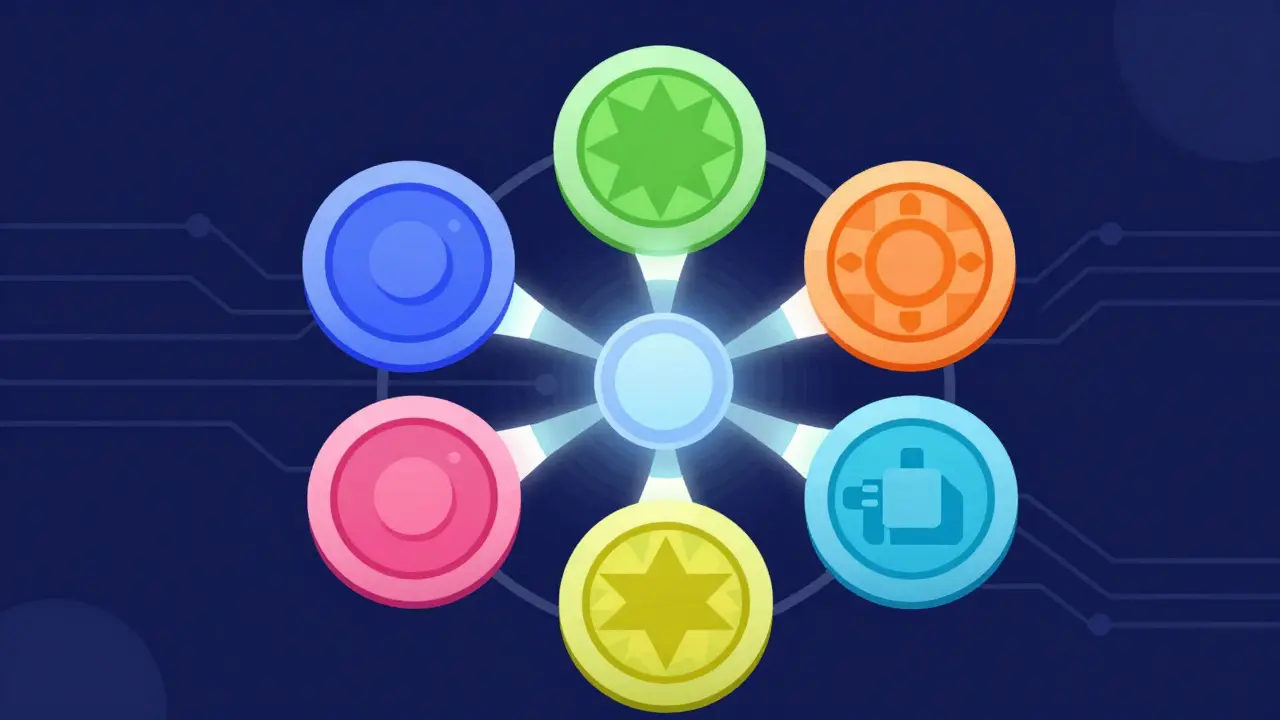
To truly understand SHI, you cannot look at it in isolation. It belongs to a family of five distinct tokens, each with a job to do. If SHI is the cash in your wallet, the others provide the rules and incentives. The architecture includes:
- SHIB: The primary infrastructure and media token. This is the famous memecoin that started it all.
- BONE: The governance token. Holders vote on proposals that shape the future of the ecosystem.
- LEASH: A loyalty token designed to reward long-term supporters of the network.
- TREAT: Specifically designated to facilitate liquidity provision for the SHI stablecoin operations.
- SHI: The stablecoin itself, providing stability for transactions.
This separation ensures that no single asset tries to do everything. For instance, you might stake BONE to influence policy, earn TREAT for providing liquidity, and then spend SHI on goods or services without risk. Shibariumutilizes TREAT tokens to provide liquidity for the SHI stablecoin, creating an interconnected token economy where each asset serves distinct utility functions. Each component relies on the strength of the others, making the system more resilient than projects with a single-token approach.
Technical Infrastructure: Shibarium Layer-2
A critical aspect of SHI is the network it runs on. It does not operate directly on Ethereum mainnet anymore; it resides on Shibariuma Layer-2 blockchain solution designed for enhanced scalability and reduced transaction costs.. Ethereum mainnet is known for high fees and slow processing times during congestion. Shibarium was built to solve exactly that problem. It processes transactions significantly faster while maintaining the security standards of the underlying Ethereum blockchain.
For the average user, this means sending SHI costs pennies rather than dollars. Validators on the network are required to hold BONE tokens to participate, ensuring they have a stake in the system's success. When a validator verifies a transaction, they receive compensation in BONE, not SHI. This technical framework prevents inflation of the stablecoin supply. Instead, the native gas fee remains separate, preserving the stability of SHI.
In comparison, early versions of stablecoins often struggled with reliance on centralized reserves or lack of transparency. The Shibarium Layer-2 infrastructure offers a decentralized alternative. As of 2026, the network has processed millions of transactions, indicating strong adoption rates among retail investors who prefer speed over traditional banking rails.
| Feature | SHI Token | USDT | USDC |
|---|---|---|---|
| Underlying Chain | Shibarium (L2) | Ethereum / Multi-chain | Ethereum / Omni-chain |
| Peg Reference | USD ($1.00) | USD ($1.00) | USD ($1.00) |
| Transaction Speed | Fast (L2 optimized) | Moderate (Mainnet dependent) | Moderate (Mainnet dependent) |
| Gas Fees | Very Low | High (on Mainnet) | High (on Mainnet) |
| Governance | Community-driven (DAO) | Centralized (Tether Inc.) | Centralized (Circle) |
How Users Interact with SHI
Owning SHI requires navigating specific tools, primarily the ShibaSwapdecentralized exchange functionality allowing users to swap tokens, provide liquidity, and stake cryptocurrency assets for rewards.. This platform acts as the hub for activity. If you want to convert your volatile holdings into SHI, you would go through ShibaSwap. Conversely, you can use SHI to buy other digital assets instantly without leaving the wallet.
Staking is another key utility. Users can lock up their assets to earn yield. However, unlike traditional savings accounts, these returns come from the protocol's growth and transaction fees rather than interest paid by a bank. This aligns incentives between the platform developers and the community. Since the launch in the early 2020s, the ecosystem has attracted millions of holders globally. User feedback highlights the importance of ease of access; if setting up a wallet is too hard, adoption stalls. ShibaSwap addresses this with guided flows for swapping and claiming rewards.
Holders must also understand that market positioning for SHI remains closely tied to the overall ecosystem performance. Even though it is a stablecoin, the demand correlates with the hype cycles of the broader brand. When the ecosystem grows, SHI sees more usage. When sentiment cools, transaction volume may drop. This linkage means SHI offers stability in price, but its popularity fluctuates with the brand's reputation.
Risks and Considerations for Investors
While stablecoins sound safer than volatile altcoins, they carry their own set of risks. First, there is the risk of "de-pegging." If the backing reserves are insufficient, the price could drift away from the $1 target. Experts note that SHI's success depends heavily on sustained community engagement and technical execution of the underlying blockchain infrastructure. If the Shibarium network suffers downtime or attacks, confidence could waver.
Second, regulatory scrutiny is a constant theme in crypto. As of 2026, governments worldwide are tightening rules around stablecoin issuance. Projects must demonstrate transparency regarding reserves and audit procedures. The Shiba Inu project emphasizes community-driven development and decentralized decision-making, which can sometimes conflict with strict regulatory frameworks requiring clear corporate liability. Investors need to stay informed about legal changes in their specific jurisdictions, such as those in Europe or North America.
Vitalik Buterin, the Ethereum co-founder, donated billions worth of SHIB in the past to charity and institutes. While this boosted the brand image early on, the long-term viability depends less on celebrity endorsement and more on actual utility. Does SHI solve a real problem? Yes, low-cost settlement within a growing DeFi platform. Can it handle regulatory pressure? That depends on the team's ability to adapt governance mechanisms like the BONE voting system.
Future Outlook and Adoption
Looking ahead to late 2026 and beyond, the trajectory suggests integration rather than isolation. Layer-2 solutions like Shibarium are becoming increasingly important for scalability. The stablecoin market has experienced increased technological development, moving toward more efficient blockchain operations. SHI benefits directly from this trend.
Future developments will likely depend on continued evolution of the Shibarium Layer-2 blockchain. Community governance through BONE token voting mechanisms suggests that SHI's development trajectory will be influenced by community preferences. Long-term viability depends on the ecosystem's ability to maintain technical innovation while preserving the culture that characterized the project since inception. If you plan to invest or use SHI, monitor the roadmap updates for upgrades in smart contract security and potential partnerships with payment processors.
Frequently Asked Questions
Is SHI the same as SHIB?
No, they are different. SHIB is a volatile memecoin used for speculation and media, while SHI is a stablecoin designed to hold a steady value of approximately $1 USD. They serve different roles in the ecosystem.
Where can I store SHI tokens?
You can store SHI in compatible crypto wallets that support Shibarium Layer-2 networks. Popular options include MetaMask configured for Shibarium or dedicated Shiba Inu ecosystem wallets.
How does SHI maintain its value?
SHI is backed by the liquidity reserves within the Shiba Inu ecosystem, specifically utilizing TREAT tokens for liquidity provision and managed through the Shibarium infrastructure to ensure a peg to the US dollar.
Can I earn yield with SHI?
Yes, you can stake SHI on ShibaSwap to earn rewards. The platform often pays out staking rewards in other ecosystem tokens like SHIB or BONE, depending on the current program configuration.
Is Shibarium safe compared to Ethereum Mainnet?
Shibarium utilizes Optimistic Rollup technology similar to other Layer-2 solutions. It inherits security from Ethereum while offering lower fees. However, all smart contracts carry inherent code risk, so users should always verify transaction details.
What happens if the Shiba Inu ecosystem fails?
If the ecosystem collapses, SHI could lose its peg or liquidity. However, because it is integrated with multiple assets and validators holding BONE, the interdependence creates some resilience. Diversification across different blockchain ecosystems reduces this risk.
Does SHI require KYC to use?
Using SHI on the blockchain generally does not require KYC (Know Your Customer). However, converting SHI to fiat currency via an exchange or broker usually mandates identity verification compliance regulations in most regions.
When was SHI launched?
The SHI stablecoin was introduced as part of the Shibarium Layer-2 blockchain rollout. While the broader ecosystem began in August 2020, SHI specifically came later as the network matured to support financial utilities.
Raymond K
30 03 26 / 03:44 AMI definitly think SHI is going to change how we view stability on chains like this. Its amazing how much infrastructure they built around just one meme concept back in the day. I hope people realize that utility matters more than just moonshots becasue those crash eventually. The gas fees alone are enough to keep me interested in switching my trading habits. Maybe we can finally transact without losing half our money to slippage.
Jamie Riddell
1 04 26 / 03:16 AMreally interesting breakdown of the five token system seems pretty solid honestly dont see why others havent tried this yet
Lisa Walton
1 04 26 / 05:14 AManother rug pull wrapped in fancy technical jargon
Shubham Maurya
2 04 26 / 19:54 PMlol @LisaWalton you scared already 😂 but seriously the shibarium tech is wild bro 🚀🐕 everyone needs to check this stuff out before its too late
Leah Lara
3 04 26 / 01:42 AMsounds like snake oil to me tbh
Justin Smith
3 04 26 / 16:56 PMThe Shibarium layer 2 implementation actually solves several fundamental issues. Transaction costs are significantly lower than mainnet alternatives. Validators stake BONE tokens to secure the network effectively. This creates a robust economic loop for the ecosystem participants. Stability mechanisms rely on TREAT token liquidity provision systems. Users can swap assets without exiting the blockchain environment entirely. Regulatory compliance remains a significant hurdle for any stablecoin project. Decentralized governance ensures community alignment with developer goals. Historical volatility patterns suggest cautious optimism regarding adoption rates. Integration with existing DeFi protocols enhances overall utility significantly. Transparency in reserve auditing builds necessary trust among investors globally. Technical scalability depends heavily on the underlying rollup architecture performance. Community engagement drives the long term viability of the token design. Market sentiment fluctuates despite the inherent stability of the peg mechanism. Diversification across ecosystems mitigates specific network failure risks adequately.
Addy Stearns
5 04 26 / 08:34 AMValue is essentially a consensus construct within digital ledgers. We assign worth based on collective belief rather than intrinsic properties. Stablecoins attempt to anchor this belief to fiat currency standards. Yet true stability requires external backing from physical assets typically. The SHI model tries to internalize this security within the protocol itself. It forces us to question the nature of monetary value in decentralized networks. Governance tokens represent voting power which shapes future economic rules. Liquidity providers act as the shock absorbers during market turbulence events. Technology serves as the medium but human psychology drives the demand curves. Trust is the fragile glue holding these complex financial machines together securely. Risks emerge when confidence wavers during periods of external regulatory pressure. Innovation continues to push boundaries of what decentralized finance entails practically. We must remain critical about the sustainability of these reward structures over time. Philosophy suggests that money is simply a tool for coordination and exchange efficiency. Ultimately the experiment proves blockchain can sustain alternative economic models successfully.
Markus Church
6 04 26 / 22:12 PMOne must acknowledge the sophistication of the multi-token economy presented here. It demonstrates a clear understanding of distinct asset functions within a unified network. Such architectural separation prevents functional overlap and reduces systemic risk exposure. The integration with Layer-2 solutions further optimizes transaction throughput significantly. Future adoption will likely depend on maintaining these technical advantages over competitors.
Cara Boyer
7 04 26 / 19:50 PMThe central banks are watching this closly and it worries me greatly. There is no way they will alow a comunity driven stable coin to operate freely. They want control of the money supply above all els. I suspect audits will reveal gaps in the reserves soon enough. Stay away form this until the goverment gives a green light officially.
Chris R
8 04 26 / 17:08 PMIt is important to respect the cultural impact of the original memecoin movement. This technology provides a new avenue for communities to manage value internally. Different regions will adopt this based on their own banking limitations. The global perspective shows strong potential for emerging markets specifically.
Zackary Hogeboom
9 04 26 / 16:55 PMHonestly seeing this roadmap evolve is super cool man. I remember when we were just burning coins in early days and now we have full L2 infra. It feels like a real legacy being built here. The low fees are just the cherry on top really. I'm definitely swapping some of my holdings over to try it out myself.
Ashley Stump
10 04 26 / 04:51 AMDangerous idea mixing memes with serious money management tools. People get greedy and lose everything when panic hits hard. Just watch the charts closely and exit before depeg happens.
joshua kutcher
11 04 26 / 04:43 AMi totally get what u saying but maybe its worth a shot for diversifying portfolio. just dont put all your savings in one place ever. i hope everyone stays safe out there
Disha Patil
12 04 26 / 07:37 AMoh my gosh i am so confused by all the tokens but i guess its kinda cool that they work togther. i just want to buy things without fees killing me every single time i pay someone. please tell me this works for normal shopping stuff soon
Michael Nadeau
13 04 26 / 21:04 PMConsidering the philosophical implications of a decentralized stablecoin changes the paradigm of trust significantly. When a token maintains value through code rather than institution it challenges established norms of economic theory. The resilience of such systems relies on the continuous participation of validators and stakeholders alike. History teaches us that innovation often precedes regulation in technological evolution cycles. We must observe how these mechanisms hold under stress conditions over many years.
Tiffany Selchow
14 04 26 / 22:50 PMThis sounds suspiciously like foreign tech trying to disrupt American markets unfairly. Why do we need crypto when we have the dollar working perfectly fine for centuries? Probably another scam designed to drain retirement funds from unsuspecting people. Stick to the dollar kids.
Alex Kuzmenko
15 04 26 / 05:22 AMI appreciate the detailed explaination provided in the original post today. Many peolpe overlook the importance of the TREAT token functionally speaking. It seems vital for maintaince of the overall liquidity pool health. I think this is a great resource for new commers to understand basics.
Katrina Tate
16 04 26 / 17:58 PMTechnical debt in the smart contracts is likely hidden somewhere deep in the codebase. Security audits rarely catch everything before major exploits occur historically. Users should never assume safety just because of hype cycles surrounding brand names.