
Have you ever wanted to trade Shopify shares at 3 AM on a Sunday without dealing with a traditional broker's closing bell? That is exactly what Shopify Tokenized Stock (Ondo), known by the ticker SHOPon, promises to do. It is not a standard cryptocurrency like Bitcoin or Ethereum that relies on hype or mining algorithms. Instead, it is a bridge between Wall Street and blockchain technology.
As of mid-2026, SHOPon represents a specific type of digital asset called a Real-World Asset (RWA). It allows eligible investors outside the United States to gain economic exposure to Shopify Inc.’s Class A subordinate voting shares (NYSE: SHOP). Each SHOPon token is designed to mirror the price performance of one actual share of Shopify stock. This guide breaks down how it works, where you can buy it, and whether it fits your portfolio.
What Exactly Is SHOPon?
To understand SHOPon, you first need to understand who makes it. The token is issued by Ondo Finance, which is a project focused on bringing real-world financial assets onto the blockchain. Unlike many crypto projects that create their own utility tokens with speculative value, Ondo creates security tokens backed by actual, tangible assets held in custody.
When you hold SHOPon, you are holding a digital representation of Shopify stock. The ratio is straightforward: 1 SHOPon equals 1 share of Shopify (SHOP). If Shopify’s stock price goes up, the value of your SHOPon tokens should go up proportionally. If Shopify pays dividends, those are typically reinvested into additional exposure rather than paid out as cash directly to your wallet. This structure means SHOPon is classified as a security token, not a utility coin.
This distinction matters because it changes the rules of the game. You are not betting on the success of a new protocol; you are buying a piece of an established e-commerce giant through a crypto-friendly interface. For non-U.S. investors, this provides access to U.S. equities without needing a complex international brokerage account setup.
How Does the Technology Work?
Technically, SHOPon operates on the Ethereum blockchain as an ERC-20 compliant token. This means it behaves like any other standard token you might find in a Web3 wallet. You can transfer it, check its balance, and approve spending limits just like you would with USDT or UNI.
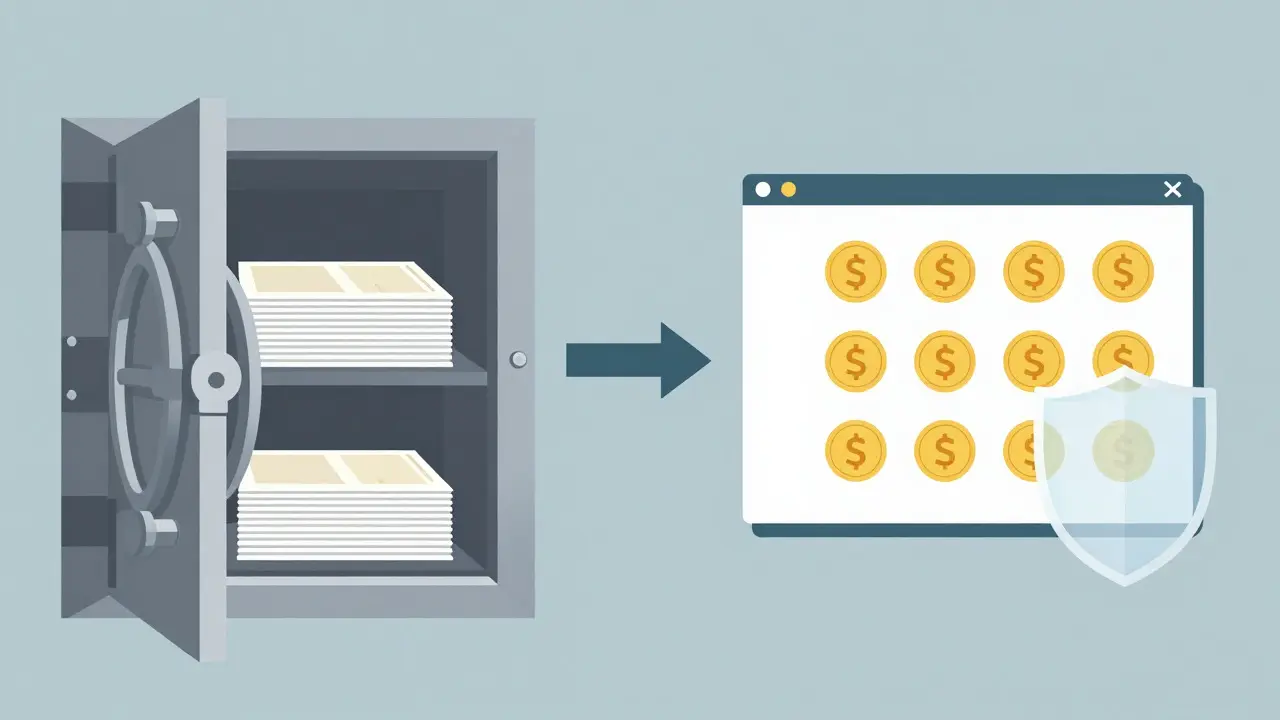
The magic happens behind the scenes. When you mint or buy SHOPon, Ondo Finance ensures there is a corresponding amount of actual Shopify stock held by a regulated custodian. This is the "backing" mechanism. It is not a synthetic derivative that bets on price movements using derivatives contracts; it is a direct claim on the underlying equity.
Here is the workflow in simple terms:
- Custody: A regulated entity holds the real Shopify shares.
- Minting: When demand increases, new SHOPon tokens are created on-chain, matched by the purchase of more shares off-chain.
- Redemption: When you want to exit, you send your tokens back to Ondo, and they redeem them for the underlying value, effectively selling the shares.
This process allows for 24-hour liquidity during market hours (five days a week), bridging the gap between the continuous nature of crypto trading and the scheduled hours of traditional stock exchanges.
Market Performance and Metrics (July 2026)
If you are looking at SHOPon as an investment, you need to look at the numbers. As of July 2026, SHOPon is considered a niche asset within the broader crypto ecosystem. It does not have the massive market capitalization of top-tier coins like Bitcoin or even major stablecoins.
| Metric | Value / Status |
|---|---|
| Price Range | $120 - $140 USD |
| Market Capitalization | $0.4M - $0.7M USD |
| 24-Hour Volume | $0.75M - $1.7M USD |
| Circulating Supply | ~4,100 - 5,900 tokens |
| Global Rank | #1093 - #3223 (varies by platform) |
The low market cap indicates that while there is active trading, the pool of liquidity is relatively shallow compared to the underlying Shopify stock itself. On the NYSE, Shopify trades millions of dollars in volume daily. On crypto platforms, SHOPon sees hundreds of thousands to low millions. This means large institutional orders could cause significant slippage, but for retail investors moving smaller amounts, the execution is generally smooth.
The price closely tracks the underlying Shopify stock. For example, if Shopify drops 2%, SHOPon will likely drop roughly 2% minus any minor fees or spread differences. It is not a leveraged product; it is a 1:1 tracker.
Where Can You Buy SHOPon?
You cannot buy SHOPon on every exchange. Because it is a security token, regulatory restrictions apply. Currently, access is primarily limited to non-U.S. residents due to securities laws in the United States. However, several centralized exchanges (CEXs) now support it.
In June 2026, WEEX listed the SHOPON/USDT trading pair, expanding accessibility for users on that platform. Other venues include NDAX, a Canadian-regulated exchange offering SHOPON/CAD pairs, and HTX (formerly Huobi). LBank has also been noted as a highly active venue for this token.
To get started, you typically need to:
- Create an account on a supported exchange (like WEEX or HTX).
- Complete KYC (Know Your Customer) verification to prove you are eligible (non-U.S.).
- Fund your account with fiat currency or stablecoins like USDT.
- Trade the SHOPON pair.
Once purchased, you can keep the tokens on the exchange or withdraw them to a self-custody wallet like MetaMask or Phantom. Both wallets recognize SHOPon as an Ethereum-based asset, allowing you to track its value and manage transfers securely.

Risks You Need to Know
Just because it is backed by real stock doesn't mean it is risk-free. In fact, SHOPon introduces unique risks that pure crypto holders might not face.
Counterparty Risk: You are trusting Ondo Finance and its custodians to hold the actual shares correctly. If the custodian fails or the smart contract has a bug, your digital token could lose its link to the underlying asset. While Ondo uses regulated partners, this is a central point of failure unlike decentralized Bitcoin.
Regulatory Risk: Securities laws change. A jurisdiction that allows SHOPon today might restrict it tomorrow. Since the token is explicitly targeted at non-U.S. users, any shift in global compliance standards could impact availability or redemption capabilities.
Liquidity Risk: With a market cap under $1 million, SHOPon is illiquid compared to major cryptocurrencies. Selling a large position quickly might require accepting a lower price due to thin order books.
Underlying Volatility: You are still exposed to Shopify’s business performance. If Shopify’s earnings miss expectations, the stock drops, and so does your SHOPon. You do not get the diversification benefits of a broad index fund; you are betting on a single company.
Is SHOPon Right for You?
SHOPon is not for everyone. It is a specialized tool for a specific type of investor. If you are a U.S.-based resident, you likely cannot use it legally. If you prefer fully decentralized assets with no corporate backing, this will feel too traditional.
However, if you are an international investor who wants exposure to high-growth tech stocks like Shopify but prefers the convenience of crypto wallets and 24/5 trading windows, SHOPon offers a compelling solution. It removes the friction of opening foreign brokerage accounts and dealing with currency conversion delays.
It sits in a growing category of Real-World Assets (RWAs) in crypto. As more traditional finance infrastructure moves on-chain, tokens like SHOPon may become more common. For now, treat it as a niche instrument: useful for specific goals, but requiring careful attention to custody and regulatory eligibility.
Can U.S. citizens buy SHOPon?
Generally, no. SHOPon is structured as a security token specifically for non-U.S. residents to comply with U.S. securities regulations. Most exchanges will block U.S. IP addresses or require proof of non-U.S. residency during KYC.
Does SHOPon pay dividends?
Shopify currently does not pay cash dividends, but if it did, the SHOPon structure is designed to reinvest those dividends automatically into additional token exposure. You would see this reflected in the adjusted value of your holdings rather than receiving cash in your wallet.
Is SHOPon a scam?
No, SHOPon is a legitimate product issued by Ondo Finance, a well-known player in the Real-World Asset (RWA) space. However, like all investments, it carries risks related to market volatility, counterparty trust, and regulation. It is not a guaranteed profit vehicle.
Which wallet supports SHOPon?
Since SHOPon is an ERC-20 token on the Ethereum network, it is supported by most standard Ethereum wallets, including MetaMask, Phantom, Trust Wallet, and Ledger hardware wallets.
How does SHOPon differ from regular Shopify stock?
Regular Shopify stock (SHOP) is held in a brokerage account, trades only during market hours (9:30 AM - 4:00 PM ET), and is subject to traditional settlement times (T+1). SHOPon trades 24/5 on crypto exchanges, settles instantly on-chain, and can be stored in a personal crypto wallet, offering more flexibility for international investors.
Leave a comments