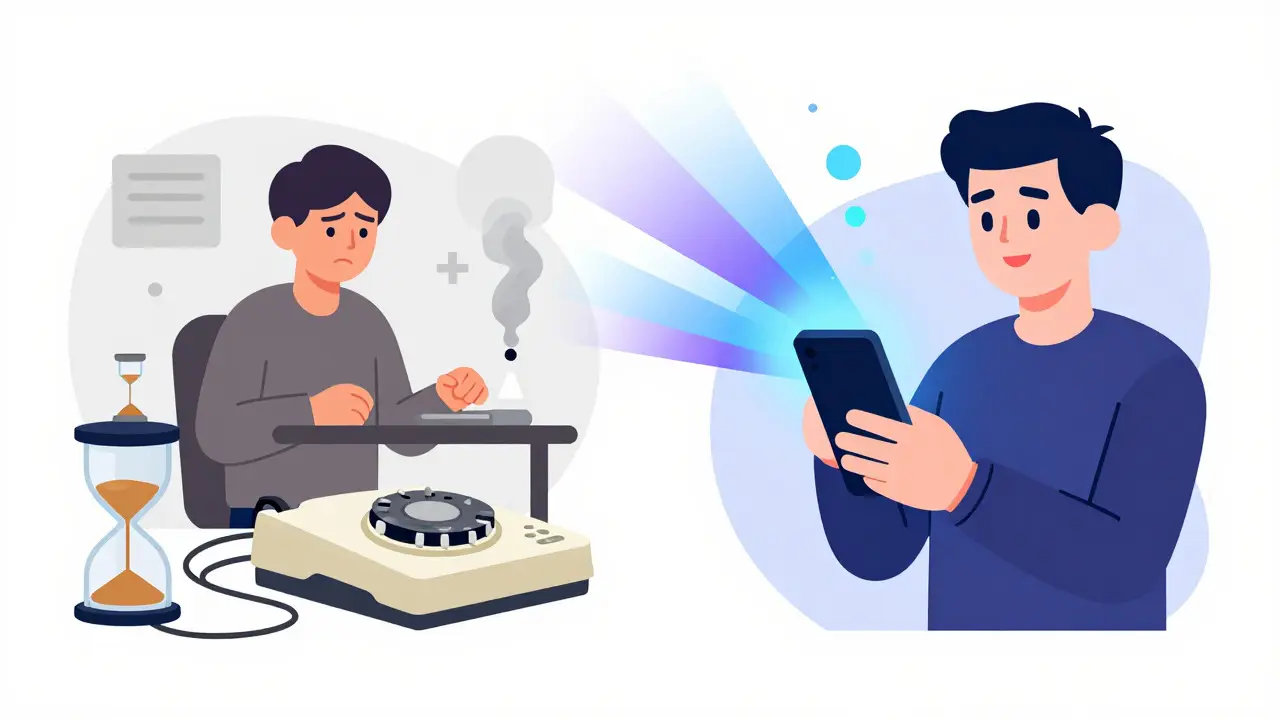
Have you ever tried to send money on a blockchain and waited minutes-or even hours-for it to confirm? It feels like using a dial-up modem in the age of fiber optics. That frustration is exactly why Sui was created. Sui isn’t just another cryptocurrency; it’s a high-performance Layer 1 blockchain designed to handle millions of transactions per second with near-instant finality. If you’ve heard whispers about SUI tokens soaring or developers flocking to its ecosystem, you’re not imagining things. This network is changing how we think about speed and scalability in Web3.
But what makes Sui different from giants like Ethereum or Solana? The answer lies in its unique architecture. Sui doesn’t just tweak existing models; it rebuilds them from the ground up using an object-centric data model and the Move programming language. In this guide, we’ll break down what Sui is, how it works, and why the SUI token matters to both investors and everyday users. We’ll cut through the technical jargon and explain the real-world benefits of this fast-growing platform.
The Core Problem: Why Blockchains Need Speed
Most traditional blockchains, including Bitcoin and early versions of Ethereum, process transactions one after another. Imagine a single-lane road where every car must stop at a red light before the next one can move. As more people join the network, traffic jams occur. Fees skyrocket, and confirmation times drag on. This bottleneck has limited blockchain adoption for everyday use cases like gaming, social media, or instant payments.
Sui solves this by allowing parallel execution. Instead of processing transactions sequentially, Sui identifies which transactions are independent and processes them simultaneously. Think of it as a multi-lane highway where cars that aren’t interfering with each other can drive side-by-side. This approach enables Sui to theoretically handle up to 297,000 transactions per second (TPS), far outpacing competitors. For context, Ethereum handles around 15-30 TPS, while Solana aims for 65,000 TPS but often struggles with stability under load. Sui’s ability to maintain high throughput without crashing is a game-changer for decentralized applications (dApps) that require real-time interaction.
Object-Centric Data Model: A New Way to Store Value
To understand Sui’s speed, you need to grasp its object-centric data model. Most blockchains use an account-based model, where your wallet balance is just a number tied to an address. When you send money, the entire state of the blockchain updates to reflect the new balances. This is inefficient because updating one small change requires scanning large amounts of data.
Sui treats digital assets as individual objects. Each NFT, token, or piece of data is a distinct entity with its own ID and ownership history. If you want to transfer an NFT, only that specific object changes hands. Other unrelated objects remain untouched. This granular approach reduces computational overhead significantly. It’s like moving a single book from one shelf to another instead of rewriting the entire library catalog every time someone borrows a book.
This design is particularly powerful for non-fungible tokens (NFTs) and gaming assets. Developers can create complex interactions-like trading items between players or combining resources-without clogging the network. The result is smoother user experiences and lower costs for builders.
Move Programming Language: Security Meets Simplicity
Under the hood, Sui runs on the Move programming language, originally developed by Meta for its Novi project. Move was built with security as a top priority. Unlike Solidity, which powers Ethereum, Move introduces a resource-oriented type system that prevents common vulnerabilities like reentrancy attacks and accidental asset deletion.
In simple terms, Move ensures that digital assets cannot be duplicated or destroyed unexpectedly. Once an asset exists on-chain, it must be explicitly transferred or burned. This mathematical guarantee gives developers peace of mind when building financial applications. For beginners, this means fewer hacks and stolen funds-a huge plus in an industry plagued by security breaches.
Move also supports modular development. Developers can write code once and reuse it across multiple projects. This accelerates innovation within the Sui ecosystem, allowing new dApps to launch faster and more reliably than on older platforms.
Mysticeti Consensus: Sub-Second Finality
Speed isn’t just about how many transactions you can process; it’s also about how quickly they become irreversible. This is known as finality. On Bitcoin, you might wait an hour to feel confident your transaction won’t reverse. On Ethereum, it takes several minutes. Sui achieves finality in approximately 400 milliseconds using its Mysticeti consensus engine.
Mysticeti replaced Sui’s earlier Narwhal and Bullshark protocols in 2024. It uses a directed acyclic graph (DAG) structure rather than linear blocks. This allows validators to agree on the order of transactions much faster. With sub-second finality, Sui becomes viable for live auctions, high-frequency trading, and interactive games where delays ruin the experience. You click “buy,” and the deal is done instantly. No waiting, no uncertainty.
What Can You Do With the SUI Token?
The SUI token is the lifeblood of the network. Here’s how it functions:
- Paying Gas Fees: Every transaction on Sui costs a tiny amount of SUI. Thanks to efficient scaling, these fees are often fractions of a cent, making microtransactions feasible.
- Staking: Sui operates on a delegated proof-of-stake (DPoS) model. You can lock up your SUI tokens with a validator to help secure the network. In return, you earn rewards paid in SUI. This is a passive income opportunity for holders who believe in the long-term growth of the platform.
- Governance: Token holders vote on proposals that shape the future of the protocol. From parameter adjustments to funding grants, your stake gives you a voice in the community.
As of February 2025, the total supply of SUI is capped at 10 billion tokens, with roughly 3.09 billion in circulation. The remaining tokens are released gradually over time to fund development and incentives. Understanding this schedule is crucial for investors, as increased supply can impact price dynamics if demand doesn’t keep pace.
User Experience Features That Matter
Blockchain tech often feels intimidating to newcomers. Sui addresses this with features designed to hide complexity:
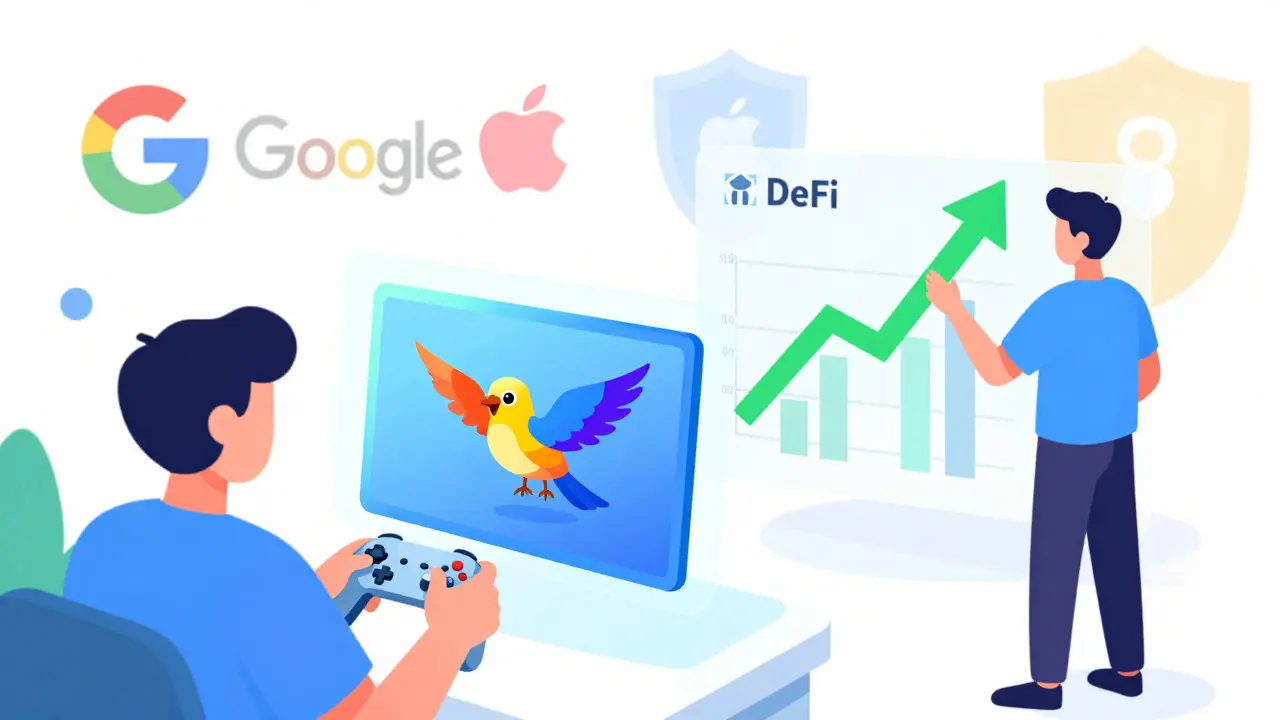
- zkLogin: This feature lets users log in to Sui apps using their Google, Apple, or Facebook accounts. Behind the scenes, zero-knowledge proofs verify identity without exposing personal data. No need to manage seed phrases or worry about losing private keys immediately.
- Sponsored Transactions: App developers can pay gas fees on behalf of users. Imagine playing a game or shopping online without needing to buy crypto first. This removes a major barrier to entry for mainstream audiences.
- Programmable Transaction Blocks: Complex actions involving multiple steps can be bundled into a single transaction. If any step fails, the whole bundle reverses. This ensures atomicity and prevents partial failures that leave users stuck.
These innovations make Sui ideal for consumer-facing applications. Gaming studios, for example, can onboard players who have never touched a wallet before. They start playing, earn assets, and only interact with crypto mechanics when they choose to cash out.
Ecosystem Highlights: Gaming and DeFi
A blockchain is only as good as the apps built on it. Sui’s ecosystem is growing rapidly, particularly in gaming and decentralized finance (DeFi). One standout example is BIRDS, a play-to-earn game that distributed over 57 trillion $FUD tokens and reached a $38 million market cap by late 2024. Players hatch digital birds, train them, and battle for rewards-all powered by Sui’s low latency and object model.
In DeFi, Sui offers lending protocols, automated market makers (AMMs), and yield farming opportunities. Because transactions settle so quickly, arbitrage bots and traders can execute strategies with minimal slippage. Projects like Cetus Exchange and BlueMove provide liquidity pools that benefit from Sui’s composability, meaning different protocols can interact seamlessly.
| Feature | Sui (SUI) | Solana (SOL) | Ethereum (ETH) |
|---|---|---|---|
| Max TPS | ~297,000 | ~65,000 | 15-30 |
| Finality Time | ~400 ms | ~400 ms | 12-15 seconds |
| Programming Language | Move | Rust/C++ | Solidity |
| Data Model | Object-Centric | Account-Based | Account-Based |
| Consensus | Mysticeti (PoS) | PoH + PoS | PoS |
Is Sui Right for You?
If you’re a developer looking to build scalable, secure dApps, Sui offers a robust toolkit with Move and comprehensive documentation. Its parallel execution model simplifies backend logic for high-throughput applications. For gamers and creators, Sui provides a frictionless environment where assets are truly yours and transactions don’t cost a fortune.
For investors, Sui presents an interesting case. It competes directly with established players but brings superior technical specs to the table. However, remember that higher supply unlocks mean dilution risk. Always do your own research (DYOR) and consider how Sui fits into your broader portfolio strategy. The crypto market is volatile, and while technology drives value, sentiment and macroeconomic factors also play significant roles.
Ultimately, Sui represents a shift toward blockchains that prioritize user experience alongside performance. By solving the trilemma of scalability, security, and decentralization better than many predecessors, it positions itself as a key player in the next generation of Web3 infrastructure.
What is the difference between Sui and Solana?
Both aim for high speed, but Sui uses an object-centric data model and Move language, while Solana relies on an account-based model and Rust. Sui claims higher theoretical TPS (~297k vs ~65k) and uses Mysticeti consensus for sub-second finality. Solana has a larger existing ecosystem, but Sui offers newer architectural advantages for specific use cases like NFTs and gaming.
How do I buy SUI tokens?
You can buy SUI on major centralized exchanges like Binance, Coinbase, and Kraken. Simply create an account, deposit fiat currency or another crypto, and trade for SUI. Alternatively, use decentralized exchanges (DEXs) on the Sui network like Cetus Exchange if you already hold crypto in a compatible wallet.
Is Sui safe to use?
Sui’s underlying technology is considered very secure due to the Move programming language, which prevents common smart contract bugs. However, always use reputable wallets and verify contract addresses. Like any crypto platform, risks exist in third-party dApps, so exercise caution when interacting with new projects.
What is zkLogin on Sui?
zkLogin allows users to authenticate to Sui applications using familiar social logins (Google, Apple, etc.) without revealing personal data. It uses zero-knowledge proofs to link your social identity to a blockchain wallet securely, reducing the barrier to entry for non-crypto natives.
Who founded Sui?
Sui was developed by Mysten Labs, founded by former engineers from Meta’s Novi Research division. These experts previously worked on Diem (formerly Libra) and created the Move programming language, bringing deep institutional knowledge to the project.
Leave a comments