
Imagine logging into your bank app on a Tuesday morning, only to find your balance locked. No overdraft fee triggered it. No suspicious login attempt flagged it. Instead, the system simply says "Under Review." For millions of cryptocurrency users in 2026, this is not a glitch-it is the new normal. The era of moving crypto to fiat with zero friction has ended, replaced by a landscape where banks treat every dollar received from a blockchain as potentially tainted until proven otherwise.
If you have ever wondered why your account was frozen despite having clean intentions, you are not alone. The regulatory environment shifted dramatically following the passage of the GENIUS Act (Guiding and Establishing National Innovation for U.S. Stablecoins Act) in mid-2025. This legislation did not just regulate stablecoins; it handed traditional banks powerful tools to freeze assets based on "lawful orders" derived from blockchain analysis. Today, the risk isn't just about what you do; it is about who sent you money, three hops back on the ledger.
The Mechanics Behind the Freeze: How Banks See You Now
To understand why your account got blocked, you need to look under the hood of modern banking compliance. Banks no longer rely solely on manual reviews. They use sophisticated Know Your Transaction (KYT) systems that scan the entire history of a cryptocurrency address before a single cent hits your checking account.
Here is how it works in practice:
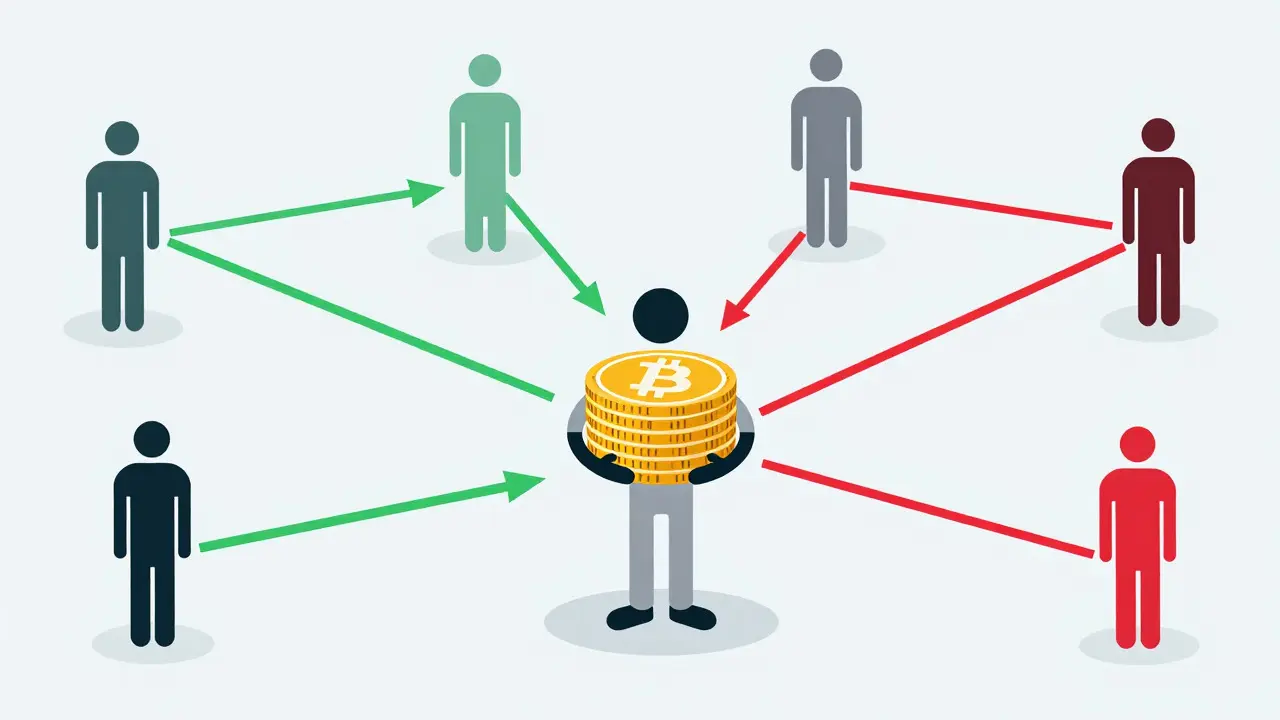
- Transaction Mapping: When you send Bitcoin or Ethereum to an exchange to cash out, the bank’s software traces that coin’s journey. If those coins ever touched a mixing service, a darknet market, or a sanctioned entity-even years ago-the transaction gets flagged.
- Risk Scoring: Each touchpoint adds to a risk score. High-risk interactions trigger automatic holds. You might be buying groceries with crypto, but if the seller received funds from a high-risk source, your off-ramp payment looks suspicious to the algorithm.
- The "Lawful Order" Trigger: Under the GENIUS Act, regulators can issue orders requiring banks to seize or freeze payment stablecoins. These orders don’t always require a criminal conviction first. They often rely on probable cause established by blockchain forensics firms like Chainalysis or Elliptic.
This means your financial fate is partially tied to strangers’ behavior. As H-X Technologies noted in their operational risk analysis, accidental exposure to questionable sources can lead to immediate account blocking, denial of service, or even criminal inquiries. The burden of proof has shifted entirely to you.
The 2025 Regulatory Shift: GENIUS Act and FDIC Guidance
The legal ground beneath our feet changed significantly in 2025. Before this year, many banks avoided crypto entirely due to vague guidance from federal agencies. That ambiguity forced users into smaller neobanks or offshore entities, which were less secure but more lenient. In April 2025, the Federal Deposit Insurance Corporation (FDIC) rescinded its restrictive FIL-16-2022 guidance. This move allowed FDIC-supervised institutions to engage in crypto activities without prior approval, provided they had robust risk management.
However, this clarity came with a catch. The FDIC expected banks to maintain strict controls over five key areas:
- Risk assessment protocols specific to digital assets
- Cryptographic key management systems
- Bank Secrecy Act (BSA) and Anti-Money Laundering (AML) compliance controls
- Third-party vendor risk management
- Ongoing monitoring of the evolving crypto market nature
Simultaneously, the GENIUS Act defined a "lawful order" broadly. It includes any final writ or decree issued under Federal law that requires seizing, freezing, or preventing the transfer of payment stablecoins. This definition gives regulators immense power to intervene quickly. While the act exempts stablecoins from commodity and securities regulation, it creates priority bankruptcy claims for holders, making them attractive targets for enforcement actions.
Critics argue that while the primary market is now regulated, the secondary market remains a loophole. Experts describe this gap as an obvious map for evading U.S. law, pushing illicit activity into less monitored corners of the ecosystem. For the average user, this means banks are compensating for regulatory gaps by over-enforcing at the retail level.
Comparative Landscape: US vs. EU Approaches
How does the United States compare to other major jurisdictions? The U.S. framework in 2026 is arguably stricter than the European Union’s Markets in Crypto-Assets (MiCA) regulation. MiCA focuses heavily on issuer liability and consumer protection, creating a harmonized market across member states. However, the U.S. approach extends enforcement authority directly to traditional banks through the GENIUS Act’s provisions.
| Feature | United States (2026) | European Union (MiCA) |
|---|---|---|
| Primary Legislation | GENIUS Act, FDIC Guidance | Markets in Crypto-Assets (MiCA) |
| Enforcement Focus | Bank-level asset freezing via lawful orders | Issuer licensing and transparency |
| Stablecoin Status | Exempt from securities/commodity regs; priority bankruptcy claims | Strict reserve requirements; e-money token classification |
| User Risk Profile | High (indirect exposure triggers freezes) | Moderate (focus on provider compliance) |
| Institutional Adoption | Accelerating (JPMorgan, BofA exploring ventures) | Steady growth within licensed frameworks |
The U.S. model creates a bifurcated market. Large institutions like JPMorgan Chase and Bank of America are exploring joint stablecoin ventures, gaining regulatory clarity. Meanwhile, individual users face increased scrutiny. This disparity drives many retail traders toward decentralized finance (DeFi) platforms, which operate outside traditional banking infrastructure but lack FDIC insurance.
Practical Steps to Protect Your Account
You cannot control the regulatory tide, but you can build a seawall around your finances. Here is how experienced users navigate the current landscape without getting frozen.
1. Maintain Impeccable Records
Treat your crypto transactions like a small business. Keep detailed logs of every purchase, sale, and transfer. If you receive crypto from a peer-to-peer trade, save the chat logs, invoices, and proof of delivery. When a bank asks for "source of funds," you should be able to provide a paper trail that connects the crypto to legitimate income or savings.
2. Use Reputable Exchanges with Strong Compliance
Not all exchanges are created equal. Platforms that adhere to strict KYC/KYT standards often have better relationships with banks. While this means more paperwork upfront, it reduces the likelihood of your withdrawal being flagged as high-risk. Avoid mixing services or privacy coins if you plan to off-ramp to a traditional bank account regularly.
3. Diversify Your Off-Ramps
Don’t put all your eggs in one basket. Relying on a single neobank or credit union is risky. Consider using multiple accounts across different institutions. If one freezes your funds, you still have access to others. Some users also explore direct DeFi-to-fiat bridges or local peer-to-peer networks, though these carry higher counterparty risks.
4. Monitor Your Transaction History
Before sending large amounts to an exchange, check the receiving address’s reputation. Tools like Chainalysis or Elliptic offer public-facing risk scores for some addresses. If an address has interacted with known illicit entities, avoid it. Remember, guilt by association is real in crypto compliance.
5. Communicate Proactively with Your Bank
If you hold significant crypto assets, consider informing your relationship manager. Ask about their specific policies regarding digital asset withdrawals. Some banks have dedicated crypto desks that can pre-clear transactions, reducing the chance of an automated freeze.
The Future Outlook: What Lies Ahead?
The regulatory conversation is far from over. Following the GENIUS Act, Congress passed the Digital Asset Market Clarity Act (CLARITY Act) and the CBDC Anti-Surveillance State Act in July 2025. These laws signal a continued push for oversight, but also reflect growing concerns about government surveillance.
Industry analysts predict that clearer rules will drive more institutional adoption. Major banks are likely to integrate crypto services deeper into their offerings, offering custody and trading directly. For individuals, this could mean smoother experiences-but only if you stay within the guardrails. Those who value privacy may increasingly turn to self-custody solutions and decentralized exchanges, accepting the trade-off of losing easy fiat access.
The long-term viability of the current enforcement approach remains uncertain. Balancing financial crime prevention with innovation is a tightrope walk. As technology evolves, so too will the methods of detection and evasion. Staying informed and adaptable is your best defense against unexpected account restrictions.
Why did my bank freeze my account for crypto?
Banks typically freeze accounts due to automated KYT (Know Your Transaction) flags. If the cryptocurrency you deposited has a history linked to high-risk activities-such as mixing services, darknet markets, or sanctioned entities-the bank’s compliance software may block the funds pending review. This happens even if your own intent was legitimate, as the focus is on the coin’s origin rather than your behavior.
What is the GENIUS Act and how does it affect me?
The GENIUS Act (Guiding and Establishing National Innovation for U.S. Stablecoins Act), passed in 2025, establishes federal standards for stablecoins. It defines "lawful orders" that allow regulators to compel banks to freeze or seize crypto assets. For users, this means banks have stronger legal backing to restrict accounts involved in crypto transactions, particularly those involving stablecoins, without needing prior court convictions in some cases.
Can I prevent my account from being frozen?
While you cannot guarantee immunity, you can reduce risk. Use reputable exchanges with strong compliance records, keep detailed records of your transaction sources, avoid privacy coins or mixers if you plan to off-ramp to fiat, and proactively communicate with your bank about your crypto holdings. Diversifying your banking providers also helps mitigate the impact of a single freeze.
Is the US stricter than Europe regarding crypto banking?
Yes, currently the US framework is more aggressive in enforcement at the bank level. While the EU’s MiCA regulation focuses on issuer licensing and transparency, the US GENIUS Act empowers banks to freeze assets based on broader "lawful orders" and indirect exposure to illicit funds. This makes US-based accounts more susceptible to freezes compared to those in EU jurisdictions under MiCA.
What should I do if my account is already frozen?
First, contact your bank’s compliance department immediately. Ask for specific details on which transaction triggered the freeze. Provide any available documentation proving the source of funds, such as invoices, tax returns, or trade confirmations. Be patient and cooperative; aggressive demands can worsen the situation. If the freeze persists beyond a reasonable timeframe, consider consulting a lawyer specializing in financial compliance or digital assets.
Leave a comments