
Imagine buying a digital picture for $69 million. Sounds like a scam, right? Yet that’s exactly what happened with Beeple’s Everydays in 2021. Since then, the question has stuck to every new entrant in the space: if you can’t hold it, touch it, or even see it without an internet connection, why is it worth anything?
The short answer is that NFTs are unique digital assets stored on blockchains that represent verifiable ownership of specific items, ranging from art to game items. Their value isn't magic; it's a mix of psychology, technology, and market mechanics. Understanding how these pieces fit together helps you move beyond hype and start looking at actual data.
The Core of Value: Scarcity and Ownership
To understand why an NFT costs money, you first have to understand what makes it different from a JPEG sitting on your desktop. A standard image file is infinitely copyable. If I send you a photo, we both have the same file. An NFT changes this by using blockchain technology to create a single, verifiable record of ownership.
This leads to the concept of digital scarcity. In the physical world, scarcity is natural-there’s only one original Mona Lisa. In the digital world, scarcity is engineered. Creators set a limit on how many copies they will "mint" (create). If an artist releases a collection of 10,000 unique avatars, each one is distinct based on its traits. But if they release a one-of-a-kind piece, that scarcity is absolute. The fewer the copies, the higher the potential demand per unit, assuming the community wants it.
However, scarcity alone doesn't guarantee value. You need demand. This is where the human element kicks in. People buy NFTs because they believe others will want them later, or because the asset provides immediate utility. It’s a blend of investment speculation and collectible culture, similar to trading cards or vintage sneakers, but with global, instant accessibility.
How Floor Prices Work
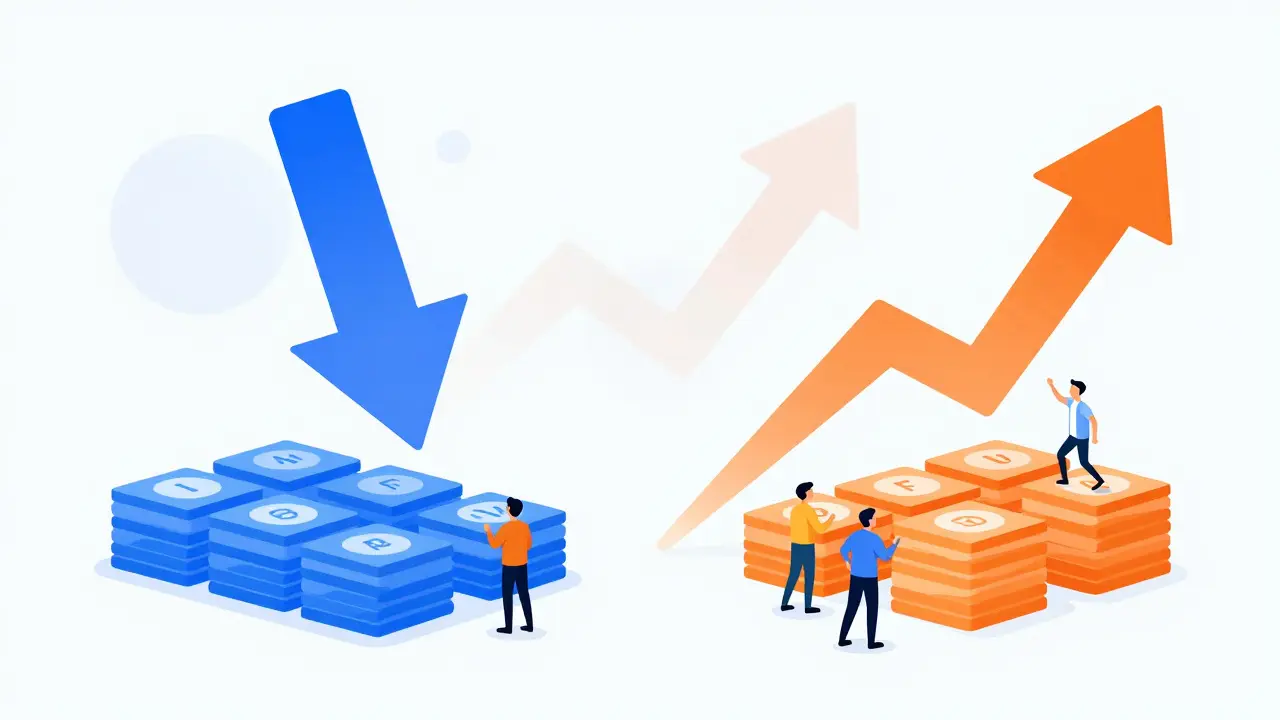
If you look at any major NFT marketplace, you’ll see a metric called the "floor price." This is often the most confusing number for beginners. The floor price is simply the lowest listed price for any item in a specific collection at any given moment.
Think of it as the entry ticket. If a popular collection has 5,000 items, and the cheapest one currently listed for sale is 2 ETH, the floor price is 2 ETH. This number fluctuates constantly. When sellers get impatient or the market cools down, they lower their prices, dropping the floor. When buyers rush in due to excitement or FOMO (Fear Of Missing Out), they bid up the cheapest items, raising the floor.
Tracking the floor price gives you a pulse on market sentiment. A rising floor suggests growing confidence and liquidity. A falling floor might indicate that holders are selling off positions or that interest is waning. For investors, the floor is the primary risk indicator because it represents the worst-case scenario for resale value within that collection.
| Factor | Traditional Physical Art | Digital NFTs |
|---|---|---|
| Scarcity Source | Natural (physical uniqueness) | Engineered (smart contract limits) |
| Verification | Certificates, experts, provenance records | Immutable blockchain ledger |
| Liquidity | Low (auction houses, galleries) | High (24/7 global marketplaces) |
| Utility | Display, status symbol | Access rights, gaming assets, membership |
| Price Discovery | Opaque, infrequent sales | Transparent, real-time data |
Rarity Traits and Internal Hierarchy
Within a single collection, not all NFTs are equal. This is where rarity comes into play. Most modern NFT collections use generative algorithms to assign random traits to each token. For example, a profile picture collection might have eyes, backgrounds, and accessories. Some combinations are common (appearing in 50% of the supply), while others are rare (appearing in less than 1%).
Collectors hunt for these rare combinations. An NFT with a "Golden Background" and "Alien Eyes" might sell for five times the floor price of a standard one. This creates an internal hierarchy. Smart buyers look at rarity rankings rather than just the floor. They know that while the floor might drop during a bear market, the top-tier rare items often retain value better because there are fewer of them and dedicated collectors always want them.
Tools exist to analyze these traits, breaking down the supply and demand for each attribute. This turns NFT collecting into a data-driven activity, much like analyzing stock fundamentals, but focused on visual aesthetics and community preference.
Utility: More Than Just Wallpapers
For a long time, critics argued that NFTs were just expensive JPEGs. That view changed when projects started attaching real-world or virtual benefits to ownership. This is known as utility.
An NFT might grant you access to an exclusive Discord server, free tickets to a concert, or a share of the revenue from the artwork. In the gaming sector, NFTs represent actual in-game items-weapons, skins, or land-that you can use, trade, or sell. In the metaverse, virtual real estate NFTs allow owners to build on plots of digital land, potentially generating income from ads or events held on that land.
When an asset provides utility, its value becomes decoupled from pure speculation. Even if the speculative bubble bursts, the utility remains. If an NFT gives you a 10% discount on a product forever, it has intrinsic value regardless of what the secondary market does. This shift toward functional assets is stabilizing the market, making valuations more grounded in practical use cases rather than pure hype cycles.

Market Liquidity and Pricing Predictors
How do we actually predict what an NFT will be worth next month? Academic research, including studies from institutions like ETH Zurich, has looked at this deeply. One counter-intuitive finding is that social media buzz doesn't always correlate positively with long-term price stability. Sometimes, high social media activity precedes a price drop as early adopters cash out.
Instead, two factors consistently predict price health: liquidity and trading volume. Liquidity refers to how easily you can buy or sell an NFT without significantly moving the price. High-volume collections have deep order books, meaning there are many buyers and sellers active at various price points. This creates stable pricing. Low-liquidity collections are volatile; one large sale can crash the floor price because there aren't enough buyers to catch the fall.
Therefore, when evaluating an NFT project, don't just look at the current price. Look at the daily trading volume. Is it consistent? Are there regular transactions, or is it sporadic? Consistent volume indicates a healthy, engaged community. Sporadic volume suggests a stagnant market where exiting your position could be difficult or costly.
Creator Reputation and Community Strength
Finally, the human capital behind the project matters immensely. Who is the creator? Do they have a track record in traditional art or digital design? Established artists command premium prices because their brand carries weight. New creators rely heavily on community building.
A strong community acts as a moat for the project. Active Discord servers, regular updates from developers, and transparent communication keep holders engaged. When the market dips, strong communities often rally to support the floor price, knowing the project has long-term potential. Conversely, silent or disorganized teams often lead to abandoned projects, causing values to plummet to zero.
In essence, you are betting on the team's ability to deliver on their promises. Whether that promise is a new game feature, a physical merchandise line, or simply maintaining a vibrant artistic community, the execution determines the longevity of the value.
What determines the initial price of an NFT mint?
The initial price, or mint price, is set by the creator. It depends on the perceived quality of the art, the size of the supply, and the strength of the pre-launch community. Creators with large followings can charge higher mint prices, while newer projects often set low prices to encourage early adoption and volume.
Is the floor price the best way to value an NFT?
The floor price is a good baseline for risk assessment, but it doesn't tell the whole story. For specific items, you should look at rarity rankings and historical sales of similar traits. A rare NFT might be worth significantly more than the floor, while a common one might struggle to sell even at the floor price.
Do NFTs have intrinsic value?
Intrinsic value in NFTs usually comes from utility. If the token grants access to services, products, or experiences, it has intrinsic value independent of speculation. Purely artistic NFTs derive value primarily from subjective aesthetic appeal and market demand, which is more speculative.
How does blockchain choice affect NFT value?
Most high-value NFTs reside on Ethereum due to its robust ecosystem and high security. However, high gas fees can hinder liquidity. Alternative chains like Solana or Polygon offer lower fees, attracting different user bases. The choice of chain affects transaction costs and the pool of potential buyers, influencing overall market depth.
What role do royalties play in NFT pricing?
Royalties ensure creators earn a percentage of secondary sales. While this incentivizes creators to maintain the project, high royalty rates can sometimes discourage traders who prefer fee-free markets. Moderate royalties are generally seen as a positive signal of long-term commitment without hindering liquidity too much.
Patrick Quairoli
18 08 26 / 21:24 PMoh look another article trying to sell you a digital rock for 6 figs. the whole thing is a con job run by tech bros who cant code. they say its scarcity but its just a database entry that can be deleted if the server goes down. i bet the next update will let you copy it too. classic crypto scam energy. watch out or youll lose your life savings like everyone else did in 2021
michelle aguilar
19 08 26 / 22:58 PMOne must, however, consider the provenance; it’s not merely pixels, it’s… well, actually, it is mostly pixels, isn’t it? But the verification aspect is so terribly important, don’t you think? It’s quite exhausting to explain this to people who still think a JPEG is just a file on their desktop; one should really read up on immutable ledgers before commenting. The nuance is lost on most, unfortunately.
Lance Konig
20 08 26 / 15:04 PMThe liquidity argument is the only part of this post that holds water. Traditional art markets are opaque and slow. NFTs offer real-time price discovery. If you ignore the volume data, you're guessing. That's all there is to it.
Susan Kiley
22 08 26 / 01:09 AMOoooh, finally someone says it! :D The 'scarcity' bit is pure marketing fluff until you see the utility kick in. I mean, sure, buying a digital monkey is silly, but owning a ticket to an exclusive event? That’s where the real value lies. Don’t get me wrong, the floor price is a nightmare to track, but hey, at least we have data now! :P
Marco Maldonado
23 08 26 / 20:15 PMthis is why america leads in innovation. while europe sleeps we are building the future. the blockchain tech here is superior to anything else. stop looking at gas fees and start looking at security. ethereum is king because it is secure. period. anyone saying otherwise is just jealous of our progress. buy american made tech.
Leah Humphrey
24 08 26 / 15:31 PMFrom a macroeconomic perspective, the correlation between social media sentiment and asset valuation is tenuous at best. We observe significant volatility in secondary market liquidity when exogenous shocks occur. The narrative around 'digital scarcity' fails to account for the elasticity of demand in non-fungible goods. It’s essentially a speculative bubble driven by zero-sum game dynamics.
Rod Sidoroff
24 08 26 / 16:02 PMYou’re missing the point entirely. Value is subjective. If I pay $69 million for a picture, it has value to me. The fact that you can’t hold it is irrelevant. What matters is the social contract. And honestly, most of you don’t even understand what a smart contract is, so maybe save your breath. The market decides, not you.
Jade Brown
26 08 26 / 06:23 AMLet’s cut through the noise. The 'floor price' is a lagging indicator, not a leading one. You’re looking at the rearview mirror while driving off a cliff. Real alpha comes from tracking wallet activity and holder distribution. If 80% of supply is held by whales, you’re cooked. The 'rarity traits' section is basically explaining how to play poker with cards you can see. It’s basic. Next level thinking requires analyzing on-chain flows, not just reading a blog post about JPEGs.
Nikki keller
26 08 26 / 14:57 PMIt is interesting to note that the definition of ownership is shifting in the digital age. We are moving from possession to access. This philosophical shift underpins much of the current discourse. Whether one likes it or not, the infrastructure is changing how we perceive value. It is a complex topic, but worth exploring without immediate dismissal.
miranda gamboa
28 08 26 / 07:00 AMGreat breakdown! The utility aspect is key. When tokens have real-world use cases, like gaming assets or membership perks, the value proposition becomes much stronger. It moves beyond speculation into functional economics. Keep these insights coming!
Melissa G
28 08 26 / 08:33 AMThe comparison table is particularly useful for contextualizing the differences between physical and digital art markets. It highlights how verification and liquidity are fundamentally different in the blockchain space. This structural difference is what drives the distinct pricing mechanisms observed in NFT collections versus traditional galleries.
Claudio Perrone
30 08 26 / 01:52 AMso basically its all about trust right? like how we trust money but its just paper? i dont get it. why do we need a computer to tell us what we own? feels like a trap. also the spelling in this article was kinda weird but i guess thats fine. whatever. just vibes i guess.
Zothana Pachuau
30 08 26 / 16:45 PMOh, brilliant analysis. Truly, the depth of insight here is staggering. Did you know that bees also make honey? Just thought you’d like that random fact. Anyway, nice post. Very educational. Or is it? Who knows. Great job though.
Linda Leeuwesteijn
1 09 26 / 14:57 PMLoved the clarity on floor prices! 📉📈 It really helps demystify the metrics for new collectors. The section on rarity traits was super helpful too. Thanks for breaking it down so simply! 🌟💎