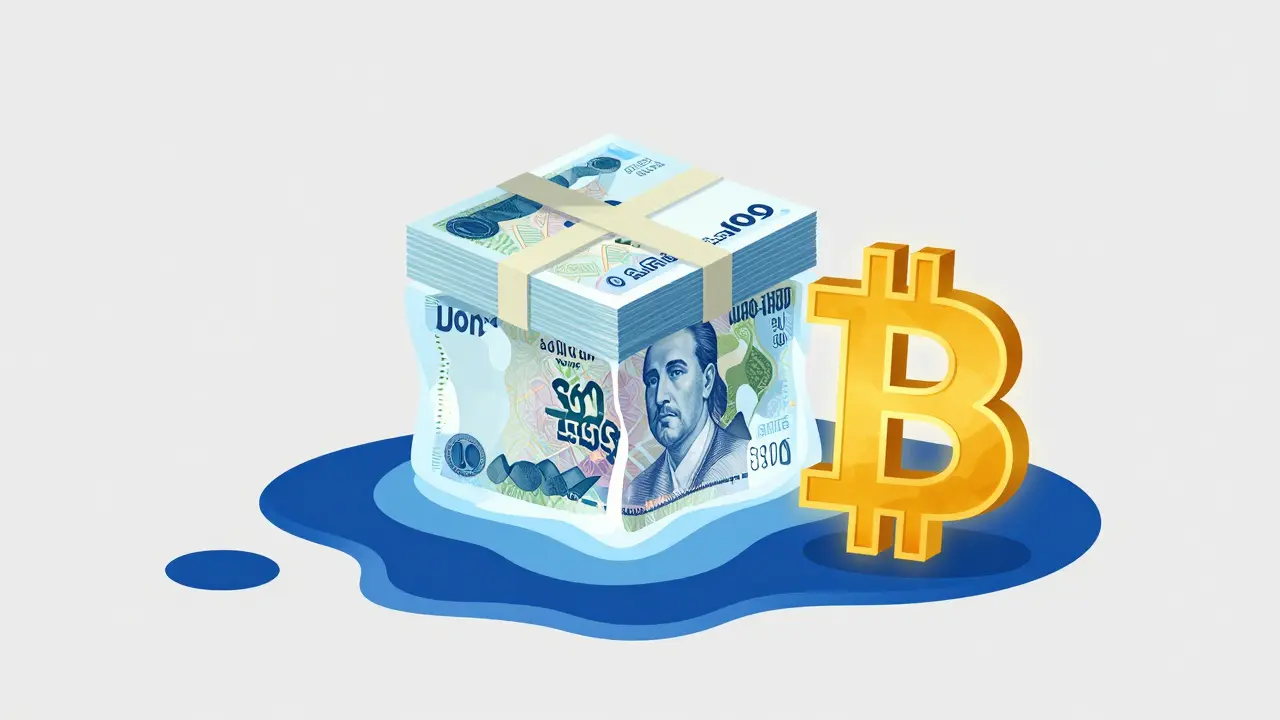
 Imagine waking up to find that your life savings have lost 90% of their purchasing power. For millions of people in Iran, this isn't a nightmare scenario-it's the reality of the last few years. When the local currency crashes and the banks are cut off from the world, people don't just sit there; they look for an exit. In 2024, that exit was digital.
crypto outflows from Iran is
the massive movement of digital assets out of the Iranian economy to preserve wealth against inflation and sanctions
reached a staggering $4.18 billion. This isn't just a number; it's a 70% jump from the previous year, signaling a desperate rush toward financial survival.
Imagine waking up to find that your life savings have lost 90% of their purchasing power. For millions of people in Iran, this isn't a nightmare scenario-it's the reality of the last few years. When the local currency crashes and the banks are cut off from the world, people don't just sit there; they look for an exit. In 2024, that exit was digital.
crypto outflows from Iran is
the massive movement of digital assets out of the Iranian economy to preserve wealth against inflation and sanctions
reached a staggering $4.18 billion. This isn't just a number; it's a 70% jump from the previous year, signaling a desperate rush toward financial survival.
The scale of this exodus is hard to wrap your head around. According to a detailed report by Chainalysis is a New York-based blockchain analytics firm that tracks illicit activity and capital flows on the blockchain , Iran accounted for about 26% of all cryptocurrency transactions made by sanctioned entities worldwide in 2024. But here is the twist: this wasn't some coordinated government plot to fund secret operations. Most of the money was moved by regular people-students, small business owners, and families-trying to stop their money from evaporating into thin air.
The Breaking Point: Why People are Fleeing the Rial
To understand why billions are leaving the country, you have to look at the Iranian rial is the official currency of Iran, which has suffered extreme devaluation and hyperinflation . Since U.S. sanctions ramped up in 2018, the rial has plummeted. With inflation rates swinging between 40% and 50%, holding local cash is basically like holding a melting ice cube. When you can't trust your bank and your money loses value by the hour, Bitcoin is the first decentralized cryptocurrency, often used as a hedge against inflation due to its limited supply becomes the only logical alternative. It's essentially "digital gold" for someone who can't actually buy or export physical gold easily.
This isn't just about long-term inflation, either. The data shows that people react in real-time to the news. Whenever military tensions spike, the crypto markets in Iran explode. For example, on April 9th and 14th, 2024-around the time of the Israeli bombing of the Iranian Embassy in Damascus and the subsequent retaliation-blockchain records showed massive spikes in capital movement. People didn't wait for the morning news; they saw the tension and moved their funds into Bitcoin immediately to avoid a total financial freeze.
How the 'Digital Escape' Actually Works
Moving billions of dollars out of a sanctioned country isn't as simple as clicking a button on an app. The Iranian government and international regulators have spent years trying to plug the holes. To get around this, users have developed a sophisticated survival kit. Most rely heavily on VPN services is Virtual Private Networks that mask a user's IP address to bypass regional internet restrictions and censorship to access international exchanges that would otherwise block Iranian IP addresses.
Inside the country, a network of domestic exchanges flourished. Platforms like Nobitex is one of the largest cryptocurrency exchanges operating within Iran, facilitating local trades and Wallex allowed people to swap their rials for digital assets quickly. However, the window of easy access is closing. By late 2024, the government began cracking down on these platforms, demanding full access to user data and trade records, which has pushed even more people toward decentralized options and peer-to-peer (P2P) trading.
| Feature | Iran | Russia | North Korea | Venezuela |
|---|---|---|---|---|
| Primary Driver | Retail Wealth Preservation | Sanctions Circumvention | State-Sponored Theft | Hyperinflation Hedge |
| Main User Base | Ordinary Citizens | Institutional/State | State Hackers | General Population |
| Relative Volume | Very High (vs GDP) | High | Moderate (High Value) | High |
| Infrastructure | Advanced Domestic Exchanges | Developing State Systems | Closed/State-Controlled | Fragmented/P2P |

The Cat-and-Mouse Game with Global Regulators
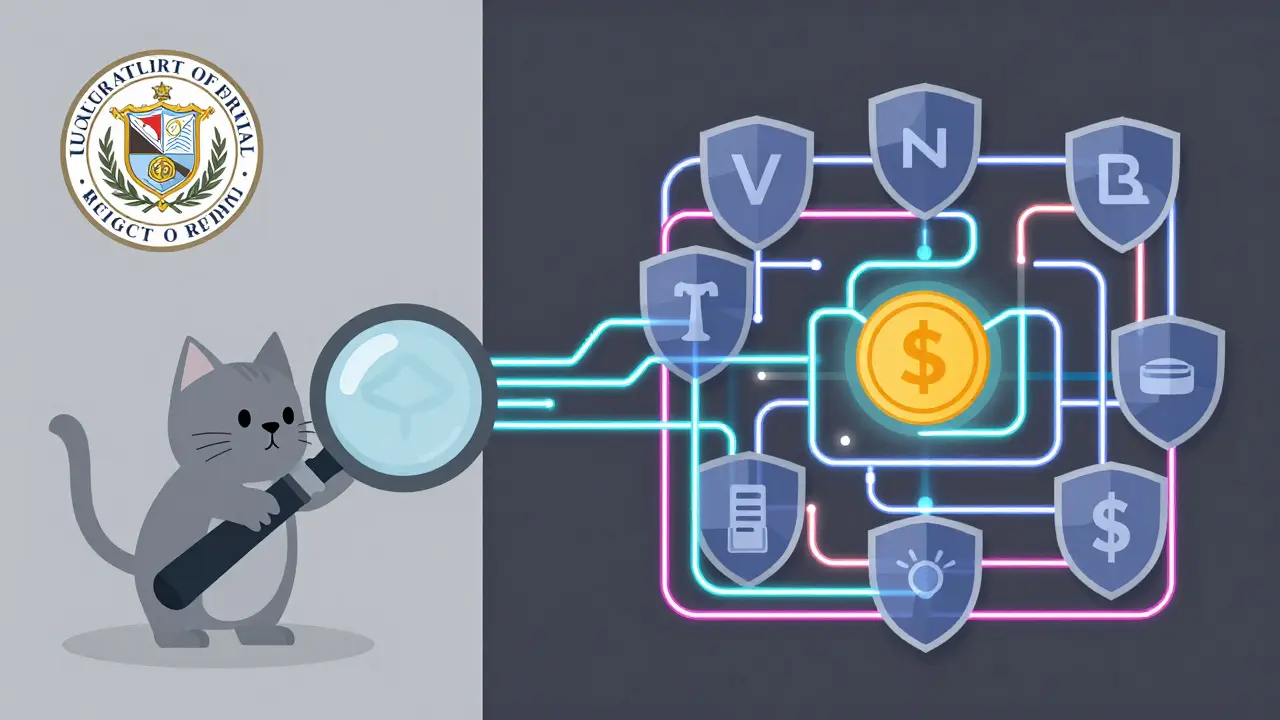
While Iranians use crypto to save their families' futures, the OFAC is the Office of Foreign Assets Control, a U.S. Treasury agency that administers and enforces economic sanctions sees a different picture. From their perspective, these outflows are a loophole in the sanctions regime. The Treasury Department's 2025 National Security Presidential Memorandum specifically targeted these networks to stop the flow of funds.
But here is the problem: blockchain technology is moving faster than the law. As compliance costs for exchanges increase-some reporting a 40-60% jump in monitoring expenses-users are simply switching to more sophisticated routing techniques. They aren't using a single exchange; they are bouncing funds through multiple wallets and using obfuscation tools that make it incredibly hard for forensic analysts to track the final destination of the money. It's a classic case of technology evolving to bypass a barrier, which in turn forces the barrier to get stronger.
Real-World Stories: More Than Just Data
If you spend time in Persian-language Telegram channels or Reddit forums, you'll see that crypto isn't a "speculative investment" for Iranians-it's a lifeline. There are stories of students in Europe using Bitcoin to pay their tuition because traditional wire transfers are blocked by sanctions. There are small business owners who import goods through third-party countries, using crypto to settle payments without needing a bank that will freeze their accounts.
For many, it's simply "escape money." When a family sees their savings plummet during an inflation spike, converting a portion to Bitcoin is the only way they can ensure they can still afford rent or food a year from now. This organic adoption is far more powerful than any government-mandated digital currency because it's driven by a total lack of trust in the state's financial system.
What Happens Next?
The trajectory for 2026 looks clear: more outflows. As long as the gap between the official rial rate and the parallel market rate remains huge, the incentive to leave the local currency stays. We are also seeing a shift toward institutionalization. Iran is deepening ties with Russia, and there are signs that these two nations might coordinate their use of digital assets to create an alternative financial corridor that completely ignores Western banking systems.
However, the risk for the individual remains high. Between government surveillance and the increasing aggressiveness of international sanctions, the "digital exit" is becoming more dangerous to navigate. The use of privacy-focused tools is no longer a choice for the tech-savvy; it's a requirement for anyone who wants to keep their assets safe from both their own government and foreign regulators.
Was the $4.18 billion outflow linked to the Iranian government?
While the government does use crypto for revenue, the vast majority of the 2024 outflows were driven by ordinary citizens. Analysis from Chainalysis indicates these moves were primarily retail-driven efforts to preserve personal wealth against the collapsing value of the rial.
Why is Bitcoin preferred over stablecoins in Iran?
During peak geopolitical crises, Bitcoin often shows higher transaction volumes. While stablecoins are great for day-to-day pricing, Bitcoin is viewed as a more robust, decentralized store of value-essentially a global asset that doesn't rely on any single company or country's stability.
How do Iranians access exchanges if they are blocked?
Most users rely on VPNs (Virtual Private Networks) and proxy servers to hide their location. They also use domestic exchanges like Nobitex to bridge the gap between the rial and digital assets before moving those funds to international wallets.
What is the role of the FATF in this situation?
The Financial Action Task Force (FATF) blacklisted Iran in 2018. This basically tells every bank in the world that Iran is a high-risk zone for money laundering, making traditional banking almost impossible and forcing citizens toward cryptocurrency.
Are sanctions still effective if people can use crypto?
It's a mixed bag. While crypto makes it harder to block individual wealth movement, it doesn't completely replace the global trade system. However, the rise of these digital outflows proves that traditional financial sanctions have a diminishing impact in an era where decentralized assets exist.
Brendan Thraxton
29 04 26 / 14:36 PMblockchain is literally a gift for people in these spots... really just helps them keep what they worked for without some gov taking it away
Noel Mandotah
30 04 26 / 04:40 AMShocking. Truly. Nobody saw this coming. 🙄
Andrew Todd
1 05 26 / 16:37 PMOur sanctions are the only thing that works. If they use crypto they are just cheating the system. My country is the best and we should just block every single wallet they touch.
Janis Naglis
3 05 26 / 00:24 AMThe systemic leverage provided by decentralized finance is truly an emergent paradigm shift!!! It allows for the mitigation of inflationary pressures through algorithmic scarcity, providing a necessary hedge for the disenfranchised population... so inspiring to see this grassroots adoption!!!
Michael Repak
3 05 26 / 00:36 AMI totally agree with the sentiment here!!! It's heart-wrenching to see people struggle with their savings, but the tech is providing a real bridge!!!
Abhishek Verma
3 05 26 / 08:22 AMWait, so you're telling me people like to keep their money? How original. I bet they're all using the same three VPNs and pretending they're in Switzerland while sitting in their living rooms. Too bad the government is finally waking up to the party.
Kara Spadone
4 05 26 / 08:02 AMThe energy of desperation is just radiating from these stats 🌀 It's a spiritual awakening through financial collapse. Maybe if they focused on inner wealth instead of Bitcoin, they'd find true peace ✨
Arun Prabhu
5 05 26 / 08:04 AMA pedestrian analysis of a complex geopolitical tragedy. The sheer banality of treating this as a 'cat-and-mouse game' is almost as offensive as the economic mismanagement of the rial. It is a grotesque carousel of failure where the only winners are the exchange owners skimming off the top of human misery.
Jehan ZA
5 05 26 / 14:13 PMIt is quite remarkable to observe the resilience of the citizenry in adapting to such volatile economic conditions. The transition toward P2P networks appears to be a logical progression when centralized trust is absent.
debra hoskins
6 05 26 / 20:18 PMBitcoin as 'digital gold' is such a tired trope. It's a volatile asset that could crash tomorrow, but sure, let's call it a lifeline while the world burns. The irony of using US-made tech to bypass US sanctions is just delicious.
Pramendra Singh
8 05 26 / 01:09 AMIt's really hopeful to see that people are finding ways to protect their families. I hope things get better for them soon.
Amanda Macy
9 05 26 / 15:36 PMThe intersection of state control and individual autonomy is perfectly illustrated here. When the social contract regarding currency is broken, the people will always seek a new medium of trust, regardless of the risk.
Chloe Fletcher
9 05 26 / 20:42 PMThis is just so brave! 💖 Using what you have to survive is the ultimate goal 🚀 I love seeing the power of community P2P trading! Keep going everyone! 💪✨
Mitali Rajvanshi
11 05 26 / 12:55 PMThe stability of stablecoins would be helpful, but I understand why Bitcoin is the choice for long-term security.
Iestyn Lloyd
12 05 26 / 23:49 PMFrom a technical standpoint, the use of obfuscation tools is standard practice in high-risk jurisdictions. It creates a significant challenge for forensic analysts, as the trail becomes fragmented across multiple non-custodial wallets.
Ralph Espinosa
13 05 26 / 23:27 PMI can add that many users also utilize hardware wallets to keep their private keys offline, which is a crucial security step!!! It's the only way to be truly sure your funds are safe from remote hacking!!!
April D Thompson
15 05 26 / 00:42 AMWe are witnessing the birth of a new financial consciousness! It's absolutely wild to think that a line of code is now more trusted than a whole government's treasury. It's not just about money; it's about the fundamental human desire for freedom and the sheer audacity to reclaim it from the jaws of hyperinflation! This is a cosmic shift in how we perceive value and power in the modern age, and honestly, it's just breathtaking to see the people fighting back with math and encryption!