Did you miss the boat on the XMS airdrop? If you’ve been hunting for free tokens from the Mars Ecosystem, you’re likely frustrated by conflicting information online. The short answer is that the major distribution events are over. However, understanding what happened, how the token works, and where it stands in the market today is crucial if you still hold XMS or plan to buy some.
This guide cuts through the noise. We’ll look at the specific details of the past campaigns, the current price reality, and whether this project has any legs left to stand on in the crowded DeFi space.
What Is the Mars Ecosystem (XMS)?
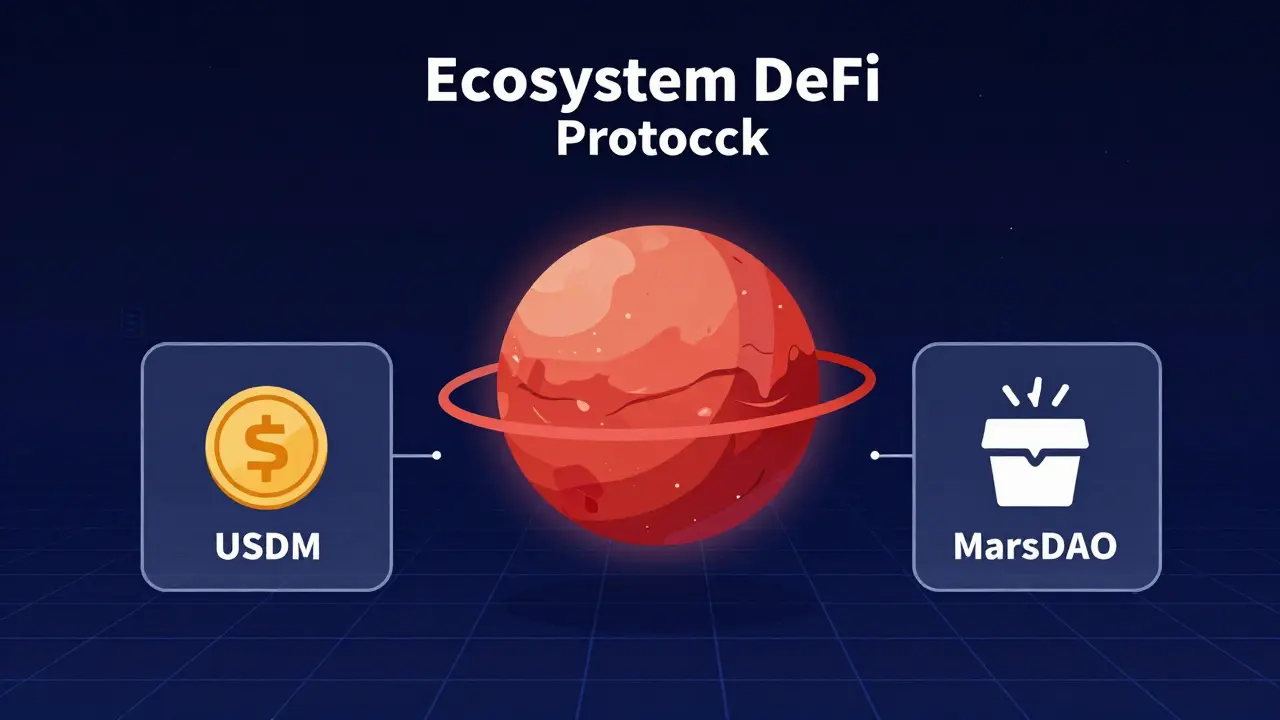
To understand the value of the token, you first need to understand the platform behind it. The Mars Ecosystem is a decentralized finance (DeFi) protocol built primarily on the Binance Smart Chain (BNB Chain). Their goal is ambitious: they want to create a "New Decentralized Paradigm" for stablecoins.
The core components include:
- USDM: The Mars Stablecoin, designed to offer higher capital efficiency than traditional stablecoins.
- MarsSwap: A decentralized exchange for trading assets within the ecosystem.
- MarsDAO: The governing body where XMS holders vote on protocol changes.
The XMS token is the governance key. Holding it gives you a say in how the ecosystem evolves. But governance rights only matter if the ecosystem actually has users and volume. That brings us to the big question: how did they try to get those users?
XMS Airdrop Campaigns: What Happened?
Mars Ecosystem ran two significant airdrop campaigns to bootstrap their user base. It’s important to note that both have officially concluded. Here is the breakdown of what occurred.
1. The CoinMarketCap Learn & Earn Program
This was the largest distribution event. Mars partnered with CoinMarketCap, one of the biggest crypto data platforms, to run a "Learn & Earn" campaign.
The Details:
- Prize Pool: $200,000 worth of XMS tokens.
- Winners: 40,000 participants.
- Reward per Winner: Approximately $5 in XMS.
- Requirements: You needed an active account on both CoinMarketCap and Binance. Participants had to watch educational videos about the Mars Ecosystem and pass a quiz with 100% accuracy.
- Distribution Method: Winners submitted their BEP-20 wallet addresses. Tokens were sent directly to these wallets within three days of the event closing.
This campaign was designed to educate new users while simultaneously distributing tokens widely. By requiring a Binance account, they targeted users already familiar with centralized exchanges, lowering the barrier to entry for future DeFi interactions.
2. The Direct Community Airdrop
A smaller, more exclusive drop targeted loyal community members. This campaign offered 50 XMS tokens to just 1,000 lucky participants. Unlike the massive CoinMarketCap sweep, this was likely distributed via social media channels or direct wallet whitelists. It has also closed.
| Feature | CoinMarketCap Campaign | Direct Community Drop |
|---|---|---|
| Status | Closed | Closed |
| Total Value | $200,000 USD | ~$50,000 USD (estimated) |
| Recipients | 40,000 Users | 1,000 Users |
| Key Requirement | Quiz + Binance Account | Community Engagement/Luck |
Current Market Reality: Price and Liquidity
If you received XMS from an airdrop, you might be wondering what it’s worth now. The data here is messy, which is a red flag you should pay attention to.
As of mid-2026, there is a significant discrepancy in pricing across major trackers. Binance lists XMS around $0.000297, while CoinMarketCap shows it closer to $0.000498. Why the difference? Low liquidity.
When a token has very low trading volume-in this case, roughly $2,300 USD in the last 24 hours-prices can vary wildly between exchanges because there aren’t enough buyers and sellers to keep the price consistent. The total market cap sits below $350,000, ranking it outside the top 5,000 cryptocurrencies globally.
This means two things for you:
- Selling is hard: If you try to sell a large amount of XMS, you could crash the price on that specific exchange due to lack of depth.
- Volatility is high: Small trades can cause large percentage swings in price, making it risky for holding.
Is There Utility Beyond Speculation?
Airdrop tokens often die out once the hype fades. Does Mars Ecosystem have real use cases? They claim to solve the "positive externality" problem in stablecoins-where protocols bear the cost of stability but external parties benefit from the transaction value.
To back this up, they’ve secured a partnership with MugglePay, a cryptocurrency payment service provider. MugglePay plans to integrate USDM into its merchant payment systems. This is a critical step because it moves the token from pure speculation to actual commerce. If merchants start accepting USDM, demand for the underlying collateral and governance token (XMS) could theoretically rise.
Additionally, the team maintains a bug bounty program on Immunefi, offering up to $10,000 for security vulnerabilities. This suggests they are still actively maintaining their smart contracts, which is a positive sign for long-term viability compared to abandoned projects.
Security and Risks for Holders
Before you move your XMS tokens around, consider the risks. Since XMS operates on the Binance Smart Chain, you need a compatible wallet like Trust Wallet or MetaMask.
Watch out for scams: Because the official airdrops are closed, any website claiming to offer a "new XMS airdrop" right now is likely a phishing scam. Never connect your main wallet to unofficial sites. Always verify links through the official Mars Ecosystem social media channels.
The low liquidity also poses a risk. If the project loses momentum, you may find yourself holding tokens that are nearly impossible to sell without taking a massive loss. Always check the order book depth before attempting to trade.
Next Steps for Investors
If you hold XMS from the old airdrops, you have three realistic options:
- Hold for Governance: If you believe in the MarsDAO vision and the MugglePay integration, hold the tokens to participate in votes. This requires faith in the team’s long-term execution.
- Swap Gradually: Given the low liquidity, don’t dump all your tokens at once. Swap small amounts over time to minimize slippage fees.
- Re-evaluate: Check the latest development updates on their GitHub or official blog. If activity has stalled, it might be time to cut losses.
The era of easy money from the XMS airdrop is over. Now, it’s about assessing whether the underlying technology deserves your capital.
Is the XMS airdrop still open?
No, the major XMS airdrop campaigns, including the $200,000 CoinMarketCap Learn & Earn program and the direct community drop, have both concluded. Any claims of ongoing airdrops are likely scams.
How much was the XMS airdrop worth?
Participants in the CoinMarketCap campaign received approximately $5 worth of XMS tokens each. The direct community drop gave 50 XMS tokens to 1,000 winners, though the fiat value varied based on the price at the time of distribution.
Which blockchain does XMS use?
XMS is a BEP-20 token, meaning it operates on the Binance Smart Chain (now known as BNB Chain). You will need a wallet that supports this network, such as MetaMask or Trust Wallet, to store or trade it.
Why is the XMS price different on Binance vs CoinMarketCap?
The discrepancy is due to low liquidity and trading volume. With only around $2,300 in daily volume, small trades can significantly impact the price on individual exchanges, leading to inconsistent data across tracking platforms.
Can I buy XMS now?
Yes, XMS is traded on exchanges like Binance. However, due to low liquidity, you should expect high slippage and potential difficulty selling larger amounts. Always check the current order book before buying.
What is the purpose of the XMS token?
XMS is the governance token for the Mars Ecosystem. Holders can vote on proposals within MarsDAO, influencing decisions related to the USDM stablecoin, MarsSwap DEX, and overall protocol upgrades.
Is Mars Ecosystem secure?
The project runs a bug bounty program on Immunefi, offering rewards up to $10,000 for vulnerabilities. While this indicates a focus on security, investors should always conduct their own due diligence regarding smart contract risks.
Leave a comments