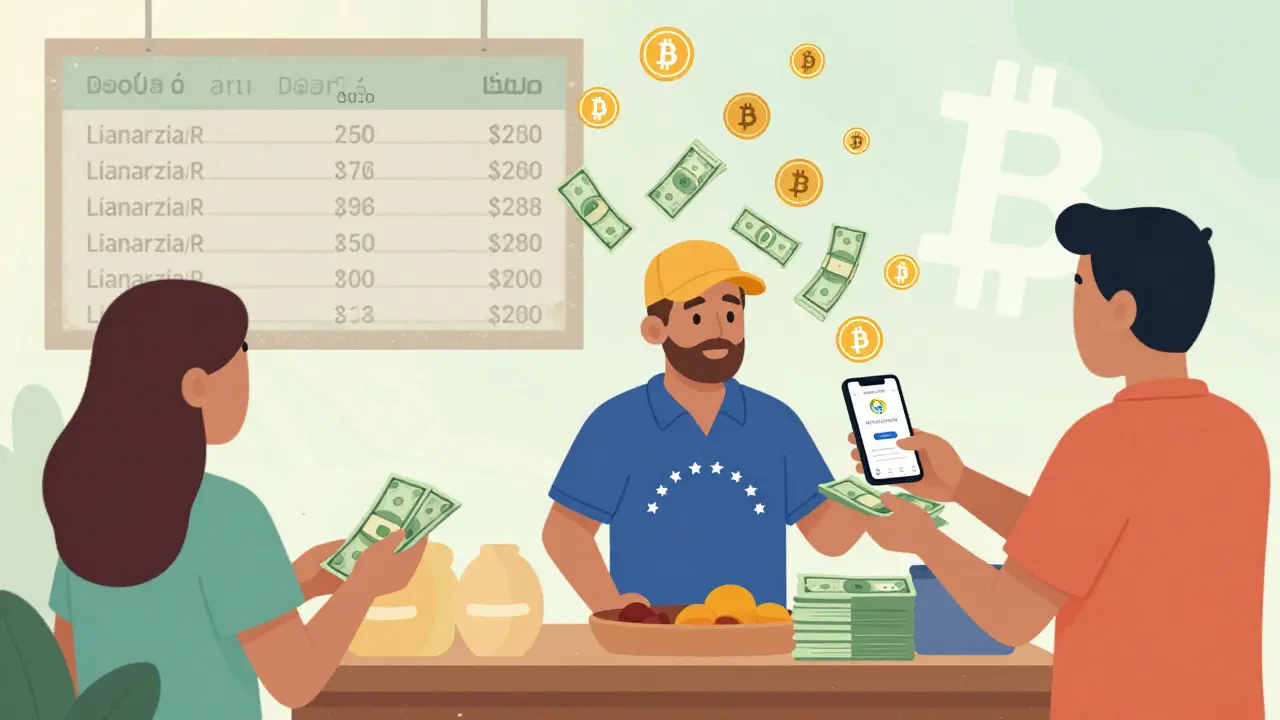
When your salary buys less than a loaf of bread by the end of the week, what do you do? In Venezuela, millions stopped trusting the bolívar - not because they wanted to, but because they had no choice. By mid-2024, inflation hit 229%. The currency lost over 70% of its value in just eight months. Banks were frozen by U.S. sanctions. ATMs ran out of cash. People couldn’t open accounts. And yet, life went on. How? Through Bitcoin. Through USDT. Through peer-to-peer trades done on phones with spotty internet.
Why Bitcoin? Because the Bolívar Wasn’t Money Anymore
The bolívar isn’t just weak - it’s broken. In 2023, the government stopped trying to prop it up. Prices changed multiple times a day. Workers got paid weekly, but by Friday, their paychecks were worth less than they were on Monday. A bag of rice that cost 50,000 bolívares on Monday could cost 120,000 by Friday. People started carrying stacks of cash just to buy groceries. Then they stopped carrying cash altogether. Enter Bitcoin and stablecoins. Not because they’re trendy. Not because they’re speculative investments. But because they work. USDT, the Tether stablecoin pegged to the U.S. dollar, became the unofficial currency. Locals call it “Binance dollars.” You can buy a bus ticket, pay rent, or buy medicine with it. A 2025 survey of 1,200 businesses in Caracas found that 65% accepted cryptocurrency for daily transactions. That’s not a niche experiment - it’s mainstream survival.How It Actually Works: P2P, Phones, and Patchy Internet
There’s no Bitcoin ATM in most neighborhoods. No crypto debit card you can swipe. Instead, Venezuelans use apps like Binance P2P and LocalBitcoins. You find someone nearby who wants to sell USDT. You meet in a café. You pay them in cash - bolívares, or sometimes even dollars if you’re lucky. They send you USDT to your phone wallet. Done. No bank. No paperwork. No waiting. It’s messy. It’s risky. But it’s faster than the bank. A Bitcoin transaction might take 10 to 60 minutes to confirm. USDT on the Tron network? Under two minutes. That’s why 91% of all crypto transactions in Venezuela in mid-2025 were in stablecoins, not Bitcoin. Bitcoin is for saving. USDT is for spending. Internet speed? Venezuela ranks 153rd globally at 14.79 Mbps. Many people rely on mobile data. When the power goes out - and it does, often - transactions pause. But people adapt. They wait. They schedule trades. They use offline methods like QR codes saved on phones. A 2025 study by the University of Carabobo found that new users learned the basics in two to three weeks. It’s not hard to learn. It’s hard to get online.Who’s Using It? 4.3 Million People and Counting
That’s about 13% of Venezuela’s population. Not the elite. Not tech bros. Regular people: teachers, mechanics, nurses, street vendors. Victor Sousa, a Caracas mechanic, told the Financial Times he uses USDT to buy spare parts. “There’s lots of places accepting it now,” he said. “The plan is to one day have my savings in crypto.” On Reddit’s r/BitcoinVenezuela, with over 42,000 members, the stories are the same. “Without USDT, I couldn’t feed my family after my bolivar salary became worthless overnight,” wrote one user in June 2025. Another posted a photo of their grocery receipt - paid in USDT. The comments? “Same here.” “I do this every week.” Even small businesses are switching. A bakery in Maracaibo started accepting USDT after customers kept showing up with empty wallets. “We used to lose 30% of sales because people couldn’t pay,” said the owner. “Now, we get paid in real money. Even if it’s digital.”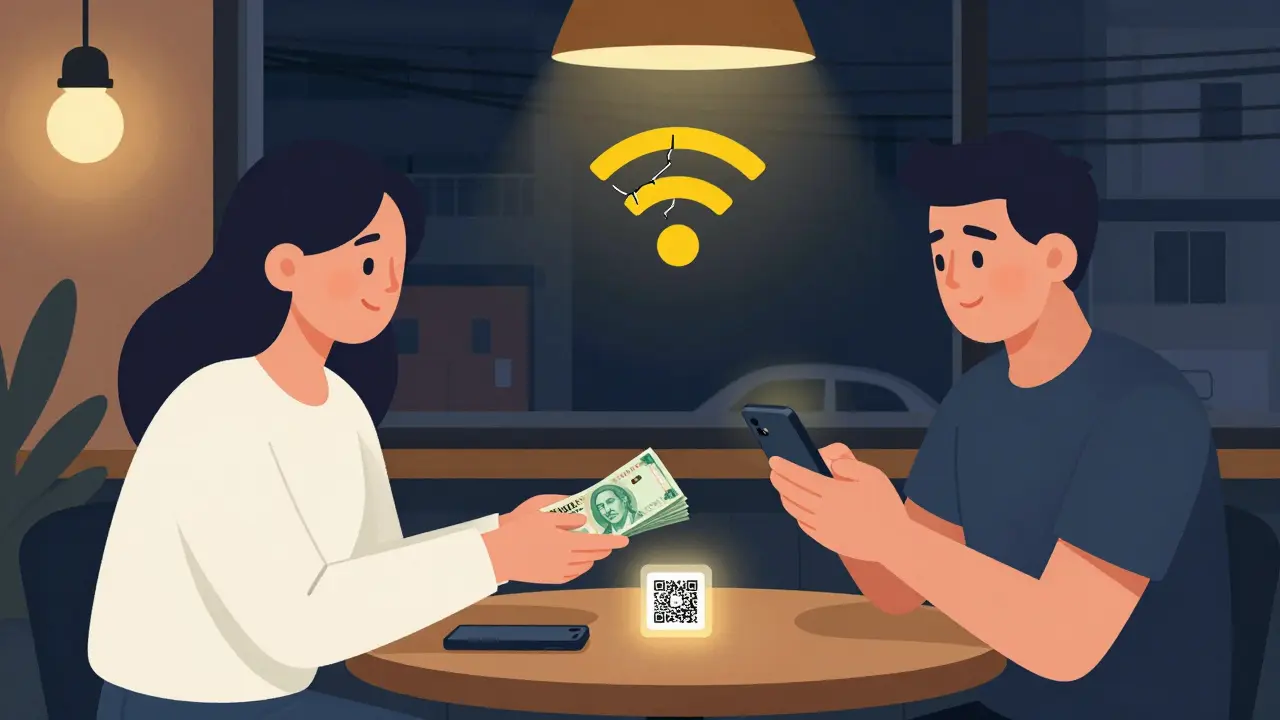
The Catch: It’s Not Perfect
This isn’t a utopia. It’s a workaround. And it’s fragile. First, you’re dependent on Tether Limited - a company based in the British Virgin Islands that controls 76% of Venezuela’s stablecoin supply. If Tether ever freezes accounts, cuts off access, or gets hit by U.S. sanctions, millions lose their savings overnight. And it’s already happened. In 2024, Binance blocked transactions from certain Venezuelan banks under U.S. pressure. Around 18% of all crypto transfers were rejected that year. Second, rural areas are left behind. Only 45% of Venezuelans have reliable internet. In the Andes or the Amazon, crypto is a luxury. No phone signal? No crypto. No electricity? No wallet. The digital divide here isn’t just about money - it’s about survival. Third, volatility still bites. Converting USDT back to cash isn’t always smooth. Spread costs average 3.7% during peak times. And if you’re selling crypto to buy food, you’re at the mercy of whoever’s buying. One day, you get 100,000 bolívares for 1 USDT. The next, you get 85,000. No regulation. No recourse.The Government’s Confusing Role
The Venezuelan government didn’t start this. It tried to control it. In 2018, they launched the Petro - a cryptocurrency backed by oil. It was a failure. By 2024, it was dead. No one trusted it. No one used it. Then, in 2023, they shut down SUNACRIP, the agency meant to regulate crypto. Why? Because they couldn’t control it. Now, there’s no official rulebook. No licensing. No oversight. Crypto exists in a legal gray zone - tolerated, but not protected. Meanwhile, the U.S. keeps sanctions in place. Banks can’t process Venezuelan transactions. PayPal, Wise, and Western Union are blocked. That’s why crypto filled the vacuum. It’s not a rebellion. It’s a response to being cut off.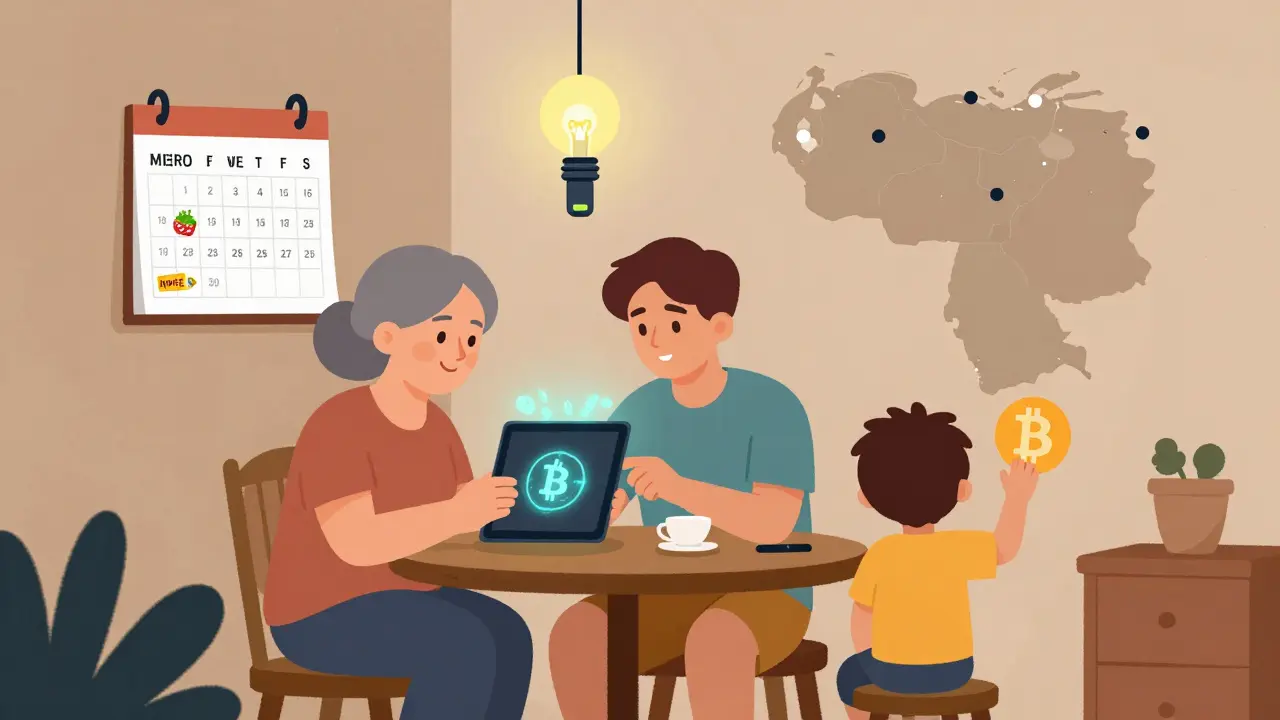
What’s Next? Survival, Not Revolution
Crypto isn’t fixing Venezuela’s economy. It’s not rebuilding factories. It’s not stopping corruption. It’s not bringing back imports. What it does is let people eat, pay rent, and send money home. The IMF says real recovery needs sound monetary policy - something Venezuela hasn’t had in decades. But until then, crypto is the only thing keeping the lights on. Some experts think crypto could become a formal parallel system - like a second currency. Others warn it’s a temporary fix. If the bolívar ever stabilizes, people might abandon USDT. But that’s not likely before 2027, according to IMF economists. What’s clear? Venezuelans didn’t choose crypto. It chose them. And they’re not going back.Real Stories, Real Numbers
- 4.3 million Venezuelans use crypto regularly (MEXC, March 2025) - $119 million in crypto transactions in July 2025 (AInvest/SUNACRIP) - 9% of all remittances to Venezuela in 2023 were sent via crypto (CoinTelegraph) - 65% of Caracas businesses accept crypto for daily purchases (Markets.com, August 2025) - 76% of stablecoin volume is tied to Tether (Chainalysis, 2025) - 37% of users report connectivity issues affecting transactions (Markets.com survey)How Did This Happen So Fast?
It wasn’t marketing. It wasn’t a government push. It was desperation. And community. YouTube channels like “Cripto Para Todos” (127,000 subscribers) taught people how to use wallets. Universities started mandatory crypto courses in January 2025. Friends taught friends. Grandparents learned from grandchildren. No one had time to wait for permission. This isn’t about technology. It’s about human resilience.Is Bitcoin legal in Venezuela?
Bitcoin isn’t illegal in Venezuela, but it’s not officially recognized either. The government doesn’t regulate it, and there’s no legal framework for crypto transactions. That means users have no protection if something goes wrong - no chargebacks, no dispute resolution. It’s a gray zone: tolerated but not protected.
Why do Venezuelans use USDT instead of Bitcoin?
Bitcoin’s price swings too much for daily use. If you need to buy bread today, you can’t risk losing 10% of your money by the time you get home. USDT is pegged to the U.S. dollar, so its value stays stable. That’s why 91% of all crypto transactions in Venezuela in 2025 were in USDT, not Bitcoin. Bitcoin is for saving. USDT is for spending.
Can I send crypto to Venezuela from abroad?
Yes, but it’s tricky. U.S. sanctions block transactions from some international platforms. Services like PayPal and Wise can’t send money to Venezuela. But peer-to-peer crypto transfers - like sending USDT directly to a Binance P2P wallet - still work. Many families abroad now send crypto instead of cash through Western Union. It’s faster, cheaper, and harder to block.
What happens if Tether freezes my USDT?
If Tether Limited freezes your account - which they can do because they control the underlying USDT - you lose access to your funds. There’s no appeal process. This is the biggest risk of using stablecoins. Venezuelans know this. Many split their savings between USDT, Bitcoin, and even physical dollars. But for most, there’s no better option.
Is crypto adoption growing or slowing down in Venezuela?
It’s still growing. In 2024, Venezuela saw 110% year-over-year growth in crypto usage - the fastest in Latin America. Even with internet issues and sanctions, more people are joining every month. The only thing that could stop it is if the bolívar regains stability - which economists say won’t happen before 2027. Until then, crypto will keep growing.
Can I use crypto to pay for utilities in Venezuela?
Some yes, most no. A few private companies - especially in Caracas and Maracaibo - accept USDT for electricity or water bills. But state-run utilities still demand bolívares. Most people pay their utilities in cash, then use crypto for everything else. It’s not a full replacement - yet.
Are there crypto ATMs in Venezuela?
No. There are no Bitcoin ATMs in Venezuela. All transactions happen through apps and peer-to-peer meetups. You can’t walk into a store and buy Bitcoin with cash like you can in the U.S. or Colombia. Everything is done digitally, on phones, with someone you trust.
Allen Dometita
9 01 26 / 12:35 PMThis is wild. People are literally using crypto to buy bread while the government prints toilet paper. 🤯 I’ve seen this in documentaries but actually reading about it? Mind blown.
Brittany Slick
11 01 26 / 09:35 AMI cried reading this. Not because it’s sad, but because it’s beautiful. Humans finding light in the darkest cracks. USDT isn’t money-it’s hope with a QR code.
Sherry Giles
12 01 26 / 10:21 AMThis is all a CIA psyop. They want you to rely on Tether so they can freeze your funds later. Watch. One day, boom-no more USDT. The dollar empire doesn’t want you free. They just want you hooked on their digital leash.
Jon Martín
13 01 26 / 11:01 AMY’all need to see this. Not as a tech thing. Not as a finance thing. As a human thing. People are teaching their grandparents how to scan QR codes so they can eat. That’s not innovation. That’s revolution. And it’s happening right now. No hype. No VC. Just survival.
Tracey Grammer-Porter
14 01 26 / 16:59 PMI love how the article says 'it chose them'-that’s so true. Crypto didn’t come to Venezuela. Venezuela reached out and grabbed it. No permission needed. No bank account. Just a phone and a will to live.
sathish kumar
14 01 26 / 17:44 PMThe phenomenon described herein constitutes a remarkable case study in decentralized monetary resilience. The absence of institutional infrastructure has precipitated an organic, grassroots adoption of cryptographic assets, thereby circumventing systemic collapse. A testament to human adaptability under duress.
Don Grissett
15 01 26 / 17:04 PMso like... if you're using usdt, you're basically trusting a company in the british virgin islands to not be a jerk? bro. that's not money. that's a gamble with your groceries.
Katrina Recto
16 01 26 / 04:49 AMI used to think crypto was for speculators. Now I know it’s for people who’ve lost everything and still have to feed their kids.
Mollie Williams
17 01 26 / 09:31 AMThere’s something haunting about this. We talk about money as if it’s abstract-numbers on a screen. But here, it’s not abstract. It’s medicine. It’s bus fare. It’s the difference between a child eating tonight or going to bed hungry. Crypto isn’t replacing the bolívar. It’s replacing despair.
Surendra Chopde
17 01 26 / 09:54 AMI’m from India. We have our own inflation problems. But seeing this makes me realize how lucky we are to still have banks-even if they’re slow. Still, the resilience here is unmatched. I’m sharing this with my family tonight.
Tiffani Frey
19 01 26 / 07:05 AMImportant note: the 91% USDT usage rate is accurate, but it’s worth mentioning that Tron-based USDT is dominant due to lower fees and faster confirmations. Also, many users use Telegram bots for P2P matching-this isn’t widely reported but is critical for low-bandwidth areas.
Tre Smith
20 01 26 / 03:26 AMLet’s be real. This isn’t ‘resilience.’ It’s a failed state. The fact that 13% of the population is using crypto means the government has collapsed. And Tether is the only thing holding up a crumbling building. This isn’t progress-it’s a house of cards held together by Wi-Fi.
Ritu Singh
21 01 26 / 14:59 PMThe Petro was a distraction. The real power move? Letting the people create their own currency. The state didn’t lose control-it was never in control. This is the quiet rebellion of the everyman. No flags. No slogans. Just wallets.
kris serafin
23 01 26 / 03:56 AMI’ve helped 3 Venezuelan friends set up Binance P2P. One sent me a pic of her kid eating rice she bought with USDT. I cried. This isn’t crypto. This is family. 🫶
Jordan Leon
23 01 26 / 23:06 PMThe most profound aspect of this phenomenon is not technological, but psychological. The reclamation of economic agency-without institutional validation-is a quiet redefinition of sovereignty. One might argue that, in the absence of state legitimacy, the individual becomes the sovereign unit of value.