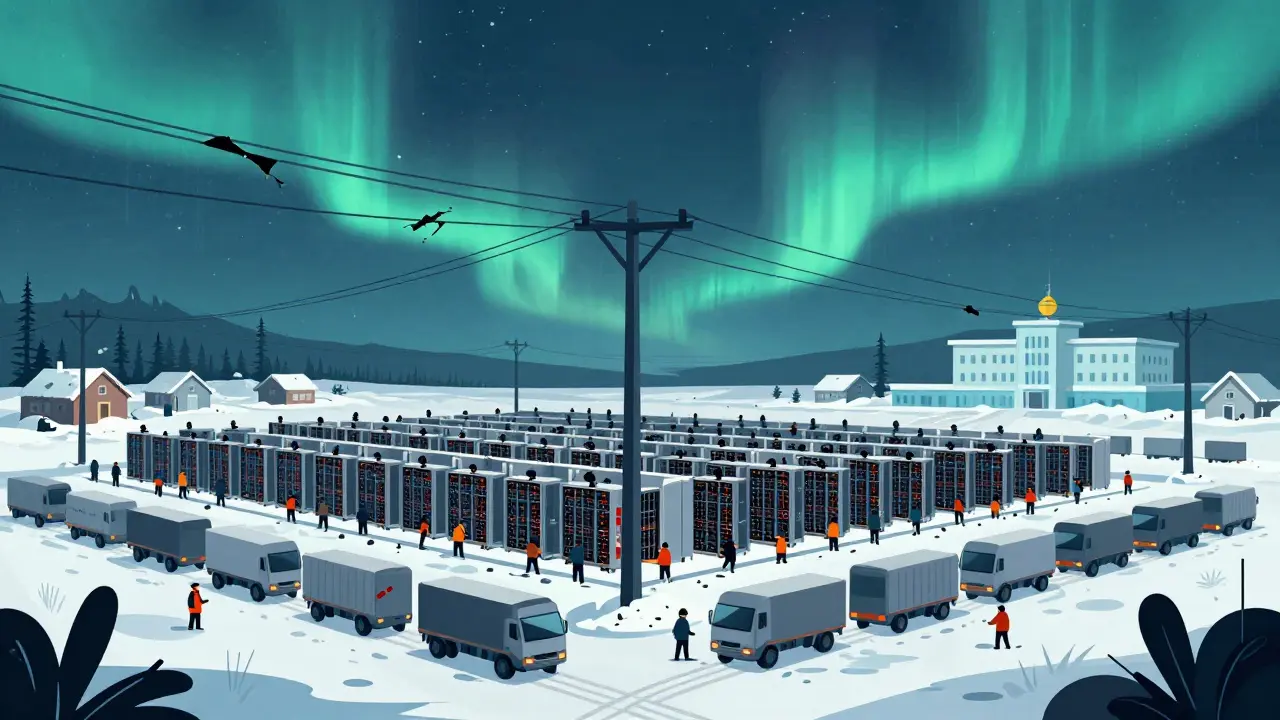
When Bitcoin’s network hash rate hit 1.041 billion terahashes per second in September 2025, it wasn’t just a record-it was proof that the network is getting stronger, even as mining shifts across continents. Behind that number is a quiet but massive relocation: miners are leaving Kazakhstan in droves. Not because the country ran out of power, but because it started running out of stability.
Kazakhstan didn’t become a Bitcoin mining giant by accident. After the Soviet Union collapsed, the country inherited vast coal reserves and unused power plants. By 2021, it had climbed to second place in global Bitcoin hash rate, behind only China. Mines in Ekibastuz, powered by cheap coal, ran nonstop. But that boom came with a hidden cost.
When Mining Broke the Grid
In 2021, Bitcoin mining consumed nearly 7% of Kazakhstan’s total electricity. That might sound small, but for a country with aging infrastructure and millions of households still dealing with winter blackouts, it was unsustainable. When miners started pulling more power than the grid could handle, homes froze. Hospitals lost backup power. Protests erupted. The government didn’t shut down mining overnight-it cut the plug. Literally. Miners were disconnected from the national grid. Some lost machines. Others lost months of revenue.
That moment changed everything. Miners realized: cheap energy doesn’t mean safe mining. If your power can be turned off because of a protest, you’re not building a business-you’re gambling.
The Exodus Begins
The real turning point came in July 2025, when Canaan, one of the world’s largest Bitcoin mining hardware manufacturers, announced it was pulling out of Kazakhstan. The numbers tell the story: in May 2025, Canaan was running 6.67 EH/s in Kazakhstan. By July, that had dropped to 5.56 EH/s. They didn’t just downgrade-they moved. Half of those machines were relocated to the U.S., the other half to Canada. Canaan mined 89 BTC in July 2025, down from previous months, not because Bitcoin got harder to mine, but because they lost over 1 EH/s of computing power overnight.
This wasn’t an isolated move. Other operators quietly followed. Some sold their rigs. Others leased space in Texas, Georgia, and Finland. The trend wasn’t news. It was inevitable.
Where Are They Going?
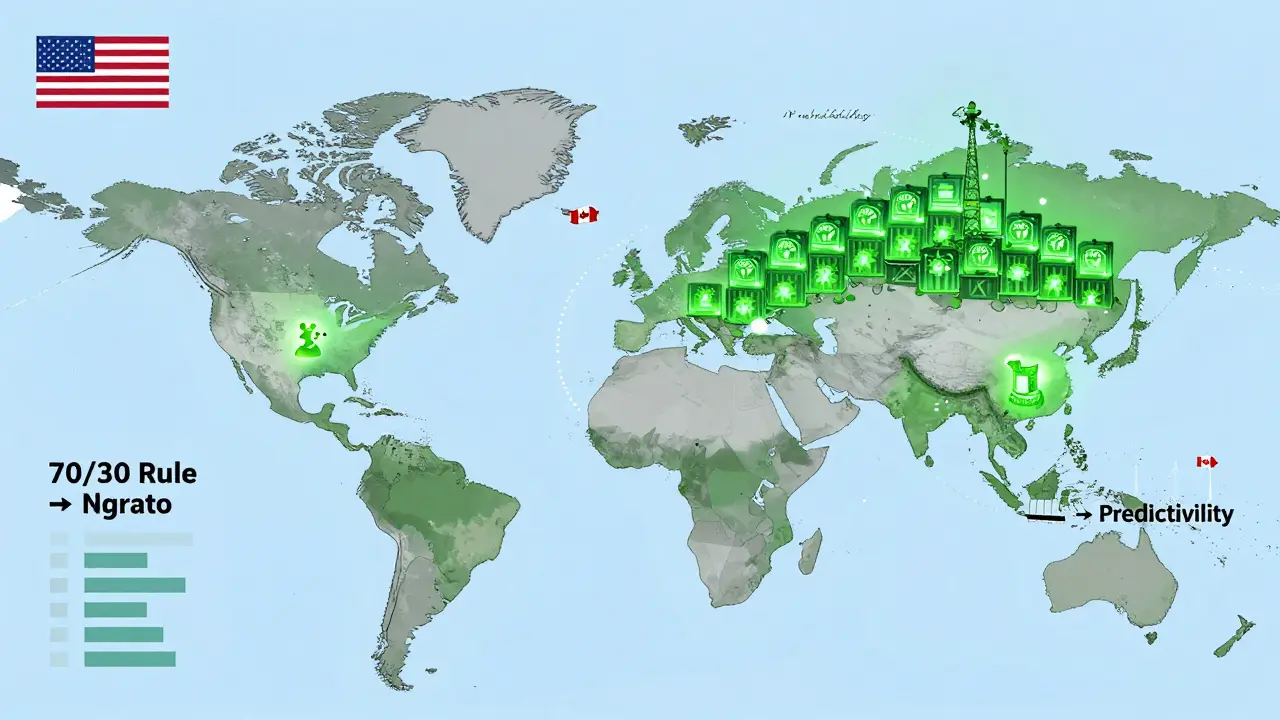
The U.S. is now the undisputed leader in Bitcoin mining, holding 35.4% of the global hash rate. Texas alone has more mining power than the entire country of Russia. Why? Reliable grids. Clear regulations. Tax incentives. Power contracts that last five years, not five weeks.
Canada isn’t far behind at 9.6%. Its hydroelectric dams provide clean, stable power. Germany and Finland are attracting miners with renewable energy credits and low carbon taxes. Even Iran, despite sanctions, is holding steady at 2.3% because it has subsidized electricity and a government that doesn’t blink when miners show up.
Kazakhstan’s 14.8% share in 2024 still makes it a major player-but it’s shrinking. The gap between the U.S. and Kazakhstan is wider now than ever. In 2021, Kazakhstan was almost tied with China. Now, it’s trailing behind Canada, and the U.S. is pulling away.
What Kazakhstan Is Trying to Do
The government didn’t give up. In early 2025, they launched a 70/30 energy plan: 70% of new thermal power plant output goes to the national grid. Only 30% is left for crypto mining. It sounds fair-but miners say it’s too little, too late. They’re still waiting for long-term contracts, not temporary quotas.
Meanwhile, banks blocked over 15,800 unauthorized crypto transactions in Q1 2025, worth $3.07 million. That’s not just enforcement-it’s distrust. Miners don’t need more rules. They need predictability. Can they count on power next winter? Will their machines be seized? Will taxes change overnight? No one can answer.
The Bigger Picture: Hash Rate Isn’t Just About Money
Bitcoin’s security doesn’t come from code. It comes from machines. The more computing power spread across the world, the harder it is to attack. When miners leave Kazakhstan, the network doesn’t weaken-it redistributes. The hash rate keeps rising because new miners are stepping in, not because old ones are staying.
Experts call this migration “geopolitical rebalancing.” It’s not a collapse. It’s evolution. Miners are choosing locations based on risk, not just cost. The U.S. isn’t cheaper than Kazakhstan. But it’s safer. And for institutional investors, safety matters more than savings.

What This Means for Bitcoin
Every time a miner moves, the network gets more resilient. The hash rate spike in September 2025 wasn’t a fluke. It was the result of thousands of machines being reinstalled, recalibrated, and reconnected-not in one country, but across five. The network doesn’t care where the power comes from. It only cares that it keeps running.
Bitcoin’s price doesn’t always jump when hash rate rises-but it usually does, months later. That’s because a growing hash rate signals long-term confidence. Investors see it: miners are betting on Bitcoin’s future. And if they’re willing to move halfway across the world to keep mining, that’s not panic. That’s conviction.
Is Kazakhstan Still a Viable Option?
Yes-but only for a specific kind of miner. If you’re a small operator with a few hundred machines, and you’re okay with intermittent outages and regulatory uncertainty, maybe. But if you’re running a professional mining farm with thousands of ASICs? No. The risk isn’t worth the savings.
Kazakhstan still has cheap coal. It still has space. But it doesn’t have the reliability that modern mining demands. Miners aren’t leaving because they hate Kazakhstan. They’re leaving because they love Bitcoin enough to walk away from a bargain.
What’s Next?
The migration isn’t over. More miners will leave in 2026. Some will come back-if Kazakhstan delivers real energy contracts and stable power. But for now, the trend is clear: the future of Bitcoin mining isn’t in places with cheap electricity. It’s in places with predictable electricity.
The global hash rate keeps climbing. The network gets stronger. And Bitcoin? It just keeps going.
Beth Erickson
16 02 26 / 09:03 AMU.S. mining dominance? Obviously. Kazakhstan couldn't even keep the lights on for its own people. Why are we even surprised? This isn't a migration-it's a correction. Power isn't a favor. It's a contract. And the U.S. actually honors them.
Also, Canada's hydro? Pure gold. No coal smoke. No protests. Just clean, reliable juice. The future is here, and it's not in Central Asia.
Andrew Edmark
16 02 26 / 23:19 PMI get it, we all want cheap power, but this isn't just about cost. It's about peace of mind. Imagine running a farm worth millions and knowing one protest could shut you down. That's not business. That's Russian roulette with ASICs. The U.S. and Canada aren't just offering power-they're offering stability. And that's worth more than any electricity discount. 😊
Dominica Anderson
18 02 26 / 01:26 AMKazakhstan was never a real player. Just a coal-burning ghost town with a Bitcoin hashtag. The U.S. isn't just winning-it's redefining what mining means. Infrastructure. Rule of law. Predictability. These aren't luxuries. They're prerequisites.
Nova Meristiana
18 02 26 / 02:45 AMOh please. The U.S. is just another geopolitical puppet. They're not stable-they're just better at hiding the cracks. Wait till the Texas grid fails during a heatwave. Then we'll see who's laughing. 🤡
Ian Plunkett
19 02 26 / 03:37 AMThe U.S. is not the answer. It's a distraction. The real story? Finland. Renewable energy credits. Carbon-neutral mining. That’s the future. Not Texas oil barons pretending they're Bitcoin pioneers. This isn't about power-it's about legacy. And Kazakhstan? At least they tried. The U.S. just took the money and ran.
yogesh negi
21 02 26 / 01:58 AMI think we should remember that mining is not just about machines-it's about people. In Kazakhstan, families were freezing because miners took the power. That’s not a trade-off-it’s a tragedy. The shift to the U.S. and Canada? It’s not just smart. It’s humane. We need to build systems that don’t make people suffer for progress. 🙏
Nikki Howard
22 02 26 / 15:12 PMIt is, however, imperative to note that the regulatory framework within the United States remains, at best, inconsistent. State-level policies vary dramatically. Texas, yes, is favorable-but California? Not so much. To generalize the entire nation as a haven is, frankly, misleading.
Sasha Wynnters
22 02 26 / 23:21 PMBitcoin doesn't care about borders. It cares about entropy. The moment you try to control energy, you invite chaos. Kazakhstan tried to ration the sun. The U.S. just let the grid breathe. That’s the difference between a dictatorship and a democracy. Miners didn't leave Kazakhstan-they escaped a cage. And now? The network is freer than ever. The hash rate isn't rising because of machines. It's rising because of freedom.
george chehwane
23 02 26 / 01:03 AMOh wow. 'Predictable electricity.' What a revolutionary concept. Next you'll tell me water flows downhill and gravity isn't just a suggestion. The U.S. didn't win because it's better-it won because it's the only place where miners can sue the government if they turn off the power. That's not stability. That's litigation theater. 🤖
Charrie VanVleet
24 02 26 / 13:26 PMHey everyone-just wanted to say this is actually kind of beautiful. Miners are voting with their rigs. They’re not running away from Bitcoin. They’re running toward a future where their work actually matters. And that’s huge. We’ve all been scared this thing could collapse. But look-people are still betting. Hard. And that’s the real story. 🙌
Scott McCrossan
26 02 26 / 10:22 AMThis whole article is propaganda. The U.S. grid is a dumpster fire waiting to happen. Texas blackouts in 2021? 2023? 2025? Still happening. They’re just better at PR. Meanwhile, Iran’s mining is growing because they don’t care about your fancy ESG nonsense. Real miners don’t need permission. They just mine.
Rajib Hossaim
27 02 26 / 04:16 AMIt is important to acknowledge that energy policy is not merely an economic issue but a social one. Kazakhstan's decision to prioritize domestic needs over mining revenue was morally sound, even if economically painful. The global community should support nations that choose human welfare over speculative infrastructure.
Ruby Ababio-Fernandez
28 02 26 / 02:35 AMU.S. wins. End of story.
Jenn Estes
1 03 26 / 01:13 AMYou people act like miners are saints. They’re just tech bros with ASICs. Kazakhstan had a real economy. Now? They’re just exporting chaos. And you’re celebrating it like it’s a victory. It’s not. It’s a race to the bottom.
Jeremy Fisher
1 03 26 / 02:08 AMLook, I’ve lived in five countries. I’ve seen mining setups in Siberia, Georgia, and even a warehouse in rural Alabama. The difference isn’t just power. It’s culture. In the U.S., if your machine dies, you call a tech guy. In Kazakhstan? You pray. And wait. And hope the grid comes back before winter. This isn’t about economics. It’s about dignity. Miners aren’t leaving for cheaper juice. They’re leaving because they want to wake up and know their life’s work won’t vanish because some bureaucrat decided to ‘protect the people.’ And honestly? I respect that.
Anandaraj Br
1 03 26 / 12:14 PMKazakhstan got played. They thought they could control Bitcoin. They thought they could tax it, limit it, ration it. But Bitcoin doesn’t negotiate. It just moves. And now? The U.S. is sitting on a mountain of hash power while Kazakhstan is stuck with broken machines and angry citizens. This isn’t a migration-it’s karma.
AJITH AERO
2 03 26 / 12:02 PMSo… we’re supposed to be impressed that miners left a country where people froze… and went to Texas? Where the grid’s held together by duct tape and Elon tweets? Bro. The joke’s on you.
Angela Henderson
4 03 26 / 00:45 AMI just think it’s kind of wild that people are moving entire mining farms across continents just because they don’t trust the power grid. I mean… I get it. But also… isn’t that just… a lot? Like, imagine packing up thousands of machines, shipping them overseas, reconfiguring everything. It’s like moving your whole house because the heater broke. But for Bitcoin. That’s… kinda beautiful in a weird way.
Paul David Rillorta
4 03 26 / 16:10 PMThe U.S. isn’t stable. They’re just better at lying. The grid’s held together by old transformers and crypto bros with generators. The real story? The Chinese government is quietly buying up every ASIC left in Kazakhstan. They’re not leaving-they’re being bought. And the U.S.? They’re just the middleman. This isn’t a migration. It’s a heist.
Lauren Brookes
4 03 26 / 22:19 PMThere’s something quietly profound here. Miners aren’t just chasing cheap power. They’re chasing the right to exist without fear. Kazakhstan offered electricity. The U.S. offered continuity. Finland offered sustainability. But what they all really offered? The chance to build something that lasts. Bitcoin doesn’t need perfect governments. It needs predictable ones. And maybe that’s the real lesson-not where the power comes from, but whether you can count on it tomorrow. Not just today. Not just this season. But always. That’s the quiet revolution.