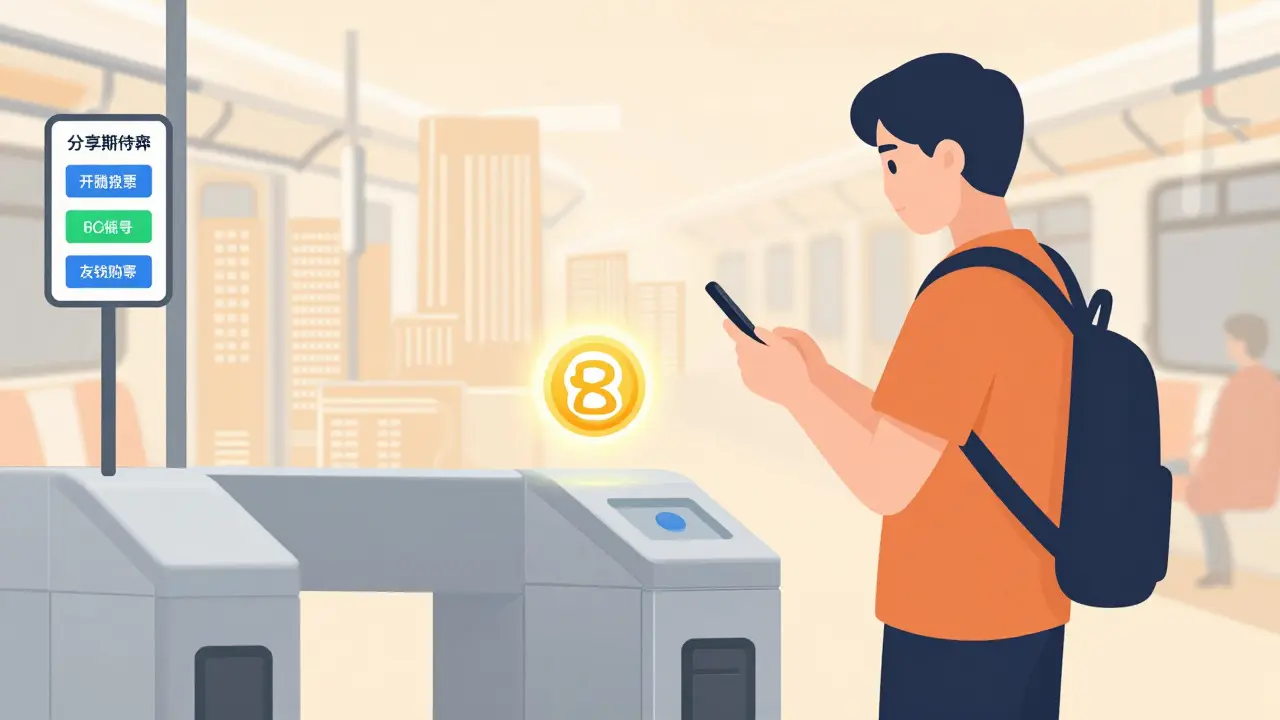
When you pay for a subway ride in Beijing using your phone, you might not realize you're using something far more powerful than just another payment app. You're using the Digital Yuan - a government-issued digital currency that’s quietly becoming the most advanced central bank digital currency (CBDC) in the world. Unlike Bitcoin or Ethereum, this isn’t a decentralized experiment. It’s the People’s Bank of China’s own money, digitized, tracked, and controlled. And it’s already handling trillions of dollars in transactions - far ahead of anything else on the planet.
What Exactly Is the Digital Yuan?
The Digital Yuan, officially called e-CNY or DCEP (Digital Currency Electronic Payment), is the digital version of the Chinese yuan. It’s not a cryptocurrency. It’s not a stablecoin. It’s legal tender, issued directly by China’s central bank, just like physical cash - but in digital form. Every e-CNY coin or note is backed by the full faith and credit of the Chinese government. That means if you hold e-CNY, you’re holding a claim on the People’s Bank of China (PBC), not a private company or a blockchain network.
It was first launched in 2014, making China the first major economy to seriously explore a sovereign digital currency. By 2024, it had grown into the world’s largest CBDC pilot, with over 7 trillion e-CNY ($986 billion) in total transaction volume across 17 pilot cities. That’s more than all other national CBDCs combined. The system isn’t fully rolled out nationwide yet - but it’s already in use by an estimated 260 million people.
How Does It Work?
The Digital Yuan doesn’t run on blockchain. That’s a common misconception. While Bitcoin relies on decentralized ledgers, e-CNY uses a centralized, permissioned system managed directly by the PBC. This gives the government complete control over issuance, monitoring, and policy enforcement.
Here’s how it actually works in practice:
- The PBC issues e-CNY to the country’s four state-owned banks - ICBC, CCB, ABC, and BOC.
- These banks then distribute digital wallets to the public through their apps or by integrating e-CNY into existing platforms like WeChat Pay and Alipay.
- Users can send, receive, and spend e-CNY using their smartphones.
- Critical feature: It supports offline payments. Even without internet, two phones can transfer e-CNY using Bluetooth or NFC - a game-changer in rural areas or during power outages.
There’s no mining, no nodes, no public ledger. Transactions are recorded on a centralized database owned by the PBC. This isn’t about decentralization - it’s about control.
Why China Built It
China didn’t create the Digital Yuan just to make payments faster. It’s a strategic tool with four main goals:
- Modernize payments - Replace outdated banking systems with a faster, cheaper digital alternative.
- Expand financial inclusion - Give unbanked rural populations access to digital money without needing a traditional bank account.
- Enable programmable money - The PBC can set rules on how money is spent. For example, a subsidy for food can only be used at grocery stores. A stimulus payment can expire in 30 days. This kind of precision is impossible with cash or credit cards.
- Challenge the dollar’s global dominance - By making e-CNY usable in cross-border trade, China aims to reduce reliance on the U.S. dollar in international transactions.
The results are already visible. In pilot cities like Shenzhen, 87% of users say the e-CNY wallet is easy to use. Transactions complete in 1.2 seconds - faster than Alipay or WeChat Pay. And during the 2024 Lunar New Year, the government distributed 150 million e-CNY in red envelopes, instantly boosting adoption.
How It Compares to Other CBDCs
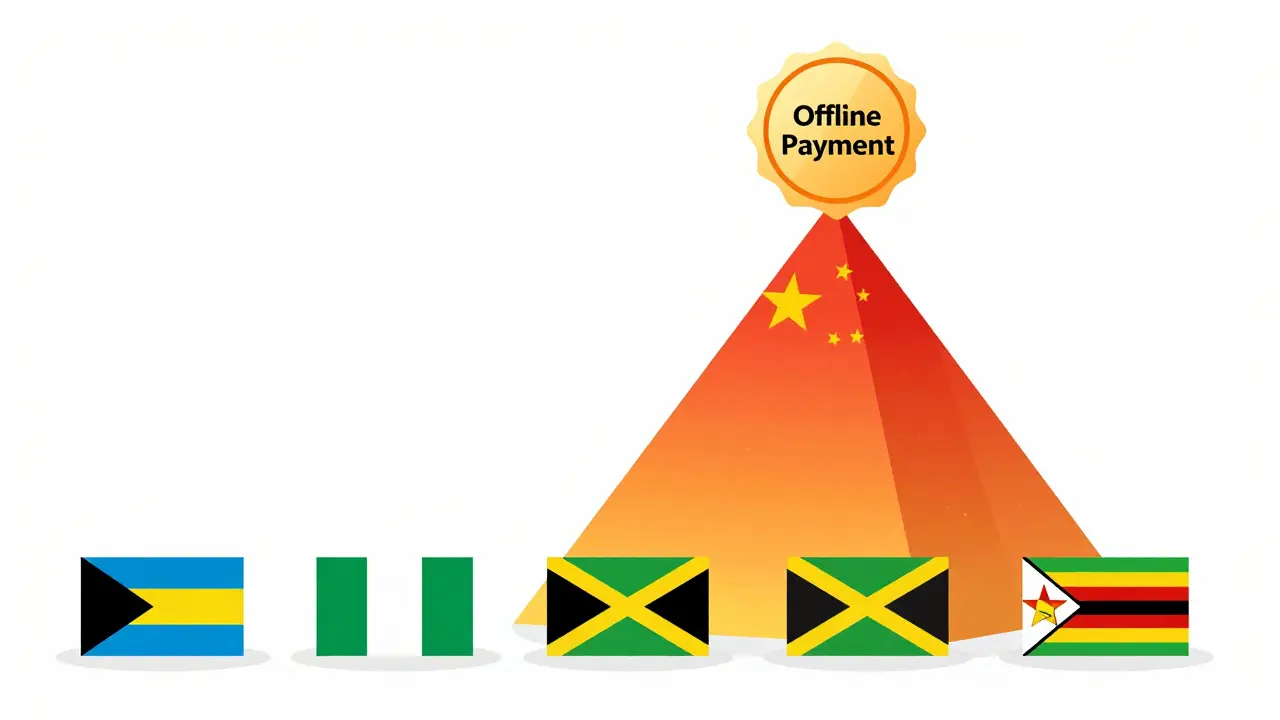
Several countries have launched their own digital currencies. Jamaica’s JAM-DEX, the Bahamas’ Sand Dollar, Nigeria’s e-Naira, and Zimbabwe’s ZiG are all live. But none come close to China’s scale.
| Country | CBDC Name | Population Served | Transaction Volume (2024) | Offline Support | Programmable Features |
|---|---|---|---|---|---|
| China | e-CNY (Digital Yuan) | 260 million (pilot) | $986 billion | Yes | Yes |
| Bahamas | Sand Dollar | 400,000 | $120 million | Yes | No |
| Nigeria | e-Naira | 210 million | $1.2 billion | No | Partially |
| Jamaica | JAM-DEX | 2.9 million | $80 million | No | No |
| Zimbabwe | ZiG | 16 million | $300 million | No | No |
China’s system is not just bigger - it’s smarter. It handles offline payments. It allows conditional spending. It integrates with the world’s most advanced mobile payment ecosystem. No other CBDC has this level of sophistication.

Privacy Concerns and Criticisms
There’s no sugarcoating it: the Digital Yuan gives the Chinese government unprecedented visibility into how people spend money. Every transaction is recorded. Every transfer can be traced. This raises serious privacy questions.
Unlike cash, which is anonymous, e-CNY transactions are tied to your real-name ID. The PBC can see where you shop, how much you spend, and when. Critics argue this could enable social control - for example, restricting payments to certain merchants or freezing funds based on behavior.
But China’s government says this transparency is necessary to fight corruption, tax evasion, and money laundering. They point out that banks already track transactions - e-CNY just makes it more efficient. Still, the lack of true anonymity has drawn criticism from human rights groups and international observers.
There’s also the issue of exclusion. Foreigners can’t easily use e-CNY because they lack Chinese ID. Even tourists in pilot zones face barriers. While the PBC is testing cross-border use through projects like mBridge (with Hong Kong, Thailand, and the UAE), most international users still can’t access it.
Why It Matters to the Rest of the World
The Digital Yuan isn’t just a Chinese project. It’s a global turning point.
Right now, the U.S. dollar dominates global trade. Nearly 90% of international transactions are settled in dollars. But China is building an alternative. By making e-CNY usable in trade deals with Belt and Road partners, it’s quietly creating a parallel financial system - one that bypasses Western-dominated clearinghouses like SWIFT.
Experts warn this could weaken U.S. sanctions. If Russia, Iran, or Venezuela start using e-CNY for oil or grain deals, they can sidestep U.S. financial controls. The Center for Strategic and International Studies (CSIS) has called this a “significant risk” to global financial security.
Meanwhile, the U.S. and Europe are stuck. The European Central Bank’s digital euro is still in testing. The U.S. Congress has blocked CBDC efforts with laws like the Anti-CBDC Act. China, by contrast, has moved fast, quietly building infrastructure that could define the next decade of global finance.
As Dr. Darrell West of Brookings Institution put it: “China’s head start gives it significant influence over emerging technical standards for digital currencies.”
What’s Next?
By late 2025, China plans to begin Phase 3 of the rollout - a nationwide launch. If that happens, the Digital Yuan could become the default payment method for hundreds of millions of people.
Already, 89% of Chinese local governments use e-CNY to distribute welfare, pensions, and subsidies. Over 65% of urban residents in pilot zones are using it regularly. The Bank for International Settlements predicts e-CNY could account for 15-20% of China’s total retail payments by 2027.
But challenges remain. Only 42% of small businesses in pilot cities accept it. Some users report syncing issues with wallets. And while the system works well within China, its international reach is still limited.
Still, the direction is clear: the world is moving toward digital sovereign currencies. And China is leading the way.
Getting Started With e-CNY (For Users in Pilot Zones)
If you’re in one of China’s 21 pilot cities, here’s how to use it:
- Download an official e-CNY wallet app from one of the Big Four banks - ICBC, CCB, ABC, or BOC.
- Or, enable e-CNY within your existing Alipay or WeChat Pay app.
- Complete real-name verification using your Chinese ID card.
- Top up your wallet by transferring yuan from your bank account.
- Pay at merchants with the e-CNY logo - or use offline mode by tapping phones together.
Foreign visitors can try it in tourist areas like Beijing’s Forbidden City or Shanghai’s Nanjing Road, but full access requires a Chinese ID. Without it, you’re locked out.
Common Issues and Fixes
- Wallet won’t sync? Try restarting your phone or switching between Wi-Fi and mobile data. 7.3% of users report this issue, often fixed by a simple reboot.
- Merchant doesn’t accept it? Ask if they’ve installed the e-CNY POS terminal. Only 38% of small businesses have fully integrated it.
- Can’t find the app? Only official bank apps work. Avoid third-party wallets - they’re not legitimate.
Support is available through bank hotlines, with 83% of inquiries resolved in under 15 minutes.
Is the Digital Yuan the same as WeChat Pay or Alipay?
No. WeChat Pay and Alipay are private payment platforms owned by Tencent and Alibaba. They let you send money from your bank account or credit card. The Digital Yuan is actual government-issued currency. When you pay with e-CNY, you’re not using your bank balance - you’re spending digital cash issued by the central bank. It’s like paying with physical yuan, but digital.
Can I use the Digital Yuan outside China?
Limited. Cross-border use is still in testing through projects like mBridge with Hong Kong, Thailand, and the UAE. You can’t use it in the U.S., Europe, or most countries yet. Even in places where it’s tested, you need a Chinese bank account and ID to access it. For now, it’s primarily a domestic tool.
Why doesn’t the Digital Yuan use blockchain?
Because China doesn’t want decentralization. Blockchain makes transactions public and hard to reverse. The PBC wants full control - to track every dollar, freeze accounts if needed, and set rules on how money is spent. A centralized system gives them that power. Blockchain would make that impossible.
Is the Digital Yuan legal for foreigners to use?
Technically yes, if you’re in a pilot zone and have a Chinese bank account. But practically, no - because you need a Chinese ID to register. Foreigners can’t open e-CNY wallets unless they’re residents. Even tourists can’t use it without local registration.
Could the Digital Yuan replace the U.S. dollar?
Not soon, but it’s a serious threat. The dollar’s dominance comes from trust, liquidity, and global infrastructure. The Digital Yuan isn’t replacing it yet - but it’s building an alternative network. If more countries start trading in e-CNY, especially for commodities like oil or grain, the dollar’s role could slowly shrink. This is why U.S. policymakers are watching closely.
Final Thoughts
The Digital Yuan isn’t just a new way to pay for coffee. It’s a new way to control money - and by extension, power. China has built a system that’s faster, smarter, and more scalable than anything else on earth. It’s not perfect. Privacy concerns are real. Global access is limited. But it’s working.
As other nations debate whether to launch their own CBDCs, China is already running millions of daily transactions. The question isn’t whether digital currencies are the future. It’s whether the world will follow China’s model - or try to build something different.
Lisa Parker
20 02 26 / 22:44 PMI just tried e-CNY in Shanghai last month. It was wild - paid for dumplings with my phone off. No internet, no problem. My friend was like WTF, but it just worked. China’s not playing around anymore.
Aileen Rothstein
22 02 26 / 06:39 AMThis is actually kind of amazing. Imagine if we could send stimulus checks that only work at grocery stores or expire after 30 days. No more people cashing them out for vape pens. Programmable money isn’t sci-fi - it’s here. And honestly? I’m weirdly excited.
Ian Plunkett
23 02 26 / 05:32 AMThe fact that they're tracking every coffee you buy... 😳 I mean, sure, it's efficient, but this isn't finance - it's surveillance with a payment gateway. The PBC has a god complex. And they're not even hiding it. #BigBrotherIsDigital
Avantika Mann
24 02 26 / 23:14 PMI live in Delhi and honestly, this makes me hopeful. We have millions of unbanked people here. If this model works for rural China, why can't we adapt something similar? Tech shouldn't be a luxury - it should be a right. Maybe we need to stop copying the West and start learning from the East.
Sasha Wynnters
26 02 26 / 00:10 AMThe Digital Yuan isn't just currency - it's a philosophical statement. It says: money is not a market phenomenon. Money is a tool of statecraft. And China, in its quiet, terrifying efficiency, has realized that to control the future, you don't need tanks - you need transaction logs. The dollar's reign? It's not ending. It's being quietly archived.
Charrie VanVleet
26 02 26 / 18:32 PMHonestly, I’m glad someone’s doing this right. We’ve been stuck in debate mode for years while China just… built it. No drama. No congressional gridlock. Just a working system. And yeah, privacy is a concern - but let’s be real: your bank already tracks you. This just makes it faster. And offline payments? That’s genius. 🙌
Scott McCrossan
27 02 26 / 02:41 AMThis is the most terrifying thing I’ve seen in 2025. A government that can freeze your money because you tweeted the wrong thing? That’s not innovation - that’s dystopia with a QR code. And don’t even get me started on how this enables social credit 2.0. We’re not just losing financial sovereignty - we’re losing our freedom one transaction at a time.
Rajib Hossaim
28 02 26 / 00:14 AMWhile I appreciate the technological achievement, I must emphasize the importance of balancing innovation with human dignity. Financial inclusion is commendable, but without robust legal safeguards against misuse, even the most efficient systems can become instruments of oppression. We must proceed with caution.
Beth Erickson
1 03 26 / 13:33 PMChina's always been sneaky with their money games. First they flooded the market with cheap stuff now they're trying to replace the dollar? Nah. The US dollar is built on trust. Not some app that tracks your toilet paper purchases. We ain't going digital. We're going military.
Ruby Ababio-Fernandez
2 03 26 / 11:14 AMSo what? It's just another app. Why is everyone acting like this is the end of capitalism?
Jenn Estes
3 03 26 / 14:14 PMYou people are so naive. This isn't about convenience. It's about control. If you're okay with the government knowing you bought a burrito at 2am, then you're already half-dead. Just saying.
Angela Henderson
3 03 26 / 21:30 PMI mean, I get why it's cool that you can pay for stuff without wifi, but honestly? I just want to know if it works on my weird old Android phone. I tried to download the app once and it crashed. Then I got a notification that said 'wallet not verified' but I didn't even know I needed to verify it. Like, why is everything so complicated now? I just want to buy a sandwich without doing a 10-step process.
James Breithaupt
4 03 26 / 10:29 AMThe real story here isn't the tech - it's the institutional design. China's CBDC operates on a permissioned, centralized ledger because they're not trying to disrupt finance - they're trying to *reinvent* it. Unlike Western attempts that fetishize blockchain or decentralization, e-CNY is a sovereign instrument built for macroeconomic precision. This is what happens when technocrats run the show instead of venture capitalists. The US is still stuck in crypto-ideology. China is building infrastructure.
Alex Williams
5 03 26 / 14:25 PMFor anyone worried about privacy - yes, it's tracked. But so is your credit card, your Amazon history, and your Google searches. The difference? With e-CNY, you're not handing your data to a corporation. You're handing it to a central bank that can't go bankrupt. And the offline feature? That's a game-changer for disaster zones. Imagine if Hurricane Harvey hit and people could still pay for water with their phones. That's not surveillance - that's resilience.
Sarah Shergold
5 03 26 / 21:19 PMIt's so cringe. China's version of 'future money' is basically a government spreadsheet with a QR code. Meanwhile we're out here building AI pets. Priorities, people.
Andrew Edmark
7 03 26 / 21:04 PMI think this is actually really beautiful. Imagine a world where no one has to pay fees to send money to family overseas. Where a farmer in Yunnan can get a loan because the system sees his crop history, not his credit score. Yeah, there are risks - but the potential? This could lift billions out of financial darkness. Let’s not panic. Let’s build better guardrails.