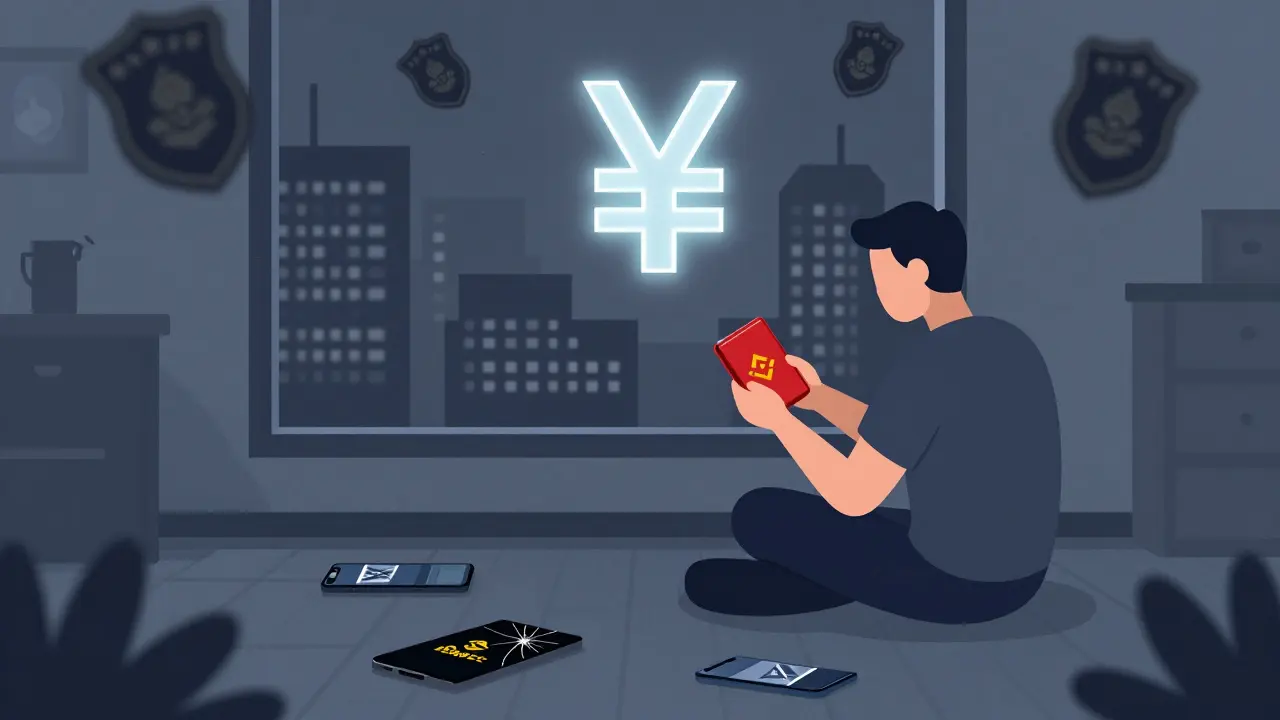
By 2026, an estimated 58 million people in China still hold cryptocurrency-more than the entire population of Canada. But here’s the catch: owning crypto in China is not legal. It’s not banned outright like drugs or weapons. It’s not protected like bank accounts or real estate. It exists in a legal gray zone where you can have it, but you can’t defend it, trade it, or even ask the courts for help if it’s stolen.
What Does Chinese Law Actually Say About Crypto?
The rules have changed so many times in the last five years that even lawyers struggle to keep up. In 2021, China made it clear: no crypto trading, no mining, no exchanges. Any business tied to Bitcoin or Ethereum was labeled illegal fundraising. That meant banks couldn’t touch crypto, payment apps couldn’t process it, and companies couldn’t accept it as payment. Then, in 2025, things got weird. One report claimed China had fully banned crypto ownership-making even holding Bitcoin a criminal act. Days later, another government source said Bitcoin was now legally recognized as protected property. That contradiction wasn’t a mistake. It was intentional. The government doesn’t want people to believe there’s a clear path forward. It wants uncertainty. The truth? Chinese law treats cryptocurrency as a virtual commodity, not money. That means it’s not illegal to have it in your wallet-but any contract involving it is void. If you lend someone 5 Bitcoin and they disappear, you can’t sue. If a crypto exchange you used gets hacked, you won’t get compensation. If your private key is stolen, the police won’t help you recover it. The state doesn’t recognize your ownership. It doesn’t protect it. It just doesn’t actively hunt you down for owning it.Why the Confusion? The Real Goal Behind the Ban
China isn’t trying to stop technology. It’s trying to control money. While private cryptocurrencies like Bitcoin and Ethereum are banned, the government is aggressively pushing its own digital currency: the e-CNY, or digital yuan. This isn’t just a digital version of cash. It’s a tool for total financial oversight. Every transaction is tracked. Every wallet is linked to your ID. Every purchase can be monitored. The state doesn’t want decentralized money. It wants money it can control. That’s why blockchain technology is still encouraged-just not for crypto. State-backed blockchain projects are being built for supply chains, land registries, and tax collection. But if you’re building a decentralized app that uses Ethereum? You’re risking arrest. The message is clear: you can innovate-but only if the government owns the outcome.What Happens If You Get Caught?
If you’re just holding Bitcoin in a hardware wallet? Probably nothing. Police aren’t knocking on doors to check wallets. But if you’re doing anything else? Big trouble. - Trading crypto on a foreign exchange? Risky. Using a VPN to access Binance? That’s circumventing capital controls-a criminal offense under China’s foreign exchange laws. - Running a peer-to-peer OTC trading desk? That’s illegal fundraising. You could face prison. - Mining crypto? All mining operations were shut down in 2021. Any equipment still running is confiscated. Fines can reach millions of yuan. - Accepting crypto as payment for goods or services? That’s considered unlicensed financial activity. Your business license could be revoked. Your assets seized. The Shanghai State-Owned Assets Supervision and Administration Commission quietly noted in mid-2025 that digital asset policies might soften. But no law changed. No regulation was amended. That comment was likely a signal to insiders-not a promise to the public.
The Practical Risks: No Safety Net
Most people don’t realize how dangerous this legal vacuum is. Imagine this: You buy 2 Bitcoin for $60,000. You store them in a cold wallet. Two years later, your phone is stolen. The thief guesses your password. They drain your wallet. You call the police. They tell you: "We don’t handle crypto theft. That’s your risk. No legal recourse." Or worse: You send crypto to a friend to pay them back. They deny receiving it. No contract. No receipt. No way to prove it. Chinese courts won’t hear your case. The law says your transaction never happened. Even your bank won’t help. If you try to deposit crypto profits into your bank account, they’ll freeze the transfer. They’re required to report any suspicious activity. If you explain it’s from Bitcoin, you might get flagged for money laundering. And if you’re a foreigner living in China? Same rules. No exceptions. Your passport doesn’t protect you.How Are People Still Using Crypto?
Despite all this, crypto is still moving through China. How? - OTC trading: People meet in person or use messaging apps like WeChat to trade cash for crypto. No platform. No records. Just trust. - VPN networks: Millions use encrypted tunnels to access Binance, OKX, or Kraken. The government blocks these constantly-but new ones pop up faster than they can be shut down. - Family and friends: Many hold crypto for relatives abroad. A son in Singapore sends Bitcoin to his father in Guangzhou. The father converts it to cash through an OTC dealer. No paper trail. No paperwork. It’s all done quietly. No ads. No public forums. No official channels. The entire underground system runs on word-of-mouth and encrypted apps.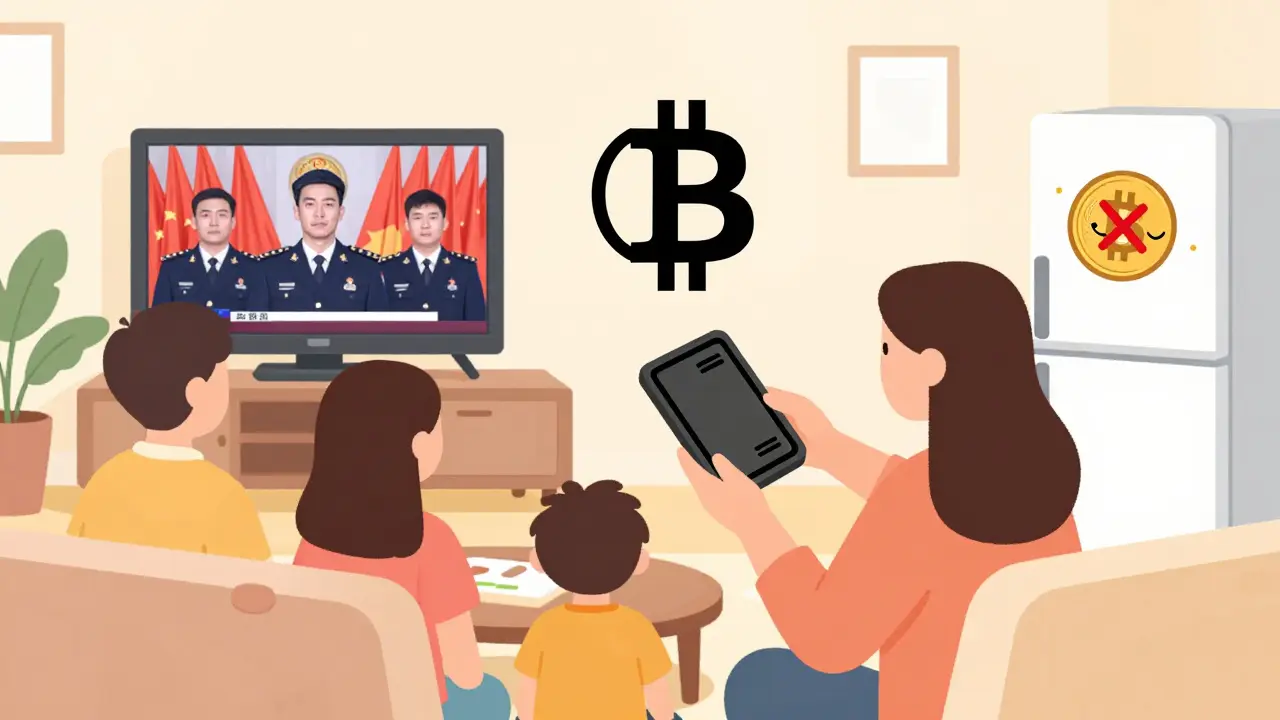
What About the Future?
Will China ever legalize crypto again? Almost certainly not. The government’s entire financial strategy is built around control. The digital yuan is the future-not Bitcoin. China wants to eliminate the possibility of capital flight, private currency competition, and untraceable transactions. Crypto threatens all of that. The 2025 "property recognition" report? Likely a test balloon. A way to see how markets react. A signal to global investors: "We’re still open to negotiation-but only on our terms." So far, no real policy shift has followed. The most likely scenario? More crackdowns. More enforcement. More arrests for trading. More mining facilities shut down. More banks freezing accounts. And more people quietly holding crypto in the dark, hoping they don’t get caught.What Should You Do If You Hold Crypto in China?
If you’re one of the 58 million:- Don’t trade. Don’t mine. Don’t run a business around crypto.
- Don’t use domestic platforms. Even apps that claim to be "legal" are risky.
- Don’t talk about it publicly. Not on social media. Not even in private groups.
- Use hardware wallets. Not exchanges. Not software wallets linked to your phone.
- Keep records of how you got it-just in case. Not for legal reasons, but for your own peace of mind.
- Understand: if it’s stolen, lost, or hacked, you’re on your own.
Is it illegal to just hold Bitcoin in China?
Technically, no-but it’s not legal either. Chinese law doesn’t explicitly say "you can’t own Bitcoin." But it also doesn’t say you can. That means the state won’t protect your ownership. If your Bitcoin is stolen, you can’t sue. If you’re audited, you might be questioned. You’re in a legal gray zone: possession is tolerated, but never recognized.
Can Chinese citizens use Binance or Coinbase?
Accessing foreign exchanges like Binance or Coinbase is against Chinese regulations. While many users do it via VPNs, doing so violates capital control laws. Authorities regularly block these sites and monitor traffic. Getting caught could lead to account freezes, fines, or criminal charges if you’re seen as facilitating large-scale transfers.
Why does China hate crypto but love blockchain?
Because blockchain can be controlled. Crypto can’t. China supports blockchain for things like supply chain tracking, land records, and tax systems-all centralized, state-monitored applications. But Bitcoin and Ethereum are decentralized. No government can track or tax them easily. That’s why crypto is banned: it threatens financial control. Blockchain is promoted: it enhances it.
Are crypto transactions taxable in China?
There’s no official tax rule for crypto gains. But if the government finds out you made money from crypto, they can classify it as illegal income and confiscate it. You won’t get a tax bill-you’ll get a confiscation order. The state doesn’t want you to profit from crypto. It wants you to stop doing it entirely.
Can I inherit crypto from a family member in China?
In theory, yes. But proving ownership is nearly impossible. Chinese courts won’t recognize crypto as inheritable property. Even if you have a will, a private key, and a notarized document, the legal system won’t enforce it. Your heirs may never access the assets. No official process exists. It’s a gamble.
Is mining crypto still banned in China?
Yes. All mining operations were shut down by 2022. Any equipment still running is subject to seizure. Power companies are required to cut off electricity to suspected mining sites. New mining hardware purchases are monitored. The ban is total and actively enforced.
Will China ever allow crypto again?
Unlikely. China’s entire financial strategy is built on control, not decentralization. The digital yuan is the future. Crypto is the past. Any signals suggesting a policy shift are likely tactical-meant to manage global markets, not change domestic rules. Don’t expect legalization. Expect tighter enforcement.
Mary Scott
2 03 26 / 09:15 AMthey're not banning crypto because it's dangerous. they're banning it because it's too *free*. and that scares them more than any hacker or Ponzi scheme. i've seen this before in authoritarian regimes. they don't fear tech. they fear loss of control. and crypto? it's the ultimate middle finger to their surveillance state.
Shannon Holliday
2 03 26 / 20:16 PMsooo... if you hold btc in china and it gets stolen... you're just kinda SOL? 😅💔
Jeremy buttoncollector
3 03 26 / 20:16 PMthe ontological paradox here is that the state is simultaneously acknowledging crypto as a commodity (for taxation and enforcement purposes) while refusing to grant it legal personhood under contract law. this creates a performative contradiction in neoliberal governance: you can commodify it, but you can't civilly protect it. the state doesn't want ownership-it wants control. and control, as we know, is the last refuge of the insecure.
Sriharsha Majety
3 03 26 / 23:54 PMman this is wild. in india we have our own problems with crypto but at least you can talk about it. in china it's like living in a black box. you can have it but if you mention it you disappear. i feel bad for those 58 million people. they're not criminals. they're just trying to use tech.
Vishakha Singh
4 03 26 / 20:13 PMwhile the legal environment remains ambiguous, individuals can still take prudent steps to safeguard their digital assets. this includes utilizing hardware wallets, maintaining offline backups, and avoiding any form of public disclosure regarding holdings. due diligence and discretion remain paramount in high-risk regulatory landscapes.
Don B.
6 03 26 / 04:05 AMso wait. let me get this straight. you can own bitcoin but if someone steals it, you're supposed to just... cry? and the police say "lol nope"? this isn't a country. this is a video game where the npc says "you can't do that" but then lets you do it anyway. who designed this system? a toddler with a clipboard?
Leslie Cox
6 03 26 / 22:26 PMthe hypocrisy is breathtaking. they're building blockchain for land registries? so they want immutable records-just not for *you*. they want transparency for their own systems, but total opacity for yours. this isn't innovation. it's digital feudalism. the state owns the land, the data, and now, the money. you're just a serf with a hardware wallet.
Andrew Hadder
8 03 26 / 00:40 AMjust curious-has anyone tried to inherit crypto from a relative in china? like, what happens if someone dies and leaves a paper with their seed phrase? is that even worth anything? or is it just a fancy note that gets thrown out?
Derek Sasser
8 03 26 / 13:14 PMthe fact that they allow blockchain for supply chains but ban crypto is like allowing a car engine but banning fuel. they want the tech, just not the decentralization. it's not about security-it's about who holds the keys. and right now, the state wants to be the only one with the keychain.
Molley Spencer
9 03 26 / 23:40 PMthe digital yuan isn't a currency. it's a behavioral modification tool. every transaction is a data point. every purchase, a behavioral nudge. they're not trying to modernize finance-they're trying to engineer compliance. crypto is the antithesis of that. it's not about economics. it's about power. and power doesn't like unpredictability. ever.
Samantha Stultz
11 03 26 / 14:46 PMlet’s be real. if you’re holding crypto in china, you’re not an investor-you’re a risk-taker playing russian roulette with your life savings. and the government? they’re the ones holding the gun. they don’t care if you lose. they just want you to stop talking about it. and if you’re dumb enough to post about it online? congrats. you just volunteered for a "voluntary conversation" with state security. this isn’t finance. it’s psychological warfare.
they’ve turned crypto ownership into a silent pact: you can have it, but you must never speak of it. never. not even to your spouse. not even in a locked room. because the moment you say "bitcoin," you become a target. and in china, targets don’t get second chances.
and yes, i know people say "oh but i use a hardware wallet!"-cool. so does every other 58 million. and guess what? the state doesn’t need to find your wallet. they just need to find your phone. your wechat. your bank statements. your family. and then they’ll know. and then they’ll come. not for the coins. for the precedent.
this isn’t about money. it’s about fear. and fear is the only thing they’ve perfected.
Ifeanyi Uche
13 03 26 / 05:58 AMchina is not alone. every government fears what they cannot control. look at nigeria. we have the same problem. people use p2p crypto because the banks are broken. but the state says "no" because they want to be the only bank. it's not about tech. it's about control. and control is the new religion.
Kenneth Genodiala
13 03 26 / 09:25 AMthe irony is that china's digital yuan is the most centralized blockchain ever conceived. every transaction is logged, monitored, and potentially reversed. they call it innovation. i call it surveillance with a user interface. if you think crypto is dangerous, wait until you realize the government has a backdoor into your entire financial life.
Michael Rozputniy
14 03 26 / 02:39 AMif the government doesn't recognize crypto as property, then technically, it doesn't exist. and if it doesn't exist, then how can it be stolen? this is legal fiction on steroids. the state is playing a game of ontological denial: "we don't acknowledge your assets, therefore they cannot be violated." it's a brilliant, terrifying form of bureaucratic gaslighting.
Danny Kim
15 03 26 / 06:07 AMso let me get this straight: you can have a billion dollars in btc, but if you get robbed, the police say "sorry, that's not real money." but if you buy a fake Rolex with it? suddenly you're guilty of fraud? the logic here is so broken it loops back around and becomes poetry.
Cathy Sunshine
16 03 26 / 08:14 AMthe real tragedy isn't the ban. it's that people still believe there's a "safe" way to hold crypto in china. there isn't. every "strategy"-hardware wallets, otc, vpn-is just a temporary workaround. the state doesn't need to shut you down today. it just needs to wait. because eventually, you'll slip. you'll message someone. you'll transfer to a bank. you'll breathe too loud. and then... silence.
Richard Cooper
18 03 26 / 01:40 AMhold crypto in china? sure. just don't blink.