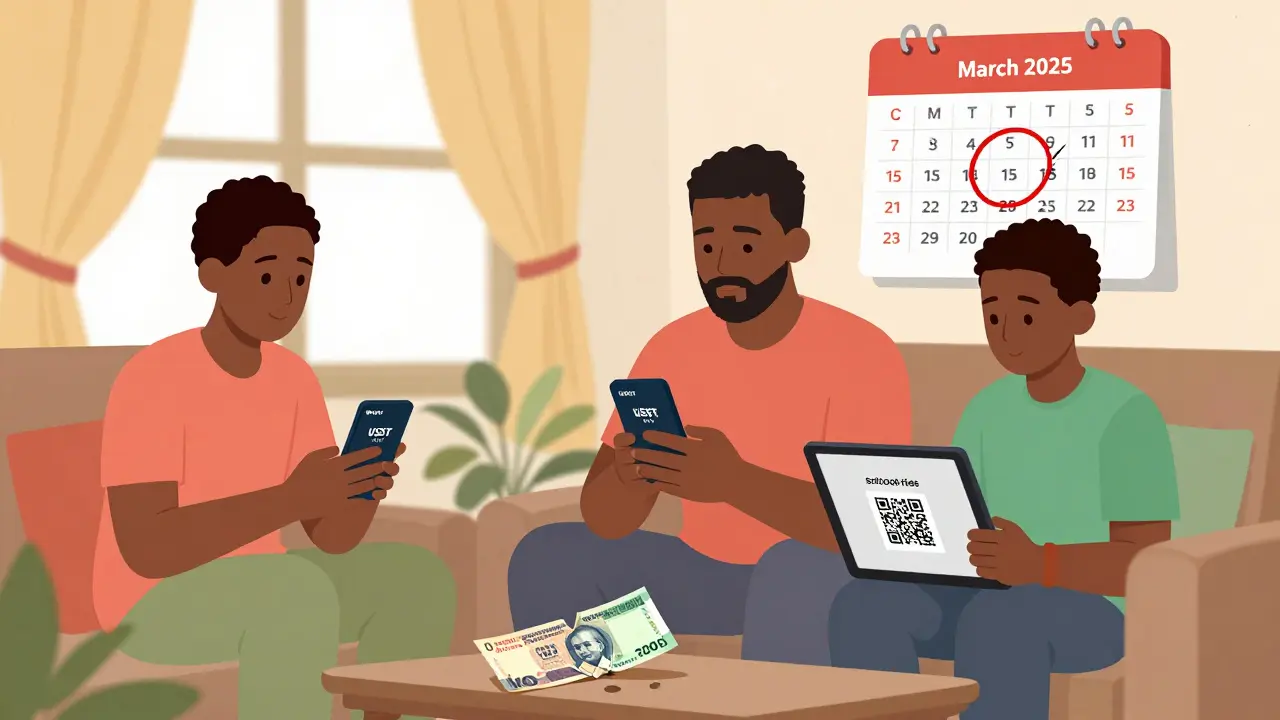
By 2025, over 22 million Nigerians - about one in ten people - own cryptocurrency. That’s not a niche trend. It’s a national response to a broken system. While governments and banks struggled with inflation, currency collapse, and banking exclusion, ordinary Nigerians turned to Bitcoin, USDT, and other digital assets to survive. This isn’t about speculation. It’s about keeping money worth something.
Why Nigeria Chose Crypto Over the Bank
The naira has lost more than 75% of its value against the US dollar since 2016. Inflation hit 24% in 2023 and hasn’t fully cooled. Salaries don’t stretch. Savings evaporate. Banks impose strict limits on dollar withdrawals. Sending money abroad costs up to 8% in fees. For millions, traditional finance doesn’t just fail - it actively punishes them. That’s where crypto stepped in. No permission needed. No paperwork. No bank approval. A phone and an internet connection were all it took. Peer-to-peer (P2P) trading became the lifeline. Nigerians bought USDT on Binance P2P, traded it for naira from local sellers, and kept their value stable. When the naira dropped overnight, their crypto didn’t. It wasn’t perfect, but it was better.The Ban That Backfired
In 2021, the Central Bank of Nigeria (CBN) banned banks from serving crypto businesses. The goal? To stop capital flight. The result? A surge in adoption. People didn’t stop using crypto - they just got smarter. They used cash deposits, mobile money, and informal networks to trade. Exchanges like Quidax and Yellow Card thrived in the gray zone. The ban didn’t kill crypto. It made it more resilient. By late 2023, the CBN reversed course. It lifted the ban. Why? Because it couldn’t stop the tide. Crypto was already part of the economy. Licensed exchanges like Binance, Luno, and Paxful got official clearance. Banks started reopening accounts. Suddenly, crypto wasn’t illegal - it was regulated. Confidence soared. Transaction volumes jumped.How Nigerians Are Actually Using Crypto
Most Nigerians aren’t trading Bitcoin for profit. They’re using it to do what banks won’t let them do:- Send and receive remittances - Freelancers in the US or UK pay in USDT. No 8% fees. No 7-day waits.
- Preserve savings - Instead of keeping cash in a naira account that loses value daily, many keep 20-50% of their savings in USDT.
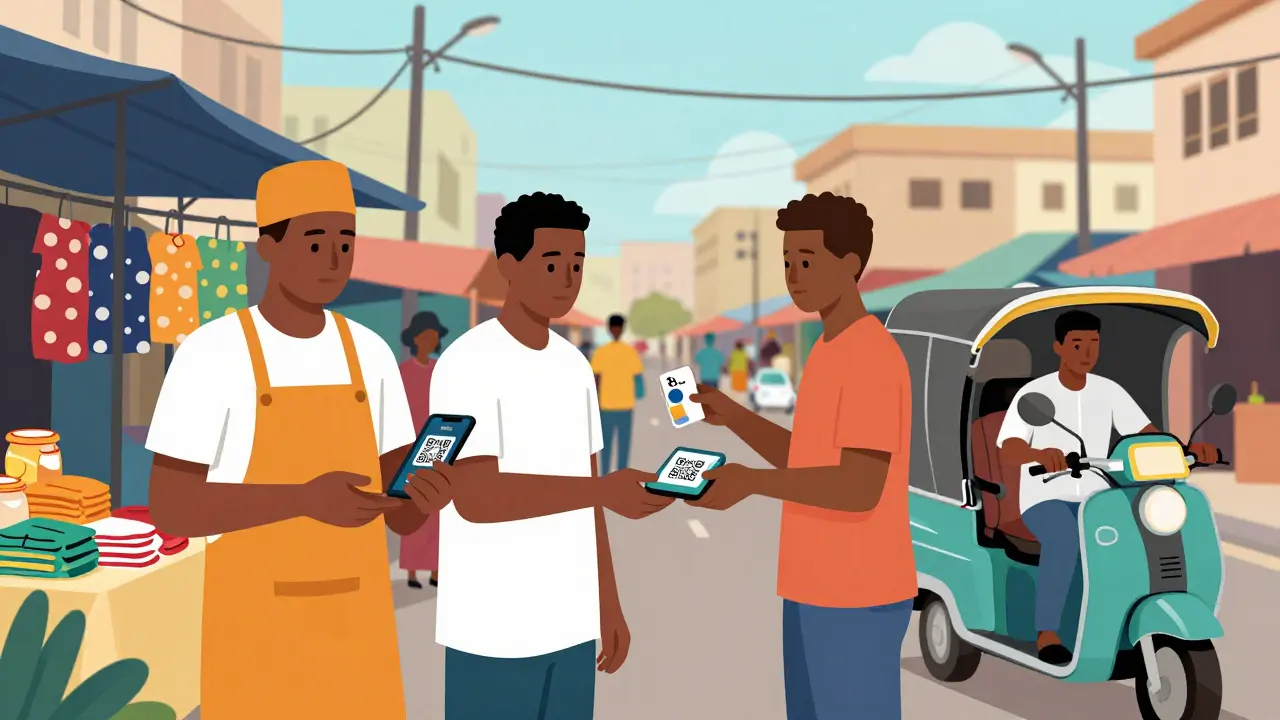
- Buy goods and services - Local shops, pharmacies, and even some universities now accept crypto payments through QR codes.
- Access global markets - Nigerian entrepreneurs buy software, cloud services, and domain names in crypto because they can’t get dollars from their banks.
The Rise of the Fintech Giants
Nigeria’s crypto boom didn’t happen in a vacuum. It rode on a wave of fintech innovation. Moniepoint, a mobile payment platform started by a former bank employee, became Africa’s first fintech unicorn in 2025 - valued at $1 billion after Google invested. It lets small vendors accept payments via phone, and now integrates crypto settlements. Other platforms like Opay and PalmPay built crypto wallets into their apps. You can now pay your electricity bill in USDT through the same app you use to order food. The Nigeria Inter-Bank Settlement System (NIBSS) - the backbone of the country’s banking network - partnered with Zone’s blockchain in early 2025. This isn’t about replacing banks. It’s about making them faster and more secure. Now, interbank transfers that used to take two days settle in seconds. Fraud drops. Costs shrink. And blockchain is quietly running under the hood.What’s Different About Nigeria’s Crypto Use
Most countries see crypto as an investment or a tech experiment. Nigeria sees it as a utility. - 8% of all crypto transactions in Sub-Saharan Africa are under $10,000 - compared to 6% globally. That’s retail. That’s survival. - In March 2025, when the naira dropped again, Nigeria’s on-chain volume spiked to $25 billion in a single month. Other regions slowed down. Nigeria didn’t just keep going - it accelerated. - Unlike the US or Europe, where institutions dominate trading, Nigeria’s market is driven by students, drivers, tailors, and teachers. The average user is 28 years old. Many have never had a bank account. This isn’t a bubble. It’s a bottom-up financial revolution.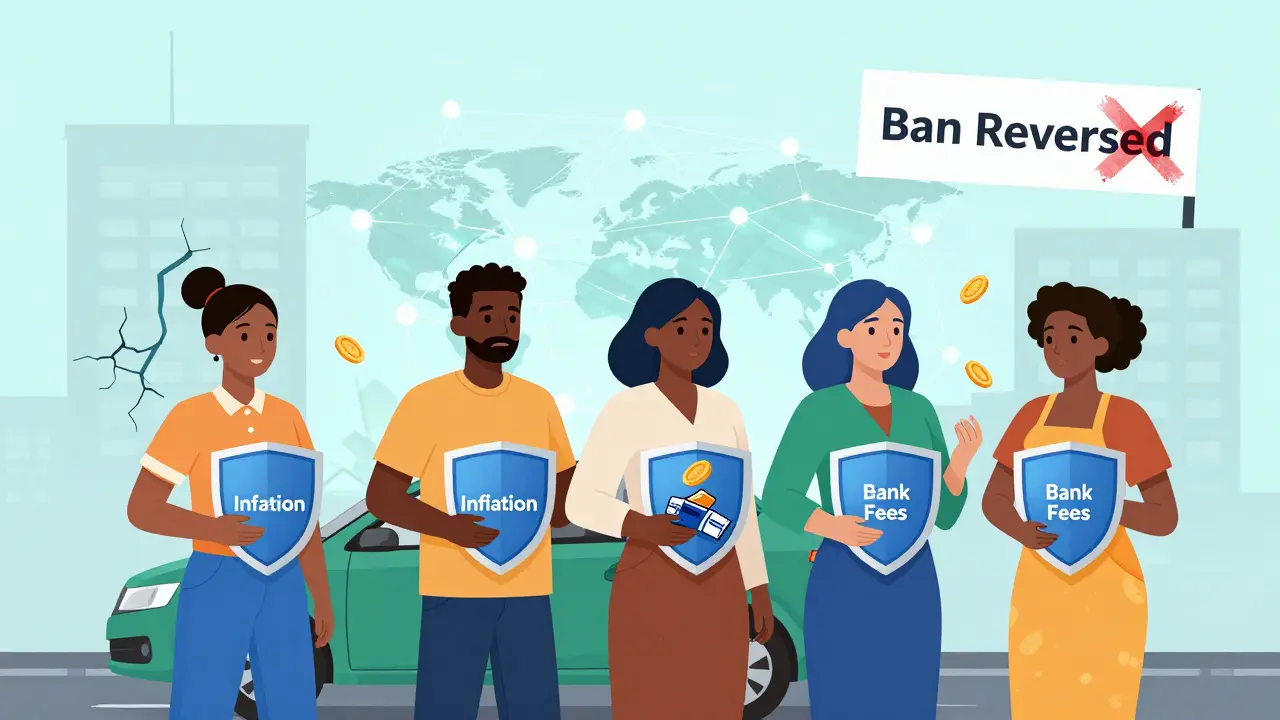
Challenges Still Linger
It’s not all smooth. Users still face problems:- Exchange outages - During price spikes or currency crashes, platforms like Binance P2P sometimes go down. People panic. Sellers disappear. Buyers are left stranded.
- Scams - Fake wallets, phishing links, and impersonators target new users. Telegram groups are full of “crypto gurus” promising 5x returns.
- Regulatory uncertainty - The CBN has lifted the ban, but it hasn’t issued clear rules. Will taxes be imposed? Will crypto income be tracked? No one knows.
- Internet and power issues - If your phone dies or the power goes out, your crypto is locked. Many users keep paper wallets or backup keys with family members.
What’s Next for Crypto in Nigeria
The future isn’t just about more users. It’s about deeper integration. The Central Bank of Nigeria is reportedly testing its own digital currency - the eNaira. But unlike crypto, it’s centralized. It won’t let you send money outside Nigeria without approval. Many Nigerians see it as a way for the government to monitor spending, not empower them. Meanwhile, DeFi is slowly creeping in. A few thousand users are now lending USDT on platforms like Aave or earning yield on PancakeSwap. But most still stick to buying and holding. The goal isn’t yield - it’s safety. Experts predict Nigeria will remain in the global top 3 for crypto adoption through 2026. Why? Because the root causes haven’t changed. Inflation is still high. The naira is still weak. Banks still won’t give you dollars. And crypto still works.Is This Sustainable?
Yes - because it’s not about crypto. It’s about survival. Nigeria didn’t adopt crypto because it’s trendy. It adopted crypto because it had no other choice. And once people realize their money can last longer, stay stable, and move freely, they don’t go back. Not even when the government tries to control it. The world watches Nigeria as a case study in financial resilience. But for millions of Nigerians, it’s just Tuesday. They wake up, check their USDT balance, and get on with their day - knowing their savings won’t vanish by lunchtime.Why is crypto so popular in Nigeria compared to other African countries?
Nigeria has the largest population and economy in Africa, with over 220 million people and chronic economic instability. While other African nations also use crypto, Nigeria’s combination of high inflation, strict capital controls, a large youth population, and widespread mobile internet access created the perfect storm for mass adoption. No other country in Africa has seen 10% of its population adopt crypto at this scale.
Can you still buy crypto in Nigeria after the CBN ban?
Yes. The CBN lifted its ban on banks servicing crypto businesses in late 2023. Licensed exchanges like Binance, Quidax, and Paxful now operate legally. Nigerians can buy crypto using bank transfers, mobile money, and cash deposits. While some banks still hesitate, most major institutions now allow transactions with approved exchanges.
What’s the most common crypto used in Nigeria?
USDT (Tether) is by far the most popular. Because it’s pegged to the US dollar, it acts as a stable store of value against the collapsing naira. Bitcoin is used for larger transfers and long-term holding, but USDT is the daily currency for payments, remittances, and savings. Over 85% of P2P trades in Nigeria involve USDT.
How do Nigerians protect their crypto from theft or loss?
Most new users start with exchange wallets for convenience. But experienced users move funds to hardware wallets like Ledger or Trezor. Many also write down private keys on paper and store them with family. Community groups on WhatsApp and Telegram offer free guides on securing wallets. Scam awareness is high - but still not universal. The biggest risk isn’t hacking - it’s users giving away their seed phrases to fake support agents.
Is crypto income taxed in Nigeria?
As of 2025, there is no official tax law specifically targeting crypto gains. The Federal Inland Revenue Service (FIRS) has signaled interest in taxing crypto income, but no formal rules or enforcement mechanisms are in place. Most users report no tax filings for crypto transactions. However, this could change if the government introduces a formal digital asset regulatory framework.
Can I use crypto to pay for everyday things in Nigeria?
Yes, increasingly so. Major retailers, pharmacies, universities, and even some restaurants now accept crypto through QR code payments. Platforms like Paywithcrypto.ng and Bitrefill let you buy airtime, data, and utility bills with USDT. While cash is still king, crypto is becoming a normal part of daily transactions - especially in cities like Lagos, Abuja, and Port Harcourt.
rachael deal
26 12 25 / 19:59 PMThis is wild. I never thought I'd see a country turn to crypto as a survival tool instead of a gamble. Nigerians aren't chasing moonshots-they're just trying to eat. It's humbling to see how real people adapt when the system fails them.
My uncle in Lagos uses USDT to pay his daughter's tuition. No bank delays. No hidden fees. Just a QR code and a phone. That's the future right there.
Andrea Stewart
27 12 25 / 10:56 AMThe CBN ban backfiring is textbook policy failure. When you try to stop people from using a tool that solves their real problems, they don’t stop using it-they just get better at it. The real innovation here isn’t blockchain, it’s human ingenuity.
USDT isn’t a currency in Nigeria. It’s a utility, like water or electricity. And just like those, once you have it, you don’t want to go back.
Josh Seeto
28 12 25 / 15:20 PMOh wow, another ‘crypto is liberation’ fairy tale. Let me guess-next you’ll tell me the Nigerian government is secretly pro-crypto because they love freedom?
Reality check: most of these ‘users’ are just trading on P2P platforms that are one regulatory crackdown away from vaporizing. And don’t get me started on the 500k-member WhatsApp groups full of guys selling ‘crypto gurus’ with fake screenshots.
Mike Pontillo
29 12 25 / 21:47 PMSo let me get this straight. People in Nigeria are using crypto because their government is corrupt and their banks are useless. And you think this is inspiring?
Meanwhile in America we have 401(k)s and FDIC insurance. You call this resilience? I call it desperation dressed up as innovation. Crypto isn’t the answer-it’s the symptom.
Joydeep Malati Das
31 12 25 / 13:26 PMThe Nigerian case is one of the most compelling examples of decentralized finance emerging organically from necessity. Unlike Western markets driven by speculation, here the adoption is bottom-up, community-led, and deeply practical.
What stands out is the absence of institutional influence. It’s students, drivers, and small vendors using technology to bypass broken systems. This isn’t a trend-it’s a new economic paradigm forming in real time.
Elisabeth Rigo Andrews
1 01 26 / 06:36 AMLet’s not romanticize this. Crypto in Nigeria is a Ponzi scheme with better PR. The ‘stable’ USDT? Tether’s reserves are a black box. The ‘community support’? That’s just 500k people getting scammed together.
And don’t even get me started on the ‘financial revolution’ narrative. This is financial chaos with a blockchain sticker on it. The fact that people are desperate doesn’t make it smart.
Adam Hull
2 01 26 / 08:20 AMOh look, another article that treats financial collapse like a TED Talk. Nigeria didn’t ‘adopt’ crypto. They were forced into it by a kleptocracy that stole their savings and called it monetary policy.
And now we’re supposed to applaud them for using Bitcoin to buy rice? Congrats. You turned a humanitarian crisis into a crypto influencer meme. Real groundbreaking stuff.
Mandy McDonald Hodge
3 01 26 / 19:17 PMomg this is so inspiring!! i cried reading this 😭
my friend in lagos just bought her first laptop with usdt last week and she said she felt like a queen!! 🙌
and the community groups?? they’re like digital family!! so much love and support!!
pls someone make a documentary about this!! i’ll watch it every night!!
also can someone teach me how to buy usdt?? i wanna help!! 💖
Bruce Morrison
5 01 26 / 04:58 AMPeople forget that crypto in Nigeria isn’t about tech. It’s about trust. When you can’t trust your bank, your currency, or your government, you find another way.
The real story here isn’t the blockchain. It’s the fact that strangers on the street trade cash for USDT because they believe in each other more than they believe in the Central Bank.
That’s the revolution.
Jordan Fowles
6 01 26 / 06:13 AMThere’s a deeper philosophical layer here. Most societies build systems to preserve order. Nigeria’s system failed, so they built a new one from the ground up-not with laws, but with phones and peer-to-peer trust.
This isn’t just economic adaptation. It’s a quiet rejection of centralized authority. And it’s happening without protest, without manifesto, without leaders.
It’s the most democratic form of financial rebellion I’ve ever seen.
Steve Williams
8 01 26 / 05:24 AMAs a Nigerian, I can confirm: this is not hype. This is daily life.
My mother keeps her pension in USDT. My brother pays for his university books with it. My cousin in Port Harcourt opened a small shop that accepts crypto for groceries.
The government may not understand it, but the people do. We are not early adopters. We are survivors. And we are not going back.
Shawn Roberts
8 01 26 / 19:29 PMbro this is why i love crypto 🤝
nigeria showing the world how its done
usdt for life
imma buy some today
if you dont have usdt you just dont get it 😎
Abhisekh Chakraborty
9 01 26 / 19:18 PMEveryone’s talking about Nigeria but what about Zimbabwe? Zambia? Kenya? We’ve been using crypto for years too. Nigeria just got lucky with population size and social media.
Also, who’s paying for all these ‘crypto tutorials’ on YouTube? Are you sure it’s not a CBN psyop to normalize digital surveillance?
dina amanda
11 01 26 / 15:46 PMOf course the media loves this story. It’s perfect for the globalist agenda. The elites want us to abandon the dollar and move to crypto so they can track every transaction.
This isn’t freedom. It’s the next phase of control. They want your money digital so they can freeze it with a click.
Wake up. This is the NWO.
Emily L
12 01 26 / 15:49 PMWhy do you think Nigerians are so desperate? Because they’re poor. And poor people make bad decisions. Crypto isn’t saving them-it’s making them easier targets for scammers.
Stop glorifying poverty. This isn’t resilience. It’s exploitation dressed up as innovation.