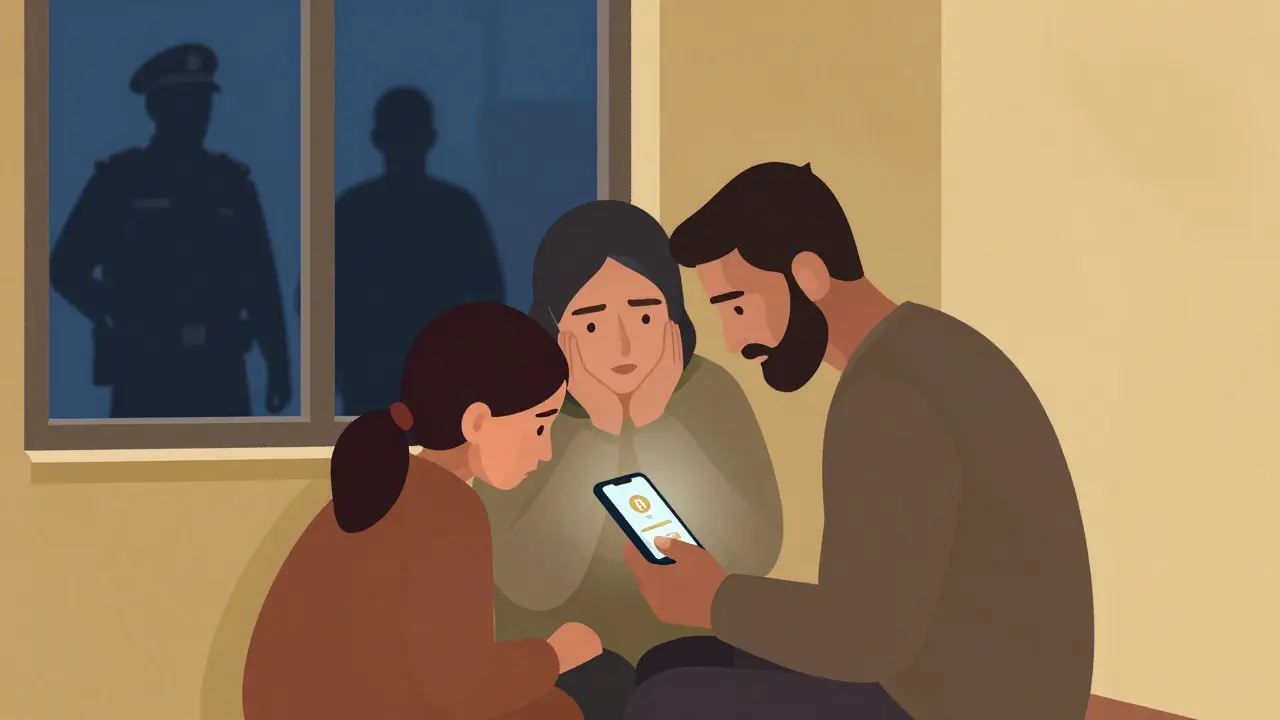
When the Taliban took control of Afghanistan in August 2021, the country’s banking system collapsed. International sanctions froze billions in assets. ATMs ran dry. Banks closed for months. For millions of Afghans, there was no way to send or receive money - not from family abroad, not for food, not for medicine. That’s when cryptocurrency became a lifeline.
Bitcoin, USDT, and other digital currencies filled the void. People used peer-to-peer apps to trade cash for crypto with strangers in markets or over WhatsApp. Remittances from relatives in the U.S., Europe, or Australia flowed in as crypto, then got swapped for local currency. Chainalysis reported Afghanistan had over $962 million in crypto transactions between mid-2020 and mid-2021 - ranking it 20th in the world for grassroots adoption. For many, it wasn’t speculation. It was survival.
The Ban That Broke the Lifeline
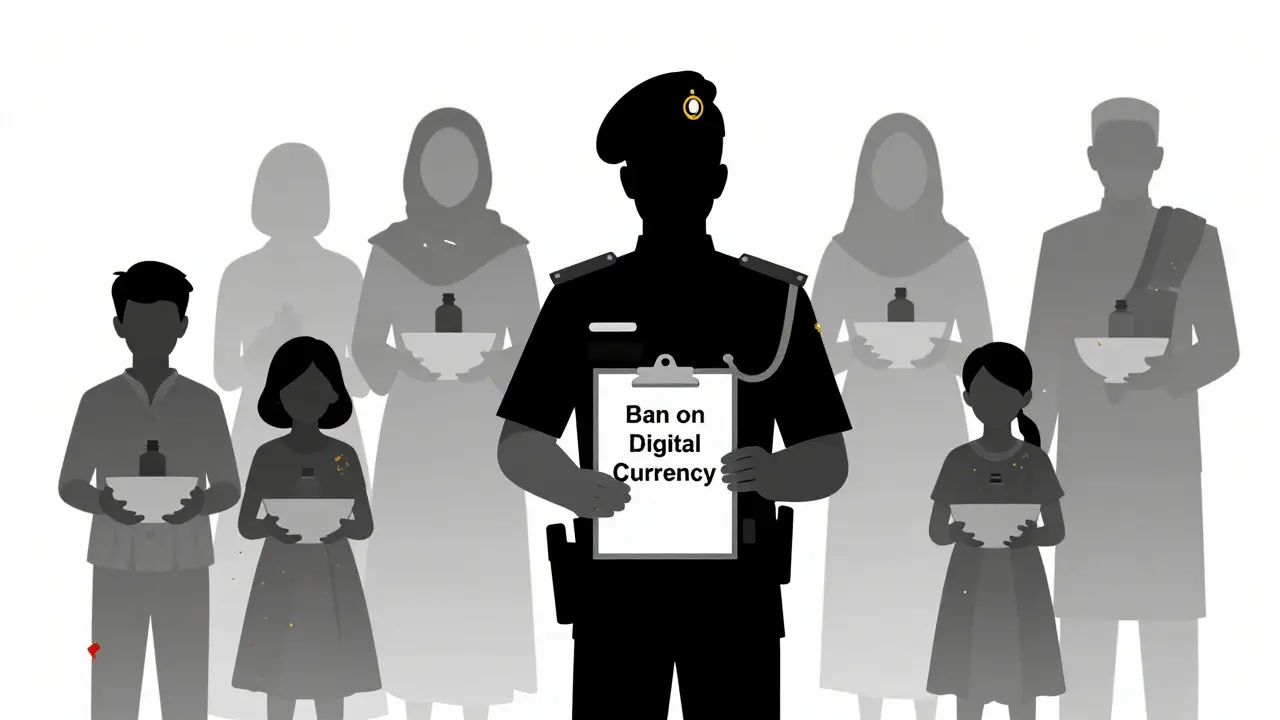
In June 2022, the Taliban’s central bank issued a formal ban on all cryptocurrency trading. The announcement was vague at first. Was it about digital money? Or just online foreign exchange? A Taliban spokesman told Bloomberg, "There is no instruction in Islamic law to approve it." The reasoning? Crypto was called "fraudulent," "gambling," and a threat to public order.
But the real issue wasn’t theology - it was control. The Taliban had no access to global financial systems. They couldn’t track where money came from or who was receiving it. Cryptocurrency bypassed their authority. And for a regime trying to isolate the country from the outside world, that was unacceptable.
From Warnings to Prison Cells
At first, enforcement was light. Authorities warned traders. Some exchanges were shut down. But by 2023, the crackdown turned violent.
In May 2023, eight cryptocurrency traders in Herat were arrested and held for 28 days in the province’s central prison. Some were released on bail. Others faced charges that could lead to six months behind bars. By September 2023, police in Herat shut down 16 crypto exchanges in a single sweep. More than 20 businesses had already closed by August 2022.
Sayed Shah Sa’adat, head of Herat’s counter-crime unit, confirmed the operations publicly: "Digital currency trading has caused a lot of problems and is scamming people, therefore they should be closed."
But the "scams" weren’t always fraud. Many were ordinary people exchanging USDT for Afghanis to buy bread. One trader told Coinspeaker he used to make 1-2% profit on each transaction - enough to feed his family. After the ban, he couldn’t afford rice.
Who Got Targeted - and Who Didn’t
The Taliban didn’t go after only big operators. They arrested small-time traders, students, women running home-based businesses, and men who relied on remittances from abroad. One man said his brother in the U.S. sent him Bitcoin every week. "There’s no other way," he told reporters. "If I don’t do this, my children starve."
Yet, there’s no evidence the Taliban targeted known terrorist groups like ISKP with precision. TRM Labs’ 2025 report shows Islamic State Khurasan Province did use crypto - transactions between $100 and $15,000 - to fund attacks, including one in Moscow in March 2024. But the Taliban’s raids didn’t focus on these networks. Instead, they swept up anyone with a crypto wallet.
The result? A chilling effect. People stopped using exchanges. They moved to private Telegram groups, cash-in-hand trades, and hidden wallets. But even then, the risk remained. If caught, you could lose your freedom - or worse.
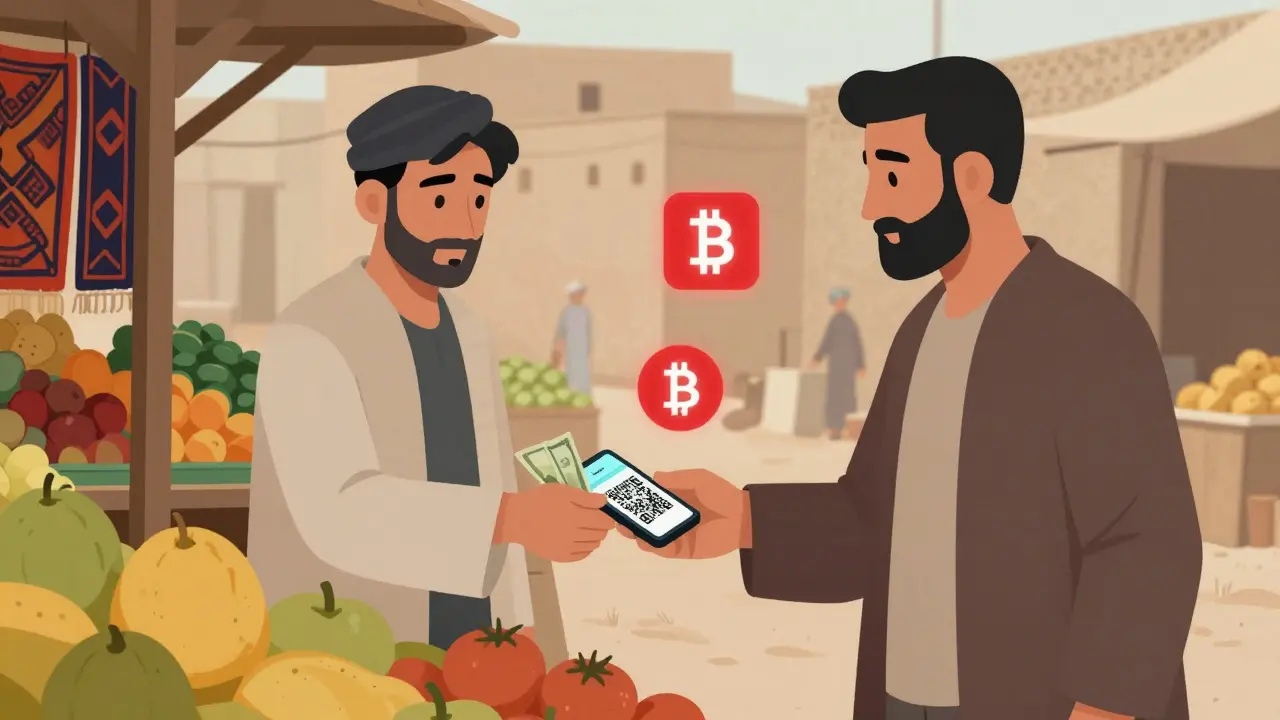
What Happens to the Crypto When You’re Arrested?
No one knows for sure. Two detainees told Crypto.news their digital assets weren’t seized. Others reported their wallets were emptied after arrest. The Taliban hasn’t published a clear policy. That uncertainty makes the situation even more terrifying. You don’t just risk jail - you risk losing everything you own.
Some experts believe the regime may be quietly collecting crypto holdings. After all, they control the prisons. They control the banks. And they have no legal system to protect property rights. If your Bitcoin disappears after arrest, who can you complain to?
The Human Cost
The ban didn’t just hurt traders. It broke the financial backbone of Afghanistan’s poorest.
Before the crackdown, NGOs like Women’s Entrepreneurship Day Organization (WEDO) used crypto to send weekly food payments to 100,000 women across the country. The system was fast, transparent, and immune to banking blockades. After the ban, those payments stopped. No one replaced them.
UNICEF reported in 2023 that over one million Afghan children were at risk of severe malnutrition. The World Bank said 97% of Afghans now live below the poverty line. In that context, banning the only tool left for remittances isn’t just policy - it’s cruelty.
Why the Ban Won’t Last
The Taliban’s crackdown is extreme, but it’s also unsustainable. Cryptocurrency didn’t disappear after the ban - it went underground. Peer-to-peer trading still happens. People use privacy coins, burner phones, and encrypted apps. The tools are easy to get. The need is desperate.
International sanctions keep Afghanistan locked out of global finance. The Taliban’s own policies created this crisis. Now they’re punishing the people who found a way out - while doing nothing to fix the system.
History shows bans like this rarely work. Prohibition didn’t stop alcohol in the U.S. It didn’t stop drugs in Mexico. And it won’t stop crypto in Afghanistan. It just makes the market more dangerous, more corrupt, and more controlled by criminals.
The Taliban may think they’re protecting Islamic values. But what they’re really doing is choosing control over survival. And in a country where people are starving, that choice has a name: oppression.
What’s Next for Afghanistan’s Crypto Users?
For now, the risk remains. If you trade crypto in Afghanistan, you’re breaking the law. You could be arrested. Your money could vanish. Your family could suffer.
But the need hasn’t gone away. Remittances still flow. Families still depend on them. The only difference now is that people are doing it in silence - behind locked doors, in dark alleys, with phones turned off.
There’s no legal path forward. No government support. No international help. Just people trying to survive - and the regime that wants to make them pay for it.
Jack and Christine Smith
29 12 25 / 16:29 PMSo the Taliban bans crypto because it’s "un-Islamic" but they’re totally fine with hoarding cash under mattresses and bribing warlords? 🤦♀️ This isn’t religion-it’s control. People are starving and they’re locking up moms who trade USDT to buy rice. That’s not piety. That’s cruelty wrapped in a burqa.
Jackson Storm
31 12 25 / 03:20 AMMan, this is wild. I didn’t realize crypto was this vital in Afghanistan. It’s not about speculation-it’s survival. Imagine if your only way to get money from family abroad got shut down overnight. The Taliban’s not stopping crime-they’re stopping hope.
Michelle Slayden
1 01 26 / 06:19 AMIt is an undeniable paradox that a regime purporting to uphold moral and religious integrity should resort to the suppression of a technological innovation that serves the most vulnerable among its populace. The moral calculus here is not only flawed, it is grotesque. The use of cryptocurrency, in this context, is not an act of defiance against divine law, but a testament to human resilience in the face of institutional collapse.
christopher charles
2 01 26 / 10:34 AMOkay, so let me get this straight: the Taliban bans crypto because it’s "fraudulent," but they’re fine with a banking system that’s been frozen by the U.S. and EU? And now they’re throwing people in jail for trading Bitcoin to feed their kids? That’s not a religious stance-that’s a power grab. And it’s disgusting.
Vernon Hughes
2 01 26 / 12:26 PMCrypto saved lives. Now they’re punishing the survivors. The regime’s priorities are clear: control over compassion
Alison Hall
2 01 26 / 12:41 PMThis is the most heartbreaking thing I’ve read all year. People aren’t trading crypto to get rich-they’re trading it to eat.
Amy Garrett
3 01 26 / 01:30 AMso like… if you’re a woman in kabul and your bro in canada sends you btc to buy flour… and the taliban locks you up for it… what even is the point of being alive anymore
Haritha Kusal
3 01 26 / 19:46 PMIt's so sad but also so brave. People are risking everything just to survive. I hope the world doesn't forget them
Mike Reynolds
5 01 26 / 06:00 AMI read this and just sat there for five minutes. I can’t even imagine being that desperate. And then having the one thing that keeps you alive turned into a crime. That’s not governance. That’s punishment for being poor.
dayna prest
7 01 26 / 04:55 AMThe Taliban’s crypto ban is like banning oxygen because someone used it to blow up a balloon. They’re not protecting faith-they’re protecting their own irrelevance. Crypto didn’t break Afghanistan. Sanctions and their own tyranny did. Now they’re blaming the bandage.
Brooklyn Servin
7 01 26 / 08:52 AMOkay, I’m furious. 🤬 Let’s be real: the Taliban didn’t ban crypto because it’s haram-they banned it because they can’t tax it, track it, or steal it easily. And now they’re locking up grandmas who trade USDT for rice. Meanwhile, ISKP is still moving crypto like it’s a free pass. Double standards? More like genocide with a side of hypocrisy.
UNICEF says 1M kids are malnourished. NGOs can’t pay women. But hey, at least the Taliban’s blockchain ledger is clean. 🤢
This isn’t religion. This is a dictatorship using theology as a cover for economic strangulation. And the world? Still just watching. #CryptoIsNotACrime #AfghanistanIsBleeding
Phil McGinnis
7 01 26 / 16:26 PMIt is the duty of any sovereign state to protect its citizens from the moral decay of unregulated financial instruments. The West promotes chaos under the guise of freedom. Afghanistan is reclaiming order. The suffering is unfortunate, but the path of righteousness is never paved with convenience.
Ian Koerich Maciel
8 01 26 / 09:46 AMThis… this is devastating. I can’t even process how someone could justify locking up a mother who’s trading crypto to buy medicine for her child. The cruelty is systematic. The silence from the international community is louder than the arrests.
It’s not about Islam. It’s about power. And power doesn’t care about hunger.
Andy Reynolds
9 01 26 / 13:52 PMLook, I get the fear of unregulated systems. But when the system you’re trying to protect is already dead-when ATMs are empty, banks are closed, and your kid’s cough won’t stop because you can’t afford antibiotics-then crypto isn’t a luxury. It’s a lifeline. And now they’re cutting it. That’s not justice. That’s a death sentence with paperwork.
These aren’t speculators. These are teachers, nurses, grandmas, students. They’re not trying to get rich. They’re trying to get through tomorrow.
Daniel Verreault
10 01 26 / 15:57 PMFrom a technical standpoint, the Taliban’s crackdown is a textbook case of regulatory overreach in a hyper-inflationary, sanctions-strangled economy. The adoption curve of crypto in Afghanistan was organic, peer-to-peer, and entirely decentralized-exactly what you’d expect when formal financial infrastructure collapses. The regime’s response? Centralized repression. Classic. But it’s not sustainable. The underground P2P networks are already evolving with privacy coins and mesh networks. They’re not stopping it-they’re just making it more dangerous.
And the irony? The same regime that banned crypto is probably sitting on a secret stash of Bitcoin they seized from detainees. They just don’t want anyone else to have it.
Gavin Hill
11 01 26 / 03:43 AMThey banned it because they can't control it. That's all. No theology. No morality. Just fear
SUMIT RAI
12 01 26 / 14:10 PMWait so the taliban bans crypto but lets ISKP use it? 😂 so the real crime is helping people not terrorists? classic
Jack and Christine Smith
14 01 26 / 10:24 AMAnd now the Taliban’s probably sitting on a private wallet full of seized Bitcoin. Who do you think owns the wallets after someone gets arrested? The prisons don’t have ATMs. But they sure as hell have blockchain access.