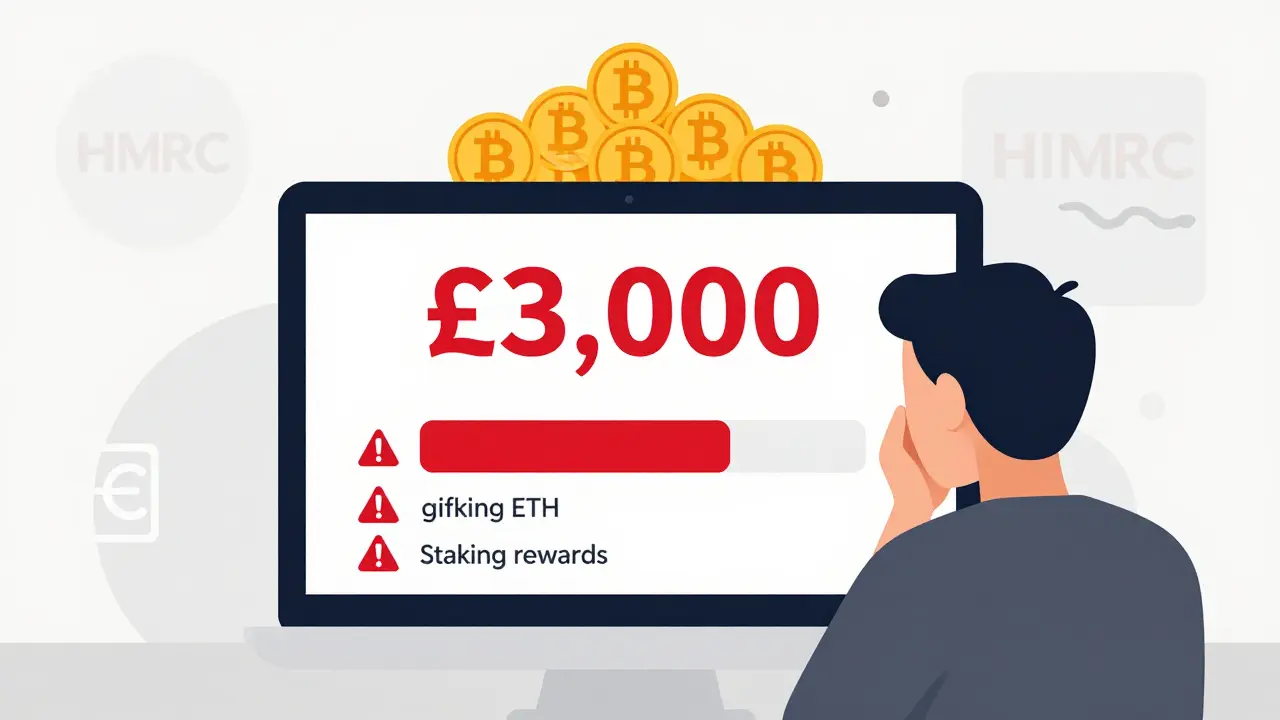
If you’ve bought, sold, traded, or earned crypto in the UK, you’re probably wondering: how much do I actually owe? The answer isn’t simple. Since October 2024, the UK government made crypto taxes much harder to ignore - and much more expensive. The annual Capital Gains Tax (CGT) allowance dropped from £6,000 to £3,000. Rates jumped from 10%-20% to 18%-24%. And every swap, gift, or purchase with crypto now counts as a taxable event. This isn’t a suggestion. It’s the law. And HMRC is watching.
What Counts as a Taxable Event?
You don’t need to sell crypto for pounds to trigger tax. HMRC defines a disposal as any time you give up control of your crypto. That includes:- Selling crypto for GBP or any other fiat currency
- Exchanging one crypto for another (e.g., BTC for ETH)
- Using crypto to buy goods or services (like a laptop or coffee)
- Gifting crypto to anyone who isn’t your spouse or civil partner
Even if you didn’t cash out, you still owe tax. In 2024, a user on Reddit gifted £4,000 worth of Ethereum to their brother. They thought it was a kind gesture. HMRC saw it as a £4,000 disposal - and because it exceeded the £3,000 allowance, they owed £240 in capital gains tax. That’s not a mistake. That’s standard.
Staking rewards, mining income, and airdrops? Those are treated as income, not capital gains. If you earn £1,500 in ETH from staking, that’s added to your total income for the year. If you’re a basic-rate taxpayer (income under £50,270), you’ll pay 20% on that £1,500. If you’re a higher-rate taxpayer, it’s 40% or even 45%. There’s no £3,000 exemption here. It’s full income tax.
Capital Gains Tax: The £3,000 Rule
The big change in 2024 was the CGT allowance. In 2023, you could make £6,000 in profit before paying tax. Now? £3,000. That’s a 50% cut. For someone who traded crypto frequently - say, swapping tokens weekly - this means you’ll likely blow through your allowance in just a few trades.Let’s say you bought 0.1 BTC for £3,000 in January. In March, you sold it for £5,500. Your profit: £2,500. You’re under the £3,000 allowance. No tax owed.
But then in May, you bought 0.05 ETH for £1,200 and sold it in June for £2,100. Profit: £900. Now your total gains for the year are £3,400. That’s £400 over the allowance. You pay CGT on £400. At 18%, that’s £72. Not huge - but it’s a tax you didn’t expect.
Now imagine you did 10 trades in a year. Each one under £500 profit. You think you’re fine. But add them up: £3,200. You’re over the limit. HMRC doesn’t care that each trade was small. They care about the total.
Income Tax: Staking, Mining, and Airdrops
If you earn crypto through staking, mining, or airdrops, HMRC treats it like a salary. You pay income tax on it. The personal allowance is £12,570 - meaning you don’t pay tax on the first £12,570 of your total income (including crypto earnings). But once you cross that line, you pay 20%, 40%, or 45% depending on your total income.Example: You earn £8,000 in staking rewards and make £45,000 from your job. Your total income: £53,000. You’re a higher-rate taxpayer. The £8,000 in crypto earnings gets taxed at 40%. That’s £3,200 in tax - just on staking.
And here’s the catch: you can’t use capital losses to offset this. If you lost £10,000 trading crypto, that loss can only be used to reduce future capital gains - not your income. So you pay tax on your staking rewards, even if you lost money elsewhere. No offsets. No breaks.
How to Track Your Transactions
HMRC requires you to keep records for every transaction. That means:- Date you bought the crypto
- How much you paid (in GBP)
- Transaction fees
- Date you sold or traded it
- How much you received (in GBP)
Doing this manually for 500+ transactions? It takes over 40 hours, according to a 2025 survey of 1,200 UK crypto investors. Most people use software. Tools like Koinly, CoinLedger, or Blockpit auto-import data from exchanges and calculate your gains and losses. But even these tools struggle when you use multiple wallets or decentralized platforms like Uniswap.
The real headache? The same-day rule and bed and breakfasting restrictions. If you buy and sell the same crypto on the same day, HMRC forces you to match the cost basis of the purchase with the sale. If you buy BTC on Monday, sell it Tuesday, then buy it again Tuesday - HMRC treats the Tuesday purchase as part of the same transaction. This makes simple portfolio rebalancing a tax nightmare.
What Happens If You Don’t Report?
HMRC has a crypto data program that now includes 47 UK exchanges. That’s up from just 12 in 2022. Exchanges like Coinbase, Kraken, and Binance UK are legally required to report your transaction history to HMRC. You don’t have to be caught - they’ll just send your data directly to the tax office.In 2024, HMRC processed 98.2% of crypto-related tax returns within 12 weeks. That means they’re not just collecting - they’re auditing. If you underreport, you’ll face penalties up to 100% of the tax owed. In serious cases, you could be charged with tax evasion - a criminal offense.
One user on Trustpilot wrote: “I waited until the last minute, didn’t track my trades, and got hit with a £1,700 penalty for underreporting. I paid more in penalties than I owed in tax.” That’s not rare. HMRC received a 37% increase in crypto tax compliance inquiries after the October 2024 changes. They’re not waiting. They’re already there.
What’s Changing in 2026?
Starting January 2026, all UK crypto exchanges must report your transaction data automatically. You won’t need to file anything - HMRC will know exactly what you did. That’s the end of “I forgot” or “I didn’t know.” If you earned or traded crypto, they’ll have the records.There’s also talk of a “de minimis” rule - a small transaction exemption under £1,000. But that’s still unconfirmed. Don’t count on it.
On the bright side, the Financial Conduct Authority (FCA) approved crypto exchange-traded notes (ETNs) in October 2025. This means you might soon be able to invest in crypto through a Stocks & Shares ISA - up to £20,000 per year, tax-free. But that’s a future option. For now, your crypto gains are still fully taxable.
How to Stay Compliant
Here’s what you need to do right now:- Use crypto tax software. It’s not optional if you’ve done more than 10 trades. Tools like Koinly or CoinLedger cost £50-£150/year. Cheaper than penalties.
- Export all transaction history from every exchange and wallet you’ve used - even if you closed the account.
- Calculate your total capital gains. Subtract the £3,000 allowance. Pay tax on the rest.
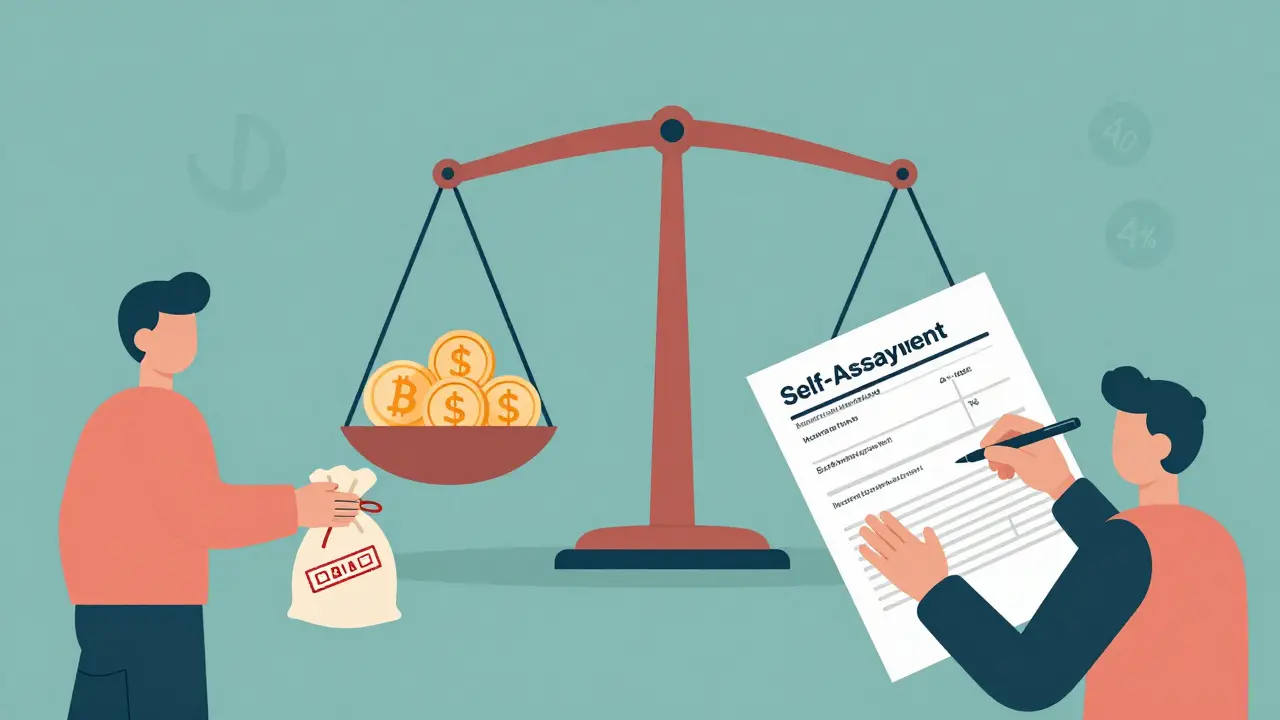
- Add all staking, mining, and airdrop earnings to your income. Report them on your Self-Assessment.
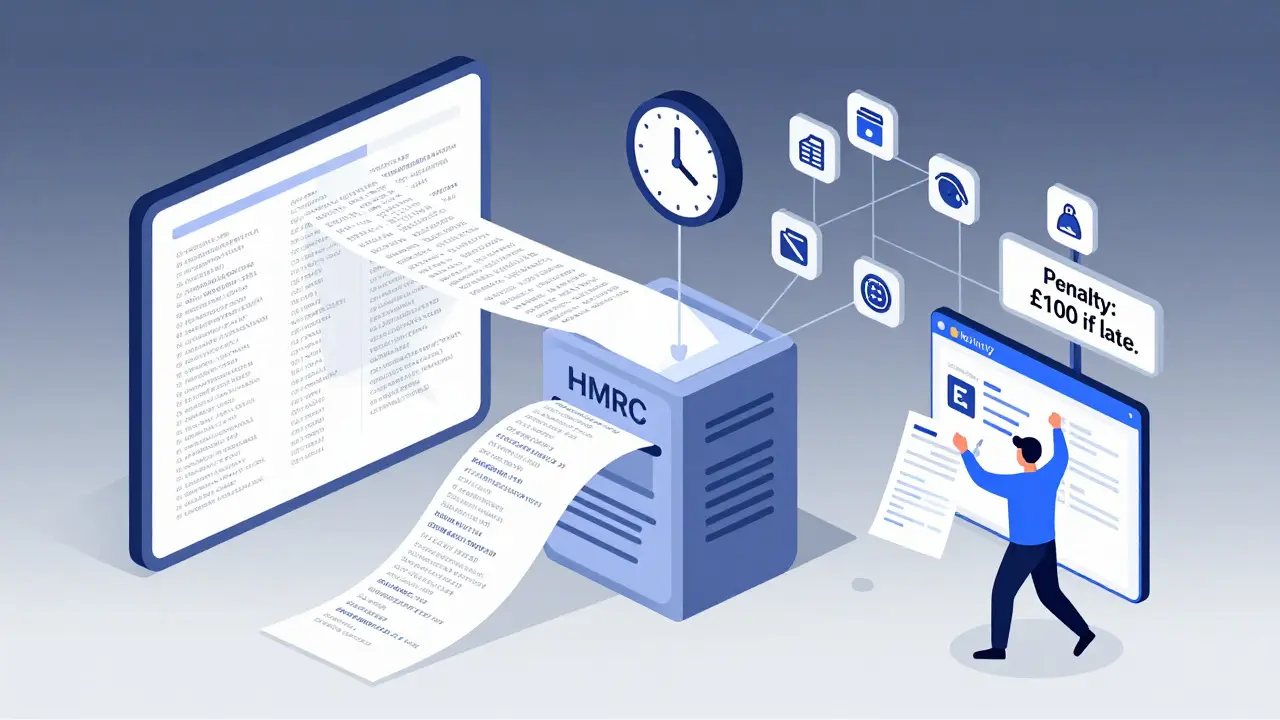
- File by January 31, 2026, for the 2024/2025 tax year. Late filing = automatic £100 penalty, even if you owe nothing.
If you’re unsure, get help from a tax professional who understands crypto. Most accountants don’t. Find one who’s certified in digital asset taxation. The Institute of Chartered Accountants in England and Wales (ICAEW) has a directory.
Final Reality Check
Crypto isn’t a tax loophole. It’s an asset class - and the UK treats it like one. The days of “I didn’t cash out, so I don’t owe tax” are over. Every trade, every gift, every reward is tracked. The £3,000 allowance sounds generous until you realize you’ve made five trades that hit £3,200 in profit. Then it’s gone.Don’t wait for HMRC to find you. Do the work now. Use the tools. File on time. Pay what you owe. The cost of compliance is far less than the cost of being caught.
Do I pay tax if I just hold crypto?
No. Holding crypto - even if its value goes up - doesn’t trigger tax. You only pay when you dispose of it: sell, trade, spend, or gift it (except to your spouse). Holding is tax-free. Trading is not.
Is gifting crypto to family taxable?
Yes - unless you’re gifting to your spouse or civil partner. Gifting crypto to anyone else (even your child or parent) counts as a disposal. If the value exceeds £3,000 in a tax year, you owe capital gains tax on the profit. Many people learn this the hard way.
Can I use losses to reduce my crypto tax?
Yes - but only for capital gains, not income. If you lost £5,000 trading crypto this year, you can use that to offset £5,000 of future capital gains. But you can’t use it to reduce your income tax on staking rewards. Losses and income are separate buckets.
What if I use multiple exchanges?
You must combine all transactions across every exchange, wallet, and platform. HMRC doesn’t care if you used Binance, Coinbase, and a DeFi protocol. They want your total gains. Tax software helps, but you still need to connect all your accounts. Missing one exchange = underreporting.
Do I pay tax on crypto received as payment for work?
Yes. If you’re paid in crypto for freelance work, a job, or consulting, it’s treated as income. You pay income tax on its GBP value at the time you received it. You also need to report it to HMRC as self-employment income if you’re freelance. Keep the receipt and the exchange rate from that day.
When is the deadline to file crypto taxes in the UK?
The tax year runs from April 6 to April 5. You must file your Self-Assessment by January 31 of the following year. For the 2024/2025 tax year, the deadline is January 31, 2026. File online. Late filing = £100 fine, even if you owe £0.
Will HMRC know if I don’t report?
Yes. 47 UK exchanges now report your transaction data directly to HMRC. They have your purchase dates, sale dates, amounts, and wallet addresses. If you didn’t report, they’ll match it. You’ll get a letter. Then penalties. Then possible interest. Don’t gamble. Report.
Are there any tax-free crypto investments in the UK?
Not yet. But starting in 2026, you may be able to invest in crypto through an ISA using exchange-traded notes (ETNs), approved by the FCA in October 2025. Up to £20,000 per year could be tax-free. But this isn’t available yet. For now, all crypto gains are taxable.
roxanne nott
26 12 25 / 03:15 AMlol u think this is bad? wait till they start taxing your *thoughts* next. 🤡
Alison Fenske
26 12 25 / 18:23 PMI just hold crypto and it makes me feel like I'm winning at life... until I remember I owe taxes on every time I bought a coffee with it 😭
Jayakanth Kesan
27 12 25 / 00:46 AMman i just wanted to hodl in peace... now i gotta track every single swap like it's my job? 🙃
Amit Kumar
28 12 25 / 12:52 PMBro, if you're trading crypto in the UK and not using Koinly, you're basically doing taxes with a abacus. I did 87 trades last year. Without software? I'd be in jail by now. 💸
Mmathapelo Ndlovu
29 12 25 / 21:13 PMI just gifted my cousin some SOL for his birthday... and now I'm staring at a £120 tax bill. 😭 I just wanted to be nice...
Tyler Porter
30 12 25 / 06:32 AMDon't panic. Just get the software. Do the math. File on time. You got this. One step at a time. 💪
Vyas Koduvayur
31 12 25 / 08:02 AMLet me break this down for you like you're five: HMRC doesn't care if you're 'just holding' or 'just swapping' or 'just gifting' - they care about your wallet addresses, your IP logs, your exchange API keys, your staking pool IDs, your DeFi transaction hashes, your cold wallet signatures, your MetaMask history, your Ledger backup phrases, your CoinGecko timestamps, your Binance trade IDs, your Uniswap v3 liquidity positions, your Etherscan contract calls, your on-chain metadata, your gas fees in wei, and your sleep schedule during tax season. They know. They always know. And they're not mad. They're just disappointed. 🤖📉
Lloyd Yang
1 01 26 / 21:17 PMI used to think crypto was freedom... until I realized I'm now a tax accountant for my own portfolio. I spend more time reconciling trades than I do actually trading. I miss the days when 'tax' meant filling out a single form and calling it a day. Now? It's a full-time job with a side of existential dread. But hey - at least I'm compliant. And that’s worth something, right?
Sarah Glaser
2 01 26 / 22:07 PMThe irony is that we built this entire ecosystem to escape centralized control - and now we're begging the very system we rejected to give us a tax exemption. We wanted decentralization. We got bureaucracy with blockchain.
Grace Simmons
3 01 26 / 01:10 AMThe UK is doing the right thing. Crypto isn't magic. It's property. And property is taxed. If you can't handle the rules, don't play the game. This isn't America - we don't let people dodge responsibility because it's 'complicated'.
Naman Modi
4 01 26 / 06:38 AMThey're watching. They're always watching. And you think you're anonymous? Lol. I sent 0.002 ETH to a friend last year. They flagged it. I got a letter. 🤡
Rachel McDonald
4 01 26 / 20:23 PMI did 14 trades in 3 weeks. £2,900 profit. Thought I was safe. Then I bought a $500 pizza with BTC. Boom. £3,100. £100 over. £18 tax. And now I feel like a criminal for eating pepperoni. 😭
Collin Crawford
5 01 26 / 06:29 AMYou're all missing the real issue. HMRC isn't trying to tax crypto. They're trying to kill it. The £3,000 allowance? It's designed to make retail traders unviable. This is a slow-motion ban. They don't want you to trade. They want you to buy ETFs. And they want your money.
Steve B
5 01 26 / 15:19 PMIt's fascinating how society has evolved to treat digital assets with the same legal gravity as land or gold. One wonders if the founders of Bitcoin ever imagined their vision would be reduced to IRS forms and accountant fees.
Brian Martitsch
6 01 26 / 15:33 PMIf you're still using Excel to track crypto, you're not just unprepared - you're a liability. I've seen your spreadsheets. They're embarrassing.
Ashley Lewis
7 01 26 / 05:14 AMYou're all whining like children. If you can't handle basic tax compliance, you shouldn't be trading. This isn't a game. It's the law. And the law doesn't care about your 'emotional relationship' with your ETH.
vaibhav pushilkar
7 01 26 / 09:32 AMFor anyone new: use Koinly. Set up all wallets. Export CSV from every exchange. Done in 20 mins. No drama. Save yourself the panic later.
Rebecca F
7 01 26 / 17:04 PMI'm just waiting for the day they tax the *emotional value* of my NFTs. Like, 'you cried when your Bored Ape sold - that’s a capital gain.'
Vijay n
8 01 26 / 15:54 PMThis is all part of the New World Order. The central banks are terrified. They know crypto is the future. So they crush it with taxes. The rich get ETFs. The poor get audit letters. This isn't capitalism. This is control.