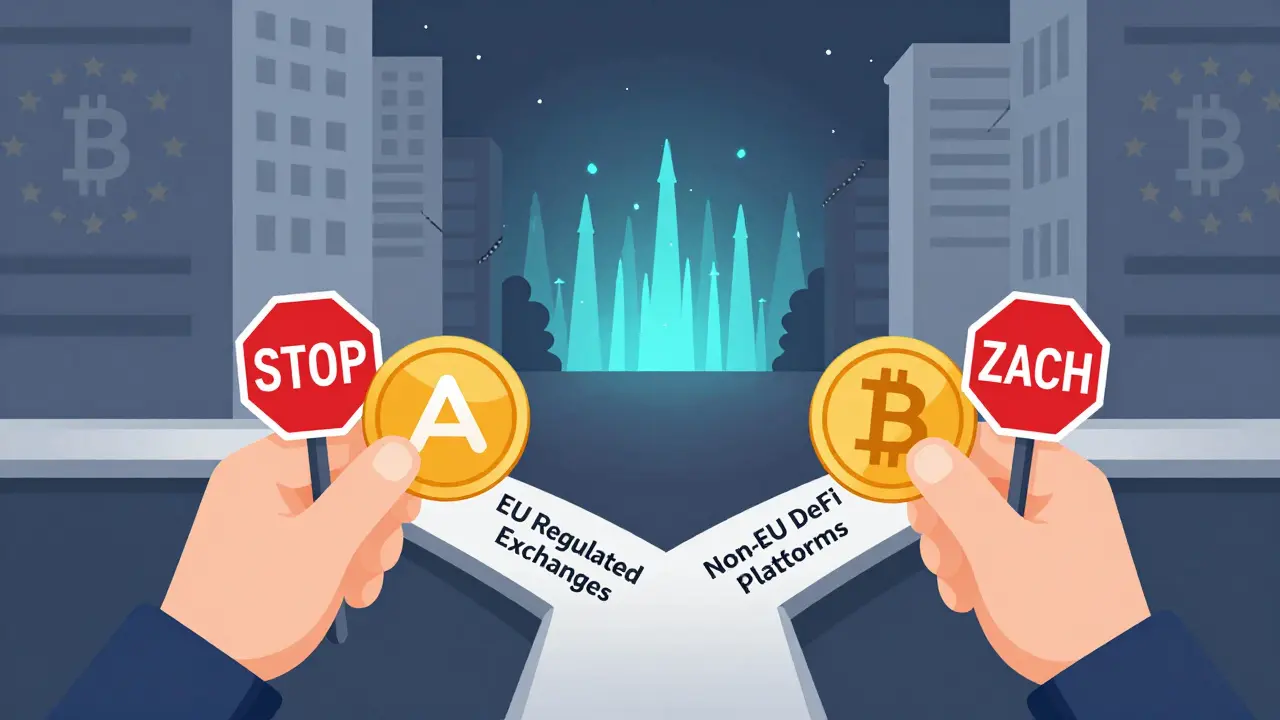
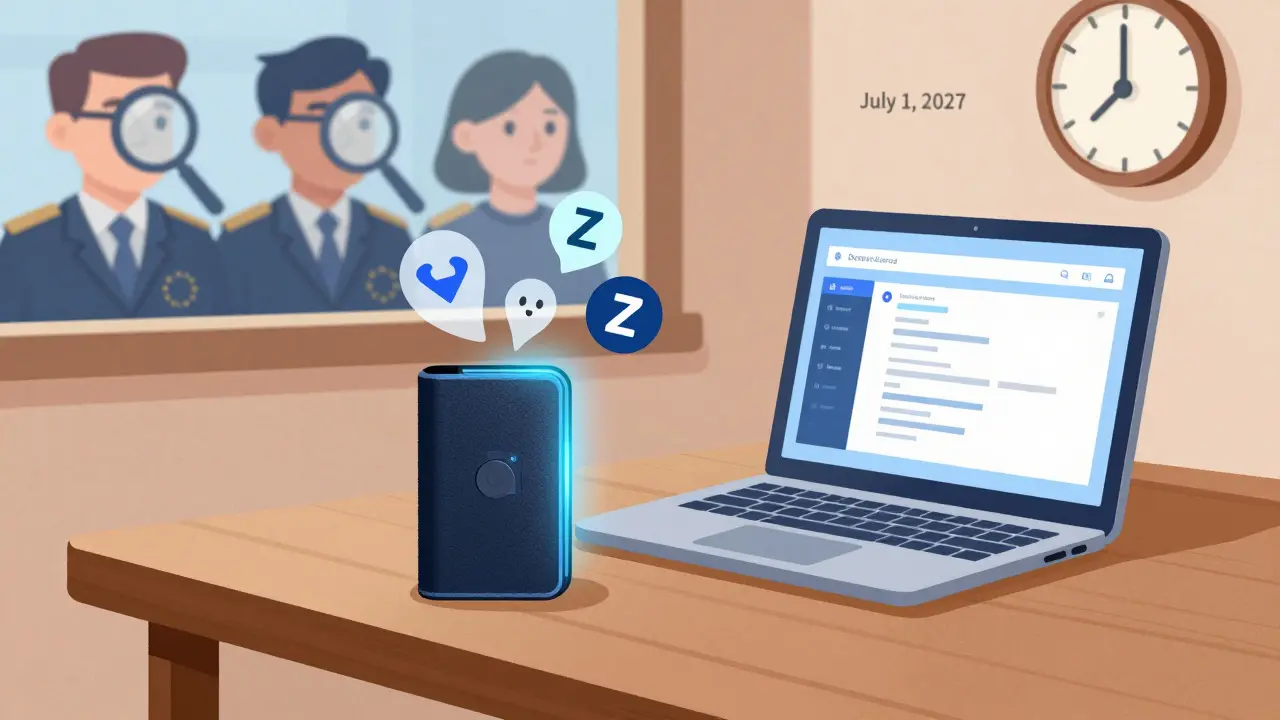
By July 1, 2027, if you’re in the European Union and holding Monero or Zcash, you won’t be able to trade them on any exchange based in the bloc. Not because you’re breaking the law, but because the platforms you use will be legally forbidden from touching them. The EU’s new anti-money laundering rules don’t target users - they target service providers. And that’s the difference that changes everything.
Why Monero and Zcash Are Being Banned
Monero and Zcash aren’t being banned because they’re dangerous. They’re being banned because they work too well. Monero uses ring signatures and stealth addresses to hide who sent what, to whom, and how much. Zcash uses zero-knowledge proofs to do the same - you can verify a transaction happened without seeing any details. That’s powerful privacy. But under the EU’s new Regulation 2024/1624, that kind of privacy is now classified as a financial risk.The EU doesn’t say privacy is bad. It says untraceable transactions make it impossible to stop money laundering, terrorist financing, or drug trafficking. Regulators argue that if every bank transaction leaves a paper trail, crypto should too. And they’re not wrong - Bitcoin and Ethereum transactions are public, searchable, and trackable. Monero and Zcash are the opposite. That’s why they’re the only crypto assets explicitly named in Article 79 of the new law.
What the Law Actually Says
The regulation doesn’t outlaw owning Monero or Zcash. It outlaws crypto service providers - exchanges, wallets, payment processors - from offering services involving them. That means:- No EU-based exchange can list Monero or Zcash after July 1, 2027
- No EU wallet provider can support shielded transactions
- No bank or payment firm can process transfers involving these coins
The law applies to all 27 EU member states. It doesn’t matter if you live in Germany, Greece, or Portugal - if you’re using a service regulated by the EU, you’re covered. The European Crypto Initiative confirmed the framework is final. Even though some technical details are still being worked out, the ban on privacy coins is locked in.
Who’s Enforcing This?
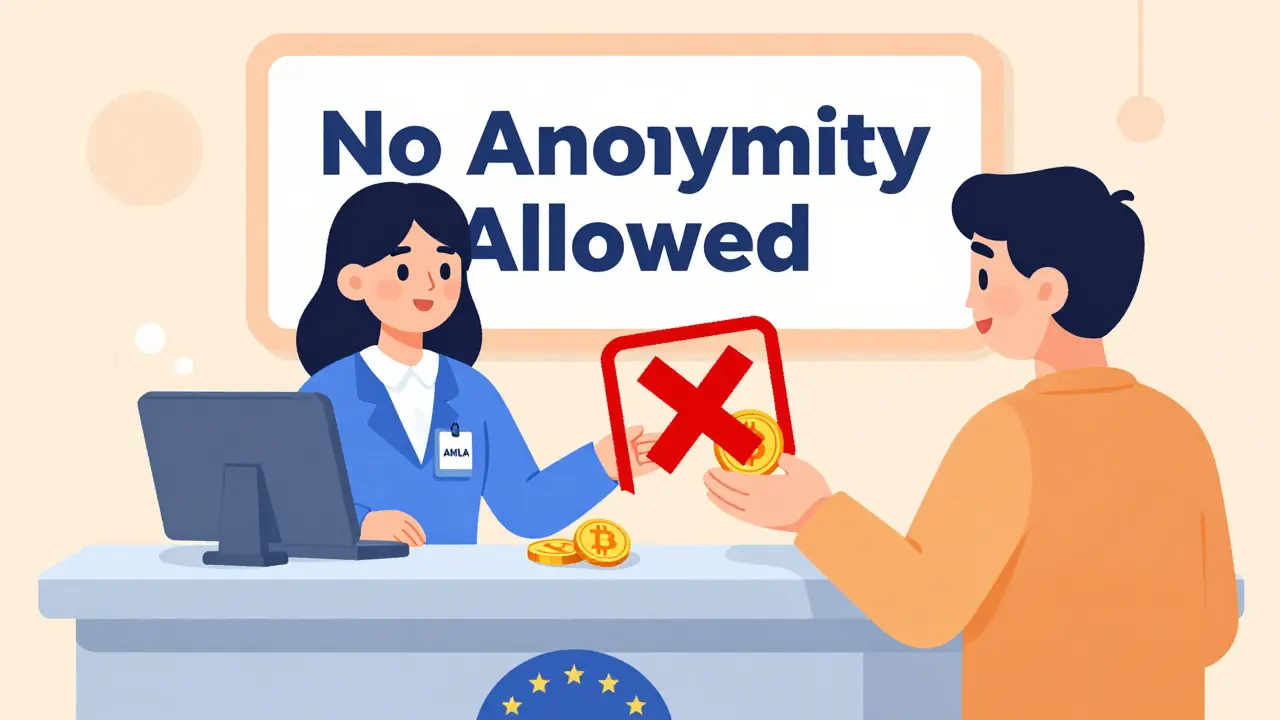
A new agency called AMLA - the Anti-Money Laundering Authority - will oversee the biggest crypto firms. If you’re a platform serving more than 10,000 customers or handling over €50 million in crypto transactions, you’re on AMLA’s radar. Smaller firms will be checked by national regulators, but they still have to comply. The European Banking Authority is writing the exact rules for how to verify identities and trace transactions, but the core rule is simple: no anonymity allowed.That’s why even if a company tries to design a "compliant" version of Zcash, it won’t work. The protocol itself is designed to break traceability. You can’t add a backdoor to zero-knowledge proofs without breaking the whole system. So the only option for EU-regulated firms is to cut them off entirely.
What Happens to Your Coins?
You won’t lose your Monero or Zcash. You can still hold them in a personal wallet. You can still send them peer-to-peer. But if you try to cash out in the EU, you’ll hit a wall. No Kraken. No Bitpanda. No Binance EU. No Coinbase Europe. All of them will have to remove privacy coins from their platforms by the deadline.Some people will move to non-EU exchanges - like KuCoin, Bybit, or decentralized platforms like Uniswap or Thorchain. But that’s not without risk. If you’re using a non-EU exchange to trade privacy coins and then try to withdraw euros to your EU bank account, you’ll likely trigger a red flag. Banks are now required to screen incoming crypto deposits for signs of privacy coin activity. If they detect it, they may freeze the funds or report you.
Will This Actually Stop Crime?
It’s unlikely. Criminals don’t use exchanges to launder money anymore. They use mixers, peer-to-peer trades, and decentralized bridges. The EU’s ban will push privacy coin use further underground, not eliminate it. But that’s not the goal. The goal is to make it harder for ordinary people to access privacy coins through legal channels - and to remove the illusion that they’re a mainstream option.Transparent coins like Bitcoin and Ethereum are already heavily regulated. They’re accepted by banks, listed on major exchanges, and used by institutional investors. Privacy coins were always the outlier. Now, they’re officially excluded from the system.
What This Means for the Future of Crypto
The EU’s move is a turning point. It’s the first time a major economy has drawn a hard line on privacy in crypto. Other countries are watching closely. Canada, the UK, and Australia are already considering similar rules. The U.S. hasn’t moved yet, but regulators are paying attention.For developers, this means building privacy tools that comply with KYC/AML rules - or building them outside the EU. For users, it means choosing between convenience and privacy. You can use a regulated exchange and lose anonymity, or you can use a decentralized platform and take on more risk.
The crypto world is splitting into two paths: one where transparency is mandatory, and one where privacy is forced underground. The EU has chosen its side. And it’s not backing down.
What You Should Do Now
If you hold Monero or Zcash and live in the EU:- Don’t panic. You’re not breaking any laws by holding them.
- Start planning how you’ll manage them after July 2027. Will you move them to a non-EU exchange? Keep them in a hardware wallet? Convert them to Bitcoin or Ethereum before the deadline?
- Be aware that withdrawing funds from privacy coins to EU banks may become harder. Banks will start flagging transactions linked to these coins.
- Don’t rely on "privacy coin-friendly" wallets or services based in the EU - they’ll be forced to shut down support.
If you’re a developer or business owner in the crypto space, start auditing your systems now. If you’re offering privacy coin services, you have less than two years to either stop or relocate. The clock is ticking.
Is There Any Way Around This?
Technically, yes. Legally, no.You can still buy Monero or Zcash on a non-EU exchange. You can still send them to a wallet you control. You can even use a decentralized exchange that doesn’t require KYC. But if you want to turn those coins into euros, dollars, or any fiat currency within the EU, you’ll need to go through a regulated gate - and they won’t touch privacy coins.
Some people think using a mixer or a privacy-focused DeFi protocol will help. But those tools are already under scrutiny. The EU is building tools to detect mixing behavior. If you’re moving large amounts of Monero through a mixer and then into a regulated exchange, you’re likely to get flagged.
There’s no loophole. The law is designed to close every door that privacy coins used to walk through.
What Comes Next?
By 2028, the EU will have a fully compliant crypto ecosystem - one where every transaction can be traced back to an identity. Monero and Zcash will still exist. They’ll still be traded. But they’ll be isolated from the mainstream financial system.This isn’t the end of privacy coins. It’s the beginning of a new kind of crypto economy - one where privacy is a niche, underground feature, not a mainstream option. And the EU just made it clear: if you want to play in the official system, you give up anonymity.
For now, privacy coin holders in the EU have a choice: adapt, relocate, or wait and see. But one thing is certain - the rules have changed. And they’re not going back.
Sammy Tam
18 12 25 / 00:58 AMMan, I just bought a bunch of XMR last week thinking it was the future. Guess I’m holding onto a digital ghost now. 😅 Not mad, just… surprised. The EU’s playing chess while the rest of us are still playing checkers. I guess privacy isn’t a feature anymore-it’s a felony.
Chevy Guy
19 12 25 / 13:15 PMThey're banning privacy because they want to watch you buy coffee with crypto. Next they'll make your toaster report your toast preferences to the IRS. 🔍
Amy Copeland
20 12 25 / 08:33 AMOh sweet mercy. People still think Monero is a 'financial tool' and not a tax evasion playground? I mean, really? If you need anonymity to transact, you're probably not doing anything legal. Just sayin'.
Abby Daguindal
21 12 25 / 08:59 AMYou’re not ‘holding’ anything if you can’t convert it. This isn’t censorship-it’s financial hygiene. You wouldn’t keep a dirty dollar in your wallet forever, would you?
Heather Turnbow
22 12 25 / 05:14 AMWhile I understand the regulatory intent behind this move, I remain deeply concerned about the precedent it sets. The erosion of financial privacy, even for ostensibly illicit purposes, risks normalizing surveillance as a baseline condition of economic participation. This is not merely a compliance issue-it is a philosophical one.
Jesse Messiah
23 12 25 / 06:51 AMHey everyone, just wanna say-don’t stress too hard. You still own your coins, you just gotta find new ways to use ‘em. Maybe hop on a non-KYC DEX, use a hardware wallet, or even convert to BTC before the deadline. It’s not the end, just a detour. You got this 💪
Rebecca Kotnik
23 12 25 / 23:05 PMThe fundamental tension here lies in the conflict between individual sovereignty over one’s financial data and collective societal safety. While the EU’s regulatory framework is technically sound and aligns with global AML standards, it simultaneously forecloses an entire class of cryptographic innovation that seeks to empower individuals against systemic financial opacity. One must ask: are we building a financial system that protects citizens from crime-or citizens from themselves?
Jonny Cena
24 12 25 / 17:50 PMFor those panicking-take a breath. You’re not losing your coins, just the easy path out. Think of it like moving from a highway to backroads. Slower, maybe a little sketchy sometimes, but you’re still moving. And hey, decentralized exchanges are getting better every day. You’re not alone in this.
Kayla Murphy
25 12 25 / 00:59 AMTHIS IS A WIN FOR FREEDOM. 🙌 Privacy isn't a bug-it's a feature. The EU is scared of real decentralization. Keep holding. Keep transacting. The future is still yours. #PrivacyIsAHumanRight
Florence Maail
25 12 25 / 05:20 AMThey’re gonna ban Zcash next. Then Bitcoin. Then your phone. Then your thoughts. 😈 I told you the NWO was coming. They’re not stopping at money-they want your soul. #WakeUp
Terrance Alan
26 12 25 / 15:12 PMIt’s funny how the same people who scream about government overreach when it comes to guns or free speech suddenly think it’s fine for the state to dictate which cryptocurrencies you can own. Hypocrisy isn’t a bug, it’s a feature
Sally Valdez
28 12 25 / 13:11 PMEU thinks they're so smart with their fancy rules. Meanwhile the US is printing money like it’s confetti and China’s got a digital yuan tracking every fart you make. At least here I can still buy Monero without a background check. You guys are the ones being controlled, not me.
George Cheetham
29 12 25 / 01:55 AMThis is not a ban on privacy-it’s a ban on the illusion that financial systems can be both transparent and anonymous. The question isn’t whether privacy matters, but whether it can coexist with accountability. The EU has chosen accountability. Whether that’s wise or not, it’s a coherent choice.
Timothy Slazyk
29 12 25 / 14:00 PMTechnically, you can still run a full node and relay Zcash transactions peer-to-peer. The law doesn’t outlaw the protocol-it outlawed the intermediaries. So if you’re technically inclined, you can still participate. Just don’t expect a user-friendly interface from a regulated entity anymore. This is the crypto equivalent of going off-grid.
Madhavi Shyam
30 12 25 / 18:11 PMRegulation 2024/1624 Article 79 is explicit. VASP compliance is non-negotiable. Shielded pools are non-compliant by design. No workaround exists under current AML/CFT frameworks.
Mark Cook
31 12 25 / 07:03 AMThey banned privacy coins… but not NFTs that track your every move. 😂 The hypocrisy is thicker than my morning coffee.
Greg Knapp
31 12 25 / 20:28 PMSo what now I just keep my XMR in a drawer and call it a day? Like some kind of digital gold bar? What if I want to buy a laptop with it? Do I have to fly to Belize now? This is ridiculous
Shruti Sinha
1 01 26 / 16:13 PMIt’s unfortunate, but not surprising. Privacy in finance has always been a battleground between individual rights and institutional control. The EU has chosen institutional control. History will judge whether that was the right balance.