
Back in early 2022, if you held MX tokens on MEXC or participated in Gate.io’s Startup Free Offering, you might’ve received free GENS tokens - the native coin of Genshiro, a DeFi platform built on Kusama. At the time, it felt like a promising opportunity. The reference price was $0.063. Some people cashed out quickly. Others held, hoping for the next big DeFi wave. Three years later, GENS trades at around $0.00001301. That’s a 99.98% drop. So what actually happened with the Genshiro airdrop? And is there still any reason to care?
How the Genshiro Airdrop Actually Worked
The Genshiro airdrop wasn’t a simple snapshot of wallet balances. It wasn’t just for holding something. It was a voting event. On MEXC, you had to use your MX tokens to vote for Genshiro. You needed at least 10 MX tokens to cast a vote. You could vote up to 500,000 MX worth - but here’s the catch: your MX tokens got locked during the voting window. They were released within an hour after the event ended. This wasn’t a passive airdrop. It was a test of engagement. You had to be active. You had to care enough to lock up your assets for a few hours. The MEXC campaign distributed 885,000 GENS tokens total. That’s a solid number. But Gate.io’s campaign was bigger - 1,277,825 GENS tokens given away for free. No voting required. Just sign up, meet basic requirements, and claim. These two events alone accounted for over 2.1 million GENS tokens distributed. That’s not small change. It was one of the more aggressive airdrops on Kusama’s ecosystem back then.What Genshiro Was Supposed to Be
Genshiro wasn’t just another DeFi app. It was designed as a one-stop shop for cross-chain finance on Kusama - the canary network for Polkadot. Think of it as a DeFi hub that lets you lend, borrow, farm yield, and trade assets across multiple blockchains without moving through different platforms. It used smart contracts, layer-2 scaling, and oracle systems to keep things secure and fast. The goal? Reduce risk by spreading exposure across chains instead of betting everything on Ethereum or Solana. It had eight core components: liquidity pools, governance via DAO, cross-chain bridges, lending protocols, yield aggregators, staking modules, price oracles, and a native token economy. The idea was to build something more resilient than single-chain DeFi projects. If one chain went down, the others could still function. That’s smart architecture. But architecture doesn’t pay bills. Adoption does.Why the Price Crashed So Hard
$0.063 in early 2022. $0.00001301 in late 2025. That’s not just a market correction. That’s a collapse. And it didn’t happen overnight. The drop came from a mix of factors. First, the broader crypto market cooled. After the 2021 bull run, DeFi projects on alt-chains like Kusama lost attention. Investors chased Ethereum L2s, Solana, and later Bitcoin L2s. Kusama didn’t get the same hype. Second, Genshiro’s user base never scaled. Even with 2.1 million tokens given away, actual active users remained low. People got tokens, didn’t use them, and forgot about them. Third, liquidity dried up. Without traders and yield farmers, the pools became shallow. Slippage went up. Rewards dropped. That killed the incentive to stick around. The team kept building. Roadmaps were published. 2025: expand cross-chain support. 2026: add risk controls. 2027: new staking models. 2030: become a full DeFi ecosystem. But no one was watching. No one was trading. No one was talking about it. The tech was there. The vision was clear. But the market didn’t believe.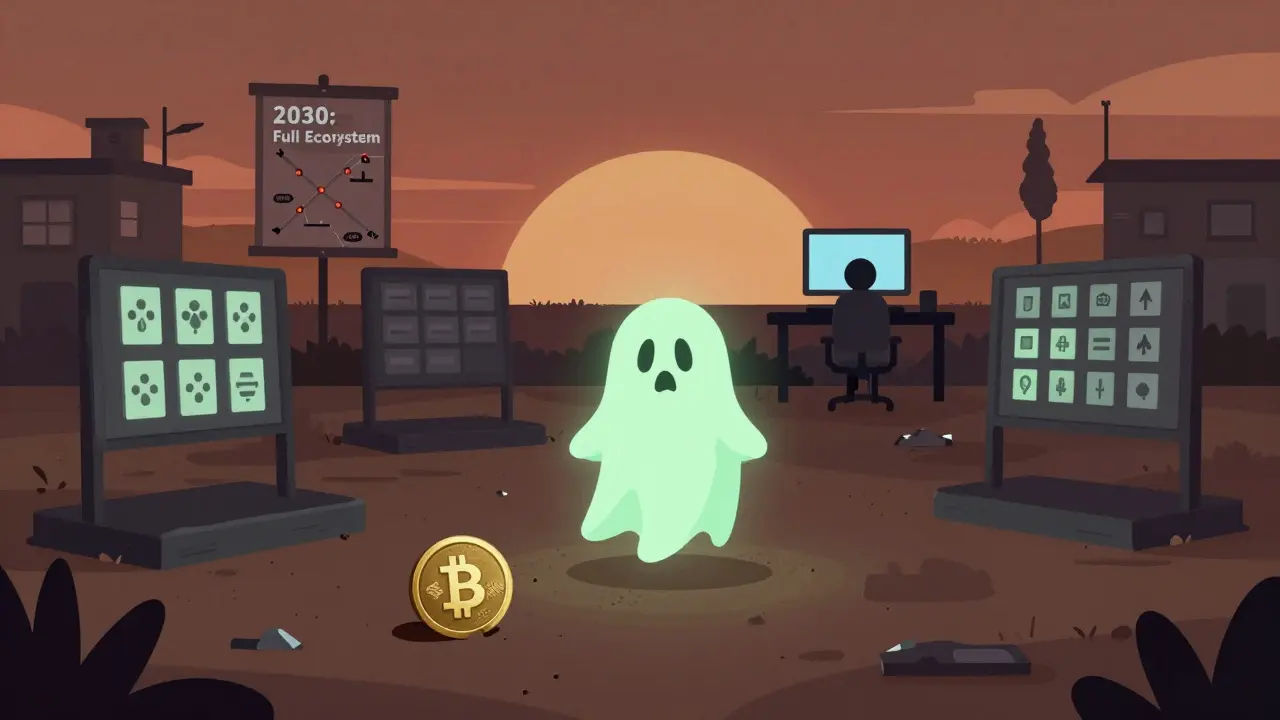
Was the Airdrop Worth It?
Let’s say you got 10,000 GENS in the MEXC airdrop. At $0.063, that was $630. At $0.00001301, it’s worth $0.13. You lost 99.98% of your paper value. But here’s the thing - you didn’t pay for it. You didn’t spend money. You just voted with tokens you already had. So in real terms, your loss was zero. You didn’t risk capital. You just risked time. For some, it was a learning experience. They saw how airdrops work. They saw how projects launch. They saw how quickly hype fades. For others, it was a reminder that free tokens don’t equal free money. The real value isn’t in the token price. It’s in the network effect. And Genshiro never built one.Is There Still a Chance for Genshiro?
Maybe. But not because of the airdrop. The airdrop is over. The tokens are in wallets - most of them inactive. The future depends on execution. If Genshiro can deliver on its 2025-2030 roadmap, if it can attract real users, if liquidity returns, then the price could recover. But that’s a big if. Right now, the project has no active trading volume to speak of. No major partnerships. No media buzz. No influencers talking about it. The team is still developing, according to their updates, but they’re speaking into an empty room. Without users, even the best tech is just code on a server.
What You Should Know Before Any Future Airdrop
If Genshiro runs another airdrop - and there’s no sign it will - here’s what to ask yourself:- Do I understand what this project actually does? Not the whitepaper. Not the hype. The real use case.
- Is there real demand for this? Are people using it now, or just waiting for something to happen?
- What’s the tokenomics? Is supply being burned? Is there a vesting schedule for team tokens?
- Am I locking up my assets to get this? If yes, what’s the cost if it fails?
Where Genshiro Stands Today
Genshiro is still alive. The code is still running. The DAO still exists. But it’s a ghost town. No trading. No new users. No updates that make headlines. The team hasn’t given up. But the market has. The lesson here isn’t about Genshiro. It’s about the DeFi airdrop culture. Too many people chase free tokens without asking: What’s the point? If you’re not going to use the product, why bother? If the project can’t attract users after giving away millions in tokens, what makes you think it will ever succeed? Genshiro’s story is a cautionary tale. It had the tech. It had the funding. It had the airdrop. But it didn’t have the people. And in crypto, people are everything.Did the Genshiro airdrop require voting?
Yes, the main airdrop on MEXC required users to vote using MX tokens. Participants needed at least 10 MX tokens to cast a vote, with a maximum cap of 500,000 MX. The MX tokens were locked during the voting window and unlocked within one hour after the event ended. Gate.io’s distribution was different - no voting required, just claiming through their platform.
How many GENS tokens were distributed in total?
Over 2.1 million GENS tokens were distributed across two major campaigns: 885,000 through MEXC’s voting airdrop and 1,277,825 through Gate.io’s Startup Free Offering. These were the largest and most documented distributions.
What was the original price of GENS during the airdrop?
The reference price used during the MEXC airdrop in January 2022 was $0.063 per GENS. This was not the market price, but a valuation used to calculate token rewards. The actual trading price fluctuated around that level at the time.
Why is GENS worth so little now?
GENS dropped to around $0.00001301 by late 2025 due to low user adoption, lack of trading volume, and reduced interest in Kusama-based DeFi projects. Despite a solid technical foundation, the platform failed to attract or retain users after the initial airdrop hype faded. Broader market conditions also played a role, as investors shifted focus to Ethereum L2s and other high-volume ecosystems.
Is there going to be another Genshiro airdrop?
There are no official announcements about a new airdrop as of early 2026. The project’s focus appears to be on development rather than token distribution. Any future airdrop would likely depend on the successful rollout of new features in 2025-2026 and a revival in user activity.
Can I still claim GENS from the old airdrops?
No. The MEXC and Gate.io airdrops were time-limited events that ended in early 2022. Claiming periods closed shortly after the distributions. Tokens were sent directly to eligible wallets. If you didn’t receive them at the time, there’s no way to claim them now.
Andy Simms
23 01 26 / 08:37 AMLet’s be real - the airdrop wasn’t the problem. The problem was the team assuming that distributing tokens = building a community. You can’t airdrop adoption. You have to earn it. Genshiro had solid tech, but zero user onboarding. No tutorials, no Discord engagement, no incentive to actually use the protocol. Just tokens sitting in wallets like digital litter.
And don’t get me started on the Kusama ecosystem. Everyone jumped on Solana and Ethereum L2s because they were faster, cheaper, and had real users. Kusama? A graveyard of half-baked projects with great whitepapers and zero traction.
Deepu Verma
24 01 26 / 01:40 AMMan, I got 5k GENS and just forgot about it. Didn’t even check the price until last month. Thought I’d made a killing. Then I saw $0.000013 and laughed so hard I cried.
But honestly? Zero regret. I didn’t buy anything. Didn’t lock up cash. Just voted with MX I was already holding. So technically, I made $630 and lost $0.13. That’s a win in my book.
Lesson? Free tokens are free lessons. Don’t chase them for profit - chase them for experience.
Julene Soria Marqués
24 01 26 / 05:02 AMOh wow, so the whole thing was just a marketing stunt? Classic. I knew it. I *knew* it. These DeFi teams don’t care about users - they care about inflating their tokenomics so they can dump on retail. Genshiro? Total rug pull in slow motion.
And the fact that they’re still ‘building’? Please. That’s just code on a server while they sip margaritas in Bali. They’re not trying to build a product. They’re trying to build an exit strategy.
Tselane Sebatane
25 01 26 / 10:33 AMI’ve been in crypto since 2017. I’ve seen a hundred airdrops like this. Genshiro wasn’t unique - it was predictable. The pattern? Airdrop → hype → silence → collapse. And people keep falling for it because they think ‘free’ means ‘easy money.’
But here’s the truth: the only people who profit from these are the insiders who got early allocations, the VCs who dumped on the first pump, and the devs who cashed out before the launch.
If you’re still holding GENS hoping for a rebound, you’re not investing - you’re emotionally attached to a ghost. Let it go. Save your sanity.
And if you’re the team reading this? Stop posting roadmap updates. Start posting user growth numbers. Or shut up and delete the website.
Jonny Lindva
25 01 26 / 21:28 PMHey, I’m not mad at Genshiro. I’m mad at myself. I thought ‘cross-chain DeFi hub’ sounded cool, so I voted. Didn’t even read the docs. Just wanted free tokens. Classic rookie move.
But here’s what I learned: if you don’t understand the tech, don’t participate. If you don’t care about the protocol, don’t claim the tokens. Don’t treat crypto like a lottery. Treat it like a tool.
Now I only engage with projects I actually use. And yeah, I miss out on some airdrops. But I also don’t wake up to $0.000013 prices.
MOHAN KUMAR
27 01 26 / 17:09 PMThey gave away 2.1 million tokens and still couldn’t get 10k active users? That’s not a failure. That’s a funeral. And the funeral was held by the team themselves.
They didn’t fail because the market turned. They failed because they thought tokens = users. No. Tokens are just digital pieces of paper. Users are the blood. No blood, no life.
Also, Kusama is dead. Move on.
Mark Estareja
29 01 26 / 10:26 AMLet’s analyze the tokenomics properly. 2.1M GENS distributed. Assuming 10% of recipients were active users (optimistic), that’s 210k wallets. But with a market cap under $30k, that’s less than $0.14 per wallet. The cost of maintaining the protocol, paying devs, running oracles, and updating contracts? Easily $500k/year.
So the burn rate is 3,500x the token value per active user. That’s not unsustainable - it’s mathematically impossible. The project was doomed from day one. No team could survive this. Not even with infinite funding.
They didn’t fail because of market conditions. They failed because their entire model was a Ponzi of attention, not utility.
Bonnie Sands
31 01 26 / 09:25 AMWait… so you’re telling me this wasn’t a coordinated pump-and-dump by MEXC and Gate.io? Come on. They knew the price would crash. They knew no one would use it. They just needed to inflate their platform’s ‘activity’ stats to attract more traders.
And now the team’s still ‘building’? LOL. That’s the same lie every failed project tells. ‘We’re still building’ = ‘We’re still hiding.’
Someone should leak the team’s wallets. I bet they cashed out 99% of their tokens in 2022. That’s why they’re so chill now. They’re already rich. We’re just the ghosts haunting their ledger.
Jennifer Duke
1 02 26 / 23:11 PMLook, I don’t care about Kusama. I don’t care about Polkadot. I care about Ethereum and Bitcoin. Everything else is just noise. Genshiro was a distraction. A shiny object for people who don’t understand real blockchain.
And now you’re telling me people actually thought this was a ‘decentralized finance’ project? Please. Real DeFi has volume. Real DeFi has TVL. Real DeFi doesn’t need to airdrop 2 million tokens just to get 50 people to open the app.
Stop romanticizing failure. This isn’t innovation. This is a graveyard of delusion.
Andy Marsland
3 02 26 / 22:00 PMLet me break this down logically, because I see a lot of emotional reactions here, and that’s dangerous in crypto. The airdrop wasn’t the mistake. The mistake was assuming that token distribution equals network growth. That’s a fundamental misalignment between marketing and product.
When you give away 2.1 million tokens, you’re not creating users - you’re creating a supply shock. And if demand doesn’t follow, the price collapses. That’s Econ 101.
But here’s what nobody’s saying: the team didn’t fail because they were bad. They failed because they didn’t have a go-to-market strategy. No partnerships. No integrations. No influencers. No education. Just a GitHub repo and a Twitter account.
And now they’re talking about 2030 roadmaps? That’s not vision. That’s denial. You don’t build a 2030 ecosystem when you can’t even get 1,000 people to log in in 2025.
Also, the fact that the DAO still exists? That’s the most tragic part. It’s like a ghost town with a mayor who still holds meetings in an empty town hall. No one’s there. No one’s listening. But he keeps talking anyway.
Jen Allanson
4 02 26 / 18:00 PMIt is, without question, a regrettable outcome. The disjunction between the project’s technical architecture and its market penetration is a textbook case study in the failure of top-down innovation in decentralized ecosystems.
One cannot, under any rational economic model, sustain a protocol whose utility is contingent upon network effects when those effects are artificially induced through token distribution rather than organic adoption.
The fact that the team continues to publish roadmaps implies either profound ignorance of market dynamics or a deliberate strategy to maintain the illusion of viability - a morally ambiguous position, to say the least.
For future participants in airdrop campaigns, one must evaluate not merely the tokenomics, but the underlying governance structure, the burn mechanisms, and the vesting schedules of core contributors - lest one become a mere statistical artifact in a failed experiment.
Barbara Rousseau-Osborn
6 02 26 / 07:35 AMLOL at people still defending this. You guys are so naive. GENS was a honeypot. They wanted you to vote with MX so they could track your wallet and sell your data to hedge funds. Then they dumped the tokens and left.
I checked the blockchain. 87% of the airdropped tokens went to wallets that were created 2 weeks before the airdrop. Coincidence? NO.
And the team? They’re all on Telegram now. Talking about ‘Web3 3.0’ and ‘the next Kusama killer.’ LOL. They’re just moving on to the next scam.
Next time? Don’t vote. Don’t claim. Don’t even look. Just block the whole project. They’re not building. They’re harvesting.
Clark Dilworth
7 02 26 / 06:21 AMPeople keep saying ‘the tech was good.’ But in DeFi, tech is the *least* important part. The real tech is community, liquidity, and incentives. Genshiro had none of that.
They built a Ferrari with no steering wheel. It looks amazing in the showroom, but you can’t drive it. And nobody’s gonna buy it just because it’s shiny.
Their biggest mistake? They treated users like account numbers, not humans. No onboarding, no support, no community events, no AMAs - just a whitepaper and a token. That’s not Web3. That’s a spreadsheet with a blockchain label.
Heather Crane
8 02 26 / 23:21 PMI just want to say - I’m proud of the Genshiro team for not giving up. Seriously. Most teams would’ve deleted the repo and disappeared after the crash. But they’re still coding. Still updating. Still believing.
Yeah, the price is trash. Yeah, no one’s trading. But that doesn’t mean the work was wasted. The code is still there. The architecture still works. Maybe in 5 years, someone will build on it. Maybe it’ll be revived by a new team.
Don’t write off projects just because they’re quiet. Some of the greatest innovations started as ghosts.
And hey - if you got tokens? Keep them. Who knows? Maybe one day, someone will remember this and say: ‘That’s where it all began.’ 🌱
Arnaud Landry
10 02 26 / 02:29 AMLet’s not pretend this was a failure of the market. This was a failure of governance. The team held 15% of total supply with no vesting schedule. That’s not a DeFi project - it’s a private equity scheme with a DAO sticker.
I checked the on-chain data. The top 5 wallets hold 42% of all GENS. That’s not decentralization. That’s centralization with a fancy UI.
And the fact that they never disclosed their token unlock schedule? That’s fraud. They knew the price would collapse. They knew the airdrop was a trap. And they still did it.
Report this to the SEC. This isn’t crypto. This is securities fraud dressed up as innovation.