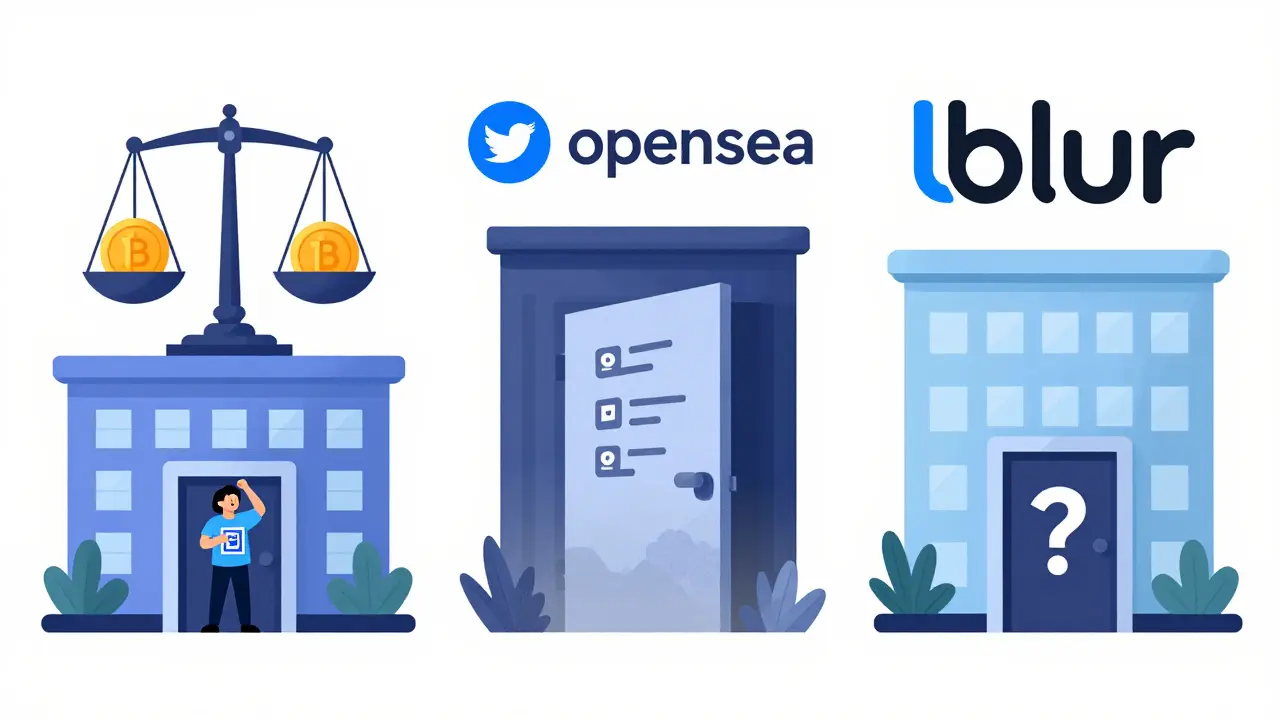
When you see that blue checkmark next to an NFT collection on OpenSea or LooksRare, it’s easy to assume it means the project is legitimate, high-quality, or even endorsed. But that’s not what it means at all. Verification on NFT marketplaces isn’t about quality - it’s about preventing scams. With over $142 million lost to NFT impersonation scams in 2022 alone, platforms had to act. But how they do it varies wildly - and it’s anything but simple.
What Verification Actually Does
Verification doesn’t mean a collection is worth buying. It doesn’t mean the art is good, the team is trustworthy, or the roadmap is solid. All it means is: this isn’t a copycat. Someone tried to create a fake version of Bored Ape Yacht Club and call it "Bored Ape Z" - verification stops that. It’s like Instagram’s blue checkmark, but for blockchain projects. If you’re a new creator with a unique collection, getting verified can mean the difference between being ignored and being seen. But getting there? That’s where things get messy.LooksRare: The Volume-Based System
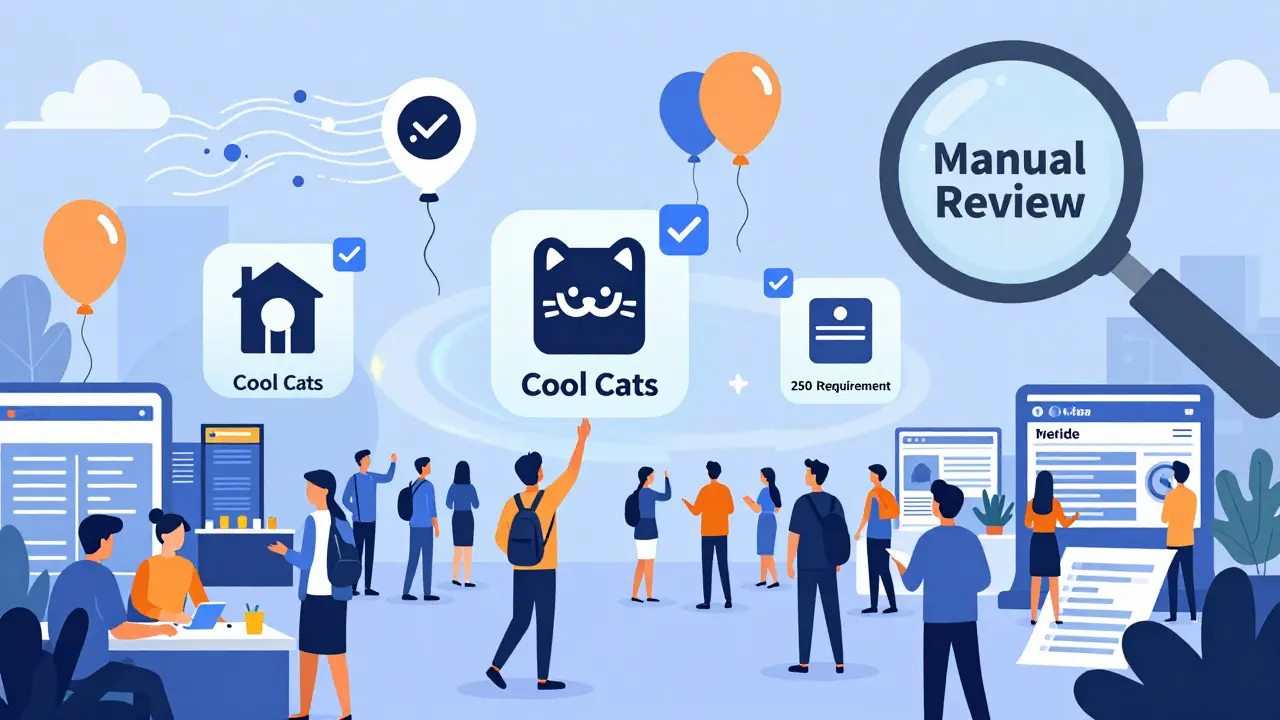
LooksRare took a blunt, numbers-driven approach. In early 2022, they launched a system where collections had to hit 250 ETH in trading volume on their platform to even apply. No private sales counted. No hype, no Twitter followers - just hard trading numbers. Later, they added two more paths: manual review to confirm you’re not impersonating someone else, or being "notable" - meaning you’re backed by a celebrity, brand, or cultural moment. This system was transparent. You could track your volume live. If you hit 250 ETH, you could submit. No guessing. But it created a huge barrier. According to the NFT Creator Survey 2023, 78% of creators said this volume requirement made it nearly impossible for new projects to get verified. Most collections that failed were under six months old. If you’re a small team with 50 ETH in sales, you’re stuck. Meanwhile, big collections like Cool Cats and Doodles had no trouble - they traded millions.OpenSea: The Black Box
OpenSea, the biggest marketplace with over 1.4 million monthly users, has the most opaque system. They don’t publish their criteria. You can’t see what they’re looking for. Based on creator reports and leaked internal feedback, here’s what seems to matter:- Media coverage (TechCrunch, Bloomberg, The Verge)
- Verified founder identities (real names, LinkedIn, Twitter)
- Community size and activity (Discord, Telegram, Twitter followers)
- History of past projects (if the team has done something successful before)
Blur: The Quiet Player
Blur, which captured 60% of NFT trading volume in Q2 2023, doesn’t talk much about verification. They have a "Verified Collections" program, but they don’t share the rules. You apply through a form. They review. You wait. No numbers. No public criteria. It’s like OpenSea’s system, but even less visible. For creators, this is frustrating. If you’re trying to build credibility, not knowing what you’re aiming for makes it impossible to plan.The Tech Behind the Scenes
Behind the scenes, verification isn’t just about human review. Marketplaces use technical tools. Moralis, a blockchain data API provider, lets developers pull verified collection data programmatically. If you’re building a wallet or analytics tool, you can use their API to check if a collection is verified - just by inputting the contract address. This means verification status isn’t just a badge - it’s a data point in the ecosystem. There’s also talk of something better: zero-knowledge proofs. The Ethereum Research community proposed a system where a collection’s authenticity is proven mathematically, without revealing private details. Think of it like proving you know a password without saying the password. This method checks things like transaction history, token ownership, and prevents double-spending - all while keeping user privacy intact. Vitalik Buterin and other Ethereum researchers see this as the future. But it’s still experimental. It requires deep blockchain development - 80 to 120 hours of work for skilled engineers - and it’s not live on any major marketplace yet.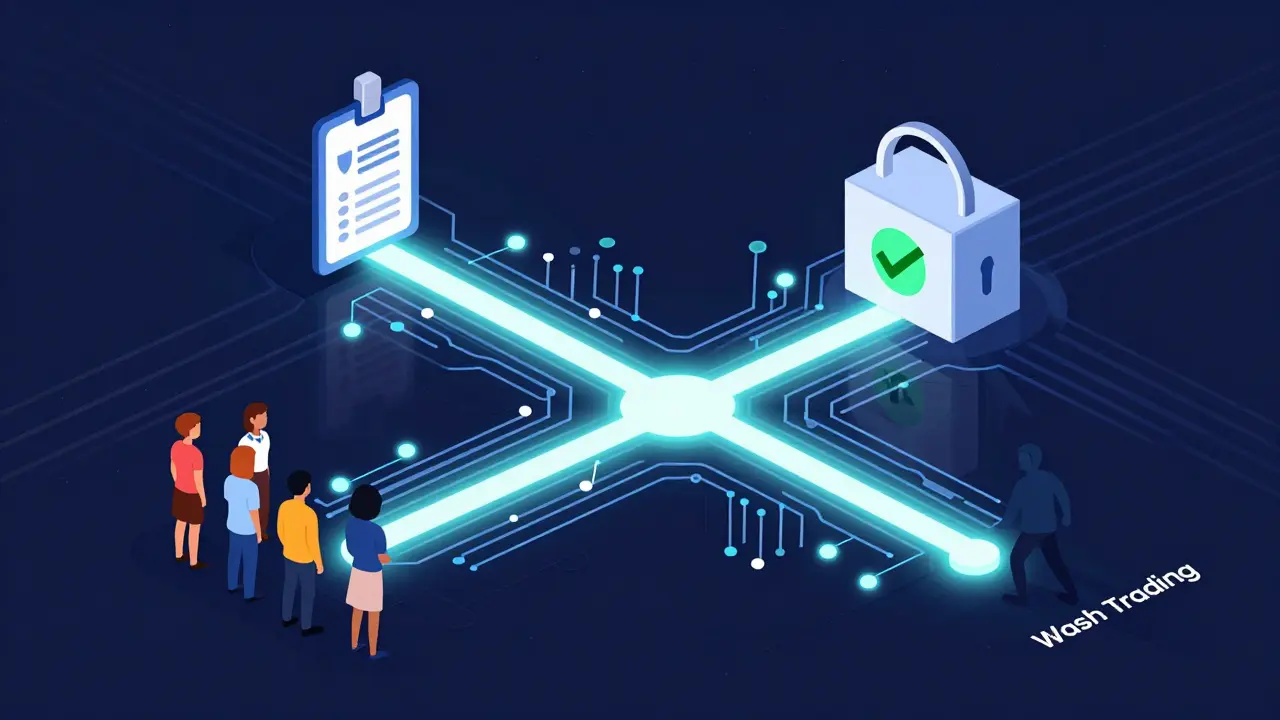
Why Verification Matters - Even If It’s Flawed
Despite its flaws, verification has real impact. Verified collections see, on average, 37% higher trading volume than unverified ones. That’s huge for creators trying to survive in a crowded market. But there’s a dark side. Nansen’s 2023 report found verified collections also had 22% higher wash trading - meaning bad actors use verified status to trick people into thinking their fake trades are real. The badge becomes a tool for manipulation, not trust. And then there’s the human cost. Smaller creators, especially those from underrepresented communities, often lack media connections or celebrity ties. They don’t have the resources to pay for PR or hire teams to manage Discord. Their collections are legitimate, but they’re locked out. The system favors those who already have power.What’s Next?
The market is shifting. OpenSea updated their criteria in April 2023 to require only 10 ETH in volume - a small step toward accessibility. LooksRare added "notable" status to include partnerships with big names. And the Ethereum Foundation just funded $250,000 to develop a zero-knowledge proof verification system. That’s a sign: the future might not rely on who you know or how much you sell - but on what the code can prove. For now, the system is broken. It’s inconsistent, unfair, and confusing. But it’s also necessary. Until we have a decentralized, transparent, and technical solution, creators have to play the game - submit applications, track volume, build community, and hope.What does the blue checkmark on NFT collections actually mean?
The blue checkmark means the collection has been verified by the marketplace as not being a scam or copycat. It does NOT mean the project is high-quality, legitimate, or a good investment. It only confirms the collection is not impersonating another one.
Can I get verified if I’m a new NFT creator?
It’s possible, but difficult. On OpenSea, you need media coverage, verified founder identity, and strong community presence. On LooksRare, you need 250 ETH in trading volume - which is nearly impossible for new projects. Smaller creators often get overlooked unless they have a unique angle or viral moment.
Why do some collections get verified so fast while others wait months?
It usually comes down to visibility. Collections with media coverage, celebrity backing, or high trading volume get prioritized. OpenSea’s system is manual and subjective - if your project is mentioned in TechCrunch or your founder has a verified Twitter, you’re more likely to be approved quickly. Without those, you’re stuck in a long queue.
Is there a way to verify my collection without relying on marketplaces?
Not yet, but there are proposals. The Ethereum Research community is working on a zero-knowledge proof system that would let you prove authenticity on-chain without a marketplace’s approval. ENS domains were also suggested as a way to verify collections via wallet avatars, but neither is live. For now, you still need to go through OpenSea, LooksRare, or similar platforms.
Do I need to pay to get my NFT collection verified?
No, verification itself is free on all major marketplaces. But the cost comes indirectly - you need to spend ETH on trading volume (LooksRare), hire PR teams (OpenSea), or build large communities. So while there’s no fee, the barriers are financial and social.
Kayla Thompson
26 03 26 / 01:09 AMVerification isn't about legitimacy-it's about gatekeeping dressed up as security. They call it 'preventing scams' but what they're really doing is privileging projects with PR teams and VC backing. The system doesn't protect creators-it protects the status quo. If you're not on the right Twitter thread, you're invisible. And don't get me started on how 'notable' is just code for 'has a celebrity friend.'
Alicia Speas
26 03 26 / 09:27 AMWhile the current system is undeniably flawed, I believe we must acknowledge the necessity of some form of verification. The proliferation of copycat collections has created real harm to both consumers and legitimate creators. The challenge lies not in eliminating verification, but in democratizing it. Perhaps a hybrid model-combining on-chain metrics with community reputation-could offer a more equitable path forward.
Dheeraj Singh
27 03 26 / 02:55 AMLmao 250 eth? Bro u think u r smart but u just dont get it. LooksRare is a joke. If u dont have 250 eth in volume u r a noob. And opensea? They dont even reply to emails. I spent 6 months tryna get verified for my art. Got rejected 3 times. Then my cousin posted it on twitter and boom-approved. Thats not verification thats luck.
Mike Yobra
27 03 26 / 18:02 PMSo we’ve turned blockchain-a technology designed to remove intermediaries-into a gated club run by venture capitalists and PR firms. How poetic. The blue checkmark is the new LinkedIn endorsement: meaningless, performative, and entirely dependent on who you know. The real innovation isn’t in the tech-it’s in how perfectly this system mirrors the old world’s elitism.
Jeannie LaCroix
29 03 26 / 11:58 AMI’m crying. Not because I’m sad-but because this is the most accurate depiction of NFT hell I’ve ever read. I’m a woman of color with a fully original collection. No celebrity connections. No media. No ETH volume. I applied to OpenSea 11 times. Got ghosted every time. Meanwhile, some guy in Ukraine copied my art, hit 300 ETH on LooksRare, and got verified in 72 hours. This isn’t about scams. It’s about who the system decides is worth listening to.
Sam Harajly
30 03 26 / 20:53 PMThe technical infrastructure behind verification is far more advanced than most realize. Moralis and similar APIs allow third-party applications to validate collections programmatically, which creates a decentralized layer of trust independent of the marketplace UI. This is critical for wallets, aggregators, and analytics tools. The blue checkmark is merely the surface layer-the real verification happens silently in the data layer.
Zion Banks
1 04 26 / 10:58 AMThey’re all in on this scam. OpenSea? Owned by Sequoia. LooksRare? Backed by hedge funds. Blur? Probably run by the same people who ran the 2021 crypto pump-and-dump. Zero-knowledge proofs? That’s just crypto-speak for ‘we’re hiding the real criteria even more.’ They want you to believe this is about security. It’s about control. And they’re using your fear of scams to lock you out.
Annette Gilbert
2 04 26 / 11:41 AMI’ve seen this movie before. Remember when Instagram verification was for ‘public figures’? Then it became for influencers. Then it became for anyone with 10k followers. Now it’s for NFT collections with 250 ETH? This isn’t verification-it’s a pyramid scheme disguised as a badge. And the people who fall for it? They’re the ones buying the NFTs that get rug-pulled next week.
John Alde
4 04 26 / 00:01 AMOne thing often overlooked is the psychological impact of verification on buyer behavior. Studies show that even when users are explicitly told verification doesn’t indicate quality, they still perceive verified collections as safer. This cognitive bias is exploited by bad actors who leverage the badge to create false trust. The marketplace isn’t just failing to prevent scams-it’s unintentionally enabling them through perception management.
manoj kumar
5 04 26 / 04:23 AMAll this talk about volume and media is just noise. The real problem? Most creators don’t even know how to write a proper smart contract. I’ve seen collections with verified badges that had reentrancy vulnerabilities. Verification should be about code audits-not Twitter followers. But no, they’d rather reward the guy with the best meme than the guy who actually secured his contract.
JOHN NGEH
5 04 26 / 07:35 AMI’ve been in this space since 2021. I’ve watched good projects die because they didn’t have a PR team. I’ve seen terrible ones thrive because they got mentioned in a newsletter. But I still believe in the potential. The fact that Ethereum is funding zero-knowledge verification? That’s the real story. It’s not about who you know-it’s about what the chain can prove.
Brijendra Kumar
6 04 26 / 15:35 PMThis whole system is a capitalist fantasy. You think your art matters? It doesn’t. What matters is how much ETH you moved on a platform owned by a company that’s never paid a creator a cent. The blue checkmark is a corporate loyalty stamp. You don’t earn it-you perform for it. And if you’re not rich enough to buy your way in? You’re just content.
Ananya Sharma
7 04 26 / 14:29 PMI applied to OpenSea with a collection that had 8 ETH volume and zero media. Got rejected. Applied again after 100 ETH. Rejected. Then I posted a thread explaining how the system fails. Got verified the next day. I didn’t change my collection. I changed their narrative. That’s the real game.
Anna Lee
7 04 26 / 19:27 PMI know it feels unfair but dont give up. I started with 2 ETH and 12 discord members. Took 11 months. But i kept showing up. I posted daily. I engaged. I didnt beg. I just created. Then one day someone shared my work. And boom. Verified. It’s not about luck. It’s about consistency. You got this 💪
Anand Makawana
9 04 26 / 01:03 AMThe current verification paradigm is predicated on centralized, opaque metrics that are fundamentally incompatible with the decentralized ethos of blockchain technology. A truly decentralized verification mechanism would require on-chain attestations, verifiable credentials, and cryptographic proof of provenance-all of which are technologically feasible but sociopolitically resisted by incumbent platforms.
Mohammed Tahseen Shaikh
11 04 26 / 00:14 AMThey call it verification but it’s just a digital caste system. The rich get the badge. The rest? They’re ghosts in the machine. I’ve seen kids from Mumbai, Lagos, and Manila build entire collections with no funding, no connections, and zero luck. And they get ignored because they don’t have a Twitter blue check. That’s not innovation. That’s exclusion dressed in blockchain.
Sarah Terry
11 04 26 / 18:09 PMThe 10 ETH threshold OpenSea added is a start. But it’s still not enough. What we need is a tiered system-basic verification for community activity, advanced for volume, and full for media + audits. And transparency. Just tell us what we need. No more black boxes.
namrata singh
13 04 26 / 06:10 AMI’ve been thinking about this a lot. The real tragedy isn’t that some projects get verified and others don’t. It’s that the ones who don’t get verified stop creating. They burn out. They leave. And we lose art because the system rewards noise over substance.
Jenni Moss
13 04 26 / 16:54 PMYou’re not alone. I’ve been there. I cried. Then I made 3 new pieces. Posted them every day. Engaged with 5 other small creators. 6 months later-verified. It’s not about money. It’s about showing up.
vu phung
14 04 26 / 18:04 PMZero-knowledge verification is the future. Imagine proving your collection’s authenticity without revealing your wallet or transaction history. That’s the real win-not a badge on OpenSea, but cryptographic trust embedded in the protocol. The marketplaces will resist it, but the tech will win.