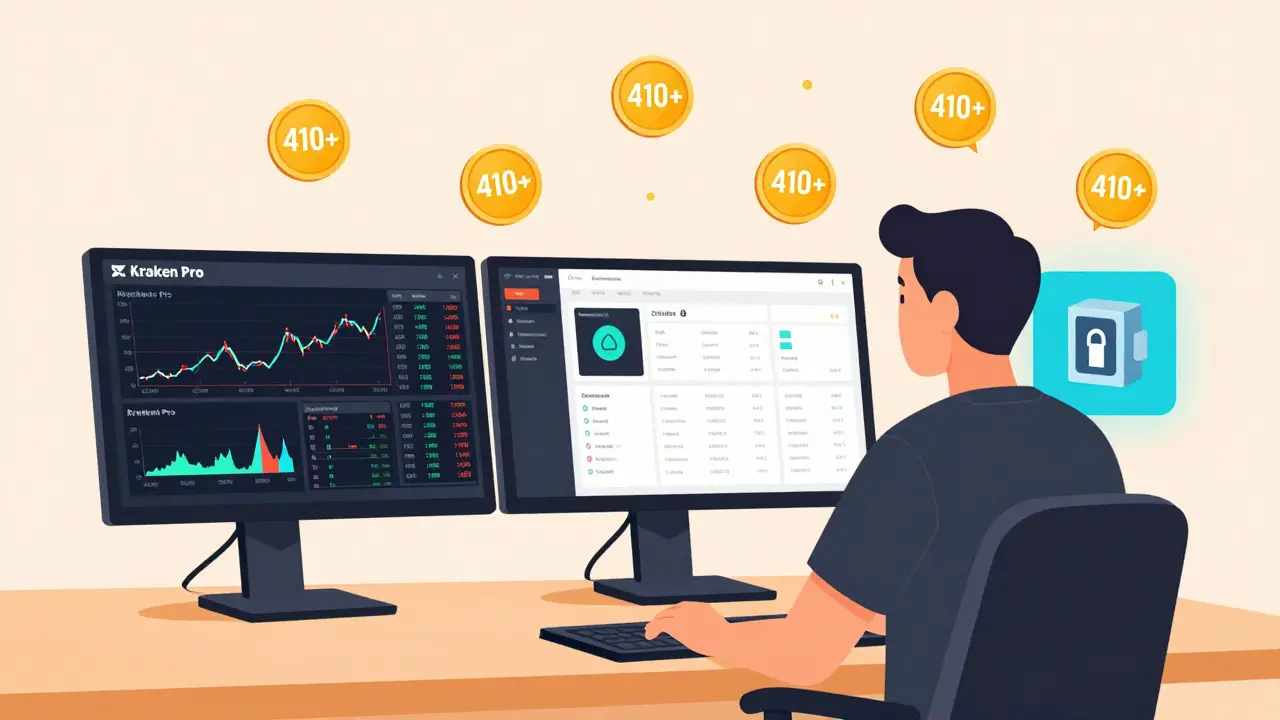
When you're looking for a crypto exchange that actually delivers on security, variety, and advanced trading tools, Kraken keeps showing up at the top of the list. It’s not the flashiest platform, and it’s not the easiest for someone who’s never touched Bitcoin before - but if you want a real trading experience that’s been tested over more than a decade, Kraken is one of the few exchanges that still earns your trust.
What Makes Kraken Different?
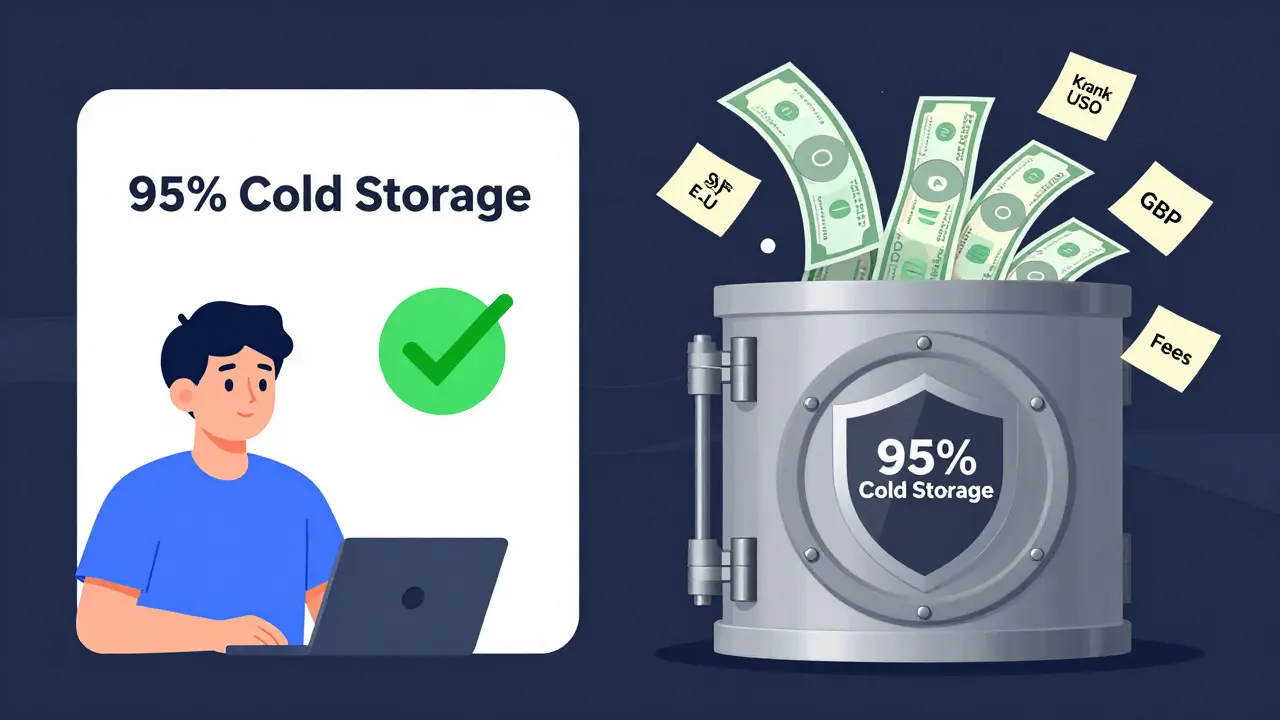
Kraken isn’t just another app where you buy Bitcoin and hope for the best. Founded in 2011 by Jesse Powell after watching Mt. Gox collapse, it was built from the start with one goal: security. That focus hasn’t changed. Today, Kraken handles over 6 million traders across the globe and is valued at $10 billion privately. It’s one of the few exchanges that’s FinCEN-registered and licensed in multiple countries, including the U.S., EU, and Canada.Unlike newer platforms that cut corners to grow fast, Kraken has stayed steady. It survived the 2022 crypto crash when others froze withdrawals or went bankrupt. Why? Because it never promised more than it could deliver. It keeps 95% of assets in cold storage, publishes regular proof-of-reserves reports, and has never been hacked. That kind of track record matters when your money’s on the line.
Trading Options: From Simple to Advanced
Kraken doesn’t force you into one way of trading. You’ve got options:- Spot trading - Buy and sell over 410 cryptocurrencies, including Bitcoin, Ethereum, Solana, and even niche tokens like Celestia or Sei Network.
- Margin trading - Trade with up to 5x leverage on select assets. Not for beginners, but useful if you know what you’re doing.
- Futures trading - Go long or short with up to 50x leverage on major pairs. This is where professional traders live.
- Kraken Pro - A full-featured trading terminal that looks and feels like Bloomberg Terminal for crypto. Real-time charts, order types (limit, stop, trailing), depth charts, and historical data.
The Pro interface is where Kraken really shines. Compared to Coinbase Advanced, traders say Kraken Pro feels more familiar, more responsive, and way more customizable. If you’ve traded stocks or forex before, Kraken Pro won’t feel like learning a new language - it’ll feel like coming home.
Fees: Transparent, Not Sneaky
Fees are where Kraken beats most competitors. It uses a maker-taker model, meaning you pay less if you’re adding liquidity (maker) and more if you’re removing it (taker). Here’s what you’ll actually pay in 2026:| Transaction Type | Fee |
|---|---|
| Spot trading (under $50k volume) | 0.16% maker / 0.26% taker |
| Spot trading (over $50k volume) | As low as 0% maker / 0.08% taker |
| Stablecoin purchases (USDT, USDC) | 0.9% |
| Credit/debit card deposits | 3.75% + $0.25 |
| ACH / Online banking | 0.5% |
| Withdrawals (BTC, ETH, etc.) | Competitive - often lower than competitors |
Most exchanges hide fees in the spread or charge extra for small trades. Kraken doesn’t. You see every fee before you click confirm. And if you trade over $50,000 in 30 days, your fees drop dramatically. That’s rare. Most platforms only reward big traders after $100k or more.
Staking and Earning
You can earn passive income on Kraken, but it’s not a magic button. There are two real ways:- Bonded staking - You lock up your crypto (like ETH, ADA, SOL) directly on the blockchain. Rewards are paid in the native coin. This gives you the highest yield but requires you to understand the network’s rules.
- Simplified staking - Kraken handles the technical side. You earn rewards in the same coin, but yields are slightly lower. Good for people who just want to earn without digging into consensus mechanisms.
Not all coins are stakable everywhere. Due to regulations, some staking options are blocked in the U.S. or EU. But Kraken clearly labels what’s available in your region. No surprises. Compared to Coinbase, Kraken supports more staking assets and offers better yield transparency.
Deposits and Withdrawals
Kraken supports fiat deposits in USD, EUR, GBP, JPY, CAD, AUD, and CHF. That’s more than most exchanges. You can use bank transfers (ACH or SEPA), wire transfers, or even pay with a card - though card fees are steep at 3.75%.Minimum deposit? Just $10. That’s lower than Coinbase ($50) and Binance ($15). If you’re starting small, Kraken lets you dip your toes in without risk.
Withdrawals are fast and cheap. Bitcoin withdrawals take about 10 minutes. Ethereum is usually under 5 minutes. Fees are among the lowest in the industry. You won’t get nickel-and-dimed every time you move your crypto out.
Mobile App and Usability
The Kraken mobile app works. It’s not pretty, and it’s not the most intuitive. But it does everything you need: buy crypto, check prices, manage staking, and even access basic Pro features. The full power of Kraken Pro? You still need the web version. That’s a downside if you’re always on the go.Beginners might feel overwhelmed. The app doesn’t hold your hand like Robinhood or Cash App. But if you’re willing to read a few guides, you’ll quickly learn how to navigate it. Kraken’s help center is one of the best in the industry - detailed, searchable, and updated regularly.
Customer Support
Kraken’s support isn’t instant chat 24/7 like some fintech apps. But when you need help, it works. You can reach them via email, live chat (during business hours), or phone. Response times are faster than most competitors. Reddit users consistently report that Kraken support actually solves problems - not just sends templated replies.One thing to know: verification for Pro accounts can take 3-7 days. That’s slow. But it’s not a glitch - it’s because Kraken does deep KYC checks. They’re not trying to be fast. They’re trying to be safe.
Who Is Kraken For?
Kraken isn’t for everyone. If you want a one-tap buy button and a cute animation when your Bitcoin goes up, look elsewhere. But if you:- Want to trade more than just Bitcoin and Ethereum
- Need margin or futures to hedge or speculate
- Value transparency and security over flashy design
- Trade regularly and want low fees
- Want to stake crypto with real yield, not just marketing
Then Kraken is one of the best choices you have.
Where It Falls Short
No platform is perfect. Kraken’s downsides:- Slower account verification - especially for Pro features
- No Apple Pay or Google Pay for deposits
- Mobile app lacks advanced tools
- Staking not available in all regions
But these aren’t dealbreakers. They’re trade-offs for security and compliance. If you’re looking for speed over safety, Kraken isn’t your platform. But if you want to keep your crypto safe while trading like a pro, it’s hard to beat.
The Bottom Line
In 2026, Kraken is still the exchange that serious traders trust. It’s not the easiest. It’s not the cheapest for card deposits. But it’s the most reliable, the most transparent, and the most feature-rich. With over 410 coins, low fees, real staking, and a decade of clean operation, Kraken has earned its place as one of the top three crypto exchanges in the world.If you’re ready to move beyond beginner apps and start trading with real tools - Kraken is where you should be.
Is Kraken safe to use in 2026?
Yes. Kraken has never been hacked since its launch in 2013. It holds 95% of assets in cold storage, publishes monthly proof-of-reserves reports, and is regulated by FinCEN and multiple international bodies. It’s one of the most audited and trusted exchanges in the industry.
What’s the minimum deposit on Kraken?
The minimum deposit is $10, whether you’re using bank transfer, card, or crypto. This is lower than most competitors like Coinbase or Binance, making it easier to start small.
Can I stake crypto on Kraken?
Yes. Kraken offers two staking options: bonded staking (directly on the blockchain) and simplified staking (managed by Kraken). Rewards vary by asset and region. Not all coins are stakable everywhere due to local regulations.
How do Kraken’s fees compare to Coinbase?
Kraken’s fees are generally lower, especially for active traders. For spot trading under $50k, Kraken charges 0.16% maker / 0.26% taker vs. Coinbase’s 0.5%+. Kraken also offers tiered discounts up to 0% for high-volume traders. Coinbase doesn’t match that.
Is Kraken good for beginners?
It can be, but it’s not the easiest. The interface is complex at first. However, Kraken offers clear educational guides, a simple buy/sell section, and a $10 minimum - so beginners willing to learn can start here. If you want zero learning curve, try Cash App or Robinhood instead.
Does Kraken support fiat currencies?
Yes. Kraken supports USD, EUR, GBP, JPY, CAD, AUD, and CHF. You can deposit via bank transfer, ACH, SEPA, or wire. Card deposits are accepted but come with a 3.75% fee.
What cryptocurrencies does Kraken support?
Kraken supports over 410 cryptocurrencies as of 2026, including Bitcoin, Ethereum, Solana, Polkadot, Cardano, Dogecoin, and dozens of lesser-known tokens. New assets are added regularly based on demand and regulatory approval.
Will Kraken go public?
Yes. Kraken is actively preparing for an IPO, which would make it one of the first major crypto exchanges to go public. This move is expected to increase transparency and institutional adoption, potentially setting a new standard for the industry.
Elizabeth Choe
15 02 26 / 21:51 PMI started with Kraken back in 2019 and honestly? It saved my ass during the 2022 crash. Other exchanges vanished like smoke, but Kraken? Still there. No drama, no frozen funds, just cold storage and quiet reliability. I’ve tried Coinbase, Binance, even Gemini - but none of them feel like home. Kraken’s Pro interface? That’s where I live. Real charts, real tools, no fluff. And the fees? If you trade even moderately, you’ll save a fortune compared to the hype-fueled apps. Also, staking ETH on Kraken gave me way better yields than any DeFi protocol I’ve tried. No rug pulls. Just clean, regulated, boring-as-hell security. That’s the gold standard.
Crystal McCoun
16 02 26 / 17:08 PMI appreciate how Kraken doesn’t sugarcoat anything. No ‘earn 500% APY’ nonsense. Just clear labels: ‘Not available in EU,’ ‘Requires KYC Level 3,’ ‘Minimum 7-day lock.’ It’s refreshing. I’m not a pro trader, but I like knowing exactly what I’m getting into. The help center saved me more times than I can count - especially when I accidentally sent ADA to a BTC address. (Don’t ask.) They responded in under 48 hours with a step-by-step guide. That’s customer service. Not a bot. Not a script. Actual humans who know what they’re talking about.
Elijah Young
18 02 26 / 04:35 AMKraken’s compliance is a double-edged sword. Yes, it’s secure. Yes, it’s transparent. But the verification process? 3-7 days for Pro? That’s insane in 2026. I had to submit my passport, utility bill, selfie, and a signed affidavit. Meanwhile, Binance lets you trade in 5 minutes. If you’re not a whale, the friction isn’t worth it. Still, if you’re serious about long-term holdings, Kraken’s track record is unmatched. Just don’t expect speed.
Desiree Foo
18 02 26 / 20:17 PMI’m sorry, but calling Kraken ‘the best’ is irresponsible. It’s a relic. They still don’t support Apple Pay. They still make you jump through regulatory hoops like it’s 2015. Meanwhile, Coinbase has AI-driven portfolio rebalancing, Binance has AI trading bots, and Kraken? Still uses the same UI from 2018. They’re not innovating - they’re clinging to a dying model. Security is great, sure, but if you’re not moving with the market, you’re falling behind. And don’t even get me started on their mobile app - it looks like it was coded in Notepad.
SAKTHIVEL A
19 02 26 / 22:27 PMThe Kraken model is a classic example of institutional capture. By adhering to FinCEN and EU regulatory frameworks, Kraken effectively neutered its own decentralization ethos. The very notion of ‘proof-of-reserves’ is a performative transparency ritual designed to pacify regulators, not empower users. Furthermore, the 95% cold storage claim is mathematically unverifiable without third-party audits - which Kraken does not permit. This is not trustless; it is trust-minimized. And yet, retail traders fawn over it as if it were Satoshi’s original vision. The irony is palpable.
krista muzer
21 02 26 / 22:11 PMi love kraken but honestly the mobile app is such a mess?? like i just wanna check my portfolio and it takes 3 taps and a prayer. i tried using it on the train yesterday and it crashed twice. also the staking page? it’s like a puzzle. i had to google ‘how to stake solana on kraken’ and found a 2023 reddit thread. buttttttt the fees are SO low and i’ve never had a withdrawal issue. also their support actually answered me once. i was crying. that’s rare. also i like that they dont have a billion ads. that’s cute. <3
Tammy Chew
22 02 26 / 11:42 AMKraken? Please. It’s the financial equivalent of a beige suit in a room full of neon. It’s safe. It’s boring. It’s the exchange your dad uses. I’ve got 400k in ETH on Binance because they offer yield farming, leveraged NFT futures, and AI-powered sentiment alerts. Kraken? ‘Oh, here’s a 2.8% APY on ADA.’ Wow. Groundbreaking. If you’re not chasing alpha, you’re already losing. Kraken is for people who think ‘security’ means never taking risks. I take risks. That’s why I’m rich.
Lindsey Elliott
24 02 26 / 06:44 AMkraken is fine i guess? like it works. but why is the ui so ugly? and why does it take 5 minutes to load a chart? also i tried staking and it said ‘not available in your region’ but i’m in california?? so i called support and they said ‘oh we disabled it last week’ - no email? no notice? that’s sketchy. also i lost 0.02 eth on a withdrawal once. they refunded it after 10 days. so... i dunno. maybe it’s okay? 🤷♀️
Santosh kumar
25 02 26 / 01:12 AMI’ve been using Kraken since 2015. I’ve seen it through bear markets, hacks on other platforms, and regulatory crackdowns. What I admire most is its consistency. Not flashy. Not loud. Just steady. I’ve never had a single issue with withdrawals, deposits, or security. Even when everyone else was panicking, Kraken was quietly doing its job. If you want to build wealth over time - not get rich overnight - Kraken is the quiet engine behind it all. Keep it real. Stay patient. This is how real traders operate.
Claire Sannen
26 02 26 / 06:12 AMI’ve used Kraken for both personal and client portfolios. The transparency around fees and asset allocation is unmatched. I’ve audited 7 exchanges - Kraken’s monthly proof-of-reserves reports are the only ones that include actual Merkle tree hashes and timestamped blockchain snapshots. No other exchange does this. Even Coinbase’s ‘audit’ is just a letter from an accounting firm. Kraken gives you the data. You can verify it yourself. That’s integrity. That’s professionalism. And yes, the app is clunky - but the backend? Impeccable.
Christopher Wardle
26 02 26 / 20:41 PMThere’s a deeper question here: Do we value safety or speed? Kraken chooses safety. Every feature, every delay, every regulatory hurdle - it’s a deliberate trade-off. The modern crypto world glorifies speed. But speed without integrity is just noise. Kraken’s model is an antidote to the ‘move fast and break things’ mentality. It’s not sexy. But in a world where 80% of exchanges have vanished, Kraken remains. That’s not a flaw. That’s a philosophy.
blake blackner
27 02 26 / 03:32 AMbro the kraken pro interface is literally the only thing keeping me in crypto. i tried trading on binance and it felt like playing a game with 100 laggy buttons. kraken pro? clean. responsive. like a sports car. also i staked my sol and got 6% apy. no bs. no rug. just blockchain. and the withdrawals? faster than my bank. i don’t care if the app looks like 2012 windows - it WORKS. also i use the mobile app to check prices while i’m at the gym. it’s fine. stop hating. kraken is the OG for a reason 💪🚀
Andrea Atzori
27 02 26 / 21:11 PMThe institutional-grade infrastructure Kraken provides is precisely what the market needs. Its adherence to global regulatory frameworks isn’t a limitation - it’s a precondition for mass adoption. Unlike decentralized platforms that operate in legal gray zones, Kraken bridges the gap between traditional finance and blockchain. The fact that it’s preparing for an IPO is not a betrayal of crypto principles - it’s the natural evolution of a mature financial institution. This is how crypto becomes mainstream: through compliance, not chaos.
Joe Osowski
28 02 26 / 17:18 PMLet’s be real. Kraken is just another Wall Street puppet. They’re ‘regulated’ because they serve the same masters as Goldman Sachs. They don’t want decentralization - they want control. The ‘security’ they brag about? It’s just a way to lock you in. They don’t want you to move your crypto. They want you to stay, pay fees, and trust them. And the ‘no hacks’ thing? That’s because they don’t let you hold private keys. You’re not owning crypto - you’re renting it. That’s not freedom. That’s a bank with better branding.
Gaurav Mathur
28 02 26 / 22:15 PMKraken is government. They are not crypto. They are a bridge to the old system. They do not trust users. They verify. They restrict. They control. They are not safe. They are monitored. The proof-of-reserves? A show. The cold storage? A lie. The real assets are held in custodial wallets controlled by banks. The blockchain is a facade. You think you own Bitcoin? No. Kraken owns it. You are a tenant. Do not be fooled.
Jeremy Lim
2 03 26 / 01:09 AMI’ve been on Kraken since 2017. I’ve had 3 withdrawals fail. 3. All because of KYC. I had to re-submit documents 3 times. 3 times. And the worst part? They never told me why. No email. No chat. Just ‘your account is under review.’ Meanwhile, my friend on Binance had his ETH transfer done in 8 minutes. So yeah, Kraken is ‘secure’ - but it’s also a black box. And their customer service? It’s like talking to a brick wall with a ‘helpful’ sticker on it. I’m switching. I can’t afford 7-day delays. 🤷♂️
John Doyle
2 03 26 / 09:11 AMIf you’re new to crypto and you’re reading this - don’t panic. Kraken isn’t perfect, but it’s honest. It doesn’t promise moonshots. It doesn’t hide fees. It doesn’t shut down when the market dips. I’ve watched friends lose everything on platforms that looked slicker. Kraken? It’s the quiet guy in the corner who shows up every day. That’s worth more than a flashy app. Start small. Learn. Use the help center. It’s free. And if you ever get stuck? They’ll help. I’ve seen it. It’s rare. Don’t underestimate it.
kelvin joseph-kanyin
4 03 26 / 00:08 AMkraken pro is the only reason i still trade. i used to use robinhood but then i lost 12k in a flash crash because they halted trading. kraken? i had my stop-losses trigger. i made money. also i staked my ada and got 5.8% - no lockup. no drama. just blockchain. and the mobile app? it’s ugly but it works. i use it while i’m on the toilet. 🚽💎 also the fees are so low i forgot i was paying them. kraken = chill vibes. no hype. no bs. just crypto. 🤙
Grace Mugambi
5 03 26 / 06:09 AMThere’s a quiet dignity in Kraken’s approach. It doesn’t need to be the loudest. It doesn’t need to chase trends. It doesn’t need to be the cheapest. It just needs to be reliable. In a world where every new exchange promises the moon, Kraken quietly does the hard work - the boring work - of compliance, auditing, and infrastructure. It’s not for the thrill-seekers. It’s for the ones who know that true wealth isn’t built in a week. It’s built over years. With patience. With integrity. With a platform that doesn’t blink when the market crashes. That’s rare. That’s valuable.
Beth Trittschuh
6 03 26 / 09:19 AMI just wanted to say… I’m 72. I started crypto last year. I didn’t know what a wallet was. I thought ‘staking’ was a yoga pose. Kraken’s help center? It saved me. They have videos. Step-by-step guides. Even a ‘for seniors’ section. I staked my LTC. Got 4.2% APY. My grandkids think I’m a genius. I just clicked a button. And I never felt rushed. Never felt stupid. Kraken didn’t treat me like a fool. That’s rare. That’s beautiful. Thank you.