
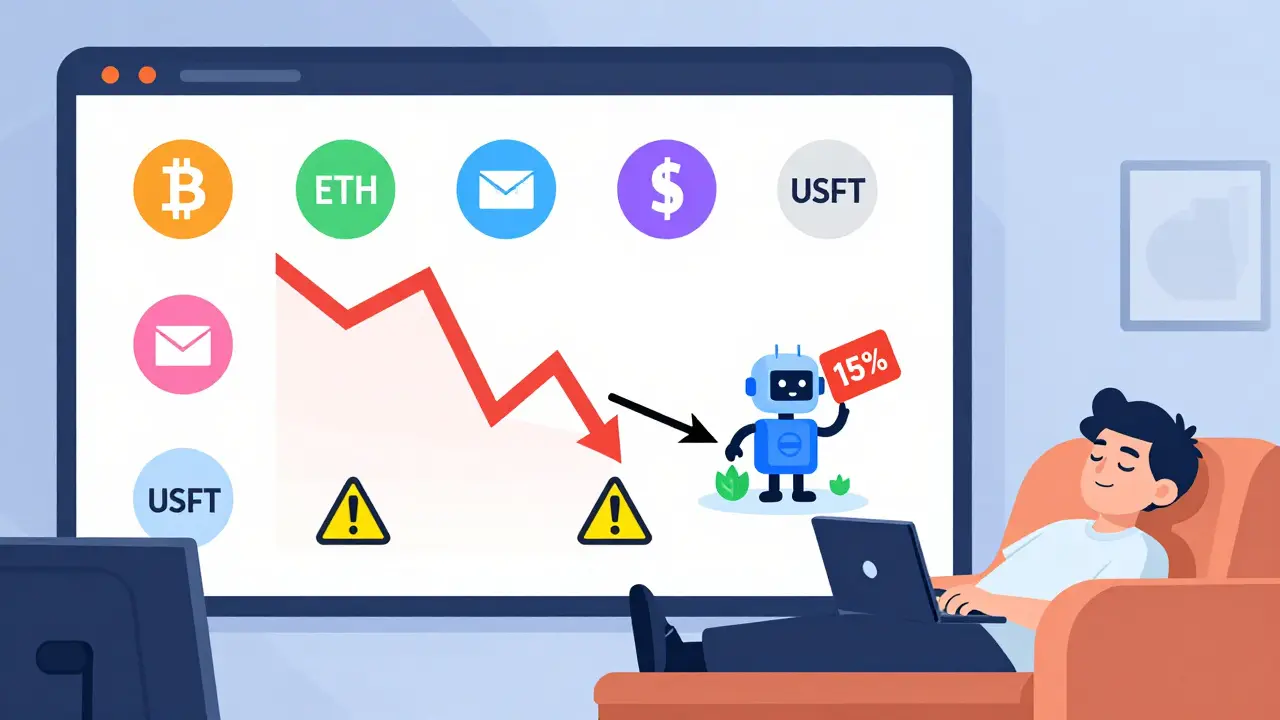
Imagine borrowing $10,000 in USDT using your Bitcoin as collateral. You think you’re safe-your BTC is worth $20,000, so you’ve got double the coverage. Then, overnight, Bitcoin drops 30%. Suddenly, your loan is underwater. Within minutes, your entire collateral gets sold off. No warning. No call. Just gone. This isn’t a nightmare. It’s liquidation risk in crypto lending-and it happens more often than most beginners realize.
How Liquidation Works in Crypto Lending
Crypto lending platforms, whether decentralized (like Aave or Compound) or centralized (like Nexo or BlockFi), don’t lend money the way banks do. You don’t get approved based on your credit score. Instead, you lock up more crypto than you borrow. This is called overcollateralization. If you borrow $10,000, you might need to put up $15,000 or $20,000 worth of BTC, ETH, or another asset as security. The system tracks your position using two key numbers: the loan-to-value (LTV) ratio and the health factor. LTV is simple: it’s how much you’ve borrowed compared to how much collateral you’ve posted. If you borrowed $10,000 and posted $20,000 in BTC, your LTV is 50%. Most platforms let you go up to 70-80% LTV before triggering a liquidation. But here’s the catch: if your collateral drops in value, your LTV rises-even if you haven’t touched your loan. Aave uses a more advanced system called the health factor. Think of it as a safety score. A health factor above 1 means you’re safe. Below 1? Liquidation time. The system doesn’t wait for you to respond. It doesn’t email you. It doesn’t call. It just executes. Smart contracts handle everything automatically, 24/7.Why Crypto Liquidations Are So Harsh
In traditional finance, if you fall below a margin requirement, your broker gives you a few days to deposit more cash or sell other assets. You can negotiate. You can ask for an extension. In crypto? No. Cryptocurrency markets move fast. Bitcoin can swing 20% in an hour. Ethereum can drop 30% in a single news cycle. When that happens, your LTV spikes. Platforms like Aave or Compound have no human operators to intervene. Their code runs on blockchain networks. Once the threshold is hit, the liquidation bot activates. And it gets worse. Liquidators-often automated bots or traders-are rewarded with a bonus. That’s usually between 3% and 15% of the collateral’s value. So if your $15,000 BTC gets liquidated, the liquidator walks away with an extra $450-$2,250. That’s why these bots are always watching. They’re not waiting for you to make a mistake. They’re waiting to profit from it.What Triggers a Liquidation
Three things usually cause a liquidation:- Price drops in your collateral-The most common cause. If you’re using ETH as collateral and ETH crashes, your LTV rises.
- Price spikes in your borrowed asset-If you borrowed USDT and the dollar weakens, causing USDT’s price to rise slightly on some exchanges, your debt increases in value, pushing your LTV higher.
- Oracle errors or manipulation-Price feeds from Chainlink or other oracles can lag or get manipulated during extreme volatility. In May 2022, a faulty price feed caused a cascade of liquidations on several DeFi platforms during the Terra Luna collapse.
How to Avoid Getting Liquidated
The best way to survive in crypto lending isn’t to push your limits. It’s to stay far away from them.- Keep your LTV under 40%-Experienced users rarely go above 40%. That gives you room for a 50% price drop before you hit danger. A 50% drop in BTC is rare, but it’s happened before. Don’t rely on averages.
- Use stablecoins wisely-If you’re borrowing USDT, don’t assume it’s always worth $1. During extreme stress, stablecoins can depeg. That’s when your debt suddenly becomes more valuable than you thought.
- Monitor your health factor, not just LTV-Aave’s health factor considers multiple collateral types and their liquidation thresholds. If you’re using a mix of ETH, SOL, and BTC, your risk isn’t linear. One asset crashing can drag down your whole position.
- Set up alerts-Use tools like DeFi Saver, Zerion, or even simple Telegram bots to notify you when your LTV hits 60%. Don’t wait for the system to act. Act before it does.
- Keep emergency funds-Have extra crypto (or fiat) ready to top up your collateral. If you see a crash coming, move early. Don’t wait for the liquidation bot to find you.
Real Stories: What Happens When It Goes Wrong
In March 2020, during the first crypto crash triggered by the pandemic, thousands of DeFi borrowers got wiped out. One Reddit user posted that he’d borrowed $8,000 in DAI using ETH as collateral. His position was fine at 60% LTV. When ETH dropped 50% in 48 hours, his LTV jumped to 120%. His entire $20,000 ETH position was liquidated. He lost $12,000 in equity. He didn’t even get a notification. Another case: a trader on Nexo used 75% LTV to lever his BTC position. He thought he was playing it safe. When Bitcoin dropped 25% in a single day, his position was liquidated in under 90 seconds. He lost $45,000 in collateral. He later said he was watching Netflix when it happened. These aren’t rare. A 2023 analysis by Ledger Academy found that 18-22% of all DeFi loans experience liquidation each year. That’s nearly 1 in 5. And most of those borrowers didn’t realize how close they were to the edge.
The Bigger Picture: Why This Matters
Liquidation isn’t just a personal risk. It’s a systemic one. When large positions get liquidated, they flood the market with sell pressure. That drives prices down further. That triggers more liquidations. It’s a feedback loop. During the Terra Luna collapse, this caused billions in collateral to be dumped in minutes. That’s why institutions still hesitate to enter crypto lending. They can’t risk sudden, automated losses. They need predictability. They need control. Right now, crypto lending offers high yields-but at the cost of total exposure to volatility. The good news? Protocols are improving. Aave added better health factor calculations in 2023. Nexo partnered with Chainlink to reduce oracle errors. Some platforms are testing partial liquidations-selling only enough collateral to bring you back to safety, instead of wiping you out entirely. But until these systems become more forgiving, the rule stays the same: don’t borrow close to the limit.What Comes Next?
The future of crypto lending won’t be about pushing leverage higher. It’ll be about safety. We’re already seeing the rise of automated risk managers-tools that monitor your positions, top up collateral when needed, or even auto-reduce your loan size before a crash hits. Insurance protocols like Nexus Mutual and Cover Protocol now offer liquidation coverage. You pay a small fee, and if your position gets wiped, you get compensated. It’s not perfect, but it’s a step toward making crypto lending less like gambling and more like finance. For now, if you’re using crypto lending, treat it like a live wire. Respect the system. Understand the math. Never assume you have time. And never, ever borrow more than you can afford to lose-even if the platform says you’re "safe."What is a liquidation in crypto lending?
A liquidation in crypto lending is when your collateral is automatically sold to repay your loan because your loan-to-value ratio (LTV) has exceeded the platform’s safety threshold. This happens without human intervention and usually within minutes, triggered by price drops in your collateral.
Can I avoid liquidation by just watching my position?
Watching helps, but it’s not enough. Markets move too fast. You need alerts, emergency funds, and a conservative LTV (below 40%). Even if you’re staring at your screen, a 20% price drop can liquidate you before you click "add collateral."
Why do liquidation bonuses exist?
Liquidation bonuses (3-15%) reward bots or traders who execute liquidations. They incentivize rapid action, which keeps the lending protocol solvent. Without this reward, no one would monitor positions 24/7, and the system would fail during market stress.
Is it safe to use 70% LTV in DeFi?
No. 70% LTV is the maximum allowed by most platforms-not a recommendation. At 70%, a 20% drop in your collateral pushes you to 87% LTV, triggering liquidation. Experienced users stay under 40% to survive volatility.
Can I get my collateral back after liquidation?
No. Once liquidated, your collateral is sold on the open market. The proceeds pay off your loan, and any leftover goes to the liquidator (after their bonus). You lose everything you put up. There’s no appeal, no refund, no second chance.
Do centralized platforms like Nexo liquidate faster than DeFi?
No. Both use automated systems. Centralized platforms may have slightly slower execution due to internal processes, but the difference is minimal. Liquidations on Nexo, BlockFi, or Aave all happen within seconds once thresholds are hit.
What’s the difference between LTV and health factor?
LTV is a simple ratio: borrowed value divided by collateral value. Health factor is a more complex score used by Aave and similar protocols. It considers the type of collateral, its liquidation threshold, and price volatility. A health factor below 1 means liquidation is imminent, even if your LTV looks okay.
Can stablecoins like USDT cause liquidation?
Yes. If you borrow USDT and it depegs (rises above $1), your debt becomes more valuable. Even if your collateral stays flat, your LTV increases. This happened during the 2022 Terra crash when USDT briefly dropped to $0.95, then spiked back up-triggering unexpected liquidations.
If you’re using crypto lending, your goal isn’t to maximize leverage. It’s to survive the next crash. Stay under 40% LTV. Set alerts. Keep cash ready. And remember: in crypto, the safest loan is the one you never take.
Harshal Parmar
22 01 26 / 20:53 PMMan, I remember when I first got into crypto lending and thought 70% LTV was "safe"-turns out that’s just the cliff’s edge. I lost half my ETH in 2022 because I was too busy scrolling TikTok. Now I keep everything under 35%, set up Telegram alerts for every position, and always have a little extra USDC sitting in my wallet just in case. It’s not glamorous, but waking up to a full portfolio beats crying over a liquidated account. Seriously, if you’re not monitoring your health factor like it’s your bank account, you’re gambling. And nobody wants to be the guy who lost his life savings because he trusted a platform’s "safe" label.
Darrell Cole
24 01 26 / 18:49 PMIt is not accurate to suggest that liquidation thresholds are cliffs. The system is mathematically deterministic and transparent. Those who fail to understand basic leverage ratios are not victims of the system-they are victims of their own ignorance. The fact that people believe they deserve a warning before their position is liquidated reveals a fundamental misunderstanding of decentralized finance. There is no safety net because there should not be one. If you cannot manage risk you should not participate.
Dave Ellender
24 01 26 / 20:51 PMGood breakdown. I’d add that even with low LTV, oracle delays can still bite you. I got liquidated once because Chainlink updated the price 12 minutes after the market crashed. I had 30% buffer-but the bot didn’t care. That’s why I now use multiple oracles and avoid illiquid collateral like SOL or AVAX. Simpler assets, lower leverage, and more patience. That’s the real secret.
steven sun
26 01 26 / 10:11 AMbro i just set my ltv to 20% and now i sleep like a baby. no alerts no stress. if btc drops 50% im still cool. if it goes up i just borrow more. its that simple. stop overthinking it.
Chidimma Catherine
28 01 26 / 03:01 AMThank you for this comprehensive overview. I come from Nigeria where many young people are entering crypto lending without understanding the mechanics of collateralization. It is vital that we educate them not just on the potential returns, but on the absolute necessity of conservative positioning. I have shared this with my community and encouraged everyone to maintain LTV below 35% and to always keep emergency liquidity. Financial literacy is the greatest shield we have in this volatile space.
Mike Stay
29 01 26 / 10:23 AMThere’s a cultural dimension here that’s rarely discussed. In Western markets, we treat financial risk as a personal responsibility. In many parts of the world, borrowing is seen as a community act-family co-signs, networks back each other. Crypto lending strips that away. It’s a solitary, algorithmic battle. That’s why I’ve started advising friends in Southeast Asia and Africa to treat their crypto loans like sacred obligations-not speculative plays. If you’re borrowing, you’re not just risking your own assets-you’re risking the trust of those who helped you get there.
Shamari Harrison
31 01 26 / 02:46 AMOne thing I’ve learned from coaching newbies: never rely on the platform’s UI to tell you if you’re safe. That 70% LTV bar? It’s just a line on a graph. The real trigger is your health factor-and Aave’s calculator doesn’t even show it by default. I always manually calculate my position using the protocol’s formula. If you’re not doing that, you’re flying blind. Also, set up a separate wallet for emergency collateral. Keep it in ETH or WBTC, not some random altcoin. You need liquidity that won’t vanish when the market panics.
Bonnie Sands
1 02 26 / 04:30 AMWait-so you’re telling me this whole system is just designed to make rich traders rich by eating the dumb people’s collateral? And the "liquidation bonus" is basically a bounty on beginner mistakes? I knew it. This isn’t finance-it’s a rigged casino where the house has bots and you have a phone. They even use fake stablecoins to trigger crashes. I read a leak last year-some devs were paid to manipulate price feeds during low-volume hours. That’s not innovation. That’s theft.
MOHAN KUMAR
3 02 26 / 04:24 AMPeople think they are smart using 70% LTV. But if BTC drops 10% in 1 hour, you are gone. Simple math. No magic. No warning. Just loss. Stay under 40%. That is the only rule. No exceptions. No excuses. If you do not follow this, you will lose everything. I have seen it 10 times. Always the same. Overconfidence. Then silence.
Jennifer Duke
5 02 26 / 02:25 AMIt’s fascinating how Americans think they can just "set alerts" and survive crypto. Meanwhile, in Europe and Asia, we’ve been using proper risk management for decades. The idea that you can outsmart a market with a Telegram bot shows a fundamental cultural immaturity. We don’t gamble with our savings-we plan. And we don’t trust code written by anonymous devs in their basements. This whole system is a joke. A very expensive joke.
Abdulahi Oluwasegun Fagbayi
5 02 26 / 18:31 PMLife is a series of thresholds. You cross one, you find another. Crypto lending just makes the thresholds visible. The real question isn’t how to avoid liquidation-it’s why you borrowed in the first place. Are you building? Or are you chasing? If it’s the latter, no amount of low LTV will save you. If it’s the former, even a liquidation is just a lesson written in blockchain ink. The system doesn’t hate you. It just doesn’t care. And that’s the most honest thing about it.