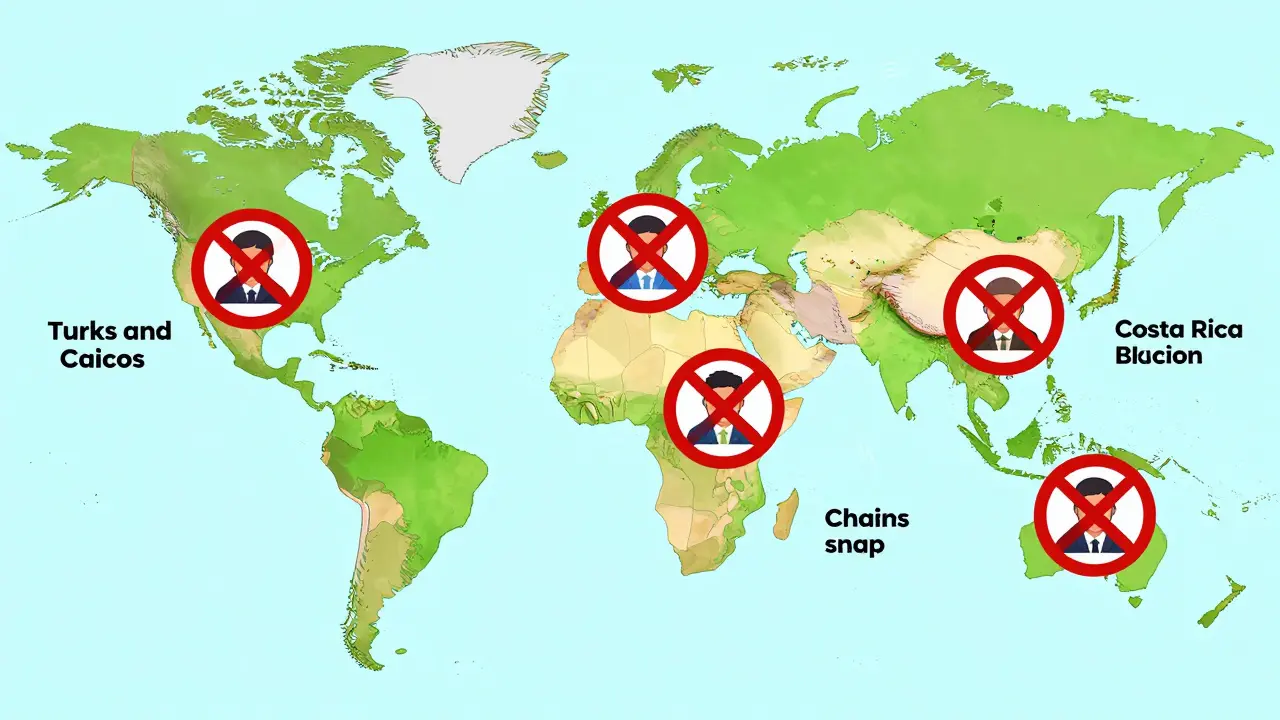
By 2025, if you were still using a no-KYC crypto exchange, you were taking a huge risk. Not because the technology was unsafe, but because no-KYC crypto exchanges were being shut down - one after another - by governments around the world. This wasn’t a minor cleanup. It was a global crackdown.
What Exactly Is a No-KYC Exchange?
A no-KYC exchange lets you trade crypto without proving who you are. No ID, no address, no selfie. Just sign up with an email and start trading. For years, this was a selling point. Privacy-focused users loved it. People in countries with strict capital controls saw it as a lifeline. But regulators saw something else: a playground for criminals. These platforms didn’t track who sent money in or out. That made them perfect for laundering cash from scams, ransomware, and darknet markets. And as crypto volumes grew, so did the damage. In 2021 and 2022, fraudsters pulled over $1 billion from users - mostly through unverified exchanges. By 2025, regulators had had enough.India’s Massive Crackdown
In early 2025, India’s Financial Intelligence Unit (FIU-IND) sent notices to 25 offshore crypto exchanges. Names like Huione, Paxful, Changelly, and BitMex were on the list. These platforms weren’t based in India, but they were actively serving Indian users. That was enough. Under the Prevention of Money Laundering Act (PMLA), any service handling virtual digital assets (VDA) in India - even from abroad - must register with FIU-IND. No exceptions. The agencies didn’t just fine them. They ordered app stores to remove the apps. They forced internet providers to block the websites. Within weeks, millions of Indian users couldn’t access these platforms anymore. The message was clear: if you want to operate here, you follow our rules. No KYC? No access.KuCoin and BTSE: The Big Relocations
KuCoin was once one of the biggest no-KYC exchanges, with over $5 billion in suspicious funds flowing through it, according to the U.S. Department of Justice. In March 2024, the DOJ filed criminal charges against KuCoin and its founders. The CFTC followed with a civil suit. New York’s Attorney General hit them with a $22 million settlement. Instead of complying, KuCoin moved. In September 2025, after Seychelles introduced strict licensing rules for virtual asset providers, KuCoin packed up and relocated to the Turks and Caicos Islands. BTSE did the same - heading to Costa Rica. These aren’t safe havens. They’re just less monitored ones. The problem? Banks won’t work with them. Payment processors like Stripe and PayPal refuse to touch them. Advertisers won’t run campaigns on their sites. Their user growth stalled. They traded freedom for isolation.Why the Push for KYC Isn’t Just About Control
It’s easy to think this is about governments taking power. But the numbers tell a different story. A 2025 CipherTrace report showed that exchanges with strong KYC protocols reduced crypto fraud by 38%. Institutional investors - hedge funds, family offices, even pension funds - now say KYC is a dealbreaker. Over 67% of them won’t touch an exchange without it. Even regular users are shifting. In the U.S., 58% of crypto users now prefer platforms that require KYC. Why? Because they feel safer. They know if something goes wrong, there’s a real person behind the support desk. They can report theft. They can get help. And the process? It’s faster than ever. KYC verification now takes an average of 3.5 minutes on top exchanges. That’s less time than it takes to order coffee. Biometrics, AI checks, and automated document scanning made it seamless. The excuse that KYC is “too slow” doesn’t hold up anymore.
The Ripple Effect: Banking, Partnerships, and Survival
When an exchange doesn’t do KYC, it doesn’t just lose users. It loses everything else. Banks started cutting ties. Stablecoin issuers refused to work with them. Card networks like Visa and Mastercard blocked transactions from unverified platforms. Even affiliate marketers stopped promoting them. In 2025, most advertising networks only accepted fully compliant exchanges. The result? No-KYC exchanges couldn’t grow. They couldn’t attract serious money. They couldn’t get paid. Some kept trading volume high - Bitunix still hit $1.8 billion daily in October 2025 - but they were running on fumes. No banking, no ads, no partnerships. Just users, and a ticking clock.What Happens to Your Money If a No-KYC Exchange Shuts Down?
This is the real question users ask. If your funds are on KuCoin, BitMex, or some offshore site that suddenly disappears - what happens? The answer: nothing. You lose access. No refund. No recourse. These platforms aren’t insured. They don’t have legal obligations to return your assets. If they get seized or shut down, your crypto vanishes with them. Compare that to Coinbase or Binance (which now comply). If there’s an issue, there’s a legal path. You can file a claim. You can contact customer support. You might not get your money back immediately, but at least there’s a system trying to fix it.The Future: No-KYC Is Becoming Impossible
By 2026, operating a major crypto exchange without KYC will be practically impossible in any country with a functioning financial system. Why? Because regulators are sharing data. Financial intelligence units in the U.S., EU, UK, Singapore, and India now exchange information in real time. If KuCoin moves to Turks and Caicos, but its users are still from the U.S. and India - those countries know. And they’ll act. The days of playing regulatory ping-pong are over. Exchanges can’t just relocate to escape the rules. The rules are catching up everywhere. Even decentralized finance (DeFi) protocols are being targeted. Regulators aren’t just going after centralized exchanges anymore. Any platform that acts like one - with order books, fiat on-ramps, and customer support - is now under scrutiny.
What Should You Do?
If you’re still using a no-KYC exchange, stop. Now. Move your funds to a platform that complies with local regulations. Yes, you’ll need to verify your identity. Yes, it’ll take a few minutes. But you’ll get:- Legal protection
- Banking access
- Customer support
- Insurance coverage (on some platforms)
- Peace of mind
Market Impact: Volatility, But No Panic
When KuCoin was charged, Bitcoin dropped briefly to $62,000. When India blocked exchanges, Ethereum dipped under $4,000. But the market recovered within days. Why? Because the broader crypto market is maturing. Traders now understand: regulation isn’t the end of crypto. It’s the beginning of legitimacy. The total market cap hit $3.2 trillion in late 2025. That’s not a bubble. That’s institutional adoption. And institutions don’t play on unregulated playgrounds.Final Reality Check
No-KYC crypto exchanges didn’t disappear because governments are evil. They disappeared because they were dangerous. For users. For the system. For the future of crypto. The technology behind crypto is powerful. But power without responsibility breaks things. KYC isn’t about surveillance. It’s about accountability. And accountability is what lets crypto grow up. If you want to trade crypto safely in 2025 and beyond, you don’t need anonymity. You need reliability. And that only comes with KYC.Are no-KYC crypto exchanges completely illegal now?
No, they’re not illegal everywhere - but they’re illegal in most major economies, and that’s where most users are. Countries like the U.S., UK, EU members, India, Japan, and Australia treat operating a no-KYC exchange as a serious violation. Even if a platform moves to a lax jurisdiction like Turks and Caicos, it still breaks the law if it serves users in regulated countries. Authorities are now targeting offshore platforms that serve their citizens, regardless of where the company is registered.
Can I still use a no-KYC exchange if I’m careful?
You technically can - but you shouldn’t. The risk isn’t just getting blocked. It’s losing your funds permanently if the exchange gets shut down, raided, or hacked. There’s no insurance, no legal recourse, and no way to recover your assets. Even if you think you’re safe, the platform itself is a ticking time bomb. Your money isn’t safer on a no-KYC site - it’s more exposed.
Why did KuCoin get fined so much?
KuCoin was fined because it knowingly allowed U.S. users to trade on its platform despite being banned from serving Americans. It also failed to implement basic anti-money laundering checks, which allowed over $5 billion in criminal funds to pass through. The $22 million settlement with New York was just one part - the DOJ also filed criminal charges against its founders, which could lead to prison time. This wasn’t a mistake. It was a pattern.
Does KYC mean the government can track all my crypto?
KYC means the exchange knows who you are - not the government. But if the exchange is legally required to report suspicious activity, they may share data with authorities. That’s the trade-off: you give the exchange your ID so they can protect you from fraud and comply with the law. It doesn’t mean every transaction is monitored, but large or unusual transfers can trigger alerts. This is standard in banking - and now in crypto.
Is there any legal way to trade crypto without KYC?
Yes - but only in limited cases. Peer-to-peer (P2P) trading directly with someone you trust, using platforms like LocalBitcoins or Paxful (which now require KYC for fiat trades), is still possible. Decentralized exchanges (DEXs) like Uniswap don’t require KYC because they’re non-custodial - you hold your own keys. But DEXs don’t support fiat on-ramps, and they’re harder to use. For most people, the convenience and safety of a KYC exchange outweighs the illusion of anonymity.
Will KYC make crypto less private?
It makes centralized trading less private - and that’s the point. Crypto was never meant to be a tool for hiding illegal activity. Privacy is still possible through tools like Monero, Zcash, or self-custody wallets. But if you’re using a centralized exchange to buy Bitcoin with your bank account, you’re already in the financial system. KYC just brings that system’s basic rules to crypto. It’s not about taking away privacy - it’s about ending abuse.
Rishav Ranjan
22 12 25 / 15:09 PMKyc is just a tax on privacy. I lost my funds on a no-kyc site once. Never again. But I'm not gonna pay for the sins of criminals.
Steve B
23 12 25 / 01:43 AMThe erosion of financial sovereignty under the guise of compliance is not regulation. It is the institutionalization of control. We are witnessing the quiet death of autonomy.
Rebecca F
23 12 25 / 03:04 AMThey call it safety but it's just surveillance with better PR. You think your money is safe on Coinbase? They freeze accounts for no reason. Same thing different name.
Ashley Lewis
24 12 25 / 03:30 AMThe notion that KYC compromises privacy is a romantic delusion. Financial systems have always required identity verification. Crypto is not exempt from civil society's basic obligations.
Jacob Lawrenson
24 12 25 / 10:06 AMDude I switched to Kraken last month. KYC took 4 minutes. Now I can actually withdraw to my bank. No more nightmares about some offshore site vanishing. Do it. You'll thank yourself 😊
Zavier McGuire
24 12 25 / 16:07 PMif you're still using no kyc you're either braindead or trying to fund a drug cartel either way stop it
Luke Steven
25 12 25 / 14:35 PMThere's a difference between anonymity and accountability. You can be private without being invisible. The real win here is that crypto is finally being treated like money. Not a rebellion. Not a meme. Money.
Ellen Sales
26 12 25 / 11:29 AMso kucoin moved to turks and caicos like its a vacation spot lmao imagine your exchange has better wifi than your landlord
Vijay n
26 12 25 / 19:33 PMthis is all a psyop by the federal reserve to control your assets they want you to trust banks again the real crypto is on chain not some kyc prison
Alison Fenske
27 12 25 / 07:29 AMI used to hate kyc but after my friend got scammed on a no-kyc site and lost everything... i just cried for an hour. then i verified. it was worth it. no more panic attacks when the market dips.
Jayakanth Kesan
28 12 25 / 03:42 AMhonestly i just want to trade and go. kyc is fine. took less time than signing up for netflix. no drama. no stress. just do it.
Tristan Bertles
28 12 25 / 10:49 AMlook i get the fear. i used to be paranoid too. but you know what's scarier? waking up to a blank screen and realizing your 10 btc is gone forever. kyc is the price of peace of mind.
Earlene Dollie
29 12 25 / 08:58 AMi just lost my life savings because some offshore exchange got raided and now i have to work two jobs just to survive. this isn't about freedom. it's about people like me getting crushed
Dusty Rogers
30 12 25 / 18:55 PMif you're still on a no-kyc exchange you're not a crypto pioneer. you're just a walking liability. move your funds. your future self will high five you.
Kevin Karpiak
31 12 25 / 01:17 AMwhy should american taxpayers bail out people who use illegal exchanges? if you want to play in the shadows go to russia or china. we have laws here
Amit Kumar
31 12 25 / 03:23 AMin india we saw this coming. when fiu blocked those apps, millions panicked. but now? everyone's on binance or coinbase. no one misses the chaos. the real freedom is not being scammed.
chris yusunas
1 01 26 / 08:12 AMthe world is changing. you can cling to the idea of anonymous trading or you can ride the wave. i chose to ride. kyc is just the new normal. get used to it.