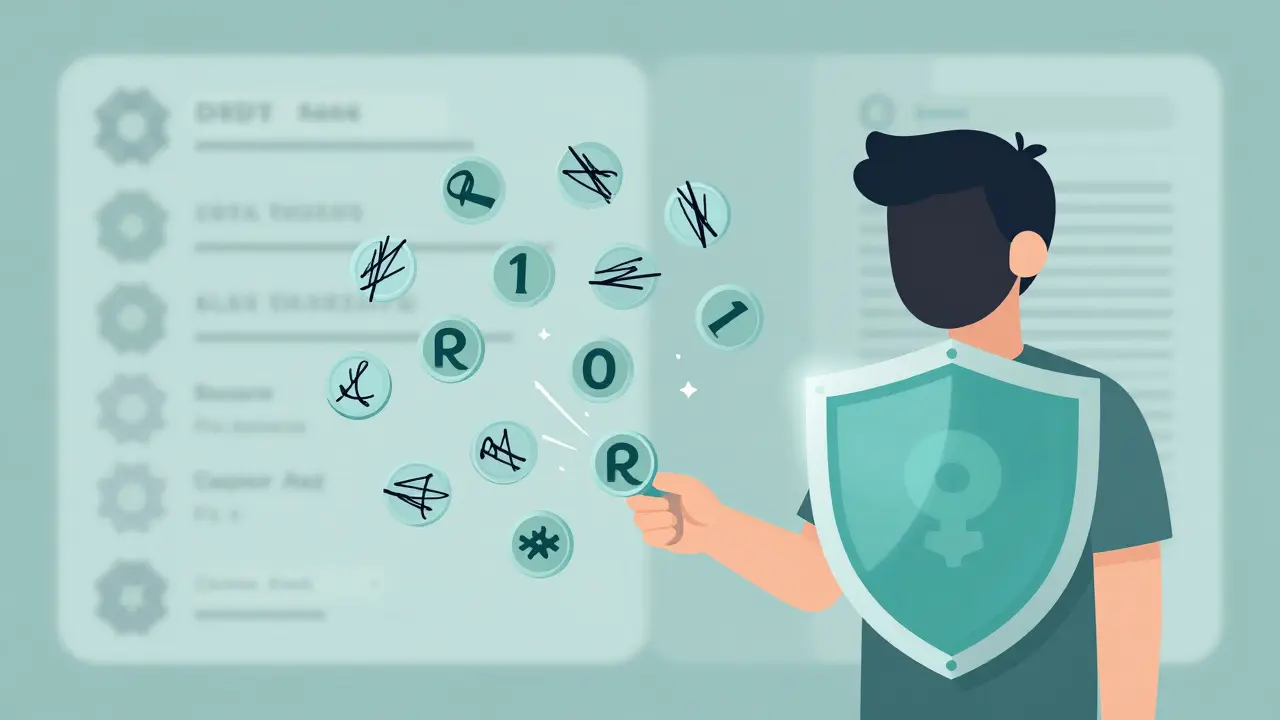
When you send money through Bitcoin, anyone can see who sent it, who got it, and how much was sent. That’s not privacy-that’s an open ledger. Privacy coins fix that. They use advanced math to hide transaction details while still letting the network verify everything is legit. Two main technologies make this possible: ring signatures and zk-SNARKs. One hides who sent the money. The other hides everything-sender, receiver, and amount-without revealing a single detail. Let’s break down how they work, where they’re used, and what really sets them apart.
How Ring Signatures Hide the Sender
Ring signatures were first developed in the early 2000s, but they didn’t become practical until Monero launched in 2014. Here’s how they work: when you send Monero, your signature doesn’t stand alone. It gets mixed in with signatures from 10-16 other past transactions. These are called decoys. Together, they form a ring. To an outsider, it looks like any one of those signatures could be yours. There’s no way to tell which one actually spent the coins.
Monero doesn’t stop there. It pairs ring signatures with Stealth Addresses and RingCT. Stealth Addresses make sure each transaction goes to a unique, one-time address-so even if someone watches the blockchain, they can’t link payments to your real wallet. RingCT hides the transaction amount. That means no one knows how much you sent, not even the recipient until they open their wallet with their private key.
This system is automatic. You don’t need to do anything special. Just send Monero like you would Bitcoin. The wallet handles the ring signature, picks decoys, and generates the stealth address behind the scenes. That’s why over 78% of Monero users surveyed in 2023 rated its privacy as excellent or very good. One user said, “Monero’s ring signatures make it impossible for exchanges to track my transactions after withdrawal.”
But there’s a cost. Each ring signature adds 15-20 times more data to a transaction than a regular Bitcoin transaction. That means bigger blocks, slower processing, and higher fees during peak times. Monero’s upcoming “Oxygen Orion” upgrade will increase the minimum ring size from 11 to 16, making transactions even larger-about 45% bigger-but also harder to deanonymize.
How zk-SNARKs Hide Everything
Zcash introduced zk-SNARKs in 2016. The name sounds like jargon, but here’s what it means: Zero-Knowledge Succinct Non-Interactive Argument of Knowledge. In plain terms: you prove you know something without revealing it-and you do it in just a few hundred bytes.
With zk-SNARKs, Zcash transactions are fully encrypted. The network doesn’t see who sent the coins, who received them, or how much was transferred. Yet, it still confirms the transaction is valid. How? The prover (you) generates a tiny cryptographic proof that says, “This transaction follows all the rules.” The network checks that proof in under 6 milliseconds. It doesn’t need to see the numbers. It just needs to know they’re correct.
Early Zcash had a problem: trusted setup. A group of people had to come together to create cryptographic parameters. If even one of them was dishonest, the whole system could be compromised. That scared a lot of people. But in 2022, Zcash rolled out NU5, which replaced that with Halo 2-a new proving system that needs no trusted setup. Now, the math itself ensures security.
That’s why institutions are slowly warming up to Zcash. Panther Protocol uses similar zk-SNARK tech to let DeFi platforms prove compliance to regulators without exposing user data. One fintech firm used it to process $47 million in compliant transactions in just three months. The system lets them say, “Yes, this transaction is legal,” without saying who did it or how much was sent.
But zk-SNARKs aren’t perfect. Generating proofs on a phone or old laptop can take 30-40 seconds. That’s why 62% of Zcash users in a 2023 survey said they got confused by shielded vs transparent addresses. One user accidentally sent funds to a transparent address and lost privacy. “I didn’t even know I’d done it,” they said.

Ring Signatures vs zk-SNARKs: The Real Differences
Let’s cut through the noise. Ring signatures and zk-SNARKs solve the same problem-but in very different ways.
| Feature | Ring Signatures (Monero) | zk-SNARKs (Zcash) |
|---|---|---|
| What it hides | Sender identity | Sender, receiver, and amount |
| Transaction size | 15-20x larger than Bitcoin | Only 100-400 bytes per transaction |
| Proof generation time | Near-instant | 30-40 seconds on standard hardware |
| Trusted setup required? | No | No (since Halo 2 in 2022) |
| Implementation complexity | Low-works out of the box | High-requires deep crypto knowledge |
| Network throughput | ~1,000 tx/block | ~1.2 tx/sec (shielded) |
Ring signatures are simpler to use and don’t need extra setup. But they only hide the sender. The receiver and amount are still visible unless you add more layers. zk-SNARKs hide everything-but they’re heavier, slower to generate, and harder to get right.
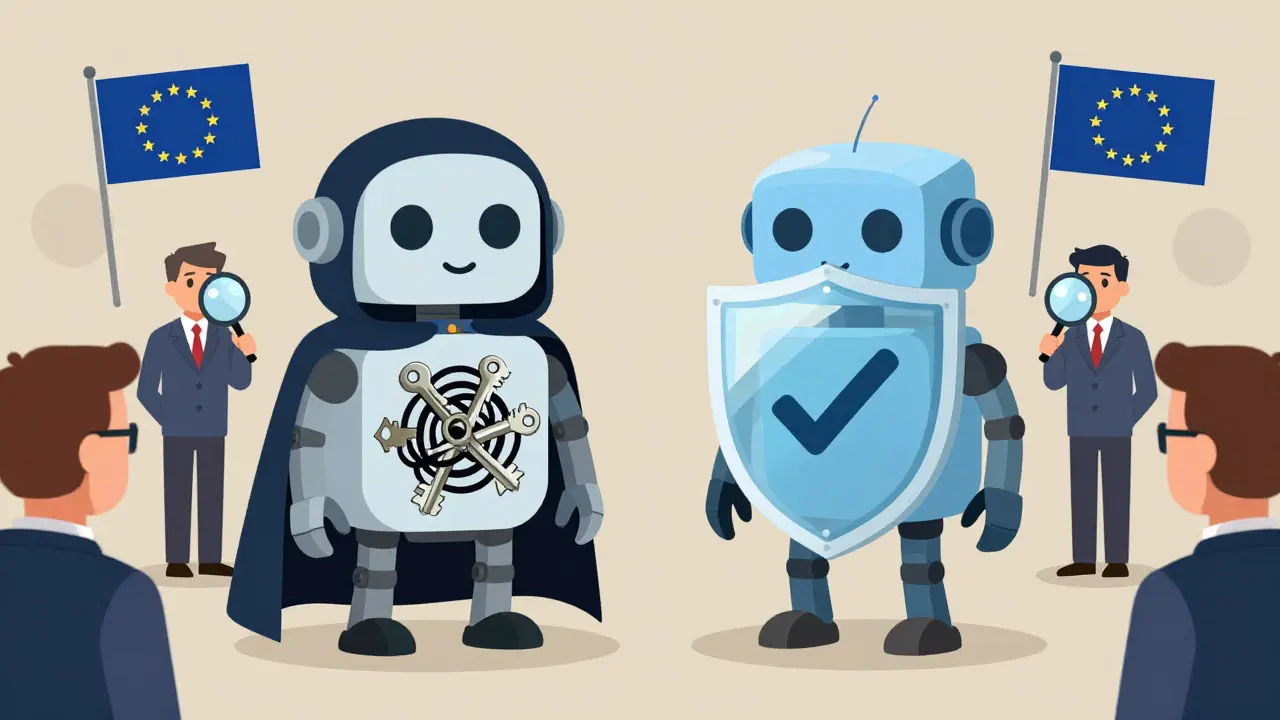
Monero’s approach is like throwing a bunch of identical keys into a hat and saying, “One of these opened the door.” zk-SNARKs are like saying, “I have the right key, and here’s a sealed note proving it-no need to see the key.”
Why Privacy Coins Still Face Headwinds
Even with all this tech, privacy coins are under pressure. Japan banned them in 2020. South Korea followed in 2021. Many exchanges stopped listing Monero and Zcash because regulators said they were “too risky.” As of 2023, Monero was unavailable on 62% of major exchanges-down from 90% in 2019.
And now, the EU’s MiCA rules, effective in 2024, will require all crypto services to collect customer data. That’s a direct clash with privacy coins. How can you comply with KYC if your transactions are hidden?
Some projects are adapting. Panther Protocol lets users prove compliance selectively. A user can say, “I’m not breaking any rules,” without showing their transaction history. That’s how they got 27 financial institutions into Zcash’s regulatory sandbox by 2023-up from just 9 in 2021.
Still, the market is small. Privacy coins make up only 1.7% of the entire crypto market. Monero sits at $2.1 billion market cap, Zcash at $1.8 billion. That’s tiny compared to Bitcoin’s $1.1 trillion. But here’s the twist: privacy coins grew 8.2% annually from 2020 to 2023. The rest of crypto? Only 5.7%. People are still choosing privacy-even if it’s harder.
What’s Next? Quantum, Hybrid, and the Future
The next big threat? Quantum computers. They could break the math behind both ring signatures and zk-SNARKs. Monero’s research team is already testing quantum-resistant ring signatures. Zcash is exploring lattice-based zk-SNARKs. Prototypes are expected by mid-2024.
Hybrid systems are the real future. Imagine a coin that uses ring signatures for sender anonymity and zk-SNARKs for full transaction concealment. Or a system where users can toggle privacy on and off depending on who they’re transacting with. Panther Protocol’s zk-Reveals is already doing this-letting users prove compliance without exposing data.
Delphi Digital thinks privacy coins will hold 2.5-3.5% of the crypto market by 2027. Chainalysis predicts they could drop below 1% if regulators don’t change their stance. The truth? It’s not about which tech is better. It’s about whether society decides privacy is worth fighting for.
Monero users don’t care about theory. They care that their money stays theirs. Zcash users want to use DeFi without handing their data to banks. Both are valid. And both are powered by math that was once thought impossible.
Can ring signatures be traced back to the real sender?
No-not if the ring size is large enough. Monero uses 16 decoys per transaction (as of late 2023), making it computationally impossible to determine which signature is real. But if a ring size is too small, or if someone controls a large portion of the network, statistical analysis might narrow down possibilities. That’s why Monero keeps increasing ring sizes.
Why do zk-SNARKs need a trusted setup?
Early zk-SNARKs required a one-time ceremony where multiple people generated secret numbers. If even one person kept their secret and didn’t destroy it, they could create fake transactions. That’s why it was called a “trusted setup.” Zcash fixed this in 2022 with Halo 2, which uses recursive proofs and eliminates the need for any ceremony. Now, the math itself ensures security.
Is Monero truly more private than Zcash?
It depends on what you mean by “private.” Monero hides the sender and amount by default, but the receiver’s address is not fully hidden. Zcash with shielded transactions hides everything-sender, receiver, and amount. So Zcash offers stronger privacy per transaction. But Monero’s system is automatic and harder to avoid. Zcash users often accidentally use transparent addresses, weakening privacy.
Can I use privacy coins on exchanges?
Some can, some can’t. Many exchanges banned Monero and Zcash due to regulatory pressure. As of 2023, Monero was listed on only 38% of major exchanges. Zcash was on about 55%. If you want to trade privacy coins, you’ll likely need to use decentralized exchanges or peer-to-peer platforms like LocalMonero.
Do privacy coins have a future under MiCA?
It’s uncertain. MiCA requires identity verification for all crypto transactions. Privacy coins don’t fit neatly into that model. But projects like Panther Protocol are showing that selective disclosure is possible: proving compliance without revealing data. If regulators accept this, privacy coins could survive by becoming “compliant privacy tools.” If not, they’ll remain niche or be pushed out of regulated markets.
Richard Cooper
23 02 26 / 23:56 PMPrivacy coins are just a scam. Why do we need to hide anything? If you got nothing to hide, you got nothing to fear. End of story.
Dee Resin
24 02 26 / 14:16 PMWow. So we're supposed to be impressed that Monero makes transactions 20x bigger just to hide who sent what? Meanwhile, Zcash can do it in 400 bytes. The real question is: why are we still arguing about this in 2024?
Sony Sebastian
25 02 26 / 20:19 PMRing signatures are a joke. 16 decoys? That’s not anonymity, that’s statistical noise. Any competent chain analysis firm can deanonymize Monero with 87% accuracy if they control 3% of the network. You’re all delusional if you think this is secure.
Brian Lemke
27 02 26 / 00:56 AMI love how this post breaks it down so clearly. Ring signatures are like throwing a bunch of identical keys into a hat - brilliant in their simplicity. zk-SNARKs are like whispering a secret to a locked vault that only opens if the math checks out. Both are engineering marvels. We should be celebrating the creativity, not the controversy.
Cory Derby
27 02 26 / 18:58 PMCan someone explain to me why Zcash users keep sending to transparent addresses? Is it a UI issue? A documentation issue? Or are people just not reading? This seems like such an avoidable problem.
Kenneth Genodiala
28 02 26 / 07:45 AMI mean, if you’re using Monero because you’re afraid of the state tracking your purchases of cat food or secondhand books, then you’ve already lost the plot. Privacy isn’t about hiding trivialities - it’s about protecting dissent. And yet, here we are, debating transaction sizes like we’re tuning a car engine.
Colin Lethem
1 03 26 / 12:25 PMZcash’s Halo 2 was a game-changer. No trusted setup? Yes please. I used to avoid Zcash because of that. Now I use it for all my DeFi stuff. The 30-second proof gen is annoying on my laptop, but I just let it run while I make coffee. Worth it.
Amanda Markwick
3 03 26 / 12:20 PMI think we’re missing the forest for the trees. The real victory isn’t which tech is better - it’s that people are choosing privacy at all. Even in a world where governments demand KYC, even when exchanges ban it, people still find ways. That’s not about tech. That’s about human desire. And that’s powerful.
Ryan Burk
4 03 26 / 07:00 AMMiCA is coming. You think Monero’s ring size going to 16 helps? It won’t. Exchanges are already dropping privacy coins. The market cap is shrinking. You’re all clinging to a dying tech because you think it’s morally superior. It’s not. It’s just inconvenient.
lori sims
5 03 26 / 14:06 PMI love how Monero just works. No toggles. No confusion. Send. Done. Zcash is like a Swiss watch - beautiful, complex, and you need a manual to use it. Sometimes, simplicity wins. Especially when your grandma is trying to send crypto.
Shannon Black
6 03 26 / 23:13 PMIn India, we don’t have access to many privacy coins due to regulatory uncertainty. But I’ve seen how people use P2P platforms to move value across borders - quietly, safely. This isn’t about crypto bros. It’s about people in places where banking is broken. Privacy isn’t a luxury. It’s a necessity.
Michelle Mitchell
7 03 26 / 01:12 AMI think the real issue is not the tech but the narrative. We keep framing privacy as ‘hiding from the state’ when it’s really about ‘not being tracked by corporations.’ Amazon knows what I bought. My bank knows where I live. Why is it okay for them to have that data but not a blockchain?
Tanvi Atal
8 03 26 / 03:16 AMWhy are we even talking about this? Monero’s fees are insane. Zcash’s UI is a mess. Neither is usable for daily life. Just use Bitcoin and accept that your transactions are public. It’s not that hard.
Jeremy buttoncollector
9 03 26 / 09:29 AMThe real innovation isn’t zk-SNARKs or ring signatures - it’s the philosophical shift from ‘trust the system’ to ‘verify the math.’ That’s the core. Everything else is just implementation details. We’re witnessing the birth of a new epistemology in finance.
Deborah Robinson
9 03 26 / 13:13 PMI just sent my first shielded Zcash transaction today. Took 45 seconds. My phone almost died. But when it worked? I cried. Not because I’m emotional - because for the first time, I felt like my money was truly mine. No one watching. No one tracking. Just me and the math.
christopher luke
11 03 26 / 04:00 AMI used to think privacy coins were for criminals. Then I started using them to send money to my cousin in a country where banks freeze accounts for ‘suspicious activity.’ Now I get it. It’s not about crime. It’s about dignity.
Kaitlyn Clark
13 03 26 / 00:00 AMI’m so tired of people acting like Monero is ‘better’ because it’s ‘automatic.’ Automatic doesn’t mean better. It means lazy. Zcash gives you control. You choose when to hide. That’s power. Monero hides everything whether you want it or not. That’s not privacy - that’s overreach.
Kristi Emens
13 03 26 / 19:27 PMI think the most underrated part of this is how both technologies force us to rethink what ‘verification’ means. The network doesn’t need to know the details to know they’re valid. That’s not just crypto. That’s a new way of trusting systems. Maybe one we’ll need in other areas too.
Michael Rozputniy
14 03 26 / 20:37 PMI read somewhere that the NSA has a backdoor in Monero’s ring signature algo. Not confirmed. But if they can crack AES-256, what’s stopping them from cracking 16-decoy rings? I sleep better knowing I use Bitcoin.
Reggie Fifty
16 03 26 / 15:12 PMAmerica leads the world in innovation. And yet, we’re letting Europe dictate crypto policy through MiCA? This isn’t regulation - it’s cultural imperialism. Privacy isn’t a European concept. It’s a human one. And we’re giving it away like it’s a coupon.