Social Token Risk Calculator
Calculate the potential loss you might experience based on social token market data from 2025 research.
Most people hear about social tokens and think: What if I invest in my favorite creator’s token before they blow up? It sounds like a shortcut to wealth-buy a token, support someone you admire, and maybe get rich. But here’s the truth most guides won’t tell you: social tokens are one of the riskiest corners of crypto, and for most people, they’re not an investment. They’re a gamble with your money tied to someone else’s mood, fame, or attention span.
They’re Not Like Bitcoin or Ethereum
Bitcoin has value because it’s scarce, decentralized, and widely accepted. Ethereum runs smart contracts that power real applications. Social tokens? Their value comes from one thing: a person. A musician. A YouTuber. A podcast host. If that person stops posting, gets into a scandal, or just loses interest, the token can crash overnight. There’s no underlying technology holding it up. No network effect. Just a person and a community. In 2025, the average social token trades just $187,000 per day. That’s less than 0.1% of Bitcoin’s daily volume. That tiny liquidity means a single large holder selling 5% of their stash can drop the price 30% in minutes. Chainalysis found social tokens are 152 times more prone to price manipulation than major cryptos. You’re not trading with institutions. You’re trading with other retail investors who are just as scared, just as impulsive, and just as clueless.Creators Don’t Stay Popular Forever
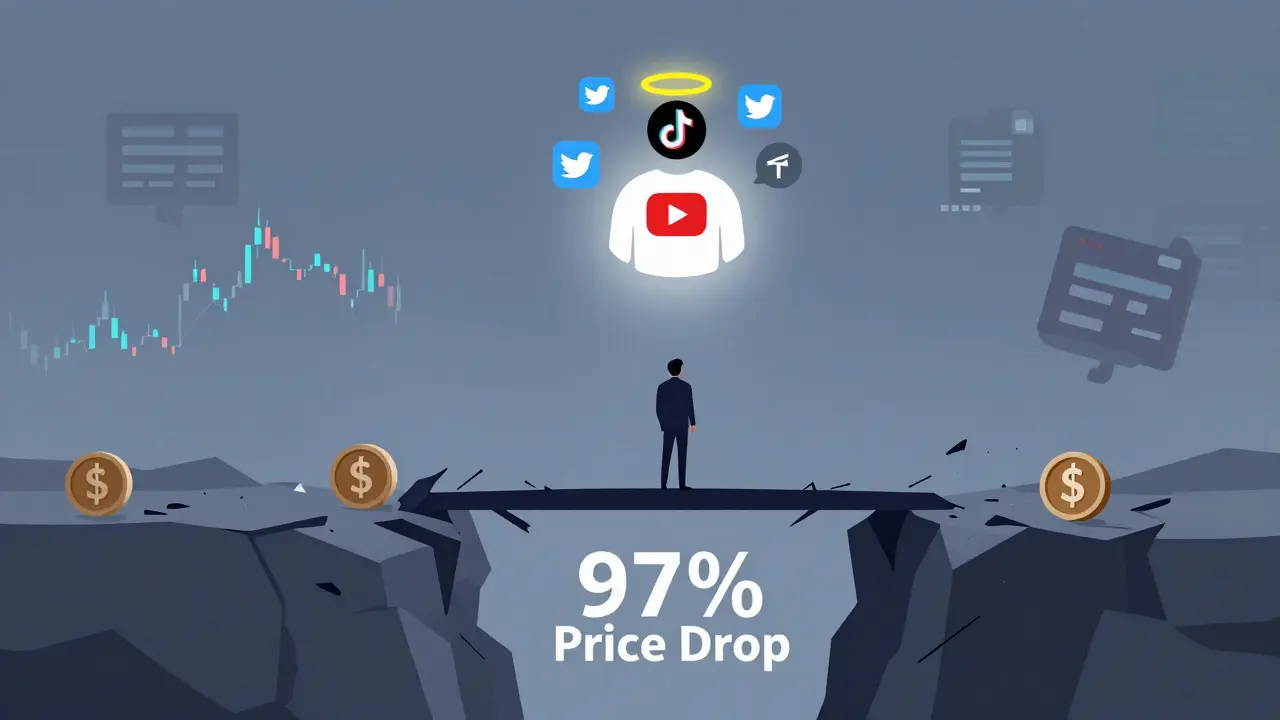
The biggest myth? That if you buy a creator’s token early, you’re locking in future success. But creators burn out. They move on. They get bored. They sign with a label. They go viral for a week and vanish. Take the ‘ArtistCoin’ case from August 2025. A musician launched a social token with 10,000 fans. He promised exclusive tracks, live Q&As, and voting rights on his next album. Within three months, he quietly signed a deal with a major label. No announcement. No warning. Just silence. The token dropped 97% in 48 hours. Fans were furious. The creator kept the money. The token? Dead. This isn’t rare. TRM Labs found that 63% of celebrity-backed social tokens collapse within 90 days. Why? Because fame is fickle. Engagement drops. The hype fades. And when it does, there’s no safety net. No revenue stream. No product. Just a token with no reason to exist.Liquidity Is a Death Trap
You think you can sell your social token anytime? Think again. 61% of social tokens have less than $500,000 in total liquidity across all exchanges. That means if you own $10,000 worth of a token and try to cash out, you might not find a buyer willing to pay even half the price. Slippage isn’t a buzzword here-it’s a reality. You’ll be stuck watching your position bleed out as you try to exit. Trustpilot reviews show 63% of users complain about being unable to sell without massive losses. Reddit threads from 2025 are full of people begging for help: “I bought $2,000 of Drama Token. Now I can’t sell it for $200.” The creator had a public meltdown. The token tanked. And the DEX couldn’t handle the sell-off. No one was buying. No one wanted it. Even if the token looks active, liquidity can vanish overnight. Many social tokens rely on single liquidity pools run by the creator’s team. If they pull the plug-or worse, get hacked-your tokens become digital wallpaper.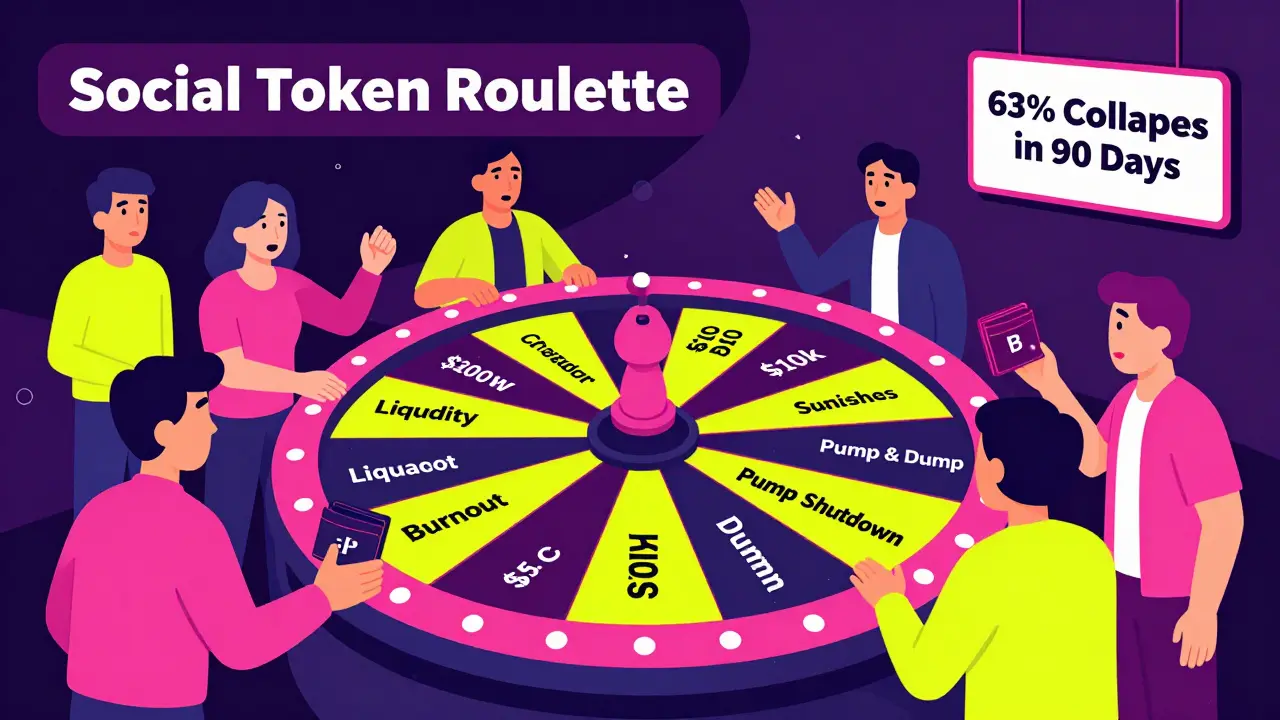
Ownership Is Concentrated. So Is Risk
You might think your $50 investment gives you a stake in something meaningful. But the truth? The top 10 holders own between 58% and 73% of most social tokens. That’s not decentralization. That’s a cartel. These big holders often include the creator, early investors, and marketing teams. They got their tokens at zero cost. They’ve been waiting for the price to pump so they can dump on retail buyers like you. And they will. TokenUnlocks.io reports that 42% of social token projects have vesting cliffs under six months. That means a huge chunk of tokens unlocks, and suddenly, the insiders start selling. No warning. No announcement. Just a flood of supply hitting the market. And when that happens? You’re the last one holding.Regulators Are Coming for You
The SEC didn’t wait. In August 2025, they approved Rule 19c-4, which says: if a social token is heavily influenced by a single person, it’s a security. And securities? They need registration. Disclosure. Compliance. Only 12% of existing social tokens meet the “sufficient decentralization” standard to avoid being classified as securities. That means the vast majority are technically illegal. And the SEC has 142 active investigations into social token projects as of Q3 2025. That’s 38% of all crypto enforcement cases. The UK’s FCA forced 38% of small creator tokens to delist after requiring 12 months of operational reserves. The EU’s MiCA rules now treat many social tokens like asset-referenced tokens-meaning they must meet strict capital and transparency rules. Most creators can’t afford that. So they disappear. Your token might be trading today. But next month? It could vanish from exchanges. You won’t be able to trade it. You won’t be able to cash out. And you won’t get your money back.Most Projects Die Within Three Years
Morgan Stanley’s research found social tokens last an average of 34 months before being delisted. DeFi tokens? 58 months. That’s nearly two years longer. Why? Because social tokens aren’t built to last. They’re built to hype. To launch. To cash out. The creators aren’t engineers. They’re influencers. They don’t care about protocol upgrades. They care about their next TikTok trend. ARK Invest projects that 75-80% of today’s social tokens will stop trading by 2027. The only ones that survive are the ones tied to established platforms-like Patreon’s token, which still holds 85% of its value because it’s used inside a real ecosystem with recurring revenue. Independent tokens? They’re ghosts waiting to happen.
Scams Are Everywhere
The Crypto Scam Database logged 317 social token scams in 2025 alone. Average loss? $3,850 per victim. That’s almost double the average loss for regular crypto scams. How do they work? A creator launches a token. Promises exclusive merch, VIP access, revenue sharing. Builds hype on Twitter. Gets 10,000 people to buy in. Then-poof. The website goes dark. The Discord vanishes. The team’s wallets are empty. The code is open-source, but the team? Gone. And here’s the kicker: many of these scams are run by people who used to be legitimate creators. They’ve done this before. They know the psychology. They know how to make you feel like you’re part of something special. You’re not. You’re funding a short-term hustle.What Should You Do Instead?
If you love a creator, support them directly. Buy their merch. Pay for their Patreon. Tip them on Streamlabs. That’s real support. That’s sustainable. That doesn’t rely on a token price going up. If you want to invest in crypto, stick to assets with real utility, strong communities, and transparent teams. Bitcoin. Ethereum. Maybe a well-audited DeFi protocol. Not a token tied to someone’s Instagram bio. Fidelity’s Digital Assets Team recommends putting no more than 1-3% of your crypto portfolio into social tokens-and even then, no more than 0.25% per token. That’s not an invitation. It’s a warning.Final Reality Check
Social tokens aren’t the future of finance. They’re a distraction. A gamble wrapped in community. A pyramid scheme with a Discord server. You’re not investing in technology. You’re betting on a person’s popularity. And popularity doesn’t last. Neither does trust. And when both vanish, your tokens are worth less than the gas fee it took to buy them. If you’re still thinking about buying one? Ask yourself this: Would you give $1,000 to a stranger who says, “I’ll make you rich if you believe in me”? If the answer is no, then don’t buy a social token. It’s the same thing.Are social tokens legal?
Many social tokens are not legal under current securities laws. The SEC and other global regulators classify them as unregistered securities if they’re tied to a specific creator’s promise of future profits or influence. As of 2025, over 140 social token projects are under active investigation by the SEC alone. If a creator promises revenue sharing, voting rights, or financial returns tied to the token’s value, it’s likely a security-and illegal without registration.
Can I make money from social tokens?
Some people have made money, but it’s rare and usually involves luck, timing, or insider access. Most who profit are the creators and early investors who sold to retail buyers. For the average person, the odds are stacked against them. The average social token lost 78% of its value between January and September 2025. The ones that survive are usually tied to platforms with real revenue streams, like Patreon-not standalone tokens.
What’s the difference between a social token and a utility token?
A utility token gives you access to a product or service-like paying for cloud storage or computing power. A social token gives you access to a person. You might get early access to a song, a shoutout, or a vote on a future project. But there’s no underlying service. No infrastructure. Just influence. That’s why social tokens are far more volatile and unreliable. Utility tokens can survive even if the team disappears. Social tokens die the moment the creator stops caring.
How do I know if a social token is a scam?
Look for red flags: no clear roadmap, anonymous team, no audit, low liquidity, heavy reliance on hype, and promises of guaranteed returns. Check TokenSniffer or DappRadar for project health scores. See if the creator has a real track record outside the token. If their social media activity dropped after launch, that’s a warning. If the Discord is dead, that’s a tomb. And if the token’s price spikes overnight with no news? That’s pump-and-dump.
Should I invest in social tokens if I’m new to crypto?
No. Social tokens are not for beginners. They require deep knowledge of creator behavior, community dynamics, and regulatory risk-none of which are taught in beginner guides. If you’re just starting out, focus on learning Bitcoin and Ethereum first. Understand wallets, exchanges, and security. Then, if you still want to explore niche tokens, treat social tokens like a lottery ticket-not an investment. Never put in more than you can afford to lose.
What happens if the creator deletes their social media?
The token usually collapses. Social tokens rely entirely on the creator’s online presence. If they delete their Twitter, shut down Instagram, or stop posting, the community loses its reason to exist. Without engagement, there’s no value. In 2025, over 41% of social token failures were due to creators abandoning their projects. You don’t own a share in a company-you own a digital token tied to someone who may never reply to your DM again.
Lynne Kuper
14 12 25 / 01:55 AMOh wow, so buying a social token is like giving your life savings to a TikTok influencer who might quit tomorrow because they got bored? I’m shocked. Truly. Who knew fame was this fragile? 😏
Eunice Chook
14 12 25 / 10:45 AMIt’s not a gamble. It’s a tax on hope.
Abhishek Bansal
16 12 25 / 06:52 AMbro what if the creator just gets famous and the token goes to moon? you haters always act like you know everything
Madison Surface
18 12 25 / 05:46 AMI just want to say - I bought a token for this indie poet last year. She stopped posting after her mom passed. The token? Worthless. I didn’t lose money because I didn’t buy it to profit - I bought it to feel close to her art. But now I see how toxic this whole system is. We’re not investors. We’re emotional donors being exploited. And that breaks my heart.
Scot Sorenson
19 12 25 / 07:03 AMLet me guess - you also think NFTs are ‘digital art’ and DeFi is ‘decentralized finance.’ Wake up. This isn’t crypto. It’s influencer capitalism with a blockchain veneer. You’re not supporting creators. You’re funding a Ponzi dressed in Discord emojis.
Jeremy Eugene
20 12 25 / 16:43 PMWhile I appreciate the emotional weight behind the piece, I must emphasize that the regulatory risks outlined are not merely theoretical. Under U.S. securities law, the Howey Test clearly applies to any instrument where an investor expects profit derived from the efforts of others. Social tokens, by design, meet this definition. Failure to register constitutes a violation - not a loophole.
Lois Glavin
21 12 25 / 00:34 AMYeah, I get it. It’s risky. But if you just give $50 to someone you love, and they post a cool meme for you? Kinda nice, right? Not everything has to be about money.
Joey Cacace
22 12 25 / 12:22 PMThank you for this thoughtful, deeply researched piece. 🙏 I’ve been thinking about this for months, and your breakdown finally made me realize I was romanticizing something that was, in reality, a trap. I’ve deleted my wallet. No regrets.
Tiffany M
23 12 25 / 07:52 AMOkay but what if the creator is actually building something real?? Like, what if they use the token to fund a studio or pay their team?? You’re acting like all social tokens are just some dude with a Twitter and a CoinGecko page!! I’ve seen real projects where the token actually pays for gear, rent, and merch!! You’re not seeing the full picture!!
Sarah Luttrell
23 12 25 / 08:51 AMOf course it’s a scam - but it’s also the future. America’s too soft. Europe’s too regulated. China’s too controlled. But in the Wild West of crypto? The bold win. The weak cry. If you’re not buying tokens tied to influencers, you’re not investing - you’re just waiting for your 401(k) to die.
Patricia Whitaker
25 12 25 / 06:35 AMSo you’re saying I shouldn’t buy a token from that guy who made that viral cat video? But he has 5M followers. He’s gonna be rich. I just want in.
Ike McMahon
25 12 25 / 18:11 PMSupport creators directly. It’s simpler, safer, and actually helps them. No blockchain needed.
Bridget Suhr
26 12 25 / 18:40 PMyou know what… i kinda agree with the guy who said it’s a tax on hope… but also… what if i just wanna feel like i’m part of something? like… even if it fails… i just wanna be in the club?