
SEC Crypto Compliance Assessment Tool
Is Your Crypto Project Considered a Security?
This tool assesses whether your project might be classified as a security by the SEC under the Howey Test, based on current enforcement priorities (2024-2025).
The U.S. Securities and Exchange Commission (SEC) hit crypto companies with $4.68 billion in fines in 2024 - the largest single-year penalty haul in its history. That’s not just a number. It’s a wake-up call that reshaped how crypto businesses operate, who gets held accountable, and what the future of regulation looks like.
Why the $4.68 Billion Fine Wasn’t Just About Money
Most of that $4.68 billion came from one case: Terraform Labs and its founder, Do Kwon. The SEC accused them of selling unregistered securities through their algorithmic stablecoin, TerraUSD (UST), and lying to investors about how it worked. When UST collapsed in May 2022, wiping out $40 billion in market value, the SEC didn’t wait. They came back in 2024 with the biggest penalty ever issued to a crypto entity. It wasn’t just about punishing bad actors - it was a message: if you’re selling something that acts like a stock, you need to register it or face serious consequences.This wasn’t the first time the SEC went hard on crypto. Back in 2019, they fined Telegram $1.24 billion for its unregistered Gram token sale. In 2021, Ripple paid $125 million over XRP. But 2024 was different. The penalties weren’t just bigger - they were concentrated. Half of all enforcement actions that year happened in September and October, right before the U.S. presidential election. That timing wasn’t random. It was strategic. The SEC, under Chair Gary Gensler, used enforcement as its main tool to shape the market - even when Congress didn’t pass clear rules.
More Fines, Fewer Cases
Here’s the twist: even though the fines jumped over 3,000% from 2023, the SEC actually brought fewer cases in 2024 - 33, down from 47 the year before. That means they weren’t chasing every small project anymore. They were going after the big ones. The ones with real user bases, real money, and real influence. The goal wasn’t volume. It was impact.The SEC focused on three things: unregistered securities, market manipulation, and failure to register as a broker-dealer. They used the Howey Test - a 80-year-old legal standard for what counts as an investment contract - to argue that most tokens sold by crypto firms were securities. That’s controversial. Many in the industry say tokens like Ethereum or Solana are more like commodities or utilities, not stocks. But the SEC didn’t care about that debate. They acted first, and asked questions later.
They also started going after individuals, not just companies. In 2022, John and JonAtina Barksdale were fined over $100 million for running a fake ICO. In 2024, the SEC pursued executives at Terraform Labs, not just the company. That shift sent a clear signal: if you’re the CEO, founder, or even a key developer, you’re personally on the hook. No hiding behind corporate shields.
The Big Shift: Gensler Out, New Rules In
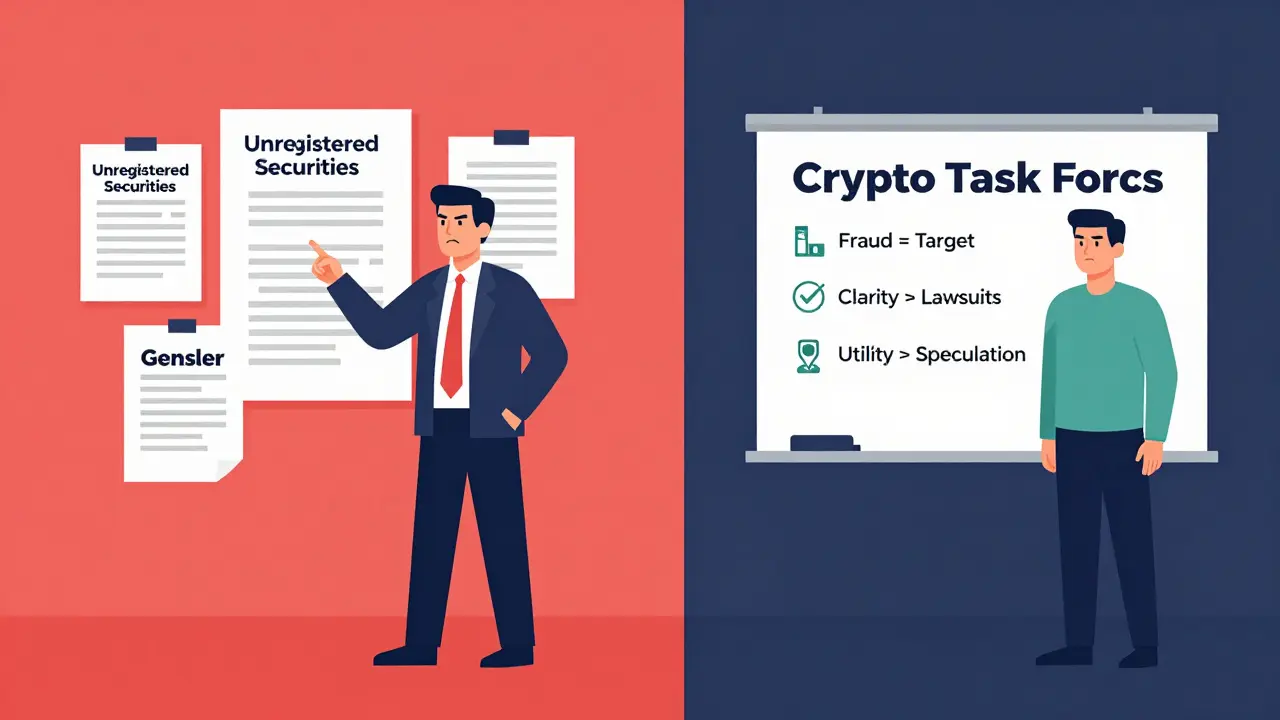
Gary Gensler left the SEC on January 20, 2025. His departure didn’t just change leadership - it changed strategy. Within a day, Acting Chair Mark Uyeda announced the creation of the Crypto Task Force. Its mission? Stop relying on lawsuits to regulate crypto. Start building clear rules instead.They brought in Hester Pierce - known as “Crypto Mom” for her long-standing support of balanced regulation - to lead it. And they hired Mike Selig, a former Wall Street lawyer, as Chief Counsel. This wasn’t a minor tweak. It was a full reset. The old unit, the Crypto Assets and Cyber Unit, got replaced by the Cyber and Emerging Technologies Unit (CETU). And guess what? They cut the number of attorneys focused on crypto enforcement.
The message was loud and clear: we’re not going to sue every company that doesn’t register. We’re going to focus on fraud.
The Coinbase Case: A Turning Point
On June 11, 2025, the SEC and Coinbase filed a joint motion to dismiss the lawsuit the SEC had filed against them in 2023. Coinbase had sued the SEC first, calling their approach “regulation by enforcement.” The agency’s decision to drop the case wasn’t just a win for Coinbase. It was a win for the entire industry.Why? Because the SEC didn’t say Coinbase was innocent. They didn’t say their tokens were legal. They just said: we’re not going to fight this anymore. The new leadership decided that chasing registration violations - without clear rules - wasn’t worth the cost. Instead, they’d focus on cases where people lost real money to scams.
That’s the new standard: fraud matters. Technical violations? Not so much.
What’s Still Being Targeted
The crackdown didn’t stop. It just got smarter. In April 2025, the SEC charged Ramil and PGI Global with a $198 million fraud scheme involving crypto and forex. In May, they went after Unicoin Inc. for misleading investors. These weren’t registration cases. These were lies, fake promises, stolen funds - the kind of stuff that hurts real people.They also dropped three lawsuits against firms accused of being unregistered “dealers.” Those cases were based on technical interpretations of what counts as a dealer under securities law. The new team saw them as overreach. So they walked away.
What This Means for Crypto Businesses
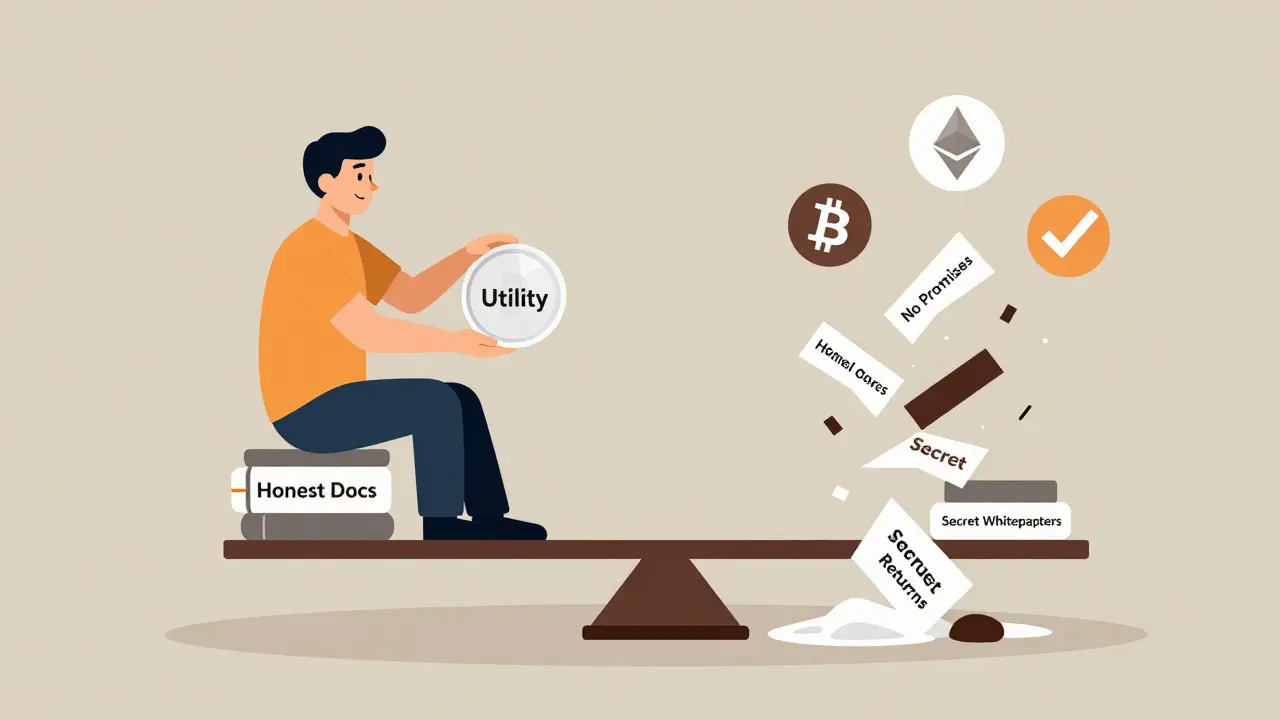
If you’re running a crypto platform, exchange, or token project, here’s what you need to know now:- Don’t lie to investors. That’s still the fastest way to get sued.
- Don’t assume your token is safe just because it’s not Bitcoin or Ethereum. The SEC still thinks most are securities.
- Registration isn’t off the table - but it’s no longer the main threat. Fraud is.
- Keep records. If you’re selling tokens, document how you’re marketing them. If you’re calling it a “utility,” make sure your users can actually use it - not just speculate on its price.
The old model - raise money through token sales, promise returns, then hope the SEC doesn’t notice - is dead. The new model? Build something useful, be honest about risks, and follow basic financial disclosure rules. You don’t need a lawyer to tell you that. You just need common sense.
Where the Industry Stands Today
The crypto market cap hit $1.97 trillion in October 2025. Spot Bitcoin ETFs are live. Institutions are pouring in. But the regulatory cloud hasn’t fully cleared. The Crypto Task Force is still working on clearer guidelines for token classification and exchange registration. No final rules yet. But the direction is clear: less punishment, more clarity.Some experts warn that the SEC’s past aggression pushed crypto companies overseas - to places like Singapore, Switzerland, and the UAE. That’s a real loss for U.S. innovation. Others say the crackdown was necessary to clean up a wild west market full of scams.
The truth? Both are right. The SEC didn’t create the chaos. But their tactics made it worse. Now, they’re trying to fix it - not with lawsuits, but with rules.
What Comes Next
By the end of 2025, expect to see:- More guidance on what makes a token a security vs. a commodity
- Clearer paths for exchanges to register legally
- Fewer surprise lawsuits - more public comment periods
- Still no federal crypto law. But the SEC is trying to fill the gap - carefully
If you’re building in crypto, don’t wait for Congress. Start preparing now. Document everything. Talk to legal counsel. Don’t promise returns. And never, ever lie to your users. The days of flying under the radar are over. But the days of being hunted for every technical mistake? Those are over too.
Why did the SEC fine crypto companies $4.68 billion in 2024?
The $4.68 billion fine was mostly from one case: Terraform Labs and Do Kwon for selling unregistered securities and misleading investors about TerraUSD (UST). The collapse of UST in 2022 wiped out $40 billion in value. The SEC’s 2024 penalty was the largest ever against a crypto entity and made up most of the year’s total. Other cases contributed, but this single penalty drove the record number.
Did the SEC bring more cases in 2024 than before?
No. The SEC brought 33 enforcement actions in 2024 - a 30% drop from 47 in 2023. Even though fines skyrocketed, they focused on fewer, bigger cases. Most of the penalties came from major companies like Terraform Labs, not small startups. This signaled a shift from volume to impact.
Is the SEC still cracking down on crypto in 2025?
Yes, but differently. After Gary Gensler left in January 2025, the SEC shifted focus. Instead of targeting registration violations, they now prioritize fraud and investor harm. They dismissed the case against Coinbase, dropped three “dealer” lawsuits, and cut enforcement staff. The goal is clearer rules, not more lawsuits.
What’s the difference between the Gensler and Uyeda approaches to crypto enforcement?
Gensler used enforcement as regulation - suing companies for not registering tokens, even without clear rules. Uyeda’s team says that’s backward. They now focus on actual fraud, not technicalities. They’re building the Crypto Task Force to create rules before punishing, not punishing first and asking questions later.
Should crypto companies still worry about SEC action?
Absolutely - but only if you’re lying, hiding risks, or promising returns like a stock. If you’re transparent, don’t mislead users, and avoid calling your token an investment, you’re much safer. The SEC isn’t chasing every unregistered token anymore. They’re chasing fraudsters. If you’re not one, you don’t need to panic.
What should crypto founders do now to stay compliant?
Stop promising profits. Document how your token is used - not just traded. If you’re selling to U.S. investors, get legal advice on whether your token could be seen as a security. Keep records of marketing materials. Don’t hide behind vague whitepapers. Be honest. The SEC won’t punish you for being new - but they will punish you for being deceptive.
Kathleen Sudborough
10 12 25 / 21:46 PMHonestly? This feels like the SEC finally grew a spine. I used to think they were just picking on crypto for being weird. But now? Seeing them go after real fraud instead of technicalities? That’s the kind of leadership we needed. No more scare tactics. Just clean up the garbage.
And thank god for Hester Pierce. She’s the only one who ever talked sense in those hearings. Finally, someone who gets that innovation needs space to breathe-not a courtroom.
Vidhi Kotak
11 12 25 / 20:28 PMBig fines don’t fix broken systems. But shifting focus from registration to fraud? That’s a real win. India’s crypto scene is watching this closely-we’ve been stuck in regulatory limbo for years. Hope this sets a global tone.
amar zeid
13 12 25 / 00:51 AMThe shift from enforcement to rulemaking is not merely procedural-it represents a fundamental epistemological realignment in regulatory philosophy. The Gensler era operated under a model of punitive epistemic closure; Uyeda’s task force, by contrast, embraces procedural openness as a precondition for normative legitimacy. This is not policy change. It is epistemic evolution.
Alex Warren
14 12 25 / 07:12 AMThey dropped the Coinbase case because they knew they’d lose. The Howey Test doesn’t fit crypto tokens. Period. No amount of legalese changes that. Now they’re pretending it was a strategic pivot. It wasn’t. It was surrender.
Ian Norton
15 12 25 / 23:54 PMSo now the SEC is just going after scams? That’s it? What about the 500 other projects that lied through their teeth but didn’t get caught? This isn’t reform. It’s selective prosecution with a PR makeover. They still don’t get it. You can’t regulate a decentralized network with lawsuits.
Sue Gallaher
16 12 25 / 12:02 PMUSA first. If you’re building crypto here you better follow our rules. No more running to Singapore because you don’t like SEC. We built this system. We own the market. If you want to play, you play by our rules. No whining. No excuses. Just comply.
Jeremy Eugene
17 12 25 / 08:45 AMThe reduction in enforcement actions combined with increased focus on fraud suggests a maturation of regulatory intent. This is not retreat-it is recalibration. The agency is prioritizing outcomes over procedural compliance, which aligns with broader trends in administrative law toward efficiency and proportionality.
Nicholas Ethan
17 12 25 / 19:48 PMLet’s be clear-this is a tactical retreat disguised as reform. The SEC didn’t change their mind. They realized they couldn’t win in court. So now they’re pretending to be reasonable. Don’t be fooled. The same people are still in charge. The same playbook is just wrapped in nicer packaging.
Rakesh Bhamu
18 12 25 / 07:42 AMFinally. I’ve been saying this for years: if you’re not stealing money or lying to people, you shouldn’t be scared of the SEC. The real villains are the ones promising 10x returns in a week. The rest of us just want to build stuff. Let’s stop treating every token sale like a Ponzi scheme.
Hari Sarasan
18 12 25 / 09:55 AMRegulatory arbitrage is now the new norm. The SEC’s capitulation has created a vacuum that will be filled by offshore jurisdictions with zero KYC, zero AML, zero accountability. This isn’t progress-it’s regulatory suicide. The U.S. is handing the future of finance to Singapore and Dubai while our innovators flee. What a tragic misstep.
Stanley Machuki
18 12 25 / 19:18 PMStop suing. Start explaining. That’s all we needed. Now let’s get back to building.
Lynne Kuper
20 12 25 / 08:06 AMOh wow the SEC just became reasonable? 🤡 Next they’ll be handing out free coffee at CoinDesk. Nah. They’re just waiting for the next big bubble to pop so they can swoop in again. Don’t be fooled. This is just season 2 of the same show.
Lloyd Cooke
21 12 25 / 06:01 AMThe regulatory pendulum swings, but the soul of markets remains untouched. The SEC’s shift from punitive justice to procedural clarity mirrors humanity’s own evolution-from fear of the unknown to the quiet courage of understanding. Yet the market, ever untethered, dances on. Will we, as stewards of capital, dare to listen? Or will we still seek to cage the wind?
Kurt Chambers
22 12 25 / 09:48 AMUSA rules. Crypto’s a foreign threat. Gensler was a hero. Now this new team is just giving in to crypto bros. We should’ve banned this whole thing. Now they’re gonna run offshore and laugh at us while we lose trillions. Idiots.
Kelly Burn
23 12 25 / 03:23 AMYESSSS this is the energy we needed 🙌✨ The SEC finally got it-fraud bad, innovation good 💫 Now if only they’d stop calling everything a security 😅 #CryptoMomForPresident 🚀