The Shield DAO SLD airdrop wasn’t just another token giveaway. In 2021, when DeFi was exploding and every project was throwing tokens at users, Shield stood out by rewarding real contributors-not just people who signed up for a newsletter or joined a Discord. This was a targeted, technical airdrop for early testers, security researchers, and community builders who helped shape a complex derivatives protocol before it even launched. If you were part of it, you got SLD tokens. If you weren’t, you missed a rare chance to back a project that was trying to fix one of DeFi’s biggest pain points: the mess of rolling options positions.
What Was Shield DAO?
Shield DAO, originally called ShieldEX, was building something unusual: a decentralized platform for perpetual options trading. Most DeFi projects back then focused on lending, swapping, or yield farming. Shield wanted to bring institutional-style derivatives to retail traders-without the need for intermediaries, margin calls, or constant position management. Their solution? Perpetual Options. These weren’t your standard 7-day or 30-day options. They were long-term, on-chain options that didn’t expire, didn’t need rolling, and didn’t require constant monitoring. It was a bold idea, and it needed a strong community to test it.How the SLD Airdrop Actually Worked
The airdrop ran from August 5 to September 12, 2021. It wasn’t open to everyone. You had to have done something meaningful. Eligibility wasn’t based on wallet size or how many tweets you posted. It was based on real contributions:- Participating in Shield’s Kovan or Binance Smart Chain (BSC) testnets
- Submitting applications for Shield’s Initial Token Offering (ITO)
- Finding and reporting bugs in their early code through their Bug Bounty Programs
- Engaging with their Gleam campaigns (social tasks, referrals, content creation)
The Claiming Process Wasn’t Simple
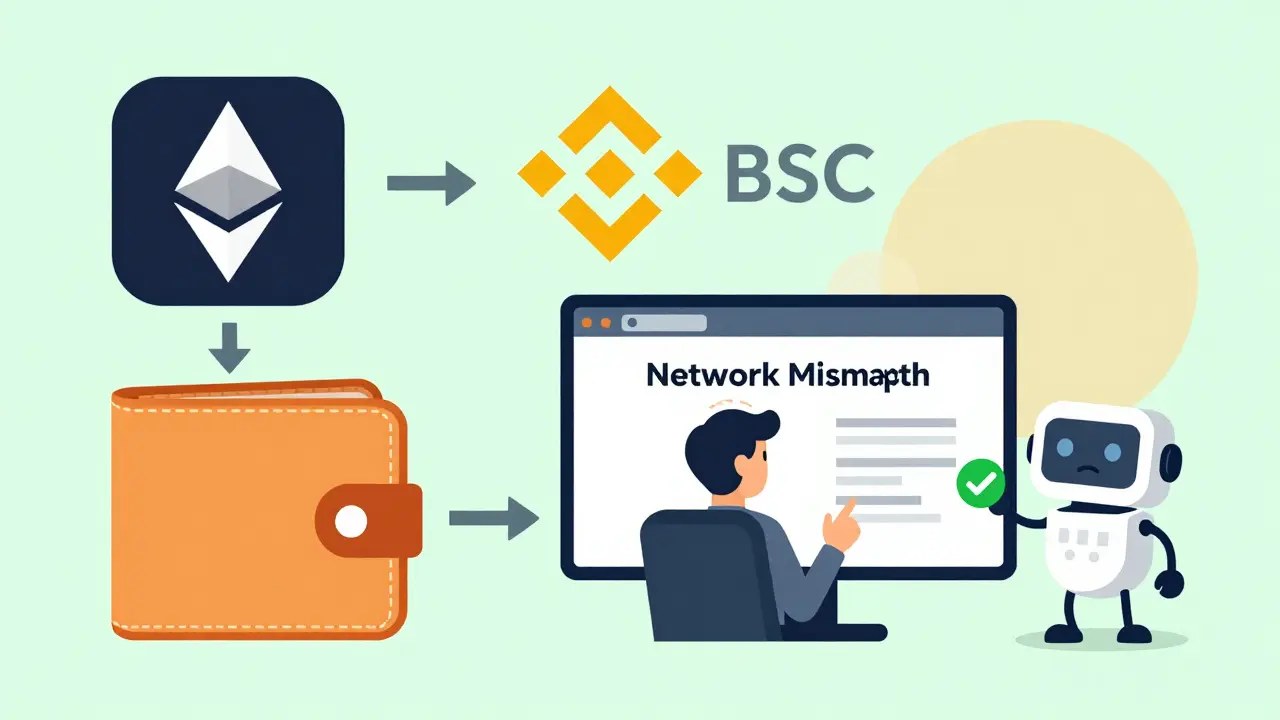
Claiming your SLD tokens wasn’t a one-click job. You had to:- Have a MetaMask wallet
- Switch your network from Ethereum to Binance Smart Chain
- Visit the official Shield airdrop claim page
- Connect your wallet and verify eligibility
What Happened to the Unclaimed Tokens?
After September 12, 2021, any unclaimed SLD tokens didn’t vanish. They were moved into a community pool. This wasn’t a trick to inflate supply or fund the team. It was a transparent decision to reinvest in the ecosystem. Those tokens were later used for future incentives, liquidity mining, or governance rewards-keeping the community’s interest alive even after the initial drop.Why This Airdrop Was Different
Most airdrops in 2021 were fishing expeditions. They gave tokens to anyone with a wallet and a Twitter account. Shield’s approach was the opposite. They treated their community like co-developers. Bug bounty participants got rewarded for finding critical flaws. Testnet users got rewarded for stressing the system under real conditions. This wasn’t marketing. It was engineering. Compare this to newer models like Skyren DAO, which runs as a multi-audit, AI-driven airdrop farming platform with 216% APY. Skyren is about accumulation. Shield was about creation. One is a tool for passive gain. The other was a tool for building something new.Tokenomics: The SLD Token Today
The SLD token had a maximum supply of 1 billion. But here’s the odd part: as of 2025, CoinMarketCap lists both circulating and total supply as 0 SLD. That doesn’t mean the token is dead. It means the data is outdated-or worse, the tokenomics changed. The contract address (0x1ef6...95a084) still exists on Ethereum, but no trading pairs are active. No major DEX lists it. No wallets show balances. The project’s original focus on derivatives infrastructure seems to have faded.
Confusion with Shield Protocol
There’s another project now called Shield Protocol. It’s not related to the 2021 airdrop. This newer entity is building a blockchain-based 2FA system that replaces centralized servers like Google or Amazon. It’s launching NFT mystery boxes, SWAG gaming platforms, and even airdrops to centralized exchanges. Same name. Different team. Different tech. Different goals. Many people mix them up. If you’re searching for SLD tokens today and you see NFTs or 2FA tools, you’re looking at the wrong Shield. The original Shield DAO is a historical artifact now-a quiet example of how DeFi used to work before everything became a yield farm.What You Can Learn From This Airdrop
Even though you can’t claim SLD tokens anymore, the lesson is still valuable:- Real contributions matter more than social following
- Testnets and bug bounties are gateways to early access
- Not all airdrops are equal-some are designed to build, not just attract
- Always check the network before claiming
- Dead tokens don’t mean dead projects-sometimes, the project just evolved
Is There a New Shield Airdrop Coming?
As of December 2025, there’s no indication of a new SLD airdrop from the original Shield DAO team. The project’s GitHub activity slowed after 2022, and the website no longer promotes the derivatives protocol. The newer Shield Protocol (2FA platform) is active, but it’s a completely different entity with no connection to SLD tokens. If you’re hoping for a new drop, keep an eye on the original Shield DAO’s social channels-but be cautious. Scammers often reuse old names to lure in people who remember the 2021 event. Verify everything. Check contract addresses. Don’t trust links from Twitter DMs.Can I still claim my SLD tokens from the 2021 Shield DAO airdrop?
No. The claiming period ended on September 12, 2021. Any unclaimed tokens were redistributed to the community pool. There is no active claim page, and the original interface has been taken offline. If someone claims they can help you claim SLD now, it’s likely a scam.
What was the total number of SLD tokens distributed in the airdrop?
A total of 4,085,754 SLD tokens were distributed to eligible participants during the airdrop period from August 5 to September 12, 2021. This represented a small but meaningful portion of the 1 billion maximum supply.
Why did I need to switch to Binance Smart Chain to claim SLD?
Shield used Binance Smart Chain (BSC) for the claiming interface to reduce gas fees and improve user experience. While the protocol itself was built on Ethereum, the claim portal ran on BSC to make the process faster and cheaper for users. This caused confusion, but it was a deliberate design choice to lower barriers to entry.
Is the SLD token still tradable today?
No. As of 2025, SLD is not listed on any major decentralized or centralized exchange. Trading pairs are nonexistent, and no wallets show active balances. The token contract still exists on Ethereum, but it’s inactive. The original Shield DAO project has largely ceased development.
How is the new Shield Protocol different from the original Shield DAO?
The original Shield DAO (2021) was a derivatives protocol focused on perpetual options trading. The new Shield Protocol is a blockchain-based 2FA security platform that replaces centralized servers like Google Authenticator. They share a name, but they have different teams, different tech, different tokens, and no shared code or history. Confusing them is common but incorrect.
What should I do if I think I qualified for the SLD airdrop but didn’t claim it?
Unfortunately, there’s no way to recover unclaimed SLD tokens after the September 2021 deadline. The project’s team moved all unclaimed tokens into a community pool for future use. Your best move now is to follow the original team’s social channels for any future projects-but don’t expect a refund or revival of SLD.
Rebecca F
21 12 25 / 23:10 PMThe entire airdrop was a masterclass in how to reward real work instead of just chasing hype. Most projects gave tokens to anyone who could copy-paste a tweet. Shield actually asked you to build something. That’s rare.
Ashley Lewis
23 12 25 / 00:54 AMIt was never about the tokens. It was about the ethos. The project understood that decentralized systems require contributors, not consumers. Most of today’s DeFi has forgotten this entirely.
vaibhav pushilkar
23 12 25 / 21:31 PMTestnets are where the real innovation happens. If you’re not testing beta protocols, you’re just speculating. Shield rewarded builders, not gamblers.
SHEFFIN ANTONY
24 12 25 / 13:26 PMLet’s be real-this whole ‘real contributors’ narrative is just PR. Everyone knows the team gave tokens to their friends and early investors. The bug bounties? Probably just paid off their dev buddies. Don’t fall for the myth.
Vyas Koduvayur
26 12 25 / 04:25 AMPeople keep talking about Shield like it was some noble experiment, but let’s not ignore the fact that the tokenomics were always shaky. 1 billion supply with zero liquidity? That’s not a community project-that’s a pre-sale trap disguised as decentralization. And the BSC claim portal? Classic move to obscure the real chain. They knew most users wouldn’t switch networks, and that’s exactly how they filtered out the weak hands. The unclaimed tokens going into a ‘community pool’? That’s just a euphemism for the team holding the bag until they decide to dump it later. You think they didn’t have a plan? Of course they did. This wasn’t altruism. It was a carefully orchestrated exit strategy dressed up as open-source idealism. And now? The contract still exists but no one’s trading it. That’s not evolution-that’s abandonment wrapped in a nice blog post.
Lloyd Yang
27 12 25 / 18:42 PMI remember when I first joined Shield’s testnet. I spent weeks just trying to understand their perpetual options interface-it felt like learning a new language. I found a bug where the collateral multiplier would overflow under high volatility, and I submitted it with a full reproduction script. A week later, I got a DM from the lead dev thanking me. No fanfare, no tweet, just a quiet ‘you helped make this safer.’ That’s when I knew this wasn’t another coinflip. They weren’t building for the next bull run-they were building for the next decade. Even if the token’s dead now, the idea lives on in every DeFi protocol that’s trying to simplify derivatives. Shield didn’t just give out tokens. They gave out a philosophy: if you want to change finance, get your hands dirty. And honestly? That’s more valuable than any airdrop ever could be.
Craig Fraser
27 12 25 / 22:26 PMIt’s ironic how people romanticize this as ‘authentic DeFi.’ The truth is, the team used technical complexity as a barrier to entry. If you didn’t know how to switch networks, you were excluded. That’s not decentralization. That’s gatekeeping with a whitepaper.
Sybille Wernheim
29 12 25 / 10:47 AMLook, I didn’t qualify for the airdrop, but I still admire what they did. It’s a reminder that real innovation doesn’t need hype. Sometimes the quiet builders are the ones who actually move the needle.
Cathy Bounchareune
29 12 25 / 14:48 PMIt’s fascinating how the name ‘Shield’ got hijacked. In India, we have this saying: ‘The same name, different soul.’ The original Shield was about protecting traders from bad derivatives. The new one? It’s selling NFT mystery boxes. One was a shield. The other is a carnival booth. Same word. Opposite worlds.
Jordan Renaud
31 12 25 / 01:25 AMThere’s something beautiful about projects that fade quietly instead of screaming for attention. Shield didn’t need to go viral. It just needed to work. And for a while, it did.
Luke Steven
31 12 25 / 07:28 AMStill remember the first time I tried to claim SLD. Thought I was on Ethereum, kept getting ‘invalid address.’ Took me three hours to realize I had to switch to BSC. Felt like a total noob. But that’s the thing-Shield didn’t dumb it down. It made you learn. And honestly? That’s the only kind of airdrop worth having.