
When a smart contract goes live on the blockchain, it can't be changed. No patches. No updates. No undo button. One line of flawed code could let a hacker drain millions in user funds. That’s why smart contract bug bounty programs exist - not as a backup, but as the first line of defense.
Why Smart Contract Bug Bounties Are Non-Negotiable
Imagine building a vault with a lock no one can pick. Then, you realize the lock was never tested. That’s what happened before bug bounties became standard. In 2022, the Cheese Wizards exploit stole $150,000 because the same vulnerability was paid out twice. Why? No one was looking. No one was incentivized to find it. Today, over $25 billion in crypto assets are protected by bug bounty programs. Projects like Aave, Curve, and Uniswap pay researchers to find flaws before attackers do. These aren’t optional. They’re essential. Why? Because audits alone aren’t enough. Audits check code once. Bug bounties keep checking it - constantly - with hundreds of eyes. The math is simple: if a vulnerability threatens $200 million in user funds, paying a $2 million bounty is a win. That’s the scaling model used by ImmuneFi, where rewards equal 10% of funds at risk. It’s not charity. It’s economics.How Bug Bounty Programs Actually Work
It’s not just “find a bug, get cash.” There’s a system. First, a project sets up a program on a platform like ImmuneFi, Sherlock.xyz, or HackerOne. They define what’s in-scope: usually the core smart contracts that handle user funds. Out-of-scope? Things like front-end bugs or theoretical attacks with no real exploit path. Yearn Finance, for example, only rewards vulnerabilities that can directly steal or lock user assets. Researchers then submit reports. Each one must include:- A clear description of the vulnerability
- Proof-of-concept code that shows the exploit working
- Steps to reproduce it
Platform Showdown: ImmuneFi vs. Sherlock vs. HackerOne
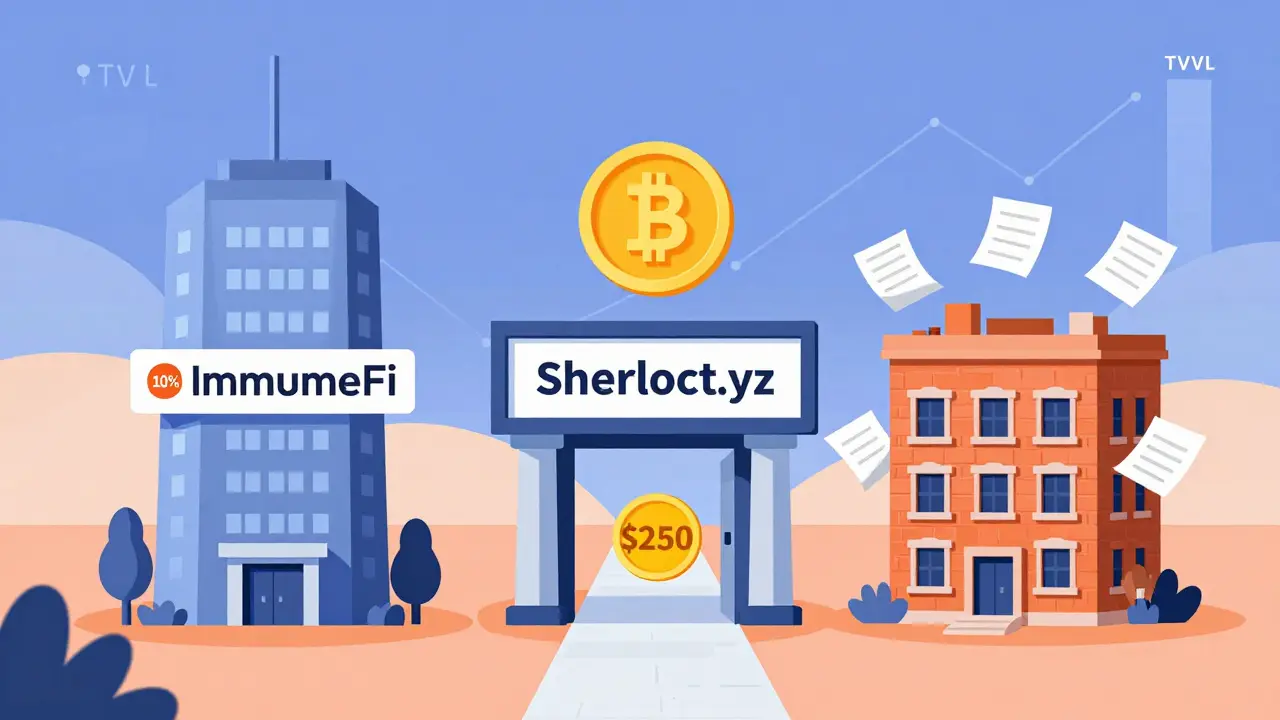
Not all bug bounty platforms are the same. Here’s how the top three stack up:| Platform | Market Share | Max Bounty | Key Feature | Submission Filter |
|---|---|---|---|---|
| ImmuneFi | 78% | $10 million | Scaling model: 10% of funds at risk | None - open submissions |
| Sherlock.xyz | 12% | $5 million | $250 staking per submission | $250 deposit (refunded if valid) |
| HackerOne | 8% | $250,000 | General security platform | None - spam common |
What Makes a Program Succeed - Or Fail
Some programs pay millions. Others pay nothing. Why? Successful ones have three things:- Clear scope: Uniswap improved valid submissions from 32% to 67% just by adding examples of what counts and what doesn’t. No guesswork.
- Fast triage: Projects with a full-time triager respond in under 72 hours. Without one? Average wait time is 14 days. Researchers move on.
- Good communication: Compound runs a Discord channel for researchers. Weekly updates. No radio silence. That’s why they’ve paid out $1.8 million since 2020.
What Bug Bounties Can’t Do
Let’s be clear: bug bounties are powerful, but they’re not magic. They can’t replace audits. Audits systematically test every line of code. Bug bounties rely on what researchers happen to find. One researcher might miss a flaw another finds. That’s why Consensys Diligence says: “Bug bounties are not a silver bullet.” They also can’t fix bad code design. If a contract has a flawed architecture - say, a centralized admin key with no timelock - no amount of bounties will stop a hack. The flaw is structural. And they don’t guarantee coverage. If a contract has 10,000 lines of code, and only 200 researchers look at it, there are still blind spots. That’s why top projects combine audits, automated scanners, and bounties - together.
The Future: Continuous, Automated, and Integrated
Bug bounties are evolving fast. Sherlock just launched integration between their audit platform and bounty programs. When code changes, the scope updates automatically. No more confusion. No more outdated rules. 62 protocols adopted it in three months. ImmuneFi’s 2024 roadmap includes real-time bounty calculations. If your protocol’s TVL jumps from $50M to $150M, your max bounty auto-adjusts. No manual updates. No missed incentives. By 2025, Gartner predicts 90% of major DeFi protocols will run continuous bounty programs. That’s up from 65% in 2023. Critical bounties? They’ll hit $500,000 on average. Why? Because the cost of a single exploit still dwarfs the cost of prevention. In 2023, the average DeFi exploit cost $30 million. A $500,000 bounty? That’s a bargain.Final Takeaway
Smart contract bug bounty programs aren’t a nice-to-have. They’re a survival tool. For every $1 spent on bounties, projects save $100 in potential losses. They turn hackers into protectors. They make security proactive, not reactive. If you’re building or investing in a DeFi protocol, ask: Do you have a bug bounty program? If not, you’re gambling. If you do, ask: Is it well-run? Clear scope. Fast triage. Real rewards. That’s the standard now.Because in blockchain, the only thing more dangerous than a hacker is a project that thinks it’s safe.
How much can you earn from a smart contract bug bounty?
Earnings vary by severity. Critical vulnerabilities - those that let attackers steal funds - can pay $15,000 to over $2 million. Some top programs, like ImmuneFi’s, have paid up to $10 million for the most severe exploits. High-severity issues typically pay $5,000-$100,000. Medium-severity bugs earn $1,000-$5,000. Low-severity findings may only get recognition. Top researchers on platforms like Sherlock and ImmuneFi report annual earnings between $100,000 and $500,000.
Do all blockchain projects run bug bounty programs?
No. Projects with over $100 million in total value locked (TVL) are 87% more likely to run continuous programs than smaller ones. Many early-stage or low-liquidity protocols skip them due to cost or lack of awareness. But as exploit losses rise, even smaller projects are starting to adopt them. Platforms like Sherlock.xyz now let anyone launch a program in under five minutes.
Can you get paid in fiat through a bug bounty program?
Some platforms like HackerOne allow fiat payouts, but most Web3-specific platforms - including ImmuneFi and Sherlock.xyz - pay exclusively in cryptocurrency (ETH, USDC, DAI). This is intentional: it aligns incentives with the blockchain ecosystem. Researchers are usually crypto-native, and projects avoid fiat conversion fees and delays. A few programs offer hybrid options, but crypto is the standard.
What’s the difference between a bug bounty and a security audit?
A security audit is a one-time, manual review by a team of experts who examine every line of code. It’s systematic and comprehensive. A bug bounty is ongoing and crowdsourced - hundreds of independent researchers look for flaws over time. Audits find known patterns. Bounties find novel, unexpected exploits. The best projects use both: an audit before launch, then a bounty program for continuous protection.
Are bug bounty programs safe for researchers?
Yes, if they follow responsible disclosure rules. Legitimate programs require researchers to report vulnerabilities privately first, not publicly. They also provide legal protection - many include immunity clauses that prevent lawsuits for good-faith testing. Platforms like ImmuneFi and Sherlock have legal teams that vet submissions and ensure researchers aren’t penalized. But researchers should never test live contracts without explicit permission - that crosses into illegal territory.
JOHN NGEH
24 03 26 / 00:24 AMReally appreciate how this breaks down the real math behind bounties. Paying $2M to save $200M isn’t charity - it’s smart business. The fact that projects like ImmuneFi scale rewards with TVL is genius. More teams need to get this.
Also, the part about Sherlock’s $250 staking fee? That’s the kind of friction that actually improves quality. No more spammy reports.
Jenni Moss
24 03 26 / 01:40 AMOMG YES. This is the kind of post that makes me believe in Web3 again 🥹
So many people think security is just ‘audit and forget’ - but this? This is living, breathing protection. Researchers are the unsung heroes here. Give them flowers, give them ETH, give them hugs.
vu phung
24 03 26 / 04:55 AMLove the ImmuneFi vs Sherlock breakdown. The staking model is such a clean solution to the noise problem. I’ve submitted 3 reports on HackerOne - 2 were duplicates, 1 was rejected for ‘insufficient detail.’ Sherlock’s filter would’ve saved me 3 hours.
Also, crypto-only payouts? 100% agree. Fiat delays kill momentum. Why make researchers cash out when they’re already in the ecosystem?
Lorna Gornik
25 03 26 / 07:26 AMSo happy to see Sherlock getting love 🙌
My buddy got $80k last month for a reentrancy he found in a DAO treasury. He didn’t even know the codebase that well - just read it like a novel. That’s the power of crowdsourcing. Also, emoji for everything: 🔥💰👀
Joshua T Berglan
26 03 26 / 09:46 AMTHIS. This is why I got into crypto. Not for the moon, but for the mission.
Every time someone finds a bug before a hacker does, we’re not just saving money - we’re saving trust. And trust is the only thing that keeps this whole thing from collapsing.
Shoutout to every researcher who’s spent 3 AM debugging someone else’s code. You’re the real MVPs. 🫡
Kevin Da silva
27 03 26 / 15:39 PMImmuneFi dominates because it’s built for crypto. HackerOne feels like a relic. Why would a DeFi project use a platform that doesn’t even auto-pay in ETH?
Also - no triage = no submissions. Simple.
Andrew Midwood
27 03 26 / 15:53 PMShoutout to the 10k line contract with 200 researchers. That’s still a blind spot. I’ve seen bugs hide in edge cases nobody thought to test - like overflow in a fee calculation that only triggers during a 3am liquidity event.
Bottom line: combine audits, scanners, AND bounties. No silver bullets. Just layers.
Kayla Thompson
27 03 26 / 18:02 PMLet’s be real - most of these bounty programs are performative. They look good on a website but have zero triage. I submitted a critical bug last year. Took 17 days. Got a ‘thanks for your submission’ email. Then I saw the same exploit get drained 3 weeks later.
It’s not about the bounty. It’s about respect. And most projects don’t give it.
Brijendra Kumar
27 03 26 / 21:05 PMStop pretending bug bounties are enough. You think a $2M payout fixes a flawed architecture? No. It just pays someone to point out your stupid admin key with no timelock. The real fix? Don’t build broken systems.
Stop outsourcing security. Start building responsibly. Or don’t launch at all.
kavya barikar
28 03 26 / 23:37 PMSecurity cannot be an afterthought. The economics here are clear: prevention is cheaper than recovery. But the human element - trust, communication, responsiveness - is what makes programs sustainable.
It’s not just about code. It’s about culture.
Andrea Zaszczynski
29 03 26 / 07:57 AMWait so you’re saying if I find a bug in a project with $50M TVL and they pay me $5M, I’m technically helping them save money? That’s wild.
Also why do I feel like I’m reading a venture capitalist’s bedtime story? Like… sure, but what about the 90% of projects that can’t afford this? Are they just doomed?
Cordany Harper
29 03 26 / 17:23 PMAs someone who’s been on both sides - researcher and dev - this is spot on.
One thing nobody talks about: the emotional toll. You spend weeks on a report. Submit it. Silence. Then you see the project get hacked. That’s not just frustrating. It’s personal.
Projects that reply fast? They get loyalty. Researchers become long-term allies. That’s the real win.
DarShawn Owens
31 03 26 / 11:44 AMThis is why I love this space. It’s not just tech - it’s community. People risking their time to protect strangers’ money. No corporate HR. No NDA hell. Just pure, messy, brilliant collaboration.
And yeah, Sherlock’s staking fee? Genius. It’s like a filter for the kind of people who actually care.
Andy Green
31 03 26 / 13:53 PM90% of DeFi protocols running continuous bounties by 2025? Please. Most are still running on Solidity v0.6 with no tests. The ‘bounty’ is just a PR stunt. Real security? You need formal verification. Not some guy on Discord finding a reentrancy because he was bored.
Stop romanticizing bug bounties. They’re a bandaid on a gunshot wound.