Cryptocurrency Difficulty: What It Is and Why It Matters for Miners and Investors
When you hear cryptocurrency difficulty, the measure of how hard it is to find a valid block hash in a blockchain network. It’s not just a number—it’s the heartbeat of proof-of-work systems like Bitcoin. This metric adjusts automatically to keep block times steady, no matter how many miners join or leave the network. Also known as mining difficulty, it’s what keeps the system honest, secure, and predictable.
Every time a new block is added, the network checks how fast blocks have been found over the last 2,016 blocks (about two weeks for Bitcoin). If they came in too quickly, difficulty goes up. Too slow? It drops. This isn’t arbitrary—it’s coded into the protocol to maintain a steady pace. For miners, this means your rig might earn less tomorrow than today, not because the price changed, but because the game got harder. For investors, it signals network health: rising difficulty often means more miners believe in the coin’s future. Falling difficulty? That’s a red flag. It usually means miners are quitting because it’s no longer profitable.
Bitcoin’s difficulty, the metric that scales mining effort to maintain 10-minute block intervals. It’s the most tracked version of this concept, but other coins like Litecoin and Bitcoin Cash use similar systems. The same logic applies: more competition = higher difficulty = higher energy and hardware costs. This is why small miners often get squeezed out when difficulty spikes. It’s not just about having a good GPU anymore—it’s about scale, efficiency, and access to cheap power. And while some newer blockchains moved away from proof-of-work entirely, for the coins that still use it, difficulty is the invisible hand keeping everything balanced. You’ll see this play out in posts about Bitcoin mining profitability, hardware choices, and even why some mining farms shut down overnight when the price drops. It’s also why some projects, like those using AI or Layer 2 tech, avoid mining altogether—they don’t want to deal with this kind of volatility.
What you’ll find in the posts below aren’t just random articles—they’re real stories from people who’ve felt the impact of changing difficulty. From miners in Kazakhstan adjusting their rigs to investors watching Bitcoin’s difficulty curve like a stock chart, these posts show how this one number shapes decisions, profits, and even survival in crypto. You’ll see how it connects to electricity costs, hardware depreciation, and why some coins die quietly when no one can afford to mine them anymore. This isn’t theory. It’s the daily reality for thousands.
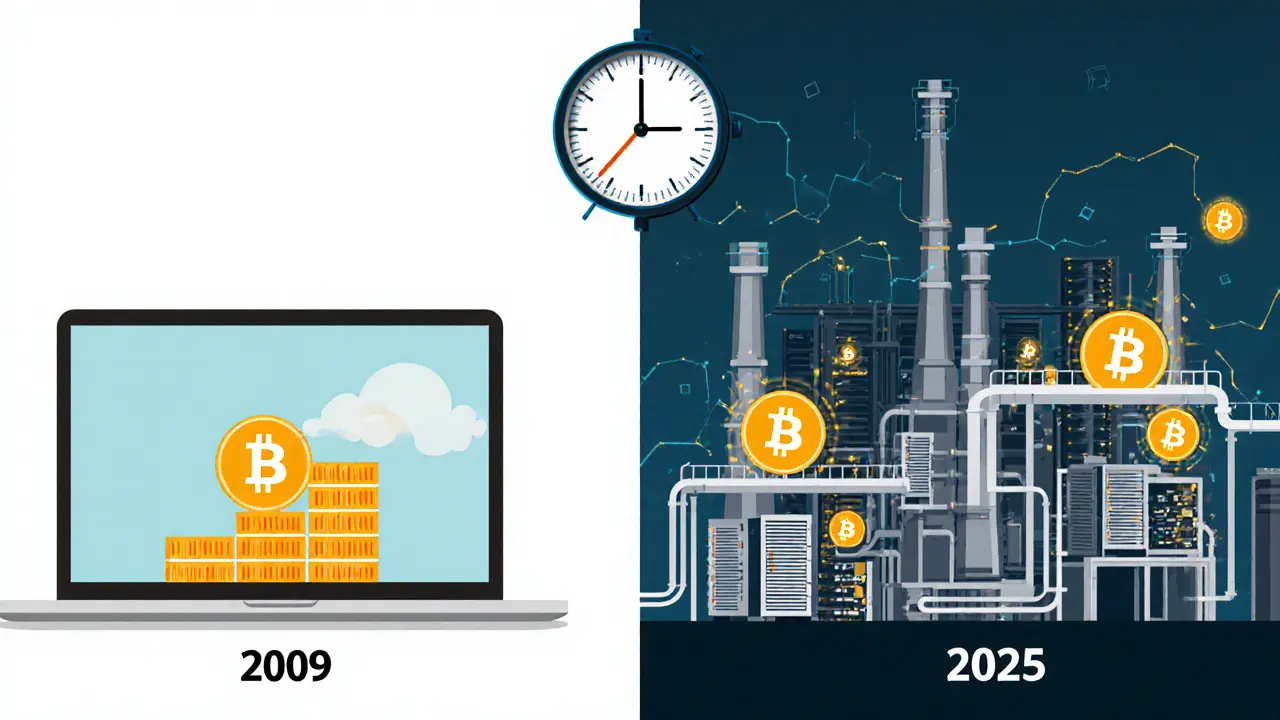
How Mining Difficulty Is Calculated in Bitcoin and Why It Matters
Bitcoin's mining difficulty adjusts every two weeks to keep block times at 10 minutes, no matter how much computing power joins the network. Understand how it works, why it matters for security and profitability, and what it means for miners today.
Details +