Decentralized Crypto Exchange: What It Is and Which Ones Actually Work
When you trade on a decentralized crypto exchange, a platform that lets users trade cryptocurrencies directly from their own wallets without relying on a central company to hold their funds. Also known as a DEX, it removes the need for banks, brokers, or intermediaries — you’re in full control. This isn’t just a buzzword. It’s the core promise of crypto: trustless, permissionless, and open to anyone with an internet connection.
Unlike centralized exchanges like Binance or Coinbase, where your coins sit in their vaults, a decentralized crypto exchange, a platform that lets users trade cryptocurrencies directly from their own wallets without relying on a central company to hold their funds. Also known as a DEX, it removes the need for banks, brokers, or intermediaries — you’re in full control. This isn’t just a buzzword. It’s the core promise of crypto: trustless, permissionless, and open to anyone with an internet connection.
Most DEXs run on blockchains like Ethereum, BSC, or Injective. They use liquidity pools, smart contracts that hold pairs of tokens and let users swap them instantly by contributing funds to the pool instead of order books. That’s why you don’t need to wait for someone to buy or sell — the pool does the work. But not all pools are equal. Some have tiny liquidity, meaning big trades crash prices. Others, like WOOFi or Astroport, handle high volumes with low slippage because they’ve built better systems.
Using a non-custodial wallet, a wallet where only you control the private keys, so no third party can freeze or access your funds is non-negotiable. If you’re trading on a DEX, you’re signing transactions directly from MetaMask, Phantom, or similar. That means if you lose your seed phrase, your coins are gone — no customer support can help. But if you keep it safe, you own your assets completely.
There’s a reason you’ll find reviews here for Phoswap, Zenlink, and WOOFi. These aren’t random picks. They’re real DEXs with actual users, real risks, and real trade-offs. Some are fast and cheap but lack audits. Others have deep liquidity but lock your funds in complex staking contracts. Some even let you trade futures or use gasless transactions via account abstraction — a feature that’s quietly changing how new people enter DeFi.
Not every DEX is built to last. Some have $15 in daily volume. Others are tied to AI tokens with no real product. The ones that survive are the ones that solve real problems: low fees, fast swaps, cross-chain support, or simple UI. You don’t need to use every DEX. You just need to find the one that matches your style — whether you’re swapping tokens once a month or trading futures daily.
What follows isn’t a list of hype coins or empty promises. It’s a collection of honest reviews, real data, and hard truths about what works — and what doesn’t — in the world of decentralized trading. You’ll see which exchanges are worth your time, which ones are ticking time bombs, and how to avoid the traps most beginners walk straight into.
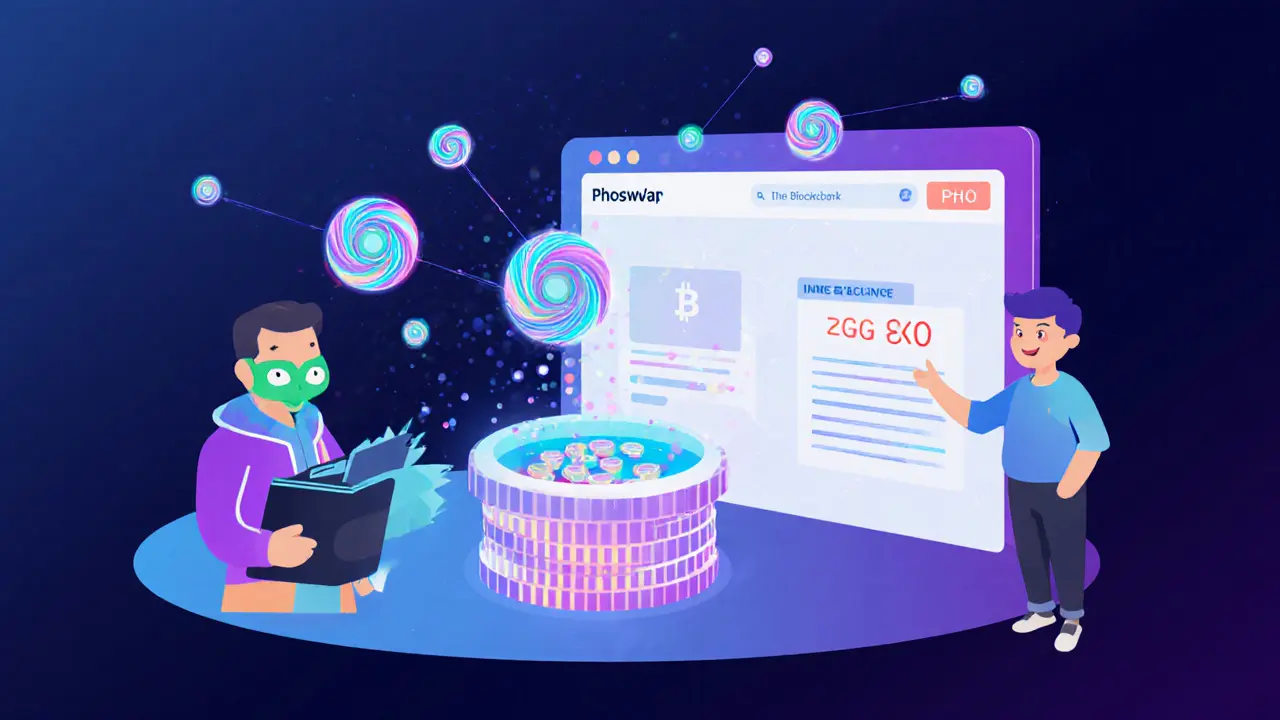
Phoswap Crypto Exchange Review: What You Need to Know About This BSC DEX
Phoswap is a decentralized exchange on Binance Smart Chain offering PHO token rewards through farming and staking. No KYC, no custody-but no audits either. Learn how it works, who it's for, and whether it's worth the risk in 2025.
Details +