Mining Difficulty: What It Is, Why It Matters, and How It Shapes Crypto Mining
When you mine Bitcoin or other proof-of-work cryptocurrencies, you’re competing against thousands of other miners to solve a complex math puzzle. That puzzle doesn’t stay the same—it gets harder or easier based on something called mining difficulty, a dynamic measure that adjusts how hard it is to find a valid block in a blockchain network. Also known as network difficulty, it’s the system’s way of keeping block times stable, no matter how many miners join or leave. If everyone suddenly starts mining with powerful new machines, the network automatically increases the difficulty to keep new blocks coming every 10 minutes (for Bitcoin). If miners shut down because it’s not profitable, difficulty drops so others can still earn rewards.
This system is built into the code of Bitcoin and many other coins like Litecoin and Bitcoin Cash. It’s not random—it’s math. Every 2,016 blocks (roughly every two weeks), Bitcoin checks how long it took to mine those blocks. If it took less than two weeks, difficulty goes up. If it took longer, it goes down. This keeps the supply of new coins predictable and protects the network from being flooded or slowed down. Without this, miners could overwhelm the system, or worse, the chain could stall if too many people quit. The hash rate, the total computing power being used to mine a cryptocurrency network directly affects mining difficulty. More hash rate means higher difficulty. Lower hash rate means easier mining. It’s a feedback loop that keeps everything balanced.
For you as a miner, mining difficulty isn’t just a technical detail—it’s your profit margin. If difficulty rises and your hardware can’t keep up, your electricity costs might eat up all your rewards. That’s why miners watch difficulty trends like weather forecasts. A sudden spike can mean it’s time to upgrade equipment or switch coins. A drop might open a window to mine profitably again. Even if you’re not mining yourself, understanding mining difficulty helps you see why Bitcoin stays secure. The higher the difficulty, the more computing power it would take to attack the network. That’s why Bitcoin is so hard to hack—it’s not because of magic. It’s because it costs billions in electricity and hardware to even try.
What you’ll find in the posts below isn’t just theory. You’ll see real examples of how mining difficulty changes affect miners in different countries, how it impacts the cost of running rigs, and why some coins become unmineable while others stay viable. You’ll also learn how new hardware, energy prices, and even government policies can shift the entire balance. This isn’t abstract math. It’s the invisible force that keeps crypto mining alive—and profitable—for those who know how to read it.
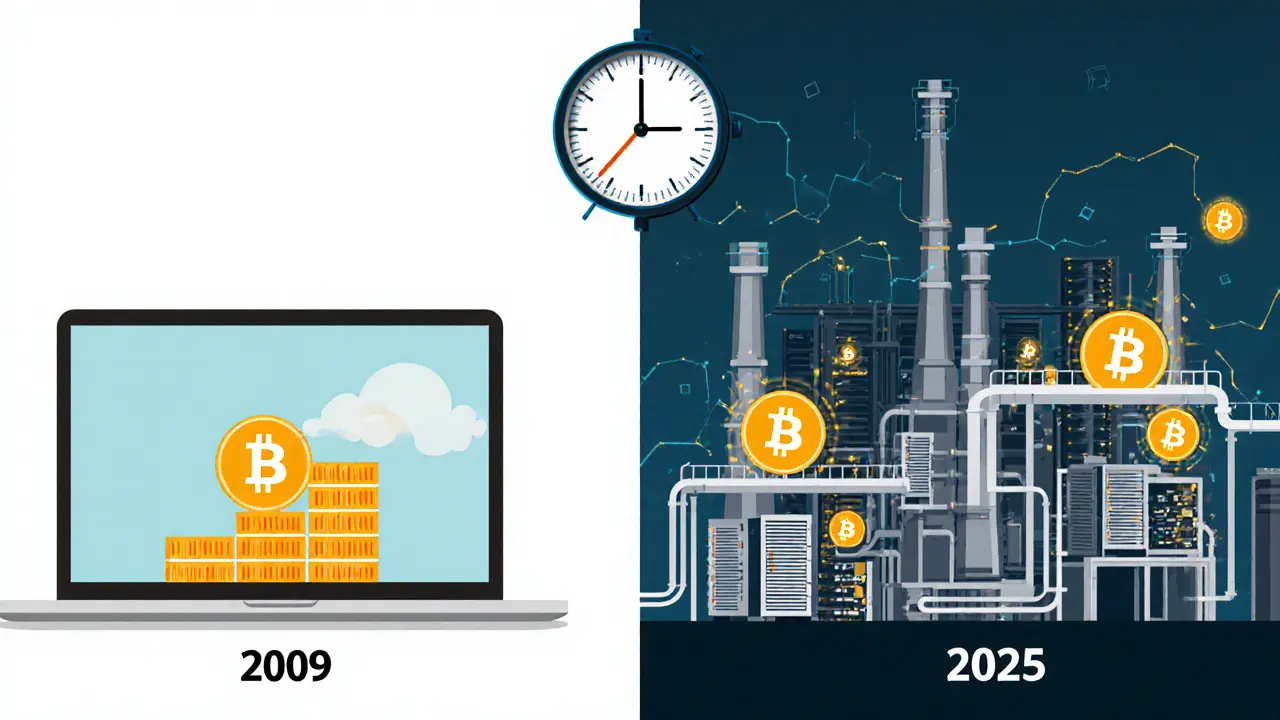
How Mining Difficulty Is Calculated in Bitcoin and Why It Matters
Bitcoin's mining difficulty adjusts every two weeks to keep block times at 10 minutes, no matter how much computing power joins the network. Understand how it works, why it matters for security and profitability, and what it means for miners today.
Details +