PullPayment Protocol: What It Is and How It Changes Crypto Payments
When you send crypto, you usually push funds out — but what if you could PullPayment Protocol instead? This is a smart contract system that lets users request money on their own terms, without needing the sender to act. It flips the script: instead of waiting for someone to send you ETH or USDC, you pull it directly from a pre-approved wallet or contract. This isn’t theory — it’s used in real DeFi apps to handle recurring payments, refunds, and automated payouts. The PullPayment Protocol, a blockchain-based payment mechanism that enables on-demand fund retrieval via smart contracts. Also known as pull-based payment system, it reduces failed transactions and cuts gas costs by eliminating unnecessary transfers.
Why does this matter? Because traditional crypto payments rely on the sender to initiate every transaction. That breaks down when you’re paying freelancers weekly, refunding users after a failed service, or distributing rewards to hundreds of holders. The smart contract, self-executing code on a blockchain that automates actions like fund transfers behind PullPayment holds the funds securely until the recipient triggers the pull. No need to chase down a payer. No waiting for a transaction to go through. Just a simple on-chain request. This also ties into decentralized finance, financial services built on blockchain without banks or middlemen, where automation and trustless execution are core. You’ll find this pattern in token vesting, subscription models, and even DAO treasury distributions — all places where pushing funds is messy and unreliable.
Look at the posts here — they cover crypto exchanges, tax rules, airdrops, and DeFi platforms. Many of those rely on smooth, automated payments. If a user claims an airdrop, they need to pull tokens into their wallet. If someone earns rewards from a DEX like Astroport, they need to pull those earnings without constant manual swaps. Even tax reporting in Canada or India becomes easier when payments are predictable and traceable through pull-based systems. The blockchain payments, transactions settled directly on a decentralized ledger without intermediaries enabled by this protocol cut out friction, reduce errors, and make crypto feel more like real money. It’s not flashy, but it’s foundational.
You’ll find posts in this collection that touch on how crypto is used in real life — from Indonesian traders following OJK rules to Dutch users on SATOS avoiding scams. Behind every secure, reliable crypto interaction is a system like PullPayment working quietly. It’s the reason some platforms handle payouts smoothly while others leave users stuck. This isn’t just about tech — it’s about making crypto work for people, not the other way around. Below, you’ll see real examples of how this concept shows up in token design, exchange features, and user workflows — even if it’s not always named outright.
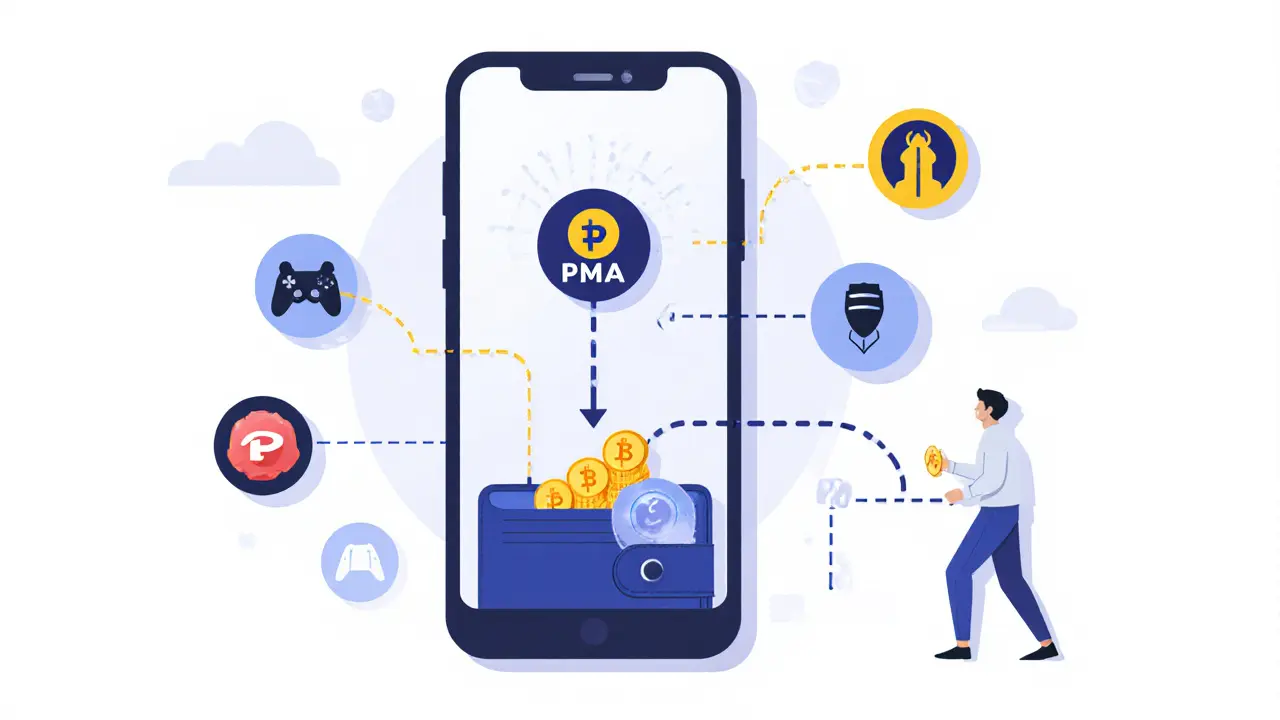
What is PumaPay (PMA) Crypto Coin? The Full Story Behind the Failed Payment Protocol
PumaPay (PMA) was a blockchain payment protocol designed for recurring crypto payments, targeting high-risk industries. Despite its innovative pull-payment model, it failed due to zero adoption, no merchant partnerships, and abandoned development. Today, it's a dead asset with 99.9% value loss.
Details +