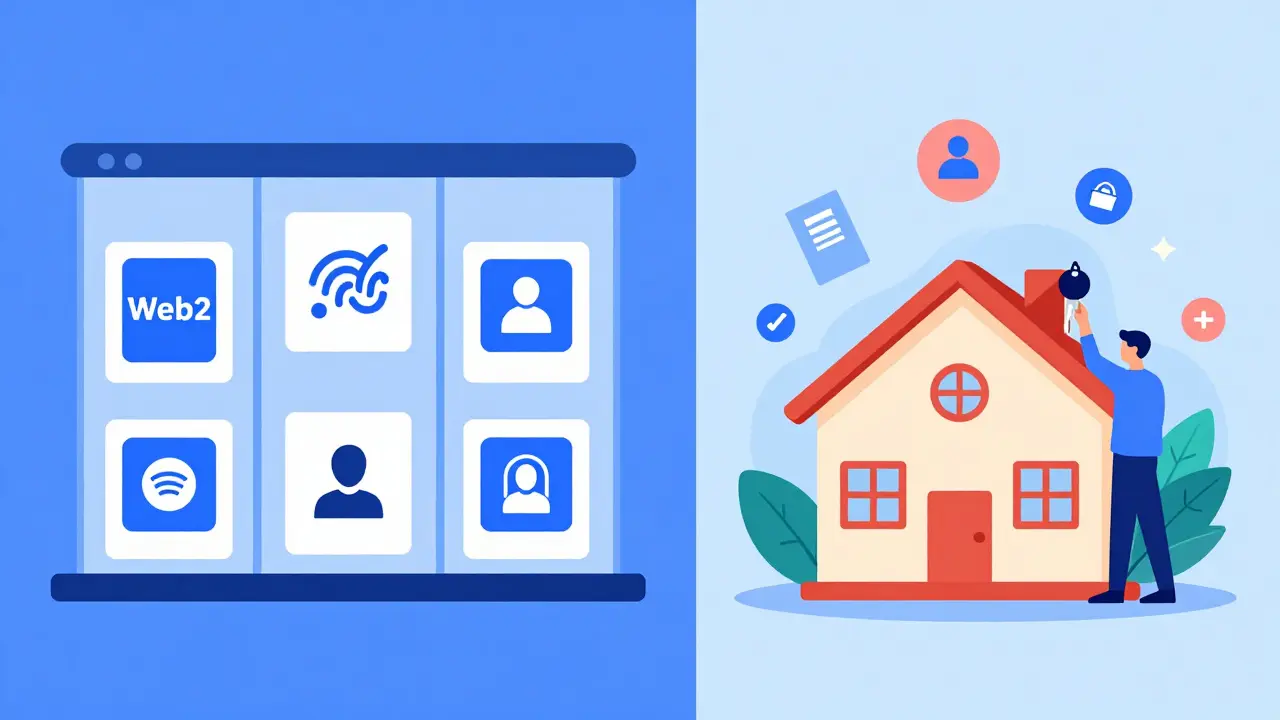
For years, your digital life was controlled by companies. Your photos on Facebook, your tweets on Twitter, your files on Google Drive-none of them truly belong to you. They’re just borrowed space. But what if you could own your digital stuff like you own a car or a house? That’s the promise of Web3 the third generation of internet services built on decentralized blockchain technology, enabling users to own their digital assets. It’s not science fiction. It’s happening right now.
What is Web3?
Web3 is the internet’s next evolution. Coined by Ethereum co-founder Gavin Wood in 2014, it’s often called the "read-write-own" web. Unlike Web2 (today’s internet), where companies like Google or Meta control your data, Web3 puts you in charge. Think of it this way: Web1 was a library (read-only), Web2 is a shopping mall (you can write but the mall owns the space), and Web3 is your own home (you own everything inside).
Here’s the proof: in 2022, the global Web3 market hit $3.2 billion. By 2030, it’s expected to grow to $81.5 billion. Why? Because people want real ownership. When you use Web3, you’re not renting space-you’re building your own digital world. Blockchain technology makes this possible. It’s like a public ledger everyone can see but no one can change. Transactions are recorded across thousands of computers worldwide, making them secure and transparent.
How Digital Ownership Works in Web3
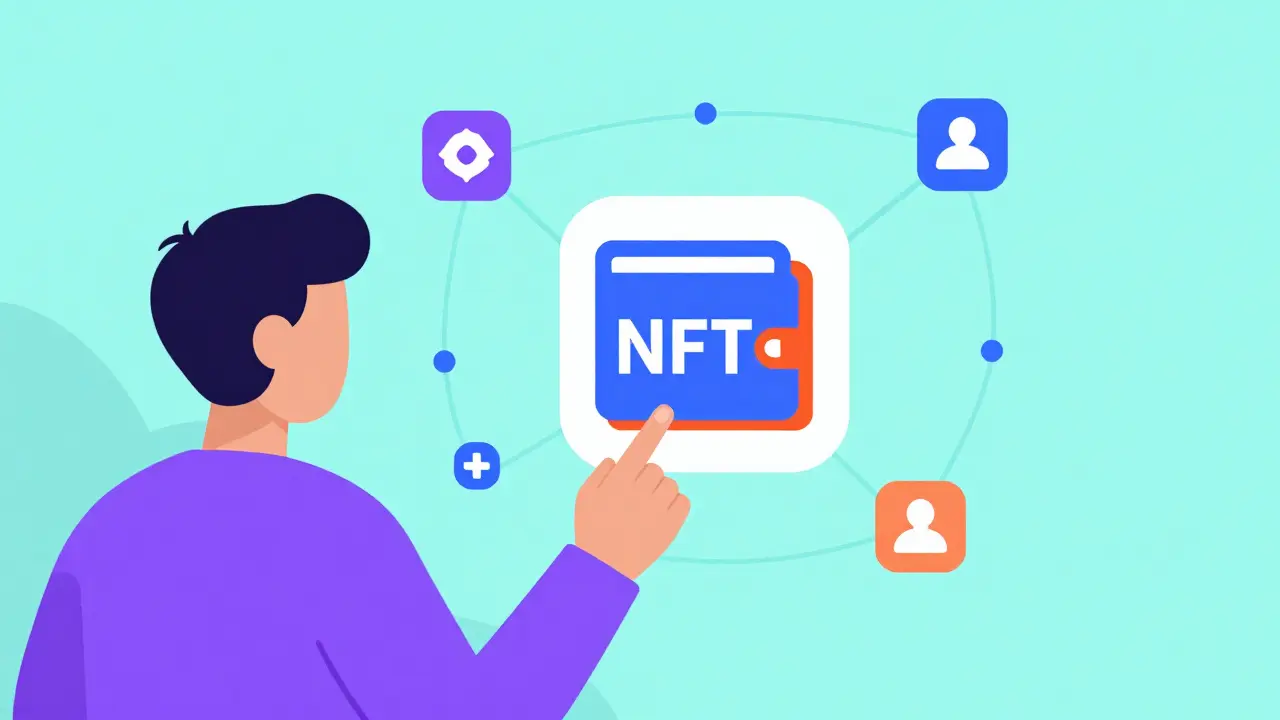
Let’s break it down. Digital ownership in Web3 happens through blockchain. When you buy an NFT (non-fungible token), for example, you get a unique digital certificate proving you own it. This isn’t just a screenshot or a download link-it’s a verifiable proof stored on a blockchain. The Ethereum a decentralized blockchain platform that processes over 1.1 million transactions daily blockchain, for instance, uses standards like ERC-721 to create NFTs. Between 2017 and 2022, over 52 million NFT transactions happened on Ethereum alone.
How do you access this? Through a wallet like MetaMask a cryptocurrency wallet with 30 million monthly active users that manages private keys for Web3 ownership. Your wallet holds private keys-like a digital key to your house. Only you control them. If you lose your keys, you lose access. No company can reset them for you. That’s why security is so important.
Smart contracts automate ownership. These are self-executing codes on blockchains. For example, if you sell an NFT, a smart contract can automatically send you 5% of future sales. That’s something impossible in traditional markets. In 2023, OpenSea processed $1.3 billion in NFT volume, proving how these contracts work in practice.
Web3 vs Web2: A Clear Comparison
Why does Web3 matter? Look at the differences:
- Web2: Companies own your data. Facebook (Meta) made $224 billion in ad revenue in 2022 by controlling user content. You can’t take your photos or posts elsewhere-they’re locked in.
- Web3: You own your data. An NFT on OpenSea stays yours forever. Even if OpenSea shuts down, the ownership record lives on the blockchain.
But Web3 isn’t perfect yet. Transaction speeds are slower. Visa handles 65,000 transactions per second. Ethereum manages just 15-30. For everyday use, that’s too slow. User experience is also tricky. Consensys found it takes 7.2 steps to complete a Web3 transaction versus 2.1 steps in Web2. Imagine having to set up a new wallet, fund it with crypto, and confirm gas fees just to buy a digital artwork. It’s not beginner-friendly.
And then there’s security. Chainalysis reported $3.8 billion stolen in 2022 from Web3 scams. One Reddit user lost $2,000 after clicking a fake OpenSea link. But there are fixes. Hardware wallets (like Ledger) keep keys offline, and tools like Revoke.cash help manage permissions safely.
Challenges Facing Web3 Adoption
Web3’s biggest hurdles? Scalability, security, and regulation.
Ethereum’s network struggles with congestion. Gas fees (transaction costs) swing wildly-from $0.50 to $50 depending on demand. Blocknative’s 2023 data shows 15% of Ethereum transactions fail due to these issues. Meanwhile, Bitcoin’s energy use is massive: 121.49 terawatt-hours annually, according to Cambridge’s index. That’s more than Norway’s total electricity use.
Legal uncertainty adds risk. The SEC’s lawsuit against Ripple in 2023 showed how unclear regulations can be. XRP wasn’t deemed a security, but the fight continues. The EU’s MiCA regulation (effective June 2024) is a step forward, but the U.S. still has no clear rules. This volatility scares off mainstream users. In 2022, the crypto market lost $2 trillion in value-proof of how unstable things can be.
Even simple tasks get complicated. CoinGecko’s 2023 survey of 5,000 Web3 users found 61% faced security issues, and 58% said transaction costs were too high for small purchases. $1.7 billion was permanently lost in 2022 due to user errors like sending funds to the wrong address. These problems aren’t trivial.
Getting Started with Web3 Ownership
Ready to try Web3? Here’s how to begin:
- Create a wallet: Use MetaMask (free browser extension) or a hardware wallet like Ledger. Never share your seed phrase-24 words that unlock your wallet. Store it offline.
- Fund your wallet: Buy cryptocurrency (like ETH) on an exchange like Coinbase. Transfer it to your wallet. Start small-$10 to learn.
- Connect to dApps: Visit decentralized apps (dApps) like OpenSea for NFTs or Aave for DeFi. Always check URLs carefully to avoid scams.
- Learn security basics: Use Revoke.cash to cancel app permissions. Enable two-factor authentication. Never click suspicious links.
Consensys says new users take 8.3 hours to complete their first Web3 transaction. It’s a learning curve, but worth it. One Reddit user, u/DigitalArtistPro, sold their first NFT collection for $63,000 (42 ETH) with automatic royalties on resale. That’s impossible in traditional art markets. The key? Start simple. Test with tiny amounts before going big.
The Future of Web3 and Digital Ownership
What’s next? Ethereum’s Shanghai upgrade in 2023 let users withdraw staked ETH, boosting liquidity. Zero-knowledge proofs (ZKPs) are speeding things up-Starknet’s testnet hit 9,000 transactions per second, far above Ethereum’s base layer. Chainlink’s Cross-Chain Interoperability Protocol (CCIP) now connects 15 major blockchains, making Web3 more seamless.
Experts are split. Gartner predicts 10% of people will earn over $1,000 yearly from Web3 by 2026. But Forrester warns Web3 will stay niche until UX improves. Still, the trend is clear. Fetch.ai’s AI-agent platform processes 2.1 million transactions daily, merging artificial intelligence with digital ownership. Imagine owning AI-generated art or services-Web3 makes that possible.
The World Economic Forum calls smart contracts "the cornerstone of Web3 ownership." They automate trust without middlemen. But adoption is slow: only 8% of large enterprises have implemented blockchain beyond pilots. The real shift? Web3 isn’t just tech-it’s about redefining who controls the digital world. As Togggle KYC’s 2023 research says, "Web3 isn’t just about new technology-it’s about redefining the fundamental relationship between users and the digital world, with digital ownership as the cornerstone of this transformation."
What is Web3?
Web3 is the third generation of the internet built on decentralized blockchain technology. Unlike today’s web (Web2), where companies control user data, Web3 lets users own their digital assets. Coined by Ethereum co-founder Gavin Wood in 2014, it’s often called the "read-write-own" web.
How does digital ownership work in Web3?
Digital ownership in Web3 uses blockchain to verify ownership. For example, buying an NFT (non-fungible token) creates a unique digital certificate stored on a public ledger. Smart contracts automate transfers-like sending royalties to creators automatically. Your ownership is proven through cryptographic keys in a wallet like MetaMask, not through a company’s database.
What are the biggest challenges with Web3?
Web3 faces three main challenges: scalability (Ethereum handles only 15-30 transactions per second vs. Visa’s 65,000), security risks ($3.8 billion stolen in 2022), and regulatory uncertainty. Gas fees fluctuate wildly, and user experience is complex. For instance, CoinGecko found 61% of Web3 users experienced security issues, and 58% said transaction costs were too high for small purchases.
How can I start using Web3?
Begin by creating a wallet (like MetaMask), funding it with a small amount of cryptocurrency, and connecting to decentralized apps (dApps). Always store your seed phrase offline and avoid suspicious links. Start small-test with $10 before investing more. Consensys reports new users take 8.3 hours on average to complete their first Web3 transaction.
Is Web3 safe?
Web3 has security risks but can be safe with precautions. Always use hardware wallets for large sums, enable two-factor authentication, and check URLs carefully. Tools like Revoke.cash help manage app permissions. However, $1.7 billion was lost in 2022 due to user errors like sending funds to wrong addresses. Education and caution are key.
Alisha Arora
7 02 26 / 06:44 AMWeb3 is just a scam. You don't own anything.
Michael Sullivan
7 02 26 / 07:53 AMNFTs are just JPEGs. Anyone who buys them is a fool. 🤷♂️
Reda Adaou
8 02 26 / 17:52 PMWeb3 has potential but needs better UX. Start small and learn.
It's not about replacing everything overnight.
The technology is still evolving. Many people don't understand blockchain basics.
We need more educational resources. Security is a big issue.
Users lose funds due to mistakes. Wallets are complicated.
Maybe better interfaces can help. Collaboration between developers and users is key.
Let's not dismiss the potential just because it's hard. It's like the early internet days.
Remember how hard email was? Now it's everywhere. Web3 could be the same.
But we need patience. Let's build together.
Also, consider that while NFTs get all the attention, there's more to Web3 like decentralized finance and identity systems.
It's not just about art; it's about reimagining ownership across all sectors.
The infrastructure is still fragile, but the vision is worth fighting for.
We should support projects that prioritize accessibility and security.
Maybe community-driven solutions can bridge the gap.
Let's not get discouraged by the current challenges.
Paul Jardetzky
10 02 26 / 01:27 AMHey folks! Web3 is the future. Use hardware wallets for security. 🛡️ Start with small amounts. You got this!
perry jody
11 02 26 / 13:05 PMYeah, exactly! The key is education. Maybe we need more beginner-friendly guides. 🚀
Udit Pandey
11 02 26 / 16:46 PMThe Western-centric narrative of Web3 ignores local contexts. India's blockchain initiatives are more sustainable. This is not progress but cultural imperialism.
Sharon Lois
13 02 26 / 10:04 AMWeb3? More like Web3.0 government surveillance tool. They're tracking every transaction. 🔍 You think you own it? Think again. 🤨
Matt Smith
15 02 26 / 00:36 AMNFTs are just JPEGs. Anyone who buys them is a fool. And the energy use? Total nonsense. 🌍🔥
Josh Flohre
16 02 26 / 23:32 PMThis article is full of inaccuracies. Web3 is not 'ownership' but a new form of centralized control. Blockchain is a scam. Period.
James Harris
17 02 26 / 11:46 AMWeb3 is about empowering people globally. Let's bridge the gap. Start small, stay safe. 🌍✨
Katie Haywood
18 02 26 / 10:08 AMY'all overcomplicating it. Web3's cool, but the UX is trash. Like trying to use a smartphone with mittens on. 😂
Brendan Conway
18 02 26 / 19:17 PMHmm. Web3 is interesting but the tech is still messy. Like trying to build a house with Legos. 😅
Jesse Pasichnyk
18 02 26 / 22:27 PMAmerica leads in Web3. Other countries are just following. Our tech is better. 🇺🇸
Jordan Axtell
20 02 26 / 17:03 PMYou think it's just America? Bro, Web3 is global. Your 'leadership' is just another echo chamber. 🤷♂️
mahikshith reddy
21 02 26 / 09:37 AMWeb3 is just a scam. Real ownership is in physical assets. Digital is ephemeral. Period.