
Imagine a world where your solar panels automatically sell excess power to your neighbor, and the paperwork happens instantly on a digital ledger. That’s not science fiction; it’s the core promise behind Energy Web Token (EWT). While most people think of crypto as just digital gold or meme coins, EWT is trying to do something far more practical: fix the broken plumbing of the global energy grid.
If you’ve ever wondered how renewable energy certificates are tracked or how electric vehicle charging networks settle payments without a middleman, EWT might be the answer. But what exactly is this token? Is it just another speculative asset, or does it have real utility in the transition to green energy? Let’s break down the tech, the tokenomics, and why major energy companies are paying attention.
The Origin Story: Why We Need an Energy Blockchain
To understand EWT, you first need to understand the problem it solves. The traditional energy grid is centralized, slow, and often opaque. When you buy "green" electricity, verifying that it actually came from wind or solar requires a mountain of paperwork and trusted intermediaries. This process is expensive and prone to errors.
In June 2019, two organizations-Rocky Mountain Institute (RMI) and Grid Singularity-launched the Energy Web Foundation. Their goal wasn't to create another currency for trading, but to build a decentralized infrastructure specifically for the energy sector. They created the Energy Web Chain (EWC), a public blockchain designed to handle the heavy lifting of energy data.
Think of it this way: Bitcoin was built for money. Ethereum was built for general-purpose apps. Energy Web was built for utilities. It’s tailored for high throughput, low energy consumption, and enterprise-grade security. The native fuel for this machine is the Energy Web Token.
How EWT Works: From PoA to NPoS
Initially, the Energy Web Chain used a consensus mechanism called Proof-of-Authority (PoA). In simple terms, instead of anonymous miners solving math problems (like in Bitcoin), known, trusted entities-such as major grid operators and energy companies-validated transactions. This made the network fast and incredibly energy-efficient, which is ironic but essential for a platform dedicated to sustainability.
However, technology evolves. As of September 2025, the ecosystem underwent a massive upgrade. The legacy Energy Web Chain moved into archive mode, and the focus shifted to Energy Web X (EWX). EWX uses a nominated proof-of-stake (NPoS) model. Here, users can stake their EWT tokens to help secure the network. If they behave well, they earn rewards. If they misbehave, they lose some of their stake. This shift aligns incentives better with long-term network health.
Furthermore, EWT now exists as an ERC-20 token on Ethereum. This allows for easier integration with the broader DeFi ecosystem. A bidirectional bridge connects Ethereum and EWX, letting users move tokens back and forth while maintaining a fixed total supply.
Tokenomics: Fixed Supply and Governance
One of the biggest concerns with many altcoins is inflation. Will the developers keep printing new tokens until the value dilutes? With EWT, the rules are strict. The maximum supply is capped at 100 million tokens. There is no automatic inflation mechanism.
Here is how the supply breaks down as of the 2025-2026 era:
- Frozen Legacy Supply: Approximately 83.26 million tokens were minted on the original chain and are frozen during migration.
- Governance Headroom: About 16.74 million tokens remain available for future minting.
- Minting Process: Any new tokens must be approved through on-chain governance referendums. This means the community and stakeholders decide when new supply enters the market, preventing sudden dumps by insiders.
This fixed-cap model appeals to investors who prefer scarcity over infinite expansion. However, it also means that price discovery relies heavily on actual usage rather than just speculation.
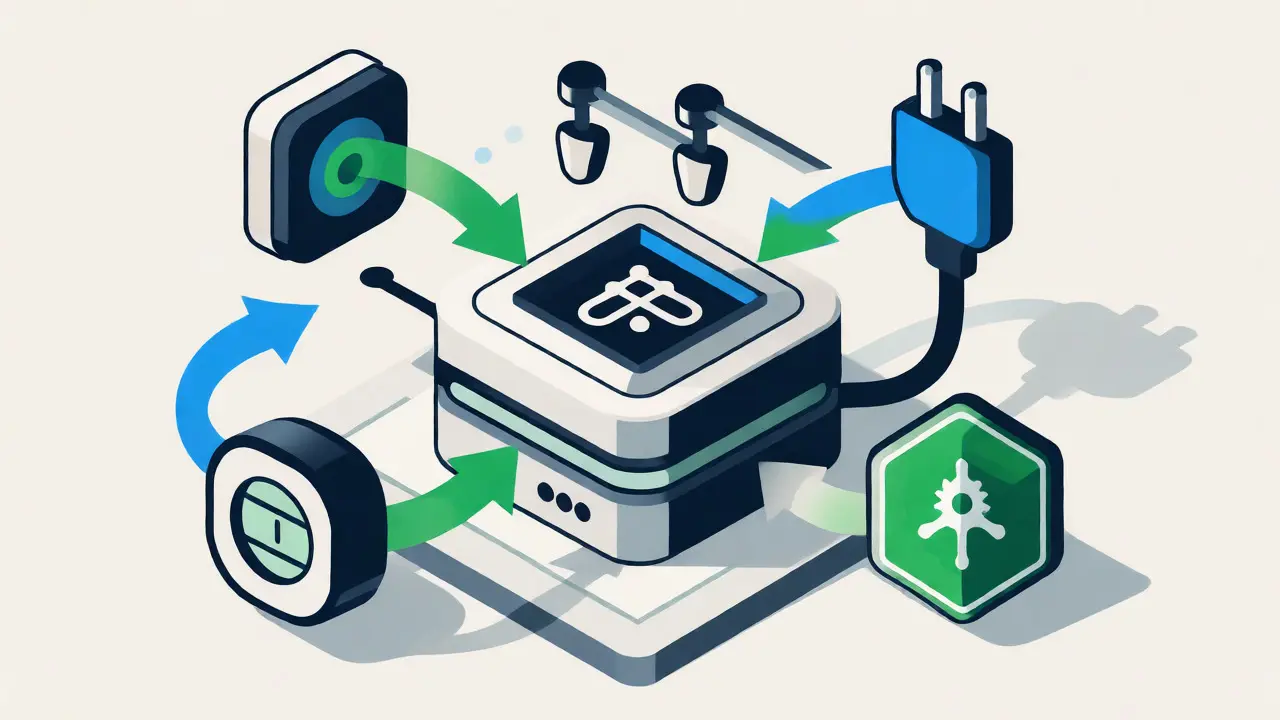
Real-World Utility: What Can You Do With EWT?
So, why hold EWT? It’s not just about holding for potential price appreciation. The token has several concrete functions within the ecosystem:
- Paying Gas Fees: Every transaction on the Energy Web network-from recording a solar panel’s output to settling an EV charging session-requires EWT to pay for computational resources.
- Staking Rewards: By staking EWT on Energy Web X, you contribute to network security and earn yield. Liquid staking options allow you to use your staked tokens elsewhere while still earning rewards.
- Accessing Services: Enterprises use EWT to access verified compute clouds and register devices like smart meters or electric vehicles on the blockchain.
- Settlement Asset: For energy traders, EWT acts as a settlement layer for renewable energy certificates (RECs) and guarantees of origin (GOs).
For example, if a company wants to prove they bought wind energy from a specific farm in New Zealand, that certificate is recorded on the Energy Web blockchain. The transaction fee is paid in EWT. This creates a continuous demand loop tied to real-world industrial activity.
Market Performance and Volatility
Let’s look at the numbers. As of mid-2026, EWT trades around $0.27-$0.30 USD. This is a significant drop from its highs in 2023, when it traded above $2.50. The market cap hovers between $16 million and $54 million, depending on which data provider you ask (CoinGecko vs. CoinMarketCap often differ on circulating supply definitions).
| Metric | Value | Note |
|---|---|---|
| Price | $0.27 - $0.30 USD | Volatile, follows broader crypto trends |
| Max Supply | 100,000,000 EWT | Fixed cap, no auto-inflation |
| Circulating Supply | ~30M - 61M EWT | Varies by source methodology |
| Daily Volume | ~$300,000 USD | Liquidity is moderate, not high-volume |
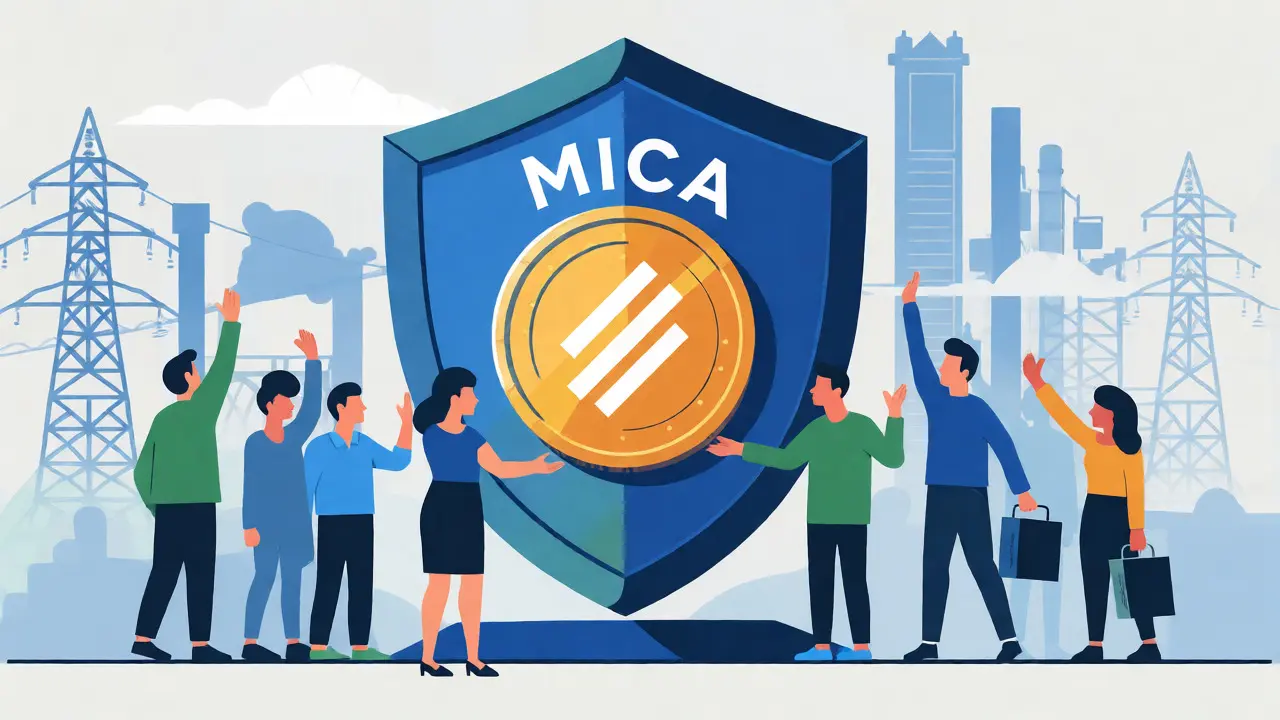
| Regulatory Status | ESMA Registered | Compliant with EU MiCA framework |
The lower trading volume compared to giants like Solana or Cardano reflects its niche nature. It’s an institutional play, not a retail hype train. However, being registered with the European Securities and Markets Authority (ESMA) under the MiCA regulation gives it a level of legitimacy that many other small-cap tokens lack.
Pros and Cons: Is EWT Right for You?
Before you dive in, weigh the benefits against the risks.
The Good:
- Strong Partnerships: Backed by RMI and major grid operators like E.ON and Shell.
- Clear Use Case: Solves a tangible problem in the multi-trillion dollar energy industry.
- Regulatory Clarity: One of the few tokens fully compliant with EU crypto laws.
- Sustainability Focus: The network itself consumes very little energy, aligning with ESG goals.
The Bad:
- Niche Market: Adoption depends on large corporations integrating blockchain, which moves slowly.
- Low Liquidity: Harder to buy/sell large amounts without moving the price.
- Complex Tech: Understanding the bridge between Ethereum and EWX can be tricky for beginners.
- Price Volatility: Despite the utility, it still correlates with the broader crypto market downturns.
How to Buy and Stake EWT
Getting started is relatively straightforward. You can find EWT on several exchanges, including Kraken, KuCoin, MEXC, and Gate.io. Since it’s an ERC-20 token on Ethereum, you can also trade it on Uniswap via decentralized exchanges.
Once you have your tokens, you have two main paths:
- Holding: Keep them in a standard Ethereum wallet like MetaMask or Ledger.
- Bridging and Staking: Use the Energy Bridge to move EWT from Ethereum to Energy Web X. Once there, you can stake them directly or use liquid staking protocols to receive stEWT, which keeps your capital liquid while earning rewards.
Developers interested in building on the platform will appreciate that Energy Web is EVM-compatible. This means you can use familiar tools like Solidity, Remix, and Truffle without learning a new programming language.
Is Energy Web Token a good investment?
It depends on your risk tolerance. EWT is a high-risk, high-reward asset tied to the adoption of blockchain in the energy sector. It offers strong fundamentals and regulatory compliance but lacks the massive liquidity of top-tier cryptos. It's best suited for investors who believe in the digitization of energy markets.
What is the difference between EWT and ETH?
ETH is the native currency of Ethereum, a general-purpose smart contract platform. EWT is the native utility token of the Energy Web ecosystem, specialized for energy applications. While EWT now exists as an ERC-20 token on Ethereum, its primary utility and governance happen on the Energy Web X network.
Can I mine EWT?
No, you cannot mine EWT in the traditional sense. The network uses Proof-of-Stake (specifically Nominated Proof-of-Stake) and previously Proof-of-Authority. You earn EWT by staking your existing tokens to help secure the network, not by solving complex mathematical puzzles with hardware.
Who runs the Energy Web Foundation?
The Energy Web Foundation is a non-profit organization co-founded by Rocky Mountain Institute (RMI) and Grid Singularity. It oversees the development and governance of the Energy Web blockchain and token ecosystem.
Is EWT compliant with regulations?
Yes, EWT was added to the ESMA register in November 2025, ensuring it complies with the EU's Markets in Crypto-Assets (MiCA) regulation. This makes it one of the more legally secure utility tokens for European users.
Leave a comments